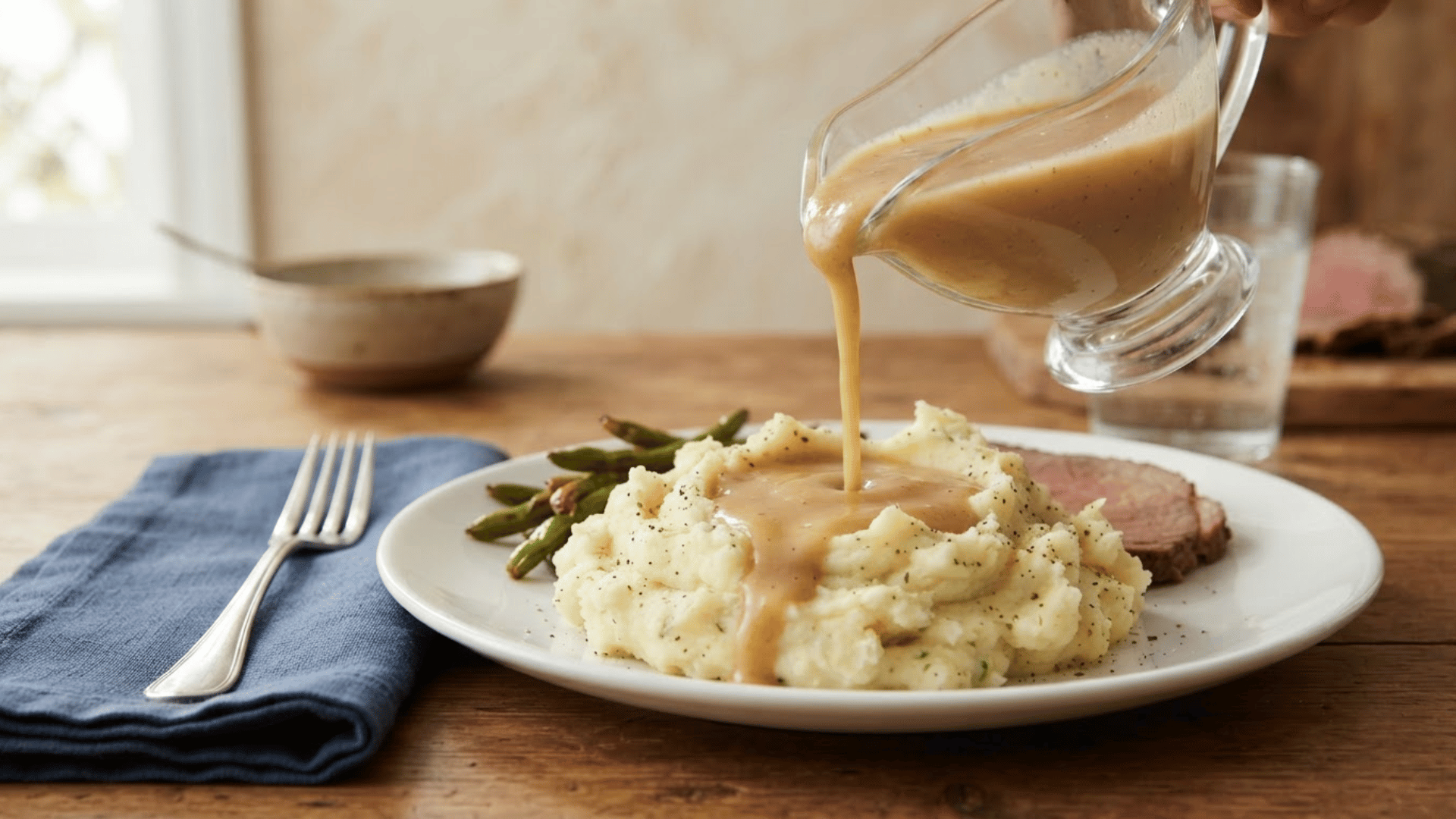
Gravy has a way of making even a simple dinner feel a little more special. I love how something so familiar can seem tricky at first, especially when you are trying to get the texture just right without ending up with lumps or a sauce that feels too heavy.
If you are learning how to make homemade gravy, it helps to know what separates a smooth, flavorful batch from one that misses the mark.
With a few basic ingredients and the right approach, the process feels much more manageable.
What You Need to Make Homemade Gravy
For Broth-Based Gravy
- 2 tablespoons butter or pan drippings
- 2 tablespoons all-purpose flour
- 1 cup chicken, beef, turkey, or vegetable broth
- ¼ teaspoon black pepper
- Salt to taste
- ¼ teaspoon dried herbs or seasoning (optional)
- Extra broth as needed for thinning
For Southern White Gravy
- 4 tablespoons butter, bacon grease, or sausage drippings
- 4 tablespoons all-purpose flour
- 2 cups whole milk
- ½ teaspoon salt, or to taste
- ½ teaspoon black pepper, plus more for a peppery finish
- Cooked, crumbled breakfast sausage (optional, for sausage gravy)
How to Make Homemade Gravy From Scratch (Broth-Based)
1. Melt the Fat and Whisk in the Flour

Place a saucepan over medium heat and melt the butter or warm the pan drippings until fully liquid. Gradually sprinkle in the flour while whisking continuously.
Keep whisking until the flour is completely incorporated and no dry spots remain. The mixture should become smooth and paste-like, creating an even base for the gravy.
2. Cook the Roux

Cook the flour-and-fat mixture over medium heat for about 1 to 2 minutes, stirring constantly. This helps remove the raw flour taste and develops a smoother flavor.
For a slightly darker gravy, cook the roux a little longer until it develops a golden or light brown color, without burning it.
3. Slowly Add the Broth

Pour a small amount of broth into the roux while whisking continuously. Once the first addition is fully incorporated, gradually pour in the remaining broth.
Keep whisking as you add the liquid so the roux blends evenly. Adding broth slowly is important because it helps create a smooth gravy and reduces the chance of lumps forming.
4. Simmer Until the Gravy Thickens

Bring the gravy to a gentle simmer and continue stirring or whisking as it cooks. Within a few minutes, the mixture should begin to thicken and develop a smooth consistency.
Remember that gravy will thicken slightly as it cools. If it becomes too thick while simmering, whisk in a little more broth.
5. Season and Serve the Gravy

Taste the gravy before adding salt since broth and pan drippings may already contain plenty of seasoning. Add black pepper, salt if needed, and any herbs or spices that complement your meal.
Stir everything together and serve the gravy warm once it is smooth and thick enough to coat the back of a spoon.
How to Make Classic Southern White Gravy With Milk
Southern white gravy uses milk instead of broth, giving it a creamy texture and mild flavor that pairs especially well with biscuits, fried chicken, and breakfast dishes.
- Use milk as the liquid: Replace the broth with whole milk for a richer, creamier gravy with the classic country-style texture.
- Season with plenty of black pepper: White gravy is usually more pepper-forward than brown gravy, so add freshly ground black pepper gradually and adjust to taste.
- Keep the color light: Cook the flour mixture only until pale golden if you want traditional white gravy rather than a darker brown sauce.
- Make sausage gravy: Stir cooked crumbled breakfast sausage into the finished gravy for a heartier Southern-style version commonly served over biscuits.
- Adjust before serving: Add a splash of milk if the gravy thickens too much, especially after it sits for a few minutes.
How to Fix Gravy That Went Wrong?
The table below shows common gravy problems, their likely causes, and simple fixes to help you quickly correct both broth and milk gravy.
|
Problem |
Likely Cause |
Quick Fix |
|---|---|---|
|
Gravy is too thick |
Too much reduction or flour |
Whisk in more broth |
|
Gravy is too thin |
Not enough cooking time |
Simmer a little longer |
|
Gravy is lumpy |
Broth was added too quickly |
Whisk firmly or strain |
|
Gravy tastes bland |
Broth is mild |
Add seasoning gradually |
|
Gravy tastes floury |
Roux did not cook long enough |
Simmer a little longer |
|
Gravy is too salty |
Broth or drippings are heavily seasoned |
Dilute with unsalted broth |
|
Gravy formed a skin |
Surface cooled uncovered |
Whisk while reheating |
Easy Homemade Gravy Variations
The basic gravy recipe can be adapted with different broths, drippings, and seasonings. These are a few simple variations to match different meals. It’s especially good spooned over buttery mashed potatoes or alongside biscuits at breakfast.
- Chicken Gravy: Use chicken broth or drippings with butter. Add black pepper and thyme.
- Turkey Gravy: Use turkey broth or drippings. Season with sage or poultry seasoning.
- Beef Gravy: Use beef broth and drippings for richer flavor. Add black pepper and onion powder.
- Vegetarian Gravy: Use vegetable broth with butter or cooking fat. Add garlic powder, onion powder, and herbs.
- Herb Gravy: Stir in finely chopped thyme, sage, parsley, or rosemary for added flavor.
How to Store and Reheat Homemade Gravy?
Homemade gravy can be stored in an airtight container in the refrigerator or frozen in a freezer-safe container for longer storage. Follow the U.S. Food & Drug Administration for safe storage and reheating practices.
To reheat, warm refrigerated gravy gently over low to medium heat while whisking. Thaw frozen gravy first, then reheat slowly.
If the gravy separates during reheating, whisk it until smooth again. If it becomes too thick, add broth or water one tablespoon at a time until it reaches the desired consistency.
Helpful Tips for Better Homemade Gravy
A few small cooking habits can improve flavor, texture, and consistency while making homemade gravy easier to prepare successfully each time.
- Choose the right pan: A heavy-bottomed saucepan or skillet helps distribute heat evenly and reduces the chance of scorching.
- Use room-temperature liquid when possible: Extremely cold milk or broth can slow the cooking process and make the mixture harder to blend smoothly.
- Control the heat: Keep the temperature moderate so the gravy thickens gradually without sticking to the bottom or reducing too quickly.
- Scrape up browned bits: When using meat drippings, stir any flavorful browned bits from the pan into the gravy for extra depth.
- Serve it warm: Gravy has its best texture shortly after cooking, so keep it gently warm until the rest of the meal is ready.
Conclusion
Learning how to make homemade gravy gives you an easy way to bring more comfort and flavor to everyday meals. I like how one simple base can be adjusted for creamy white gravy, hearty brown gravy, or a version made from pan drippings.
Once you know the basic method, you can match the gravy to whatever you are serving without making dinner complicated.
Try your favorite version with your next meal and experiment with the seasonings you enjoy most.
Leave a comment and share which homemade gravy turned out best for you.
Frequently Asked Questions
Can You Make Gravy without Pan Drippings?
Yes. Replace the drippings with butter and use chicken, beef, turkey, or vegetable broth as the liquid base.
Can You Make Gravy with Just Water and Flour?
Water and flour can thicken into a sauce, but the flavor will be very mild. Broth, bouillon, seasoning, or another savory base adds depth.
Can You Use Cornstarch Instead of Flour for Gravy?
Yes. Mix cornstarch with cold water first to create a slurry, then whisk it into hot broth. Cornstarch does not need to be cooked in fat like a flour roux.