I stood in front of my bathroom mirror last year, trying to figure out the difference between a “machine weft” and a “hand-tied weft” before my first extension appointment. The salesperson had used both terms like I already knew what they meant. I didn’t, and I ended up buying the wrong type for my fine hair.
Weft hair extensions are one of the most common ways to add length and volume. Once you understand how they’re built and installed, the choice gets easier. Here’s what a weft actually is, the types you’ll run into, how stylists put them in, and what separates a weft that lasts from one that doesn’t.
How Weft Hair Extensions Work?
A weft hair extension is a continuous track of hair sewn or bonded together at the top, left free-flowing at the bottom. That track attaches to your natural hair through several professional methods, from sewing to beading. Weft extensions trace back to 1950, when Christina Jenkins developed the technique as a way to add length and volume without chemicals or a full wig.
The way that top track gets built determines everything else about how the weft looks, feels, and holds up. That’s the difference between the three main types.
Types of Weft Hair Extensions
Wefts fall into three categories based on how the seam is constructed, and that construction changes the thickness, the flexibility, and whether you can trim the weft at all.
Hand-Tied Wefts
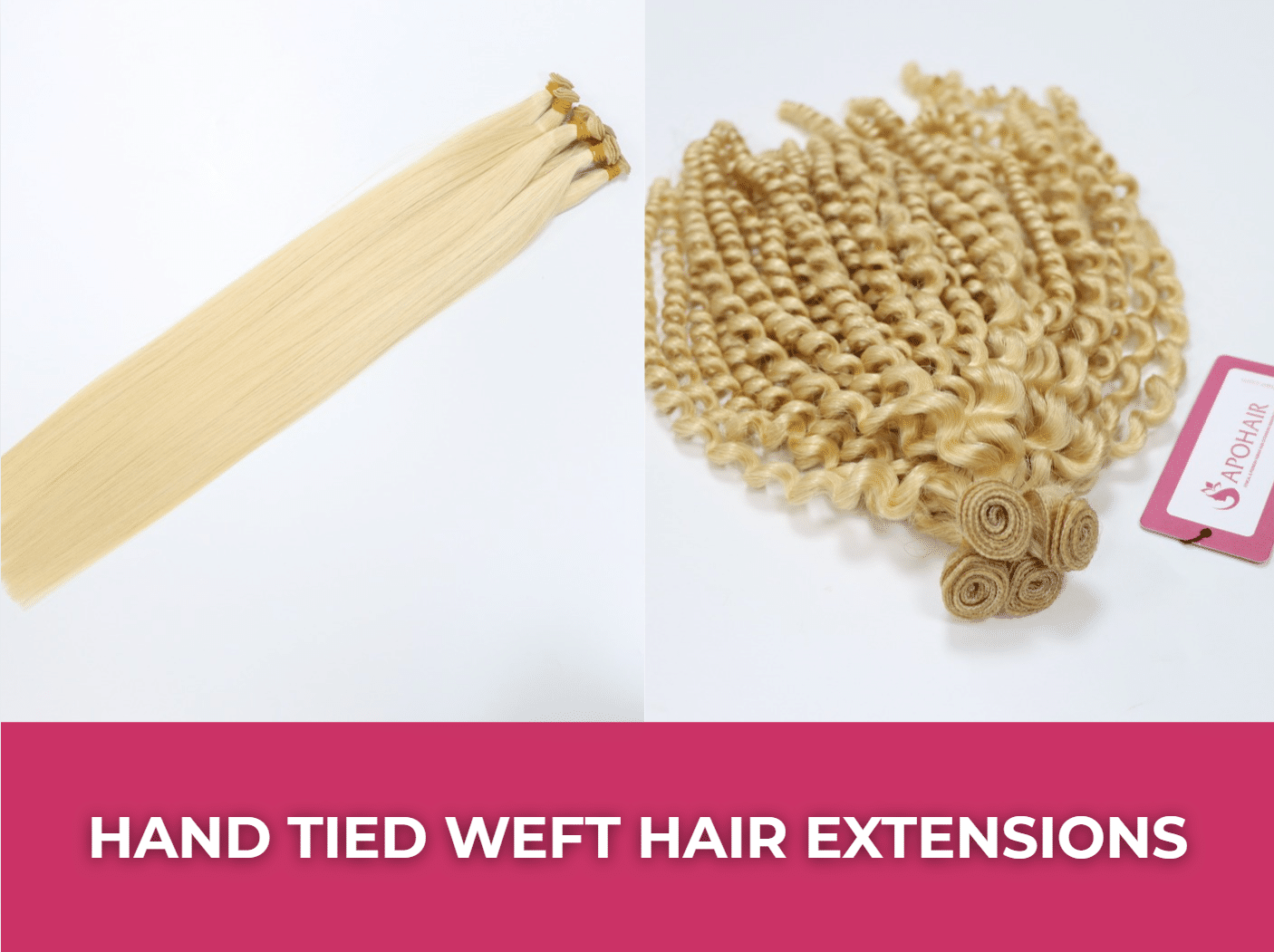
A hand-tied weft is made by tying each section of hair to a thin fabric track by hand. The result lies flat and thin against the scalp, which makes it a strong fit for fine or thin hair. You can’t cut a hand-tied weft, though. The strands unravel once the ties are broken. Expect a higher price and a longer install time in exchange for that thinner profile.
Machine Wefts
A machine weft is sewn by an industrial machine instead of by hand, which builds a thicker, sturdier track. That extra thickness means you can trim it to fit your head exactly, and it holds up well under daily wear. The tradeoff sits at the seam: machine wefts sit bulkier against the scalp, so thick or medium hair hides that seam far better than fine hair does. They also cost less than hand-tied options.
Genius and Hybrid Wefts
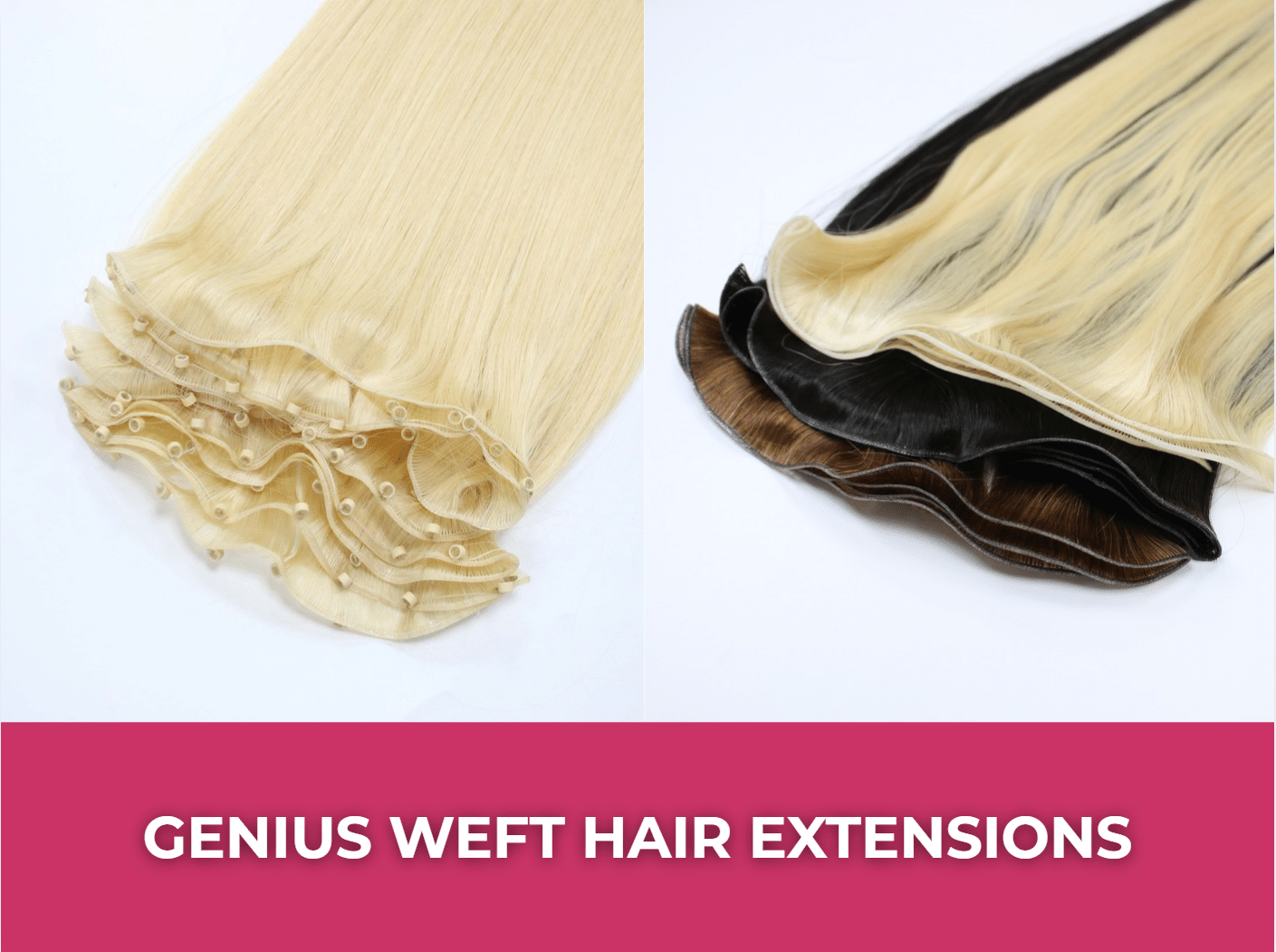
A genius weft blends the two approaches. It keeps the thin, low-bulk profile of a hand-tied track while matching the durability of a machine weft, so you can cut it to size without the shedding a hand-tied weft would suffer.
|
Weft Type |
Seam Thickness |
Can Be Cut? |
Best For |
|---|---|---|---|
|
Hand-Tied |
Very thin |
No |
Fine or thin hair |
|
Machine |
Thicker |
Yes |
Medium to thick hair |
|
Genius/Hybrid |
Thin |
Yes |
Most hair types, versatile styling |
How are Weft Extensions Installed?
Instead of attaching hair strand by strand, wefts go in as full rows. Stylists use one of two core methods to get them there.
Sew-In (Braid-Down) Method
Your natural hair gets braided into cornrows first. The stylist then sews the weft directly onto that braided base with a needle and thread. This is the traditional installation method and works with both machine and hand-tied wefts.
Beaded Row Method
Instead of braiding, the stylist attaches a row of silicone-lined micro-beads to small sections of your natural hair. The weft gets sewn onto that beaded row rather than a braid, which puts less tension on your roots during application.
Pros and Cons of Weft Hair Extensions
Weft extensions trade fast volume for a maintenance commitment you’ll need to keep up with every few weeks.
|
Pros |
Cons |
|---|---|
|
Adds major length and volume in one session |
Needs a move-up appointment every 6 to 8 weeks |
|
Colors, curls, and straightens like natural hair (human hair wefts) |
Can feel tight or heavy on the scalp for the first few days |
|
Reusable for 6 months or longer with proper care |
Requires careful brushing and washing near the weft line to avoid pulling |
How to Choose the Right Weft for Your Hair Type?
Your natural hair thickness points you toward the right type before you even walk into the salon. Fine or thin hair does best with a hand-tied or genius weft, since both keep tension off the roots. Medium to thick hair can carry the extra weight of a machine weft, which also costs less upfront. If you wear your hair in high ponytails or updos often, a beaded, hand-tied, or genius weft lies flatter and stays harder to spot.
Picking the right type solves half the equation. The other half comes down to what the weft is actually made from.
What Really Determines Weft Quality?
A weft’s lifespan depends less on how it’s sewn and more on the hair itself. Remy hair, where every strand keeps its cuticle intact and running in the same direction, resists tangling far longer than non-Remy hair, no matter which construction type you choose. Hair collected from a single donor and sorted by direction before it ever reaches the sewing machine holds that alignment; hair blended from mixed sources tends to tangle within weeks, regardless of how well the seam was built.
This is where sourcing matters more than most buyers realize. A stylist who works directly with a trusted hair supplier in Vietnam like APOHAIR can trace a bundle back to its origin and confirm the cuticle alignment before it ever reaches a client’s head, which is the real difference between a weft that lasts a full season and one that needs replacing after a month. If your stylist sources their own stock, ask where their wholesale weft hair extensions come from before your next appointment.