When choosing a wedding ring or engagement ring, the question tends to start with which gemstone will look beautiful and be practical enough for everyday wear.
Diamond has long been popular for its exceptional hardness, brilliance, and established popularity in bridal jewelry.
Alexandrite is a wonderful alternative.
Rather than reflecting light in the form of brilliance and sparkle, alexandrite can appear green or bluish green in daylight and purple or reddish under warmer lighting.
The difference between alexandrite and diamond is simple: diamond is the better choice for maximum scratch resistance and brilliance, while alexandrite is the better choice for distinctive color change, individuality, and the potential rarity of fine natural material.
Both can work, but they are more suited to different priorities.
What Is the Difference Between Alexandrite and Diamond?
Alexandrite and diamond are utterly different gemstones.
Diamond is composed of carbon in a distinctive crystal structure, while alexandrite is the color-change variety of chrysoberyl, which is a mineral composed of beryllium and aluminum.
Their physical and optical properties are also completely different.
| Feature | Alexandrite | Diamond |
| Mineral | Chrysoberyl | Diamond |
| Mohs hardness | 8.5 | 10 |
| Typical appearance | Green, blue-green, purple, reddish | Colorless or various fancy colors |
| Defining visual feature | Color change | Brilliance and fire |
| Everyday wear | Very good with care | Excellent scratch resistance |
| Natural rarity | Fine natural color-changing material is rare | Varies significantly by quality and size |
| Lab-grown option | Available | Available |
| Main attraction | Color and individuality | Sparkle and durability |
Neither gemstone is universally better, but the difference is clear.
It will come down to which gemstone the owner prefers to wear.
Why Is Alexandrite Considered a Rare Gemstone?
Natural alexandrite requires an unusual combination of geological conditions.
Fine alexandrite is a variety of chrysoberyl, but the color change is caused by trace elements like chromium.
Under daylight, or daylight-equivalent lighting, fine alexandrite may appear green or bluish green.
Under warm incandescent lighting, it may appear reddish or purplish red.
This happens due to differences in the wavelengths of light.
Fine natural alexandrite is exceptionally rare in terms of several characteristics.
- Good color change
- Attractive colors under different lighting
- Good transparency
- Minimal distracting inclusions
- Good cutting proportions
- Larger carat weight
A natural alexandrite with all the characteristics can command a substantial price.
However, not every alexandrite can be exceptionally rare or expensive.
Quality and size matter considerably.
Why Are Diamonds So Popular for Wedding Rings?
Diamond’s popularity is largely cultural, but it has practical benefits as well.
With a Mohs hardness of 10, diamond has the maximum scratch resistance of any natural mineral.
That is a big benefit for a ring that tends to get worn all the time.
Hands can hit many surfaces throughout a day: desks, countertops, door handles, clothing, tools, and more.
A more scratch-resistant gemstone will generally hold up to ordinary wear and tear better.
Diamond has a distinctive brilliance and fire.
Well-cut diamonds reflect and refract light in such a way as to create interesting flashes of light and colorful refractive effects.
This has contributed to diamond’s popularity in engagement and wedding jewelry, but neither hardness nor brilliance make a gemstone unbreakable or unscratchable.
Hardness does not equal impact resistance, and a sufficiently powerful blow can always crack or break a gemstone, especially one with delicate edges.
Is Alexandrite Durable Enough for Everyday Wedding Rings?
Yes, alexandrite is durable enough for everyday wedding ring wear, but it will require some care.
Alexandrite has a hardness of about 8.5 on the Mohs scale.
This will generally be durable enough for everyday jewellery wear, but it will not be as scratch-resistant as diamond or other gemstones with a higher Mohs rating.
It is much harder than many popular colored gemstones like opal, moonstone, and tourmaline.
Alexandrite does have good toughness and no cleavage, which makes it more suitable for jewelry.
Diamond is much harder and more scratch-resistant, but for toughness, the two gemstones are comparable within their respective categories.
For someone considering an alexandrite engagement ring, the main considerations should be how the gemstone is cut and set, as well as the owner’s lifestyle.
A well-set gemstone will have its delicate edges protected.
What Does Hardness Actually Measure?
Hardness measures resistance to scratching.
It does not measure resistance to breaking or chipping.
A gemstone can be extremely hard but still chip if it is struck at an unfavorable angle.
This is an important difference between diamond and alexandrite.
Diamond has superior scratch resistance, but both gemstones should be protected from impacts.
Which Gemstone Looks Better: Alexandrite or Diamond?
It is a question of personal preference.
The overall visual appeal of both gemstones will be different.
Diamond: Brilliance and Sparkle
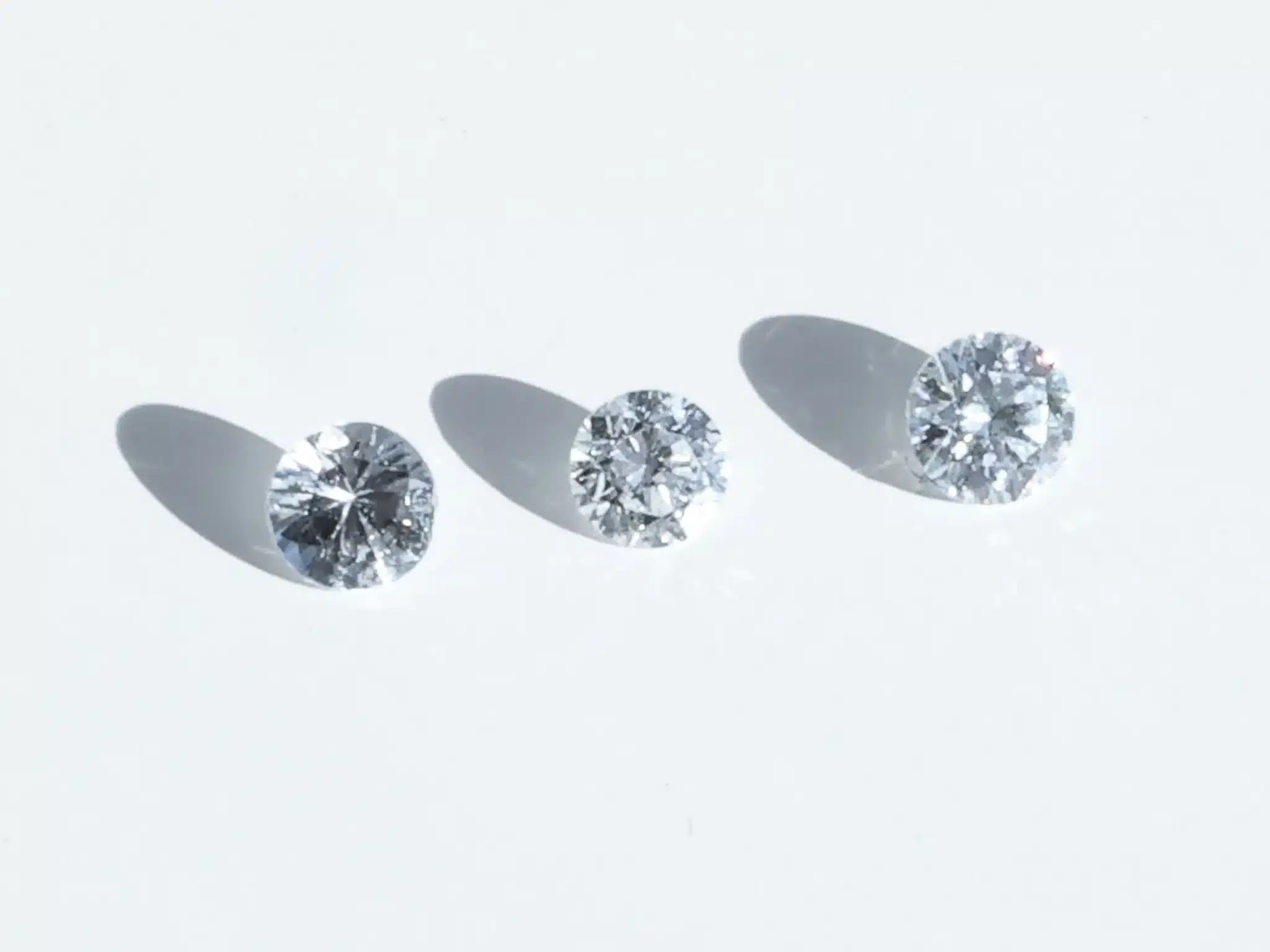
Colorless diamonds are prized for their ability to reflect white light and split it into the various colors of the spectrum.
The overall appearance can change with the lighting, but the diamond remains brilliant.
Diamond looks particularly good in traditional solitaires, pavé, halos, and eternity bands.
Alexandrite: Color Change and Depth
Alexandrite is prized for its color change.
A gemstone that appears green in daylight may look purple or reddish in the evening under incandescent lighting.
The appearance will depend on the lighting and the particular alexandrite.
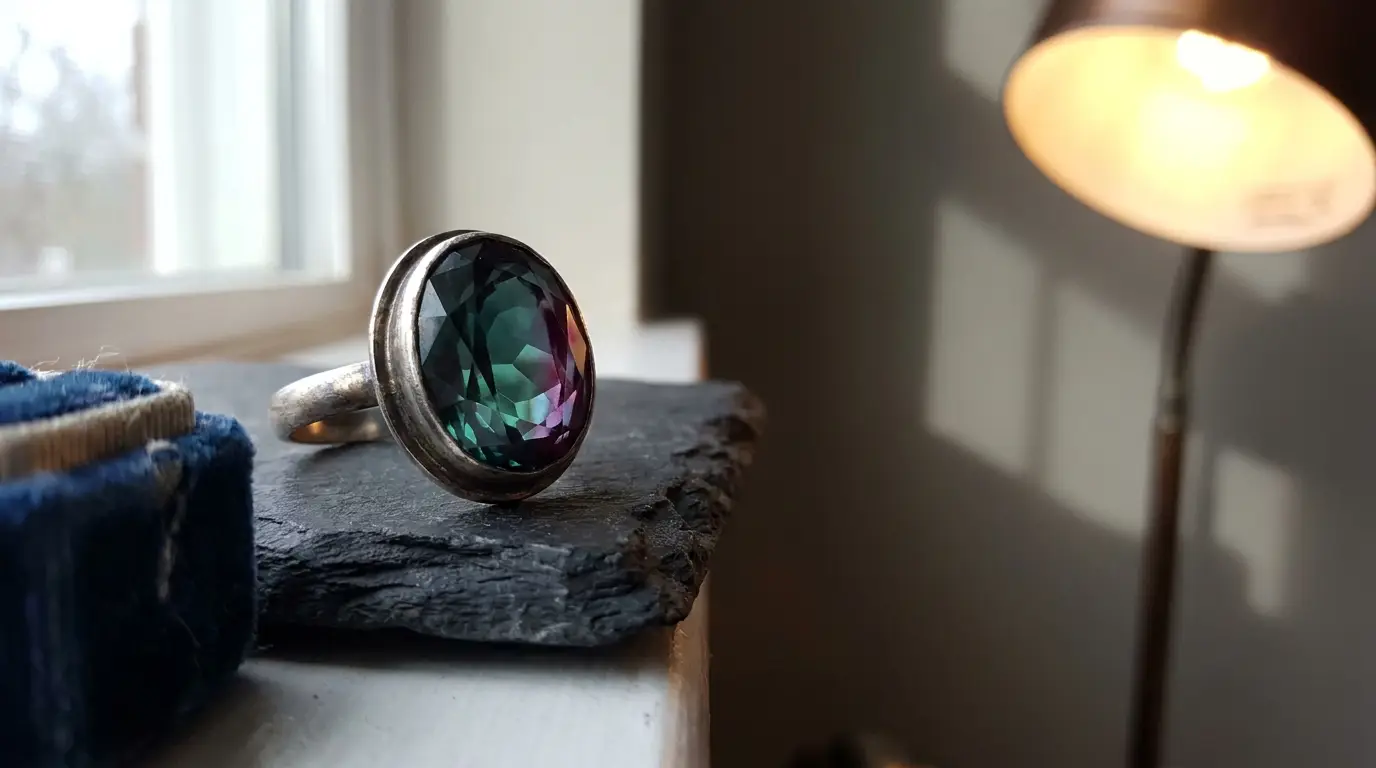
Not every piece of alexandrite will have a dramatic color change, and some alexandrites appear predominantly red throughout the day.
For someone who prefers unusual gemstone jewelry, this can be much more interesting than a colorless diamond with little apparent change from one lighting condition to another.
Does Alexandrite Sparkle Like a Diamond?
No, not particularly.
Alexandrite can be bright and appealing when it is cut well, but it does not have the same kind of brilliance or sparkle as a well-cut diamond.
It has other attractive features, but sparkle is not one of them.
This difference can actually be turned into an advantage.
For example, small diamonds surrounding the alexandrite in a three-stone ring or halo setting can provide the brilliance and sparkle while the alexandrite displays its beautiful color change.
Is Natural Alexandrite More Expensive Than Diamond?
Sometimes, but not always.
Fine natural alexandrite can be extremely valuable and rare, especially if the color change is particularly striking.
However, diamonds also vary significantly in price.
A diamond’s value depends on factors like carat weight, cut, color, clarity, and origin.
The same applies to alexandrite, but it places a bigger emphasis on the color change, color, clarity, size, and natural origin of the gemstone.
It does not make much sense to compare alexandrite and diamond by carat weight.
A one-carat alexandrite with exceptional color change can be much more valuable than another one-carat alexandrite with little or no color change.
The same goes for two diamonds of equal weight: they can vary significantly in price.
Natural vs. Lab-Grown Alexandrite and Diamond
Both gemstones are available in natural and lab-grown forms.
This makes for four broad categories of potential purchase:
Natural diamond: Formed naturally.
Lab-grown diamond: Essentially identical to natural diamond at the molecular level, but created artificially.
Natural alexandrite: Naturally occurring.
Lab-grown alexandrite: Artificially created.
The main difference is the origin of the gemstone.
Lab-grown gemstones can offer the same visual appeal as their natural counterparts without the limitations of rarity.
They tend to be more affordable than fine natural material, but the price will still depend on the characteristics of the individual gemstone.
For people who want natural rarity, it can be an important consideration.
On the other hand, people who want an unusual visual appeal do not have to settle for a smaller or less valuable natural gemstone just because it is more rare.
Which Gemstone Is Better for an Active Lifestyle?
Diamond has the edge when it comes to sheer scratch resistance.
Someone who works with their hands will likely value that kind of practical benefit.
However, no fine gemstone ring should be worn during every activity.
Even a diamond ring can be chipped if it is struck powerfully enough, and the metal setting can be damaged or worn.
As for both gemstones, it is best to avoid wearing a fine gemstone ring during weightlifting, construction work, gardening, and other demanding activities.
Alexandrite can still be a practical choice for an active wearer, but it should be removed whenever the opportunity presents itself.
Which Ring Settings Work Best for Alexandrite?
The setting should protect the gemstone while complementing its unique appearance.
Bezel Settings
A bezel setting surrounds the gemstone with metal, which protects the edges.
It can be a good choice for someone who expects to wear the ring in potentially hazardous conditions.
Prong Settings
Prongs hold the gemstone in place but allow more light to enter the gemstone while exposing more of its surface to potential impacts.
They should be considered carefully but can work well for certain styles if the vulnerable edges are protected.
Low-Profile Settings
A low-profile setting keeps the gemstone closer to the surface of the band.
This limits the distance the gemstone has to travel in order to reach another object, reducing the chance of impact damage.
Three-Stone Settings
The alexandrite can be paired with smaller diamonds or other gemstones in a three-stone design.
This works particularly well when contrasting the color-changing properties of the alexandrite with brighter, more traditional-looking diamonds or other accent gemstones.
For engagement rings, the security aspects of the setting should be balanced with its visual appeal.
Which Settings Work Best for Diamond Wedding Rings?
Diamond offers incredible design flexibility.
Some common options include solitaires, channel settings, pavé, bezels, and eternity rings.
For wedding bands that tend to feature multiple diamonds, the security of each individual gemstone is paramount.
Full-eternity designs place gemstones around the entire band, meaning the diamonds on the underside are constantly exposed to potential impacts.
Half-eternity styles leave some of the band bare, which might be preferable in some cases.
Diamond’s hardness is an advantage, but the metal and setting will determine how well the ring wears in everyday use.
How Does Metal Choice Affect Alexandrite and Diamond?
Metal color can have a major impact on the visual appeal of a ring with either gemstone.
Yellow gold offers warmth that can complement the cool colors of alexandrite in a striking contrast.
White gold offers a cooler appearance that works well with both colorless diamond and fancy-colored gemstones.
Rose gold can provide a nice contrast with purplish or reddish alexandrite.
Platinum offers a naturally white appearance and is frequently used for diamond bridal jewelry.
For alexandrite, it is important to consider how the metal interacts with the gemstone, since the gemstone’s appearance can change depending on the lighting.
There is no single best metal for either gemstone.
It will come down to the appearance of the individual gemstone and the desired style.
Is Alexandrite a Better Choice for a Unique Engagement Ring?
Alexandrite may have an advantage when it comes to a unique center stone.
Its unique properties and appearance will set it apart from more traditional colorless gemstones like diamond.
Fine natural alexandrite can also be exceptionally rare, especially in larger sizes with exceptional color-changing properties.
However, the value and appeal of a unique engagement ring will depend on more than the gemstone.
A unique diamond can also be had in a unique cut, setting, proportions, accent gemstones, or design.
Alexandrite offers the unique optical display of a color-changing gemstone, but diamond offers tremendous flexibility in its own right.
Does Alexandrite Have a Special Meaning?
Alexandrite is often associated with transformation, change, balance, and adaptability.
These themes align with the change in appearance that fine alexandrite undergoes depending on the lighting.
For engagement purposes, some people associate it with the way a relationship can evolve and grow.
Diamond is traditionally associated with love, but neither gemstone’s associations are scientific.
They are more a matter of personal interpretation.
The most meaningful choice is the one that appeals to the individual.
Which Gemstone Is Easier to Maintain?
Both require basic maintenance.
Diamond is more resistant to scratches, but it can look dull and dirty if it is not cleaned.
Alexandrite can also collect residue on the surface, which will affect the way it looks.
Warm water, mild soap, and a soft brush are suitable for cleaning most untreated gemstones that are mounted securely in jewelry settings.
The Gemological Institute of America notes that alexandrite has good toughness, no cleavage, and a Mohs hardness of 8.5. The alexandrite care and cleaning guidelines describe in further detail why this gemstone is a good candidate for jewelry, and how to care for it.
For both gemstones, it is best to avoid using ultrasonic or steam cleaning equipment on the complete ring unless the additional gemstones, treatments, and repairs are known to be compatible.
How Should You Choose Between Alexandrite and Diamond?
A good place to start is by considering five questions.
1. Is Maximum Durability Your Priority?
If maximum scratch resistance is your priority, go with diamond.
2. Do You Prefer Sparkle or Color?
Choose diamond for brilliance and sparkle and alexandrite for a unique change in color.
3. Does Natural Rarity Matter?
Fine alexandrite can be exceptionally rare, especially in larger sizes.
Diamonds vary significantly in terms of rarity as well, depending on their characteristics.
4. How Will You Wear the Ring?
Think about your activities and willingness to remove the ring during demanding tasks.
5. Which Gemstone Do You Actually Enjoy Looking At?
Specifying technical characteristics is an important step in choosing between alexandrite and diamond, but ultimately, the ring should appeal to the individual.
A gemstone that sounds appealing on paper is not always as enjoyable to look at in person.
Frequently Asked Questions
Is alexandrite better than diamond for engagement rings?
Neither gemstone is universally better, but diamond offers greater scratch resistance and brilliance. Alexandrite offers distinctive color change and the potential rarity of fine natural material.
Is alexandrite harder than diamond?
No, alexandrite has a Mohs hardness of 8.5, while diamond has a Mohs hardness of 10.
Can alexandrite be worn every day?
Yes, but it should be protected from impacts and set well.
Is natural alexandrite rarer than diamond?
Fine natural alexandrite can be exceptionally rare, but there is no single category that determines the overall rarity for either gemstone. Both alexandrite and diamond vary widely in terms of quality and value.
Does alexandrite lose its color-changing ability?
No, normal changes in lighting will not alter the inherent properties of the gemstone.
Is alexandrite more expensive than diamond?
It can be, especially when it comes to fine natural alexandrite. However, the two gemstones have vastly differing value spectrums.
Can alexandrite and diamonds be used together?
Yes, diamond accents can complement an alexandrite center stone.
Which gemstone is better for a wedding band?
Diamond is better in terms of overall scratch resistance, but alexandrite can also work well in certain designs.
Final Thoughts
Alexandrite and diamond are both viable choices for fine bridal jewelry, but they have clear advantages and disadvantages relative to one another.
Choose diamond if your priorities are maximum scratch resistance and the traditional brilliance of a well-cut gemstone.
Choose alexandrite if your priorities are distinctive color-changing properties and the rarity of fine natural material.
Alexandrite is durable enough for everyday ring wear, but it will not be as scratch-resistant as diamond.
The most important consideration should be how the gemstone appeals to the individual who will be wearing it.
An engagement or wedding ring should be chosen for more than a hardness rating or carat weight. It should appeal to the individual’s preferences, lifestyle, and appreciation for the gemstone itself.
For someone who prefers sparkle, diamond may remain the natural choice.
For someone who wants interesting gemstone that can appear to change color from green in daylight to purple or reddish in the evening, alexandrite has much to offer.