I used to think of sesame seeds as decoration. The little flecks on a bagel, the crunch on top of a takeout noodle box, the thing you brush off your sweater after lunch. Then a friend who grew up in Kerala watched me spend forty dollars on a hair serum and laughed. Her grandmother, she said, kept a jar of toasted black sesame by the stove and ate a spoonful most mornings. Her hair was still thick and dark well into her seventies.
That is one grandmother, not a clinical trial. But it got me curious, and after a few months of keeping my own jar on the counter, I have opinions. Here is what I learned about putting these tiny seeds into a daily routine, what they can reasonably do for skin, hair and energy, and where the hype gets ahead of the evidence.
Why a Seed Belongs in a Beauty Conversation
Most of what we put on our faces works on the outer layer. What we eat shapes the raw material underneath. Sesame seeds are small, but they carry a surprising amount: healthy fats, plant protein, fiber, and minerals like calcium, magnesium and iron. They also contain lignans and phytosterols, plant compounds with antioxidant activity that researchers keep studying.
In Ayurveda, the traditional Indian system of health, sesame is described as warming and nourishing. It is said to calm Vata, the dosha associated with dryness and restlessness, which is why it shows up so often in practices meant to soothe dry skin and frazzled nerves. The same texts note that too much can aggravate Pitta, the “heat” dosha, so people prone to acidity or rashes are told to go easy.
I like that framing because it is honest. Sesame is not a miracle. It is a food that suits some bodies more than others, and quantity matters.
Black or White: Picking Your Seed
Walk down the international aisle and you will usually find both. White sesame is mild and buttery, the one you know from hamburger buns and tahini. Black sesame tastes deeper and a little bitter, almost like dark chocolate that forgot the sugar.

Traditionally, black sesame gets the beauty reputation. It is the seed linked with healthy hair and with slowing premature graying, possibly because of its higher antioxidant content. I want to be careful here: that link comes mostly from tradition and early research, not from solid human studies showing gray hair reversing. If a spoonful of black sesame turned silver strands brown, the hair-dye industry would be in trouble.
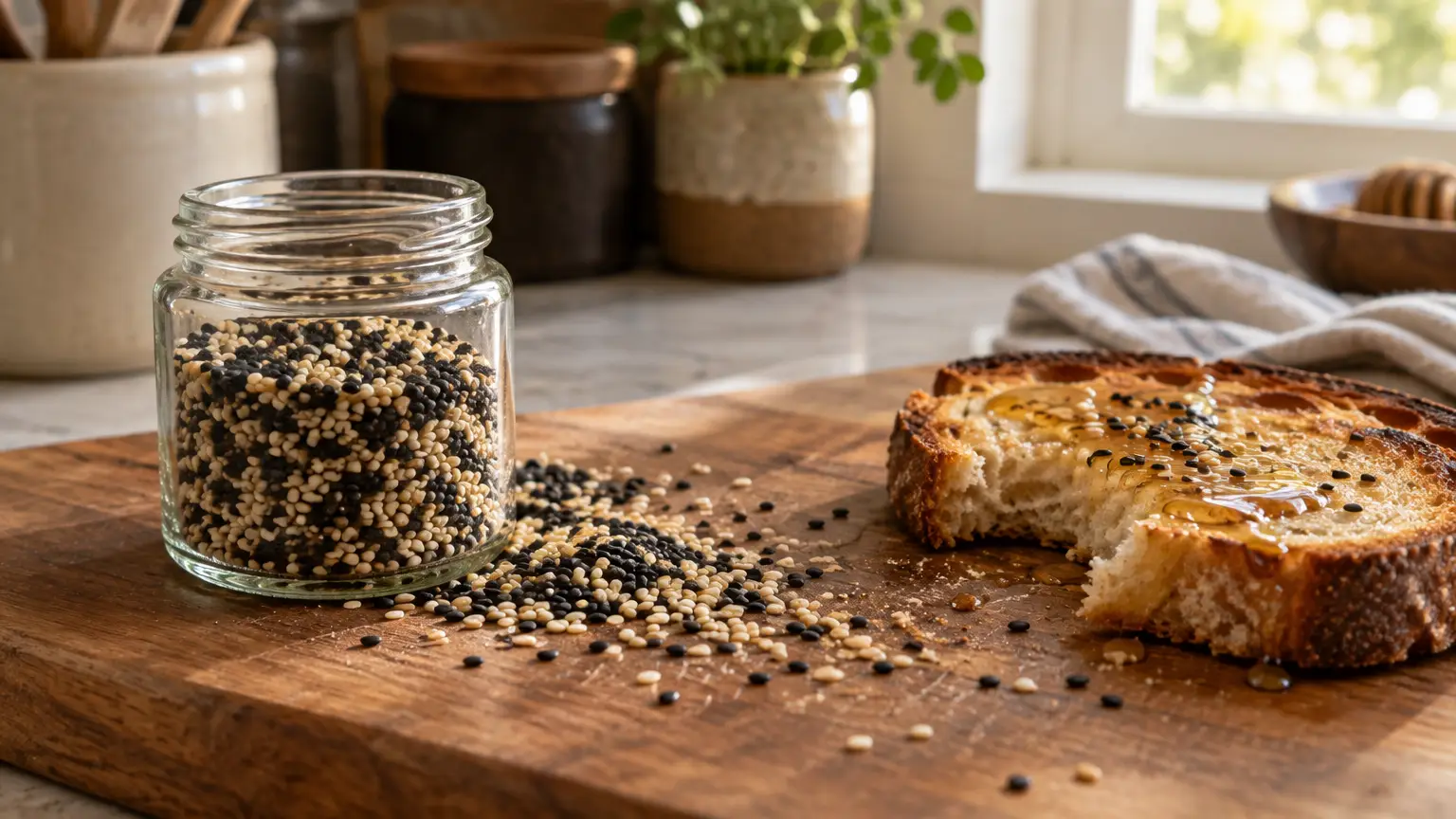
You do not have to choose, though. Mixing black and white together is perfectly fine and gives you a broader mix of flavor. I keep a jar that is roughly half and half, toasted together in one dry pan.
How I Actually Eat Them Every Day
The biggest surprise was how much preparation matters. Raw sesame seeds are edible, but they can taste bitter and some people find them hard to digest. Lightly roasting them releases their natural oils, makes them taste better and tends to sit easier on the stomach. Soaking them for a few hours or overnight softens the seeds and may help your body absorb more of what is inside. If you want a fuller breakdown of timing, raw versus roasted, and portion size, this guide on how to eat sesame seeds covers the details clearly and helped me stop guessing.
The amount most sources land on is about one to two tablespoons a day for an adult. That sounds tiny until you realize sesame is calorie-dense and high in fat, so more is not better. Consistency beats volume. A daily spoonful does more for a routine than a giant tahini binge once a month.
My rotation looks something like this:
- Morning: a tablespoon of soaked seeds blended into a banana and oat smoothie.
- Lunch: toasted white sesame over a cucumber salad with rice vinegar.
- Afternoon slump: a square of sesame brittle or a date rolled in black sesame.
- Evening: a drizzle of tahini on roasted sweet potato.
Some Ayurvedic practitioners suggest pairing the seeds with a little ghee or honey. I tried it with honey on toast and it tasted like something from a good bakery, so I am not complaining.
Skin, Hair and Energy: What to Expect, Honestly
Energy. This is where I noticed a change first, and it makes sense. Protein plus fat digests slowly, so a seed-heavy breakfast kept me fuller and steadier than toast with jam. Eating them in the morning for sustained energy is a common recommendation; some people prefer evenings, saying the grounding quality helps them wind down. Try both and see.
Skin. People who eat sesame regularly often report better skin texture, and the fats and minerals plausibly play a role. I would describe my own result as “less tight in winter,” which is modest but real to me. I also never stopped using sunscreen or moisturizer, and you should not either. Food supports skin; it does not replace basic care.
Hair. My hairdresser said my ends looked healthier after a few months. I also started using a silk pillowcase around the same time, so I cannot give the seeds all the credit. Treat any hair claim with a raised eyebrow, and if you are losing a lot of hair, see a doctor or dermatologist. Thinning can point to thyroid issues, iron deficiency or hormonal changes that no seed will fix.
There is also the outside-in route. Ayurveda has used warm sesame oil for centuries in self-massage, called abhyanga, and for oil pulling. A few drops warmed between your palms and pressed into dry elbows or shins before a shower feels lovely, and it is the least fussy ritual in my cabinet. Patch test first if your skin is reactive.
Who Should Slow Down or Skip It
Sesame is one of the major food allergens in the United States, and since 2023 it has had to be listed on food labels. If you have a sesame allergy, avoid the seeds, the oil and anything made with them. Reactions can be serious.
A few other groups should be thoughtful. If you have irritable bowel syndrome or a sensitive gut, the fiber and fat may cause bloating or gas, so start with a teaspoon. If you run hot, deal with acid reflux or get rashes easily, Ayurveda would say you are a Pitta type who should keep portions small. And if you are pregnant, managing a chronic condition or taking regular medication, talk to your doctor before adding larger amounts to your diet. Food can interact with health conditions in ways that are easy to overlook.
Overdoing it has its own signs: digestive discomfort, a few unwanted pounds from all that fat, or irritation if your system does not love the heat. Listen to your body and scale back if something feels off.
A Small Jar, a Small Habit
I like beauty habits that cost little and ask for nothing dramatic, and a jar of toasted sesame fits that perfectly. It will not erase wrinkles or rewrite your genetics. What it can do is add good fats, minerals and a satisfying crunch to meals you already eat, and maybe nudge your skin and energy in a nicer direction. Start with a spoonful, notice how you feel after a few weeks, and keep the serum if you love it. Your grandmother’s pantry and your bathroom shelf can get along just fine.