I used to think a wardrobe was just a box with a rail in it. Then I spent two years living with one that fought me every single morning. The doors swung into the bed, my long dresses crumpled at the bottom, and my shoes lived in a pile I pretended not to see. That experience taught me something I wish I had known sooner: the right wardrobe is not about what looks nice in a showroom. It is about how you actually live and dress.
So if you are about to choose a new one, grab a cup of tea and let’s walk through it together.
Why Planning Matters More Than You Think
A wardrobe is one of the few pieces of furniture you interact with every day, usually when you are half awake and in a hurry. When it works, you barely notice it. When it doesn’t, it quietly adds friction to every morning.
Planning first saves you from buying something that looks lovely but doesn’t suit your clothes, your room, or your routine. Before you browse a single catalogue, take an honest look at what you own and how you use it. Ask yourself:
- Do you mostly hang your clothes, or fold them?
- How many long pieces do you own, like coats, maxi dresses, or gowns?
- Where do your shoes, bags, and accessories currently end up?
- Is your room tight on space, or do you have a spare wall or even a small room to work with?
- Do you share the wardrobe with a partner?
- Are you likely to stay in this home for many years, or move in the next two or three?
Your answers will point you towards the right type far more reliably than any trend.
The Main Types of Wardrobes
Freestanding Wardrobes
These are the classic standalone pieces you can move from room to room. They are perfect for renters, first homes, or anyone who likes to rearrange often. The downside is that they rarely use the full height of a room, and the gap on top tends to collect dust and clutter.
Built-In Wardrobes
Built into a wall or alcove, these make the most of every centimetre, often running floor to ceiling. They feel seamless and calm, which suits minimalists and anyone with a small bedroom. They do need a bit more commitment, since they stay with the house.
Sliding Door Wardrobes
If your bedroom is compact or your bed sits close to the wardrobe, sliding doors are a lifesaver. No swing space needed. Mirrored panels can also make a small room feel brighter and larger.
Walk-In Wardrobes
The dream for fashion lovers. A walk-in gives you room to see everything at once, plan outfits, and store seasonal pieces properly. It does need floor space, though, and without good organisation it can turn into a very expensive storage room.
Open Wardrobes
Open rails and shelving suit people with curated, capsule-style collections who enjoy seeing their clothes on display. They are less forgiving if you own a lot or prefer a tidy, closed look.
Flat-Pack vs Designer Wardrobes: An Honest Comparison
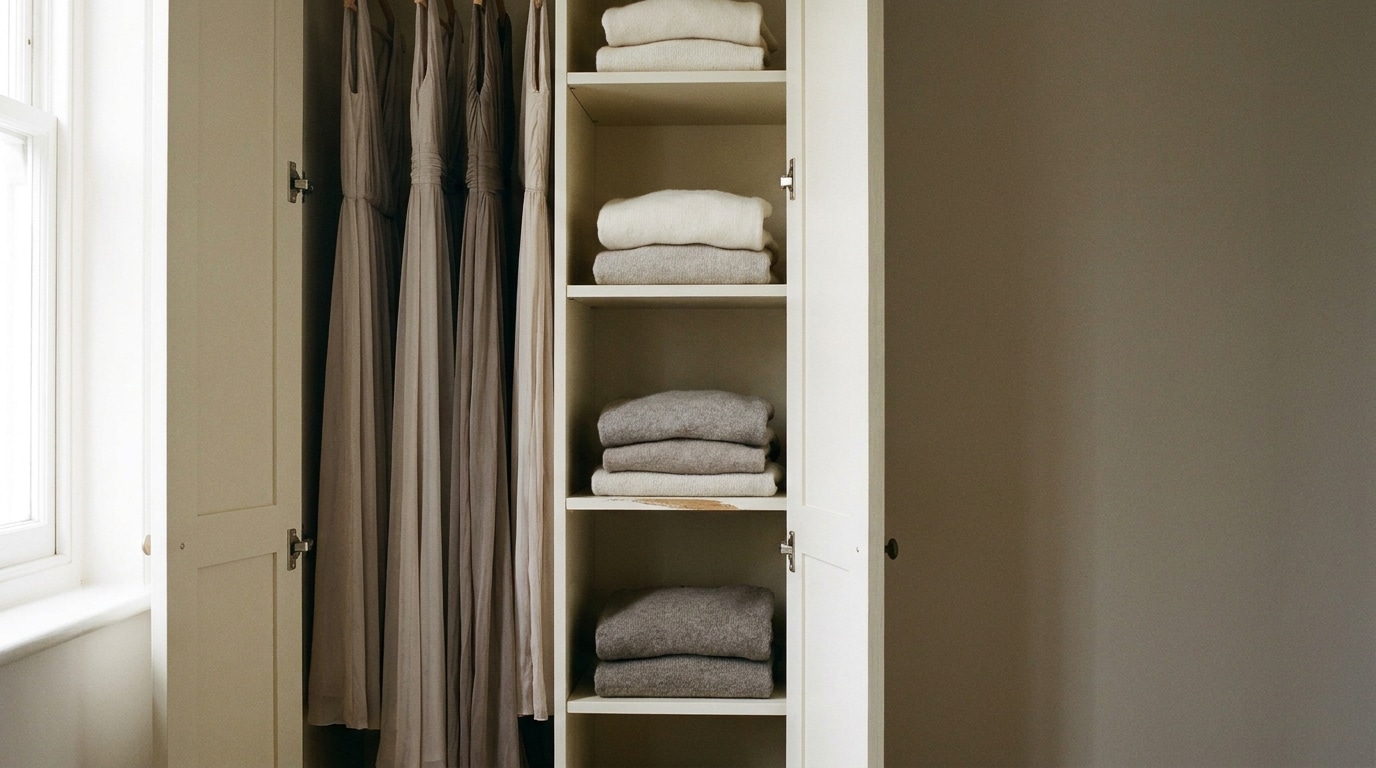
This is the question I get asked most. Should you go with an IKEA system or work with a wardrobe designer?
IKEA and other flat-pack options are wonderful for budget, speed, and flexibility. Systems like PAX let you mix and match frames, drawers, and inserts, and you can take them with you when you move. The trade-off is that you are working with standard sizes. Awkward ceilings, sloped walls, or unusual alcoves often leave gaps, and the finish, while decent, won’t feel bespoke. You will also need patience (and possibly a friend) for assembly.
Wardrobe designers start with your space and your habits rather than a catalogue. Everything is measured to fit, so you get full height storage, shelving spaced for your actual folded jumpers, and drawers exactly where you reach for them. Materials and finishes tend to be more durable, and the result can genuinely add value to your home. It costs more upfront and takes longer, but you are paying for something built around you.
A good friend of mine in New Zealand went through exactly this decision last year. She had a beautiful older villa with high ceilings and a slightly crooked bedroom wall that no flat-pack frame could handle. After a frustrating weekend of measuring, she decided to invest in a premium custom wardrobe in Auckland instead. When I visited, I was honestly a little jealous. Every shelf had a purpose, her evening dresses hung at full length, and the doors closed with that soft, satisfying hush.
She worked with Boston Wardrobes, and what struck her most was not the finished product but the conversation at the start. They asked how she gets ready in the morning, how much she folds versus hangs, and what she wanted to see first when the doors opened. That, to me, is the real difference. A designer plans with your life in mind.
So Which One Is Right for You?
If you rent, move often, or are working with a tight budget, a well-planned flat-pack system is a smart and stylish choice. If you own your home, have an unusual space, or simply want something that will serve you beautifully for years, a custom design is worth considering.
Whatever you choose, start with your lifestyle and your clothes, not the brochure. Your wardrobe should feel like it was made for you, because the best ones are.