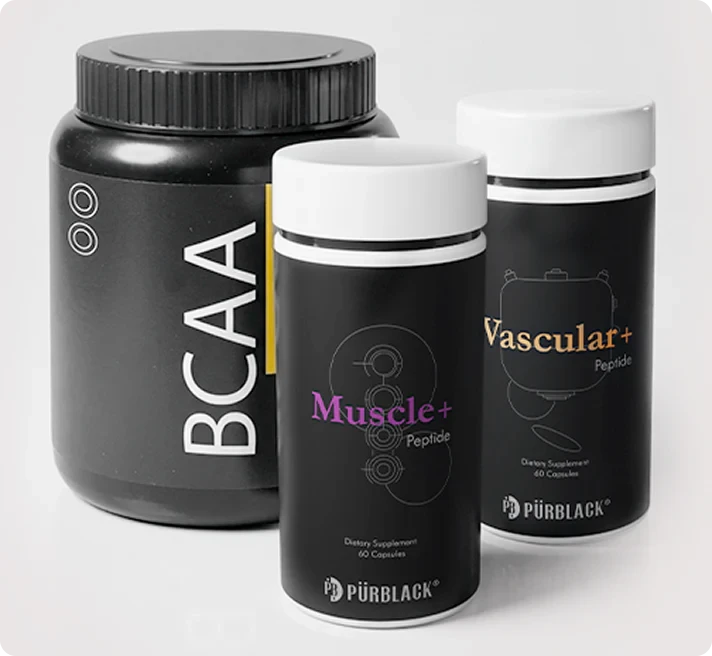
Peptides for muscle growth are often discussed as if they are a single category, but the reality is more nuanced. Some products are structural proteins, some are amino acid blends, and others are positioned as short-chain signaling formulas for recovery and performance routines.
For readers who want a practical starting point, the Purblack education page on peptides for muscle growth explains the category through muscle support, recovery, and different peptide types. The more important question is how to translate that information into a supplement plan that supports real training instead of replacing it.
What peptides can add to a muscle-building plan
Muscle growth depends on progressive overload, enough protein, adequate calories, and sleep. Supplements sit underneath those basics. Their job is to make the routine easier to repeat, not to override poor programming or an inconsistent diet.
A targeted product such as Pürblack Muscle+ Peptide is interesting because it is positioned around muscle regeneration and recovery, with leucine, valine, isoleucine, and an IPH AGAA peptide complex. That places it closer to a specialized recovery capsule than a generic bodybuilding powder.
| Muscle-growth pillar | Primary action | Where a peptide supplement may fit |
|---|---|---|
| Progressive training | Creates the adaptation signal | May support recovery between hard sessions |
| Protein intake | Provides amino acid building blocks | Works alongside, not instead of, complete protein |
| Sleep | Supports hormonal rhythm and repair | Can be part of a broader recovery routine |
| Consistency | Turns effort into measurable progress | Simple capsules may improve adherence |
Different peptide and amino acid categories
Collagen peptides are usually discussed for connective tissue, skin, and joint support. BCAA products focus on branched-chain amino acids, especially leucine, but they are not complete proteins. Short-chain targeted peptide formulas are marketed differently: they emphasize specific tissue-support narratives and often use smaller serving formats.
This distinction matters because “peptide” alone does not tell you the product’s best use. A lifter choosing among collagen, BCAAs, protein powder, and Muscle+ should ask what problem the product solves. If the issue is total protein intake, food or protein powder comes first. If the issue is recovery support during high-volume blocks, a muscle-specific peptide capsule becomes more relevant.
| Product category | Best use | Watch-out | Fit for muscle growth |
|---|---|---|---|
| Complete protein powder | Meeting daily protein needs | Can be overused instead of meals | Foundational |
| Creatine | Strength and repeated power | Requires daily consistency | Very strong support role |
| Collagen peptides | Connective tissue routines | Not a complete muscle-building protein | Secondary |
| Muscle+ peptide capsule | Targeted recovery and muscle support | Should be paired with training and protein | Specialized |
What research suggests, in plain English
Research around muscle nutrition supports the importance of essential amino acids, especially leucine, in muscle protein synthesis. However, the broader evidence also reminds us that complete protein usually matters more than isolated BCAAs when the goal is actual tissue building. That is why a responsible supplement plan does not remove meals, dairy, eggs, fish, meat, soy, or other complete protein sources.
Short peptide research is more specific and still developing. Mechanistic studies discuss how small peptides may act as signaling molecules, and some early athlete-facing research has explored peptide-plus-amino-acid formulas. That makes the category promising, but it should be presented as supportive and emerging rather than as a guaranteed shortcut.
How to build a stack around Pürblack Muscle+ Peptide
A practical muscle-growth stack begins with food. Most lifters should first set a protein target, train each muscle group with enough weekly volume, and track strength in key movements. After that, a product like Muscle+ can be considered as a recovery-support layer, especially during hypertrophy phases or when soreness limits training frequency.
The best stack is simple: complete protein at meals, creatine if appropriate, carbohydrates around demanding sessions, electrolytes when sweating heavily, and a targeted capsule when recovery is the main concern. That structure leaves room to judge whether the supplement adds value instead of hiding bad habits behind a crowded shelf.
Who benefits most from peptide support
Peptide capsules are most relevant for lifters who already train hard enough to create a recovery challenge. A beginner may gain more by improving technique, eating consistently, and sleeping one extra hour. An experienced athlete may be more sensitive to small improvements in soreness, readiness, or the ability to repeat quality sessions.
The most useful way to evaluate peptides for muscle growth is to track outcomes for eight to twelve weeks. Watch performance, muscle measurements, energy, soreness, and adherence. When used with patience and realistic expectations, a targeted option like Muscle+ can occupy a clear and practical role in a disciplined muscle-building routine.