Learning how to reseed a lawn starts with one decision: are you fixing thin spots or starting from scratch? Most people think reseeding means the same thing as overseeding, then wonder why their approach fails.
I’ve watched neighbors dump expensive seed on compacted dirt every spring, only to see the same bare patches by July.
This guide walks through the actual process, timing that matters, diagnosis before you waste money, prep work that makes the seed germinate, and watering schedules that keep it alive.
You’ll also learn why most attempts fail and how to avoid those mistakes.
Reseed vs Overseed: Which One Fixes your Lawn?
Here’s how I break it down: if your lawn is more than half weeds or bare dirt, I treat it as a full reseed. That means I’m starting over, killing what’s there, prepping the soil, and planting new grass from scratch.
It’s not a weekend project. When I reseed, I plan on multiple weekends and real work. Overseeding is what I do when a lawn looks thin or patchy but still has decent grass underneath.
I think of it like this: reseeding is rebuilding. Overseeding is filling gaps. Most people searching for how to reseed a lawn actually need a full renovation, not a quick touch-up.
And this difference really matters. If I choose the wrong path, I either waste money on seed that never takes, or I spend three weekends tearing up a lawn that only needed thickening.
Decision Checklist: Which Path to Follow
I use this quick checklist to decide what I’m actually dealing with.
Full Reseed Needed if:
- More than half the lawn is bare dirt or dead grass
- Weeds outnumber actual grass blades across most of the yard
- Large sections are completely dead with no recovery
- Previous overseeding attempts failed to fill in bare areas
Overseed Only If:
- Existing grass looks healthy, but thin or patchy
- Bare spots are small and scattered, not huge sections
- The lawn needs thickening from foot traffic or wear
- More than half the yard is still decent grass
How to Reseed Your Lawn
These steps are the same ones I follow for a full reseed. I’ll point out where I do things differently for overseeding so you don’t waste effort.
Tools and Materials you’ll Need
| Item | Cost estimate |
|---|---|
| Grass seed | $30-80 per bag (covers 1,000-2,500 sq ft) |
| Broadcast spreader | $25-50 (buy) or $15/day (rent) |
| Garden rake | $15-30 |
| Hose with sprinkler or irrigation system | $20-100 depending on setup |
| Core aerator | $40 – 300 |
| Dethatching rake | $10-35 |
| Lawn roller | $50-80 |
| Starter fertilizer | $20-40 per bag |
| Compost or topsoil | $8-15 per bag or bulk delivery |
Step 1: Figure out Why It Died and Fix It
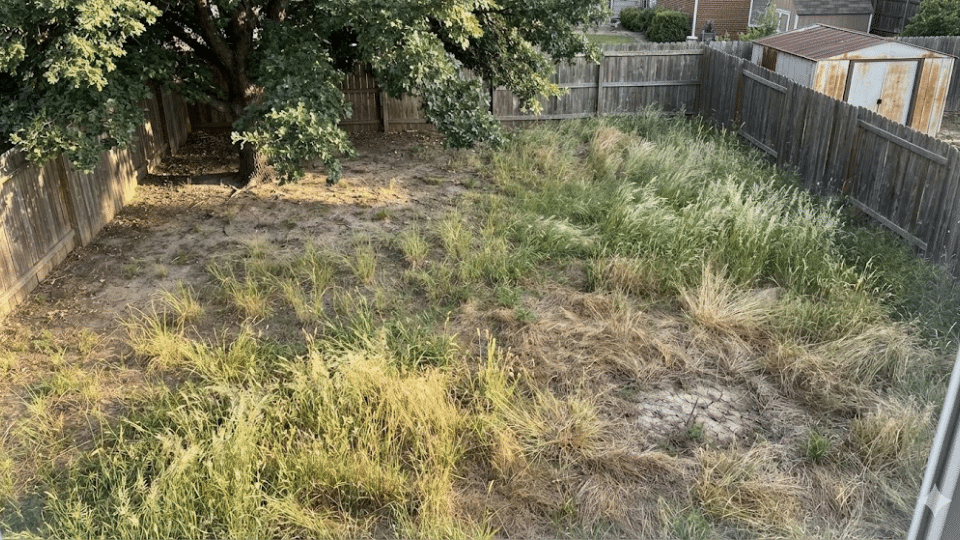
This is the step I never skip, because it’s where most people fail. If I don’t figure out why the lawn died in the first place, I’m basically reseeding into the same problem.
I like to get a soil test before I buy anything. It tells me the pH, nutrient levels, and what amendments I actually need, so I’m not guessing and wasting money.
Common Reasons Lawns Fail:
- Heavy shade (less than 4 hours of direct sun daily)
- Compacted soil from foot traffic or clay composition
- Poor drainage causing standing water or soggy spots
- Scalping grass too short with the mower (weakens roots)
- Dog urine spots killing patches repeatedly
- Heavy foot traffic from kids, pets, or shortcuts
I might skip the soil test if the existing grass looks healthy. But if the whole lawn is struggling, I test it—otherwise I’m treating symptoms, not the cause.
Step 2: Prep the Site
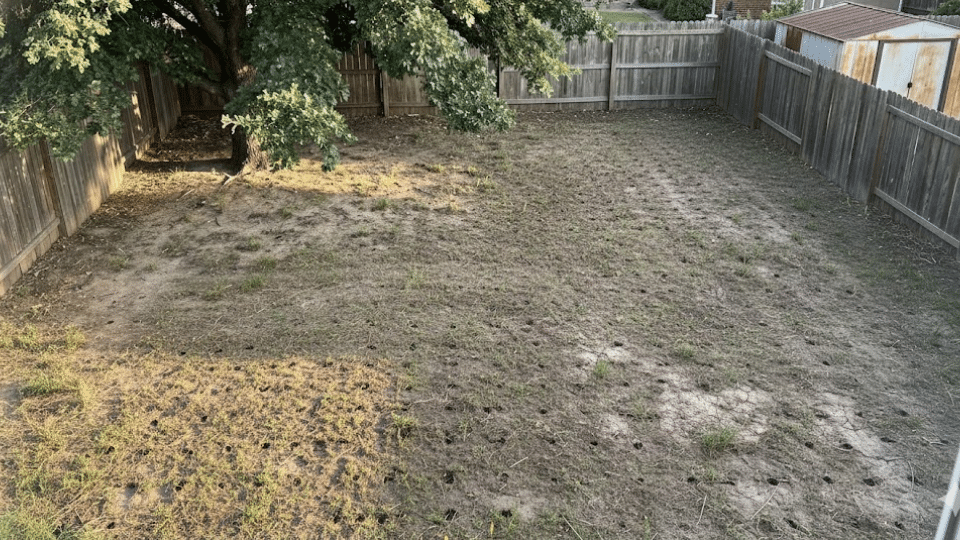
In my experience, reseeding fails most often because the seed never touches soil. It ends up sitting on matted grass or thatch, dries out, and does nothing.
Here’s what I do:
- I mow at the lowest setting and bag the clippings
- I clear debris so nothing blocks soil contact
- I rent a core aerator or use a dethatching rake to break up compaction and thatch
The goal I’m aiming for is simple: I want visible soil for the seed to grab onto. If my soil is poor, I add a thin 1/4-inch compost layer. I keep it thin because if I bury the seed, I can smother it.
I usually skip renting the aerator. I mow low, rough up bare spots with a hard rake, and make sure seed hits soil. I’m not rebuilding, I’m thickening.
Step 3: Choose and Spread the Right Seed
When I buy seed, I match it to my region:
- Cool-season (fescue, bluegrass, ryegrass) for the north
- Warm-season (Bermuda, zoysia) for the south
If I’m working around trees or buildings, I choose a shade mix. I also prefer blends because they help with disease resistance.
Before I buy, I check the label. I look for:
- 85%+ germination
- Under 0.5% weed seed
Here are the rates I use as a baseline:
- Tall fescue: 6-8 lbs per 1,000 sq ft
- Perennial rye: 8-10 lbs per 1,000 sq ft
- Kentucky bluegrass: 2-3 lbs per 1,000 sq ft
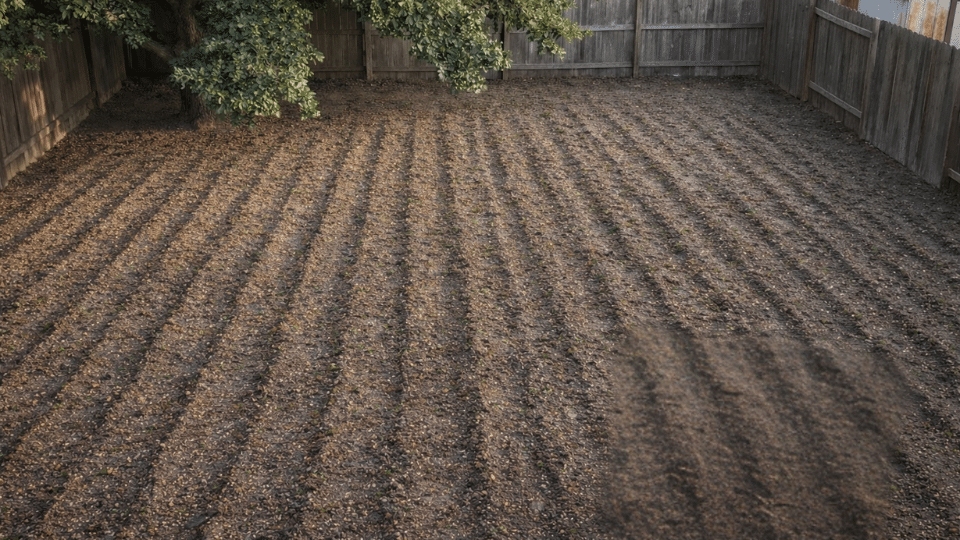
When I spread it, I do two passes, one direction, then perpendicular, to ensure even coverage. I lightly rake it into the top 1/8 inch, leaving soil visible, then walk or roll over it for solid seed contact.
I use half the seed rate listed for a new lawn. I’m filling gaps, not starting from scratch.
Step 4: Water and Aftercare
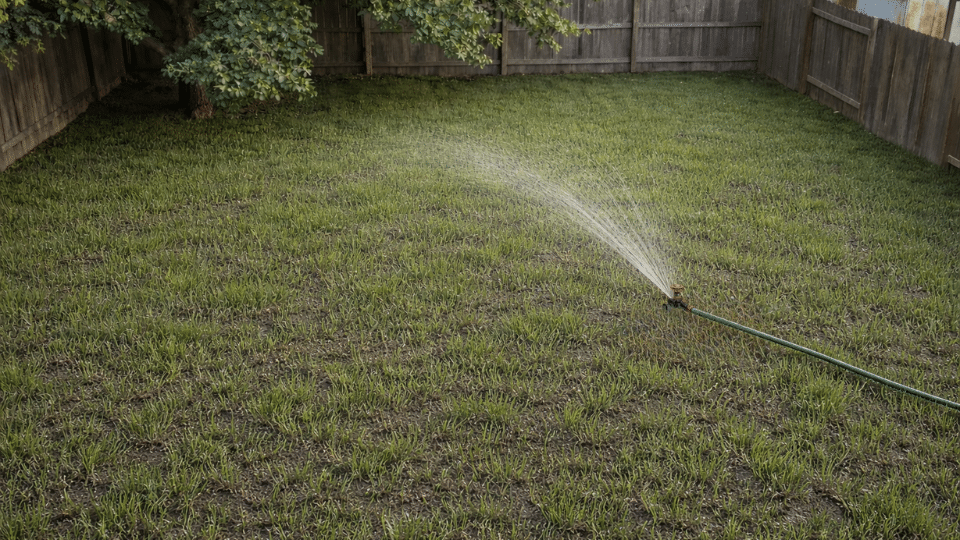
If there’s one thing I take seriously, it’s watering. In my opinion, watering is the make-or-break point for germination.
For the first 10-14 days, I keep the top half-inch moist with light watering 2-3 times daily:
- Early morning
- Midday
- Late afternoon (especially if it’s hot)
Once I see germination, I shift the plan. I start watering deeper but less often—once or twice daily, then every other day. That’s how I push roots to grow down instead of staying shallow.
I’ll be honest: I set phone alarms or use timers. Inconsistent watering is the #1 reason I see reseeding fail.
If I’m overseeding, I follow the same watering rules. New seed still needs consistent moisture, even if there’s older grass nearby.
Step 5: First Mow and What Not to Do
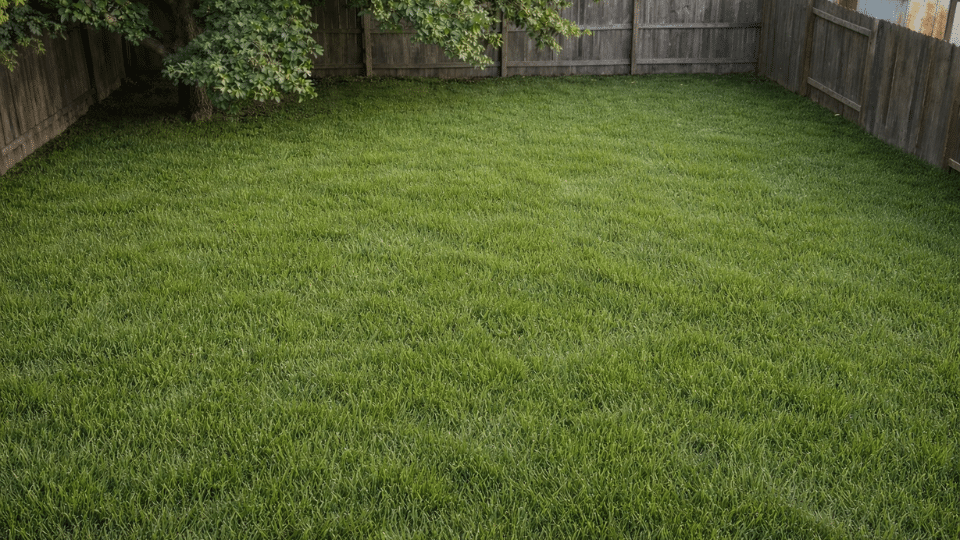
I wait until the new grass hits 3-4 inches before I mow (usually 3-4 weeks). Then I only cut off one-third of the blade height, and I bag the clippings so I don’t smother the seedlings.
Here’s what I do not do:
- I do not apply weed killer for 8-12 weeks (it can stunt or kill new grass)
- I do not fertilize unless I’m using starter fertilizer as part of my soil test plan
- I stay off the lawn for 4-6 weeks because foot traffic compacts soil and crushes new growth
What is the Correct Time to Reseed Your Lawn?
I don’t treat timing as optional. If I seed at the wrong time, I can do perfect prep work and still watch it fail.
1. Cool-season lawns: Late August to mid-September is your window
For cool-season grasses, I aim for late August through September (zones 3-6). I like this window because the soil is still warm, the air is cooling, and weeds aren’t as aggressive.
That gives the grass 6-8 weeks to establish before winter. Spring can work, but when I seed in spring, I expect more weed pressure.
2. Warm season lawns: Late spring to early summer
For warm-season grasses (zones 7-10), I target late May through early July. I want soil temps around 65-70°F, because that’s when these grasses grow hard and establish quickly.
I avoid sustained 90°F+ heat if I can, because seedlings get stressed and germination drops.
3. The non-negotiable timing rule
My rule is simple:
- Cool-season grass needs 6-8 weeks before hard frost to build roots
- Warm-season grass needs to avoid extended 90°F+ heat during early growth
If I miss those windows, I don’t gamble with expensive seed. I wait.
Common Issues and Quick Fixes
Even when I do everything “right,” problems can still pop up, usually in the first two weeks. Here’s what I look for and what I do fast.
- Seed washed away by rain or slopes: I use a thin straw mulch or an erosion blanket. I also adjust sprinklers so water doesn’t blast the seed downhill.
- Patchy germination: Usually, I’m dealing with poor seed-to-soil contact, inconsistent watering, or old seed. I spot reseed bare areas and fix the watering schedule immediately.
- Birds eating the seed: I cover it with lightweight netting or a thin layer of straw. I’ve found most loss happens in the first 3-5 days.
- Dogs or kids won’t stay off: I add barriers or flags. One walk-through won’t always kill it, but daily paths absolutely will.
- Grass growing in clumps: That’s usually my spread pattern. I spread more evenly next time and lightly rake or thin clumps once it hits 2 inches.
- New grass turning yellow or brown: It’s usually underwatering (most common) or overwatering that leads to fungus. I check soil moisture, the top inch should be damp, not soggy—then adjust.
Most problems happen early. When I catch them fast and fix the cause, I can save the lawn without starting over.
The Bottom Line
If you follow the steps on how to reseed a lawn correctly, you’ll see results in 2-3 weeks and a full lawn in 6-8 weeks.
The difference between success and failure comes down to timing, seed-to-soil contact, and consistent watering; skip any of these, and you’re gambling.
I’ve seen too many people restart this process three times because they rushed prep or forgot to water one hot afternoon.
Get your soil tested, pick the right window for your grass type, and commit to the watering schedule. Your lawn won’t fix itself, but it will respond if you give it what it needs. Drop a comment if something here helped or if you hit a snag.