Australian outdoor living areas should do more than look attractive. They need to provide enough shade during summer when needed. Getting this right is important. But you need to understand how your family plans to use the outdoor living area.
A properly planned outdoor area may also make a home more practical. For instance, a family considering affordable granny flats might need to rethink how shaded corners may serve different members in the household. Simple improvements to structures can’t just help create a useful space. They can also help preserve a sense of openness.
Starting With the Sun’s Daily Movement
Before you plant trees, observe where sunlight often falls throughout the day. Sun in the morning can suit a breakfast area.
According to Australia’s YourHome, you need to choose shades based on seasonal sun angles, local climate and building orientation.
Choosing Shade That Adapts to the Seasons
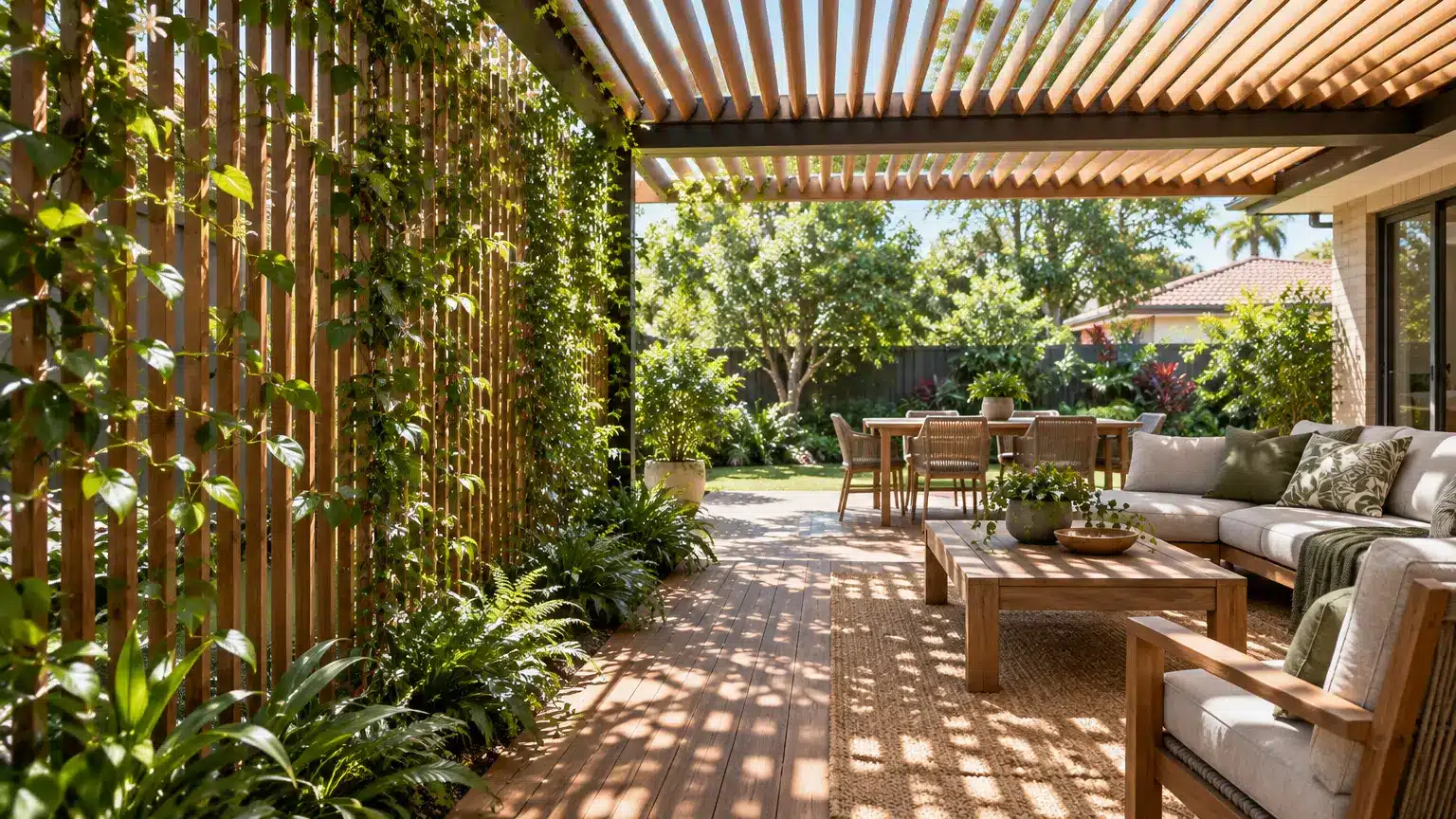
An installed roof can provide reliable protection. However, when positioned poorly, it can block important winter sunlight. This is why you need to consider adjustable louvres and retractable awnings. They will provide more control when there are weather changes. Effective shading is capable of blocking 90% of solar heat. But the result depends on the conditions and design.
Trees offer another option, especially when an Australian homeowner wants shade without covering an entire yard. Deciduous varieties don’t just offer summer protection. They also allow enough sunlight throughout the winter. Before you plant trees, consider factors, like the following:
- Root spread
- The distance from underground services, paths and buildings
- Mature height
Protecting Privacy without Losing Natural Light
Privacy becomes more difficult to manage. This is true, especially when neighbouring homes overlook a backyard. Solid fencing can block unwanted views. But it may also reduce natural light and make smaller spaces feel enclosed. Combining partially screened fences with thoughtful wardrobe storage solutions indoors comes in handy. It won’t just help keep outdoor areas uncluttered. It will also maintain a practical, cohesive home design.
For instance, vertical slatted screens won’t just interrupt direct sightlines. They will also allow filtered light to pass through. Usually, climbing plants soften these screens. However, dense foliage might require regular pruning so as to avoid excessive shade.
Do Not Overlook UV Protection
Shade plays a crucial role in making an outdoor area safer to use. About 55.6% of people who spend over 10 minutes outdoors during summer spend time in the shade. Unfortunately, shade alone can’t eliminate UV exposure. This is because sunlight reflects off nearby surfaces.
To ensure better protection, consider using a shade structure. Don’t just combine this with sunscreen and a hat. Combine it with protective clothing, too. These steps help make an outdoor space more comfortable.
Creating a Space That Works All Year
Balancing privacy and shade in Australia doesn’t require you to cover every part of your backyard. Start with an area where your family gathers. Then, add adjustable shade where needed. By considering neighbouring sightlines, you can create an outdoor living area that feels comfortable throughout the year.