The first Maileg mouse I bought was for my daughter. The second was for me, and I hid it in a drawer like contraband. That’s the honest version of how most adult collections start, and I’m not embarrassed about it anymore.
These are small, soft, slightly odd-looking figures from Denmark, and they’ve quietly become one of the most collected toy lines in the nursery world. If you’re here because a shelf caught your eye, or because you keep adding animals to a cart and talking yourself out of it, this guide is for you. I’ll cover what the line actually is, how collections form, and how to buy without turning your living room into a warehouse.
You can browse the full range at Maileg if you want to see the shapes and scales side by side before reading further. Seeing a mouse next to a bunny next to a dollhouse explains more than any paragraph can.
What Is Maileg, Exactly?
Maileg is a Danish toy company known for cloth mice, rabbits, and the miniature worlds built around them. The figures have long limbs, embroidered faces, and a slightly vintage look, like something pulled from a 1950s attic. Some come with matchbox beds. Some arrive in metal tins. A few have furniture scaled to their own bodies.
What separates them from a standard plush toy is intent. These are designed as small characters with homes rather than as single stuffed objects. You buy a mouse, then you notice the mouse has a bed, then the bed belongs in a house. That progression is the whole business model, and it works because each step feels like a discovery rather than an upsell.
I’d argue the design philosophy owes more to Scandinavian craft tradition than to modern toy manufacturing. The embroidery is done by hand on many pieces, which matters when you’re deciding whether a figure is worth the price. You’re paying for labor and detail, not volume.
Why Grown-Ups End Up With a Shelf Full
Ask ten adult collectors why they started and you’ll get ten different answers. A few themes show up constantly.
- They bought one for a child and liked it more than the child did.
- They wanted a nursery decoration that would outlast the baby phase.
- They collect miniatures of any kind and this line fit the shelf.
- They saw a holiday set in a store window and never recovered.
The common thread is that these toys photograph beautifully and live comfortably in adult spaces. A row of small mice on a bookshelf doesn’t read as a children’s item. It reads as a collection, which is a different thing entirely.
Here’s my personal take, and you’re welcome to disagree: the adult appeal is nostalgia with better materials. Most of us had a plush toy we loved to pieces. This line offers that same comfort, but built well enough that it survives the affection.
How to Start a Collection without Going Broke
The biggest mistake new collectors make is buying broadly instead of deeply. It’s easy to add fifteen different animals in a month and end up with a pile that has no shape.
Pick a focus first. That could be a single species, one seasonal theme, or one scale of dollhouse. Then buy slowly and let the collection earn its next piece. I’d choose one character family and build outward, because a tight group looks intentional and a scattered one looks like a shopping habit.
Second, decide where it lives before you buy it. Measure the shelf. A dollhouse needs more room than you think, and a row of mice in matchboxes needs almost none. Knowing your footprint prevents the slow creep of clutter that turns a collection into a problem.
A Short Buying Checklist
- Choose your focus and write it down.
- Measure the shelf or display space you actually have.
- Check whether the piece is part of a set or sold alone.
- Confirm the scale if you plan to mix figures and furniture.
- Buy the one you keep returning to, not the one on sale.
That last point matters more than it sounds. Discounted items have a way of colonizing a collection with things you never wanted. I’ve made that mistake with other hobbies and I regret every purchase I made just because the price was good.
Display Ideas That Don’t Look Like a Toy Store
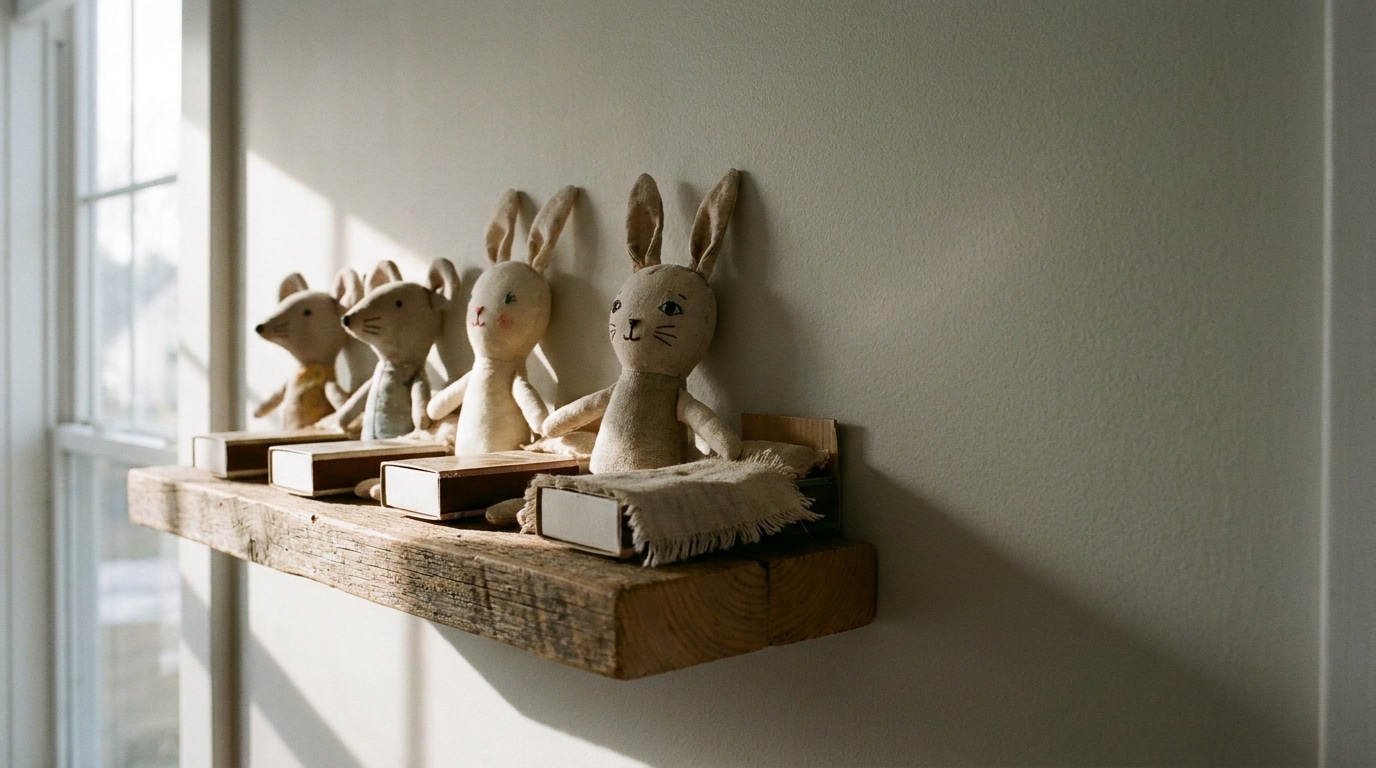
You don’t need a dedicated room. A few approaches work well for adult spaces.
Use a shallow floating shelf at eye level so the figures read as objects rather than clutter. Group by story instead of by type, so one corner holds a family in a house and another holds a single traveler with a suitcase. Leave empty space between groups, because negative space is what makes a shelf look curated. If you have a glass cabinet, treat it like a museum case and rotate what’s inside each season.
Lighting is the detail most people skip. A small clip light aimed across the figures brings out the embroidery and makes the whole arrangement feel deliberate. It costs less than another doll and does more for the display.
The impulse to buy miniature furniture and dollhouse components for play predates the modern toy industry by centuries, and institutions like the Library of Congress hold collections that document how long people have been building tiny domestic worlds. Your shelf is part of a much older habit.
What About Kids?
These toys are made to be played with, and the company designs them for children as much as for collectors. That dual life is part of the charm, but it creates a practical tension.
If a child is going to handle the figures, decide early which pieces are theirs and which are yours. I keep the small accessories, the tiny metal tins, and anything with loose parts out of reach, and I let the larger animals take real wear. A scuffed rabbit that a kid dragged around for three years has more value to me than a pristine one in a box, though I know collectors who’d disagree.
Play itself is a serious business in childhood development, and UNESCO has long treated access to play as a fundamental part of a child’s early years. So the worn-in version isn’t a compromise. It’s the point.
Where to Buy and What to Watch For
Buy from retailers that specialize in this line rather than general marketplaces, because fakes exist and scale information gets lost on resale listings. Check whether a listing shows the item beside a familiar object, or states dimensions outright. Ask about the year of a design if you’re trying to match something you already own, since older styles circulate on the secondary market at unpredictable prices.
For gifts, a single figure with its own small bed makes a stronger impression than a bundle of loose animals. It tells a story the moment it’s unwrapped, which is what people remember.
If you’re new to all of this, resist the urge to buy a full set at once. Start with one character and one piece of furniture, live with them for a month, and see how you feel. Collections that grow slowly tend to stay loved. Collections built in a single checkout spree tend to get boxed up.
So here’s the question worth sitting with: what would you actually put on the shelf if nobody was watching? Start there, buy the odd little mouse that made you smile, and let the rest arrive when it’s ready. Your future self will thank you for the restraint.