There’s something about living in the desert that changes your relationship with your home. You can’t ignore the environment the way you might somewhere more forgiving. The sun is relentless, the air pulls moisture from everything, and the dust finds its way into corners you forgot existed.
After a while, you stop fighting those things and start building your home life around them instead. That shift – from resisting the desert to adapting to it – is what’s changing how people who live here actually take care of their homes.
Learning to Work With the Climate
Coachella Valley Plumbing KC’s is one example of a local service that has adapted entirely around what desert homes actually need – because desert homes need different things.
The plumbing problems, the maintenance rhythms, the materials that hold up and the ones that don’t – all of it looks different here than in a more temperate climate, and the people who live and work here know it.
One of the first things you learn in a desert home is that water is precious in a way that genuinely changes your habits. Hard water from mineral-heavy local sources leaves deposits on everything – faucets, showerheads, the inside of your kettle.
Pipes that run through exterior walls or attic spaces get tested by temperature swings that would surprise most people: freezing cold at night in winter, scorching through the wall in August. You start paying attention to things you never thought about before.
The dust is its own education. After the first haboob blows through, you understand why desert-experienced homeowners seal their windows differently, why weather stripping matters, and why a good air filter needs changing far more often than the manufacturer’s label suggests.
The fine particles that come through in a dust storm aren’t just annoying – they work their way into HVAC systems, clog filters faster than anyone anticipates, and settle into the kinds of places that cause long-term problems if you’re not on top of them.
What desert conditions demand of a home’s systems year-round:
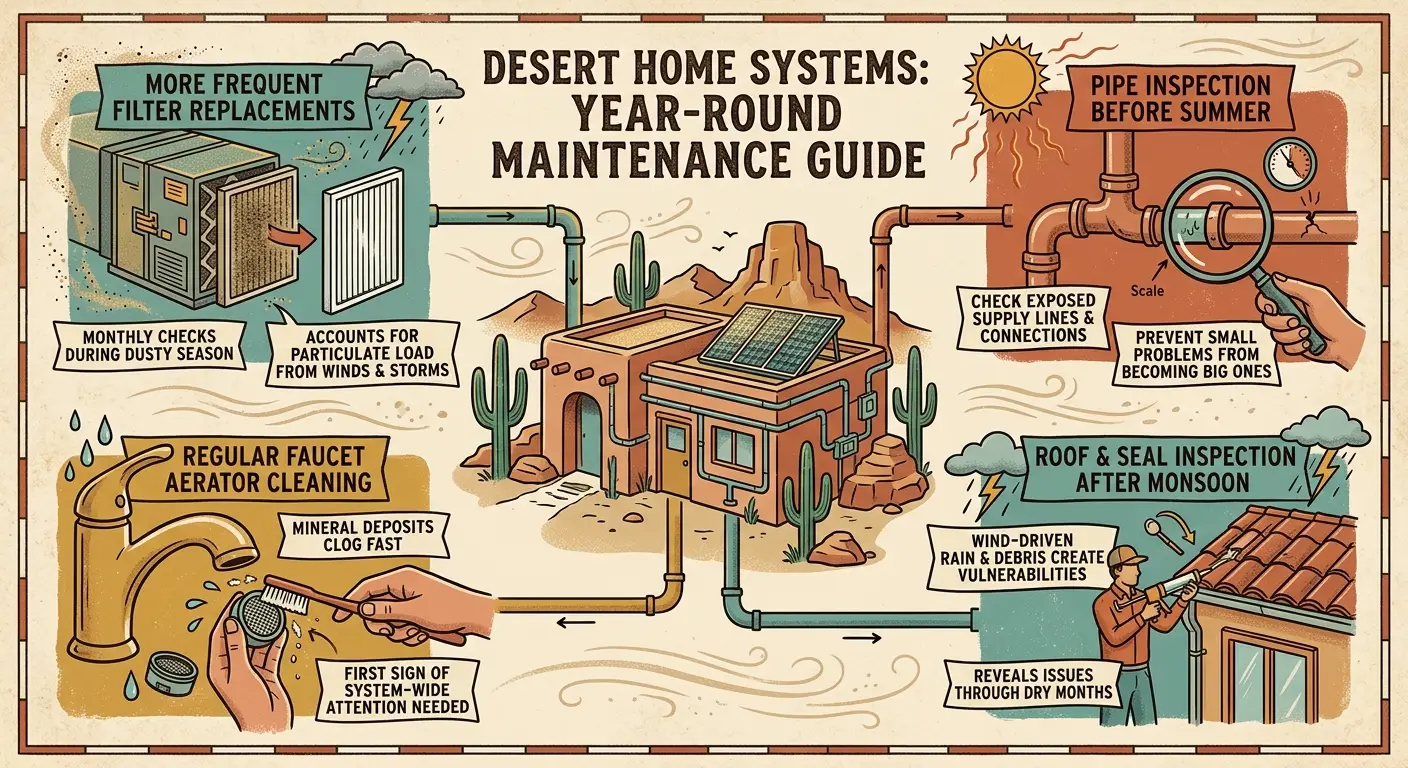
- More frequent filter replacements – standard HVAC filter schedules don’t account for the particulate load that comes with regular desert winds and storm events; monthly checks during dusty season are the norm for attentive homeowners
- Pipe inspection before summer – the combination of thermal expansion from extreme heat and hard water scale buildup means checking exposed supply lines and connections before peak season catches problems when they’re still small
- Regular faucet aerator cleaning – mineral deposits clog aerators faster in hard water areas, and a restricted aerator is often the first sign that your whole system needs attention
- Roof and seal inspection after monsoon season – wind-driven rain and debris create vulnerabilities in roofing and exterior seals that reveal themselves through the following dry months
The Way Outdoor Spaces Have Changed
Gardens and outdoor spaces in desert communities have been through a quiet transformation over the past decade. The traditional lawn – green, thirsty, and completely out of place – has been giving way to something that actually belongs here.
Desert landscaping, or xeriscaping done thoughtfully, isn’t just about reducing water use. It’s about creating an outdoor space that feels like it grew from the same ground your house sits on.
Native plants, gravel paths, decomposed granite, shade structures built around how the sun actually moves – these choices make outdoor spaces more livable while requiring significantly less water.
People who’ve made the switch tend to describe the same experience: the new garden requires less ongoing work, holds up better through summer, and feels more connected to where they actually live. Done well, desert landscaping has texture, color that shifts through the seasons, and a quiet beauty that grows on you.
What’s driving the shift toward desert-adapted outdoor spaces:
- Water rate structures – tiered pricing that penalizes high usage makes a lawn a visible monthly cost in a way it wasn’t before
- Drought consciousness – regional water conversations have made conservation feel less like a sacrifice and more like being a good neighbor
- Low-maintenance appeal – life in the desert is already demanding on a home; outdoor spaces that don’t need constant watering and weekly mowing free up real time and money
- Aesthetic shift – desert-native plants and landscaping styles have found a moment in wider design culture, making the choice feel current rather than like settling
Interior Adjustments That Accumulate
Inside the home, desert living nudges you toward certain choices that aren’t always obvious until you’ve been through a summer or two. Light-blocking window treatments become non-negotiable.
Ceiling fans run more months of the year than you’d expect. The materials you choose for furniture and flooring start to matter more when handling temperature swings and dry air.
Humidity levels in desert homes drop low enough in dry months that wood furniture cracks, houseplants need much more attention, and your skin tells you immediately that something needs adjusting. People who’ve lived here a while often run whole-house humidifiers through the dry season.
The best desert homes aren’t fighting where they are – they’re designed around it, carefully maintained with it in mind, and lived in with an awareness of what the environment asks.
That awareness, once it becomes a habit, stops feeling like extra work. It starts feeling like the natural way to live in a place that’s genuinely worth living in.