More families are replacing short car trips with something quieter, cheaper, and a lot more fun: the electric bike. Whether you’re doing the school run, hauling groceries, or heading out for a weekend ride with the kids, finding the best electric bike for family use comes down to a few key factors: how many riders you need to carry, where you’ll ride, and how much cargo your daily routine involves. This guide walks through the types, the features that matter, and the questions to ask before you buy.
Why Families Are Switching to E-Bikes
A regular bike works well for a solo commute, but add a child seat, a backpack, and a hill, and it gets tiring fast. An electric motor takes the strain out of the extra weight, so parents can carry kids and gear without arriving exhausted.
The practical benefits add up quickly:
- Lower running costs. Charging an e-bike costs a few cents, compared to fuel, parking, and maintenance for a second car.
- Faster short trips. In town, an e-bike often beats a car door to door because you skip traffic and parking.
- Time outdoors together. Kids get fresh air and see the neighborhood instead of a screen in the back seat.
- Less stress on hills. Pedal assist flattens out climbs that would otherwise make you get off and push.
Types of Family Electric Bikes
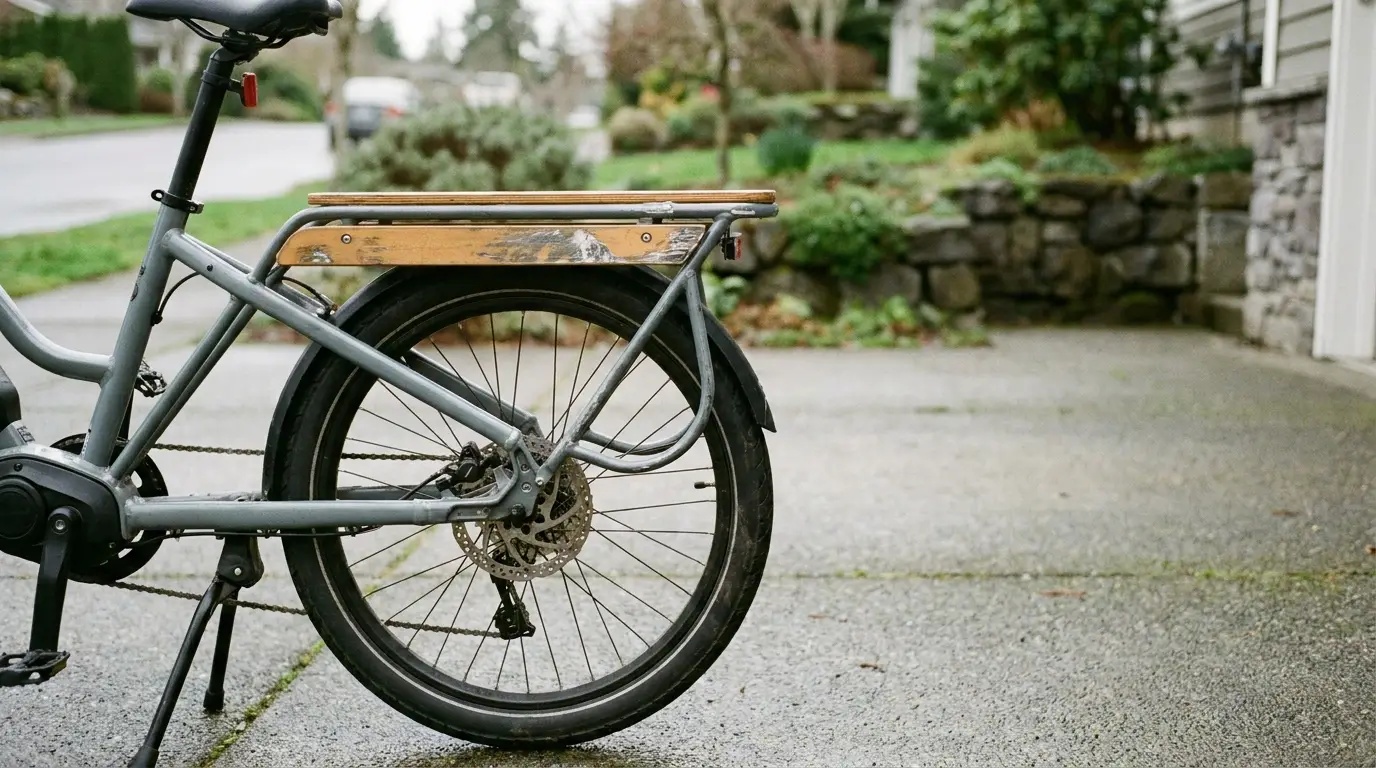
Longtail Cargo E-Bikes: Longtails have an extended rear rack that can carry one or two child seats, a bench with handrails, or large panniers. They ride much like a standard bike, which makes them easy to learn, and they fit through most doorways and bike racks. For families with one or two young children, a longtail is often the most versatile choice.
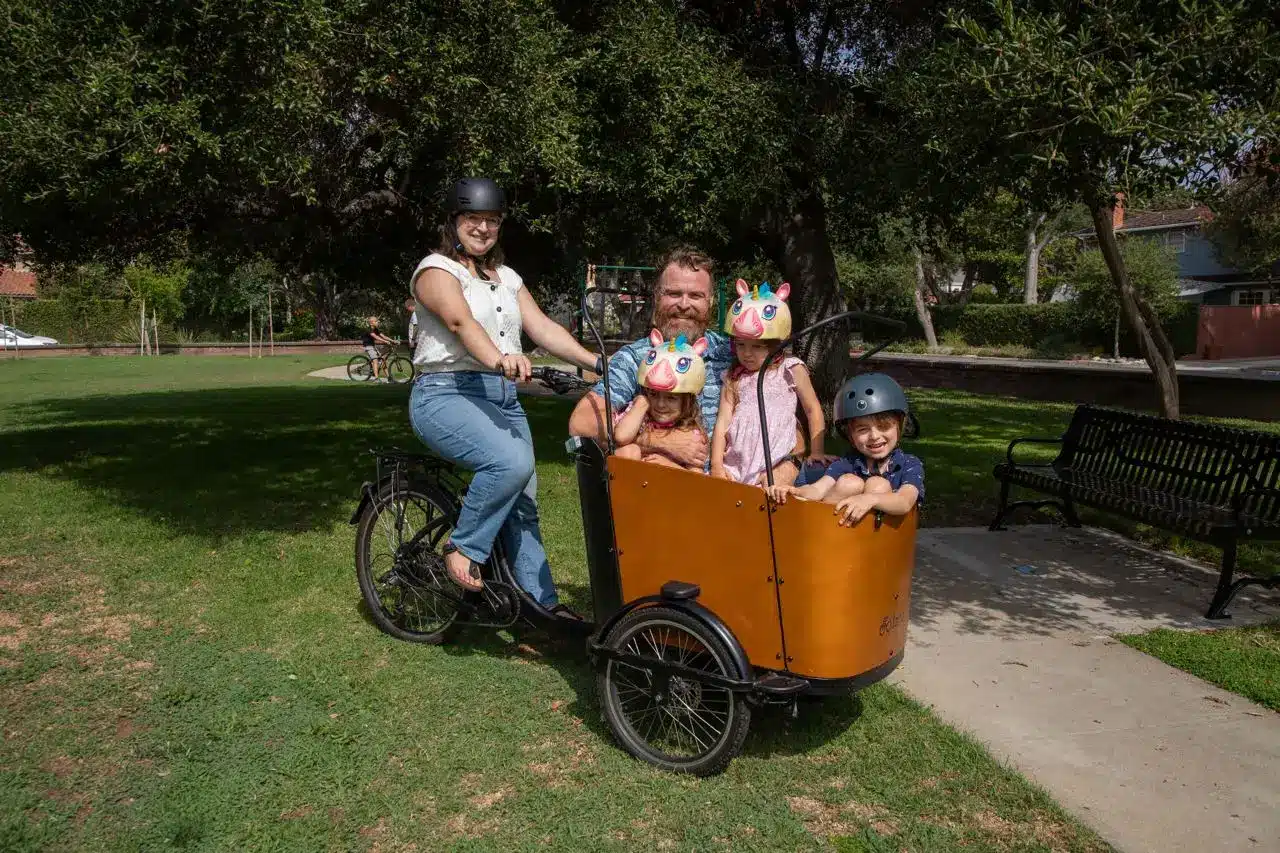
Front-Loading Cargo E-Bikes (Box Bikes): These have a large box or bucket between the rider and the front wheel. Kids sit in front where you can see and talk to them, and the box doubles as storage for groceries, sports gear, or even a pet. They are longer and heavier, so they need more storage space, but nothing beats them for carrying capacity.
Electric Tricycles: Three-wheeled e-bikes are stable at low speeds and when stopped, which makes them a good fit for riders who feel less confident on two wheels or for families who carry heavy loads. They take up more room on the road and in the garage, but balance is never an issue.
Commuter E-Bikes with Child Seat Mounts: If you only occasionally carry a child, a sturdy commuter e-bike with a rear rack rated for a child seat may be enough. It’s lighter and cheaper than a dedicated cargo bike, though it has less room for growth as kids get bigger.
Kids’ and Teen E-Bikes: For older children who want to ride alongside you, smaller-framed e-bikes with lower speed limits let the whole family ride at the same pace. Check local rules first, since some areas restrict e-bike use by age.
Key Features to Look For
Motor Type and Power
E-bikes use either a hub motor (in the wheel) or a mid-drive motor (at the pedals). Hub motors are simpler and usually less expensive. Mid-drive motors use the bike’s gears, which gives better efficiency and stronger climbing, a real advantage when carrying kids up hills.
Battery Range
Range depends on battery capacity, rider weight, cargo, terrain, and assist level. A loaded cargo bike uses more energy than a solo ride, so look at the realistic range under load, not just the headline number. Some family bikes support a second battery for longer days.
Payload Capacity
This is the total weight the bike can safely carry, including the rider, passengers, and cargo. Add up your weight, your kids’ weight, and a typical shopping load, then leave a margin. Kids grow fast, so plan for where they’ll be in two or three years.
Brakes
Hydraulic disc brakes are strongly recommended on any family e-bike. They provide consistent stopping power in wet weather and with heavy loads, and they need less hand strength than mechanical brakes.
Frame Design
A step-through frame makes getting on and off much easier, especially with a child on the back. A low center of gravity also helps the bike feel stable when loaded.
Accessories and Safety Gear
Look for integrated lights, fenders, a strong double-leg kickstand, and compatibility with child seats, footrests, and handlebar guards. A sturdy kickstand matters more than people expect: it keeps the bike upright while you load wriggling kids.
Understanding E-Bike Classes
In the US, most states use a three-class system:
- Class 1: Pedal assist only, up to 20 mph.
- Class 2: Pedal assist plus a throttle, up to 20 mph.
- Class 3: Pedal assist up to 28 mph, often with age limits and restrictions on certain paths.
For family riding, Class 1 and Class 2 bikes are usually the best fit. They’re allowed on more bike paths and trails, and 20 mph is plenty fast with children aboard. A throttle can be handy for getting started from a stop with a heavy load.
Safety Tips for Riding with Kids
- Helmets for everyone. No exceptions, including the youngest passengers.
- Practice before you load up. Ride the bike empty, then with cargo, before adding a child.
- Start in a low assist mode. It makes starts smoother and more predictable.
- Choose your route. Bike lanes and quiet residential streets are far less stressful than busy roads.
- Be visible. Use front and rear lights, even during the day, and consider a bright flag on cargo bikes.
- Check the bike regularly. Brakes, tire pressure, and bolts on child seats should be inspected often.
How Much Does a Family E-Bike Cost?
Prices vary widely. Entry-level commuter e-bikes that can take a child seat start at the lower end of the market, while well-built longtails and front-loaders cost more, and premium cargo models with mid-drive motors and dual batteries sit at the top. It helps to think of the purchase as a partial car replacement: if an e-bike handles most of your short trips, the savings on fuel, parking, and maintenance can offset the cost over a few years.