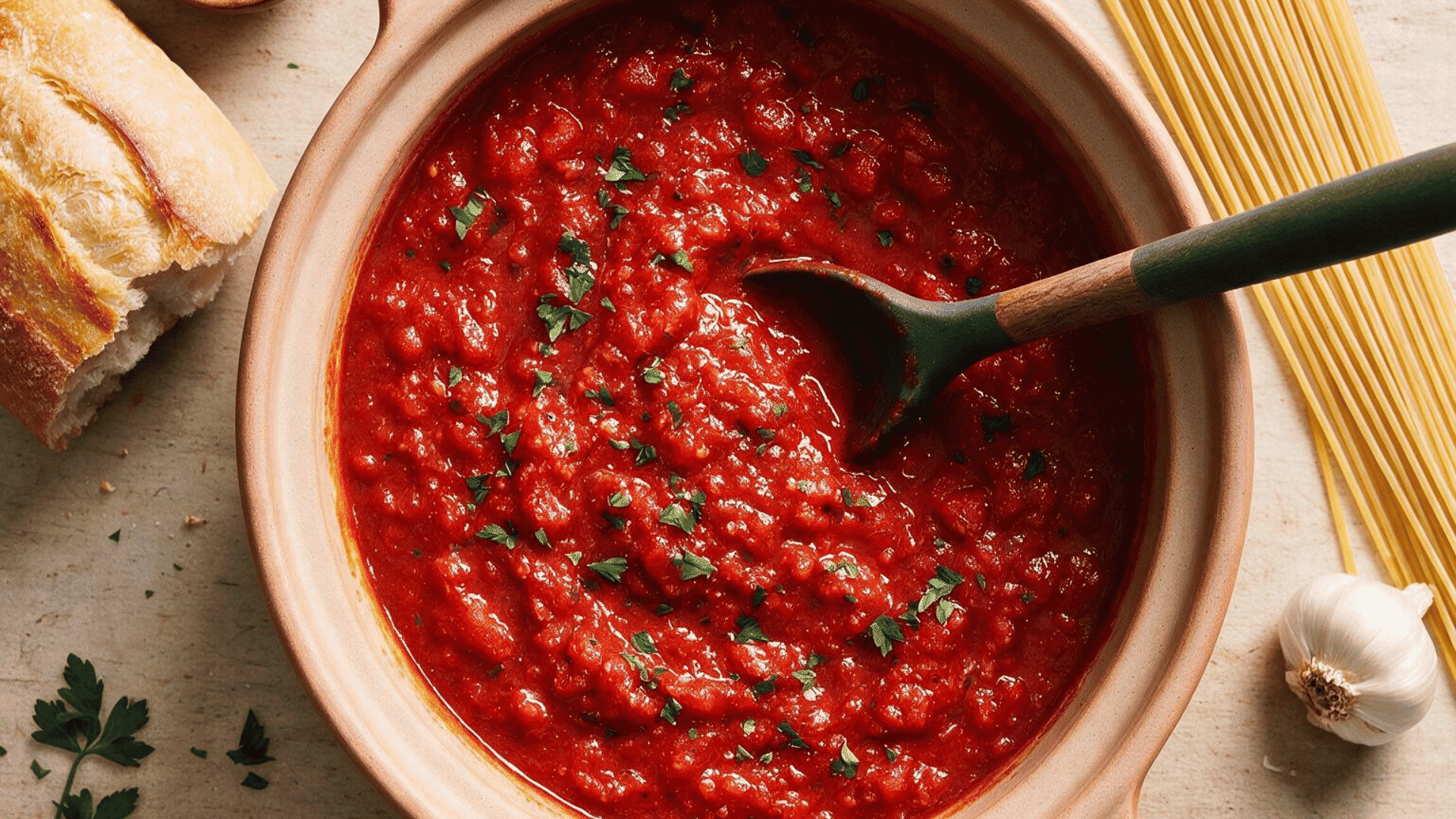
There’s nothing more disappointing than sitting down to spaghetti only to find the sauce watery, bland, or overly sweet.
I like a good spaghetti sauce to be rich, hearty, and comforting without making dinner feel like an all-evening project.
Ground beef, tomatoes, onion, garlic, and herbs are simple ingredients, but the way they come together can make all the difference.
From preparing the ingredients to letting everything simmer together, this recipe keeps each step easy to follow and the final meal satisfying.
Jump to recipe
Ingredients for Spaghetti Sauce
- 1 tbsp olive oil + 1 lb ground beef
- 1 medium onion, chopped + 3 garlic cloves, minced
- 1 tsp salt + ½ tsp black pepper
- 1 tbsp tomato paste + 28 oz crushed tomatoes + 15 oz tomato sauce
- 1 tsp each dried oregano, dried basil, and sugar
- 12 oz spaghetti + ½ cup grated cheese + 2 tbsp fresh basil
How to Make Spaghetti Sauce: Step by Step
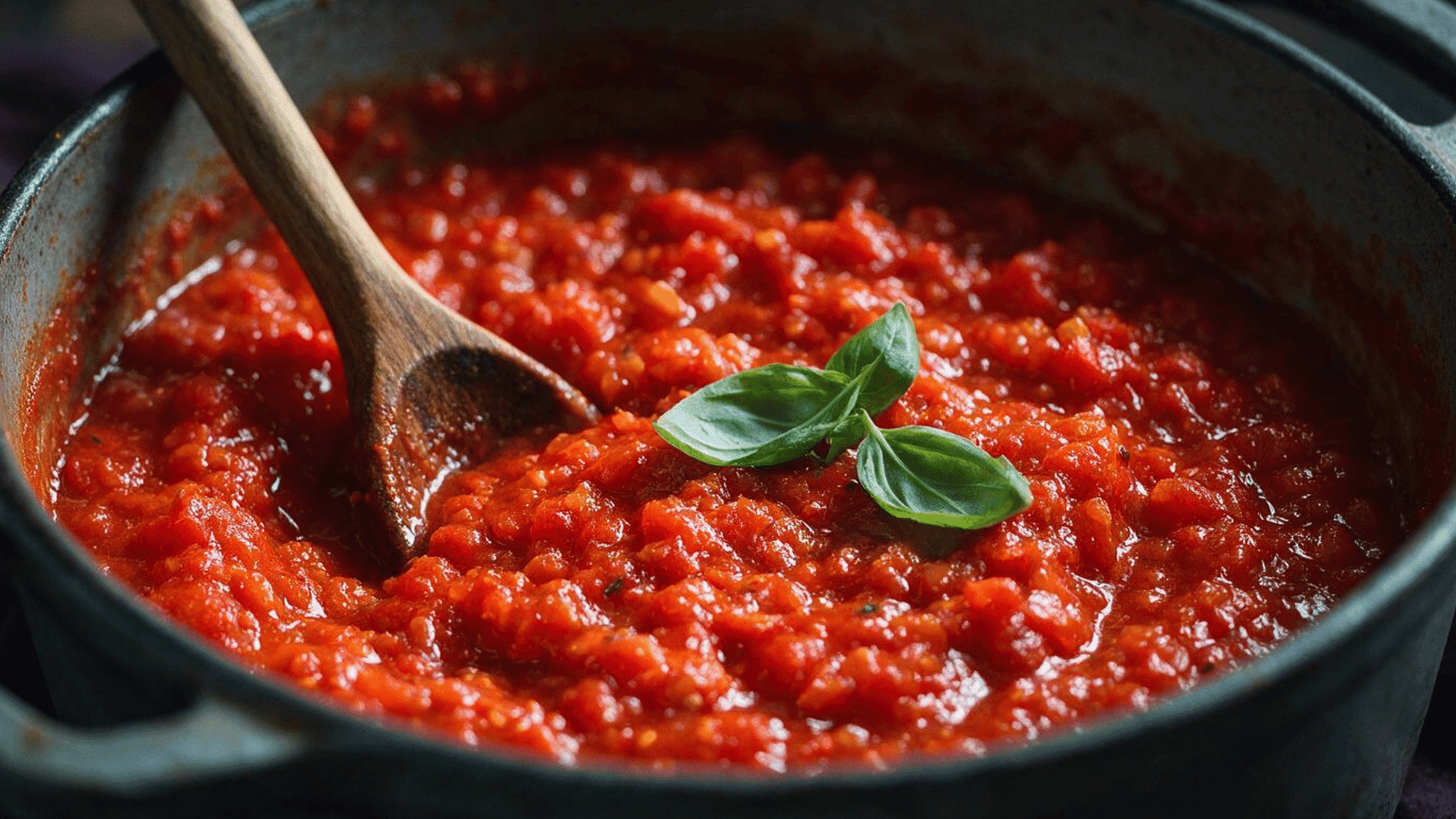
| Yield: 4-6 | Prep Time: 10 minutes| Cook Time: 25 minutes |
Step 1: Brown the Beef
Heat oil over medium-high heat. Brown the ground beef with salt and pepper. For safe cooking, USDA recommends cooking ground beef to 160°F.
Step 2: Cook the Onion and Garlic
Add the chopped onion to the browned beef and cook over medium heat until softened, stirring occasionally. Add the minced garlic and stir to combine.
Cook for about 30 seconds, stirring constantly to prevent the garlic from burning.
Step 3: Add Tomatoes and Herbs
Cook one tablespoon of tomato paste for one minute. Add crushed tomatoes, tomato sauce, oregano, basil, and a small amount of sugar. Stir until evenly combined.
Step 4: Simmer the Sauce
Bring the sauce to a boil, then lower the heat. Cover and simmer for 25 to 30 minutes, stirring occasionally to prevent the bottom from scorching.
If the sauce looks thinner than you’d like once it’s done, uncover it for the last 5 to 10 minutes so extra liquid can cook off.
Step 5: Serve With Spaghetti
Cook spaghetti until al dente and drain. Spoon the meat sauce over the pasta or toss them together. Finish with grated cheese and fresh basil before serving.
For a tangy side, you can also serve homemade dill pickles with spaghetti and meat sauce.
Tips for the Best Spaghetti Sauce
A few small tricks separate a flat pot of tomatoes from a rich spaghetti sauce that tastes like it simmered all day.
- Add a parmesan rind: Drop a leftover parmesan rind into the sauce while it simmers, then pull it out before serving for extra savory depth.
- Thicken with tomato paste: If the sauce seems thin after simmering, stir in another tablespoon of tomato paste and cook a few more minutes.
- Balance the acidity: A teaspoon of sugar softens the natural tartness of canned tomatoes without making the sauce taste sweet.
- Save some pasta water: A splash of starchy pasta water helps the sauce cling to the noodles instead of pooling at the bottom of the bowl.
- Taste before serving: Simmering mellows raw garlic and onion, so taste near the end and adjust salt, pepper, or herbs as needed.
Italian Spaghetti Sauce Variations
You can easily customize a classic spaghetti sauce by changing a few ingredients.
| Variation | How to Make It |
|---|---|
| Classic Marinara | Skip the beef and use tomatoes, olive oil, garlic, onion, and Italian herbs. |
| Spicy Arrabbiata | Add crushed red pepper flakes for a spicy tomato sauce. |
| Puttanesca | Add olives, capers, anchovies, garlic, and red pepper flakes. |
| Bolognese-Style | Use ground beef and simmer longer for a thicker, meat-forward sauce. |
| Vegetable Sauce | Add mushrooms, zucchini, bell peppers, spinach, or other vegetables. |
| Creamy Tomato Sauce | Stir in a little heavy cream near the end for a richer, smoother sauce. |
How to Store and Serve Spaghetti Sauce
Let the spaghetti sauce cool before transferring it to an airtight container. Refrigerate it for up to 3–4 days. For longer storage, freeze the sauce in freezer-safe containers.
Serve the sauce warm over spaghetti, toss it directly with pasta, or use it with meatballs and other Italian-inspired dishes, like:
- Garlic bread
- Caesar salad
- Italian meatballs
- Roasted vegetables
- Caprese salad
For longer storage, freeze the sauce in freezer-safe containers for up to 3 months for the best flavor. Thaw frozen spaghetti sauce in the refrigerator before reheating.
Wrapping It Up
Homemade spaghetti sauce doesn’t have to be complicated. With ground beef, tomatoes, onion, garlic, herbs, and enough time to simmer, you can make a thick, hearty sauce that pairs perfectly with spaghetti.
You can also adjust the consistency and seasoning to suit your taste, add your favorite toppings, and store any leftovers for another meal.
If you’re making a quick weeknight dinner or sitting down for a family meal, this spaghetti meat sauce is an easy recipe to keep in your regular rotation.
What’s one ingredient you always add to spaghetti sauce that others might not expect? Try the recipe and share your favorite additions or toppings in the comments.
Frequently Asked Questions
Can I Make Spaghetti Sauce in a Slow Cooker?
Yes, brown the ground beef first, then add it with the remaining sauce ingredients. Cook on low until the tomatoes, meat, and seasonings taste well combined.
Is Spaghetti Sauce the Same as Bolognese?
No. Bolognese is traditionally a meat-centered sauce, while spaghetti sauce commonly has a stronger tomato base and may contain ground beef, sausage, or no meat.
Should Spaghetti Sauce Simmer With the Lid On?
Use the lid when you want to retain moisture. Remove it when the sauce needs to reduce, since uncovered simmering lets extra water cook away.
Can I Use Red Onion in Spaghetti Sauce?
Yes. Red onion can replace yellow or white onion in spaghetti sauce. It has a slightly different taste and may add mild sweetness as it cooks.
Can I Use Other Pasta Shapes With Spaghetti Sauce?
Yes. Spaghetti sauce also works with pasta shapes such as penne and fusilli. Pick a shape that holds enough sauce for each bite.