Most homeowners hire their first heating and cooling contractor in a panic. The system dies on a Sunday, the house is 88 degrees inside, and whoever answers the phone wins the job by default. That is exactly how people end up paying for a compressor they did not need.
Choosing well does not require a background in mechanical systems. It requires a repeatable process you can run before the emergency, on a Tuesday afternoon, with your phone and thirty minutes. That same process holds up in any market, but it matters more in places with long cooling seasons, brutal summer runtimes, and housing stock that ranges from brand new to genuinely old.
Below you will find the vetting method, the specific questions that separate real technicians from call-center dispatchers, and the signals that tell you to hang up and try the next number.
What Actually Separates a Licensed Contractor From a Good One
Licensing gets you a floor, not a ceiling. A contractor with the right state license and insurance has met the legal minimum. That tells you nothing about whether the technician who shows up at your door can diagnose a failing blower motor or will just start swapping parts until your bill maxes out.
The gap shows up in three places: how they diagnose, how they price, and how they document. A company worth hiring will explain why a part failed, not just what it costs to replace. They will show you the failed component or walk you through a diagnostic reading. And they will hand you a written estimate before touching anything.
Equipment standards matter here too. Trade bodies such as the Air Conditioning Contractors of America publish load calculation and installation standards that competent contractors actually use when sizing new systems. If nobody on the crew mentions sizing, that is your first clue.
Where Homeowners Get the Vetting Process Wrong
People compare contractors on price alone. That is the mistake that costs the most money over a five-year window.
Two bids for the same job often describe completely different work. One includes a permit and a load calculation. The other reuses the old line set and skips the inspection. The cheaper number is not a discount. It is a smaller scope of work dressed up as a better deal.
Fair comparison means matching scope, not just totals. Ask each company to itemize parts, labor, permit fees, and warranty terms in writing. Line them up side by side. When you do that, the spread usually narrows.
Before You Call Anyone: A Five-Minute Homework Pass
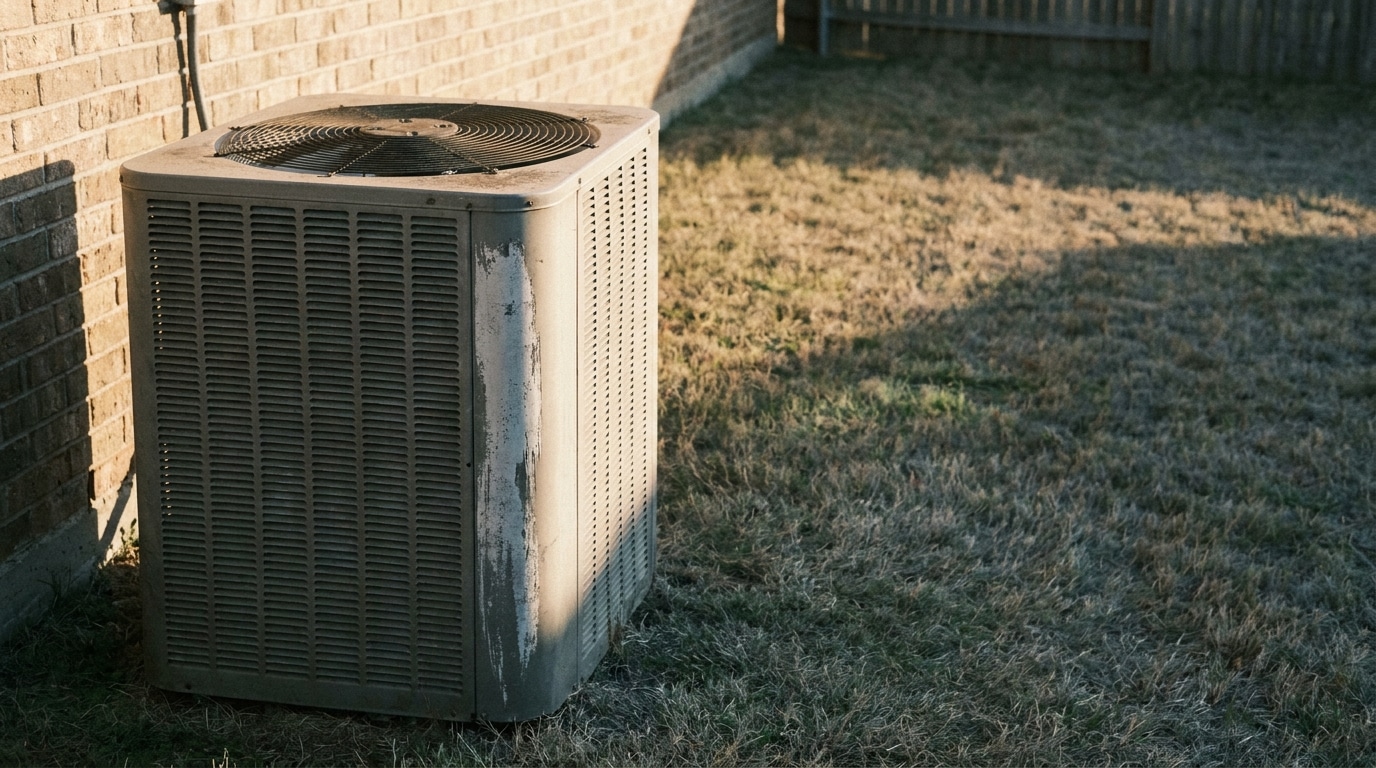
Do this while your system still works, because it changes the entire conversation.
- Write down your system’s make, model, and install year. The data plate on the outdoor unit has it all. A technician who knows your equipment age walks in with a different mindset than one who assumes everything is original.
- Note your filter size and change date. Half of all airflow complaints trace back to a clogged filter. Knowing yours matters more than knowing who makes your thermostat.
- List every symptom you have noticed. Weak airflow upstairs. A musty smell on startup. A unit that short cycles. Details point to a diagnosis.
- Photograph your setup. An attic unit, a closet unit, a pad-mounted condenser. Photos let a dispatcher quote more accurately and flag anything unusual.
- Set a budget range, not a number. Repair, replace, and retrofit sit at very different price points, and knowing your ceiling keeps you from being steered upward.
The Questions That Expose a Weak Contractor Fast
Ask these on the phone before anyone comes out. The answers tell you more than any review page will.
- Do you charge a diagnostic fee, and does it roll into the repair if I hire you?
- Who is the technician, and are they employed by you or subcontracted?
- How long have your technicians worked on the equipment brands in my home?
- Will I get a written estimate before any work begins?
- What is your repair warranty, and does it cover labor or just parts?
- Can you show me a license number and proof of insurance today?
Vague answers to the warranty question are the biggest tell. A company that stands behind its work will name specific terms without hesitating. A company that mumbles is telling you something about how a future claim will go.
One more thing I would personally weigh heavily: whether the same technician can handle both cooling and heating. In a market where summer does the heavy lifting, many outfits treat heating as an afterthought. A company that services full systems is easier to keep as a single long-term relationship, and that continuity is worth real money over a decade of ownership.
Red Flags, Plus One Green Flag People Overlook
Red flags worth acting on:
Pressure to decide today. No legitimate repair becomes urgent because a salesperson says so. If the pitch leans on a discount that expires this afternoon, that is a sales tactic, not an equipment problem.
No written estimate. Anyone unwilling to put numbers on paper before starting work is telling you how the billing dispute will go.
A diagnosis with no explanation. “Your compressor is shot” is not a diagnosis. It is a conclusion. Ask what reading produced it.
Replacement quotes on a system under ten years old. Sometimes replacement is genuinely right. Just make sure someone explained why repair lost, and get a second opinion before you commit.
The green flag: a company that offers a second opinion or declines a job it cannot do well. Turn down the work you are bad at, and you are probably good at what you keep. I would take that over a five-star average built on coupons.
There is an efficiency argument here you can check for yourself. The U.S. Department of Energy maintains baseline guidance on heating and cooling efficiency and home energy use, and it is worth reading before you accept a claim that a pricey upgrade will pay for itself.
Timing Your Call So You Are Not the Emergency
Schedule maintenance in spring and fall, not July. Two reasons, both practical. Technicians have room in their calendars, so you get more attention and better scheduling. And you catch small failures- a weak capacitor, a dirty coil, a refrigerant charge that has drifted- before they turn into a no-cool call at the worst possible moment.
If you are searching for the best hvac companies in san antonio, run the checklist above before you dial. Fifteen minutes of prep beats a same-day panic decision every time.
What to Do the Moment a Tech Arrives
You hired them, so you can ask questions. Confirm the diagnostic fee again. Ask what they are testing and why. When they hand you a recommendation, ask three things: what failed, what caused it, and what happens if I wait.
That last question is the one most homeowners never ask, and it is the most useful. Sometimes the honest answer is “wait a week and it will be fine.” Sometimes it is “this fails in the next heat wave.” Either way, you now know what you are buying.
Keep the paperwork. Serial numbers, install dates, and invoice dates build a service history that follows your equipment, and anyone who has sold a house knows a clean maintenance record is worth something at the closing table.
Your comfort system is the one appliance you will call about, most likely on a weekend, probably when you have guests. Spend thirty minutes choosing the right company now, and that call becomes routine instead of a crisis. Start with your own questions, not their ads. Which one would you actually trust to explain a repair instead of just billing for it?