The most successful outdoor spaces no longer feel like separate areas added behind a house. They function as natural extensions of the interior, with the same attention given to proportion, materials, color, comfort, and movement.
A well-designed patio can become an outdoor dining room. A pathway can guide guests through the landscape in the same way a hallway connects rooms indoors. Planting, stone, lighting, and furniture can define individual zones without enclosing them.
Creating this kind of space requires more than choosing attractive furniture. The materials underfoot, the transitions between different areas, and the structure beneath the finished surface all influence how refined and comfortable the result feels.
Start With How the Space Will Be Used
Before choosing materials, decide what the outdoor area needs to accomplish.
A space designed primarily for entertaining may need a generous dining area, room for circulation, and a clear connection to the kitchen. A quieter garden might prioritize seating, privacy, planting, and shaded paths. Larger properties may combine several functions, such as dining, lounging,
cooking, swimming, and garden areas.
Thinking about these uses first makes it easier to divide the landscape into zones.
Instead of treating the entire yard as one open space, consider creating smaller destinations connected by paths and changes in texture. This can make even a large property feel more intimate and intentional.
Let the Hardscape Establish the Design
Hardscaping often provides the visual framework for an outdoor living area.
Patios, walkways, steps, retaining walls, pool surrounds, and driveways create permanent lines within the landscape. Because these elements occupy significant visual space, their color and texture can influence the character of the entire exterior.
One of the most versatile options is pavers, which are available in a wide range of formats, surface textures, colors, and laying patterns.
Large-format pavers can complement contemporary architecture with clean lines and fewer visible joints. Smaller cobble-style units can create a more traditional or European-inspired appearance. Stone-textured surfaces work particularly well when the goal is to connect a patio with natural
landscaping.
The pattern matters as well. Running bond, modular layouts, geometric grids, and more irregular arrangements can make the same basic material feel completely different.
Rather than choosing the paving in isolation, consider how it relates to the home’s exterior materials. Brick, siding, stucco, wood, and stone should feel connected to the hardscape rather than competing with it.
Build a Simple Material Palette
Luxury landscapes are not necessarily defined by the number of materials used.
In many cases, limiting the palette creates a more sophisticated result.
For example, a project might combine:
- neutral-toned paving;
- natural stone accents;
- gravel or decorative rock;
- wood or metal furniture;
- structured planting.
Repeating the same materials across different parts of the property creates continuity.
A stone used near the entry can reappear around a garden bed. The color of a patio can echo the home’s masonry. Gravel used along a pathway can repeat around a fire feature or planting area.
These small visual connections help the landscape feel designed as a whole.
Think About What Is Beneath the Surface
The finished patio or walkway receives most of the attention, but the layers beneath it are equally important.
Site conditions, drainage, grading, and the intended use of the area determine what type of base preparation may be required. A pedestrian garden path and a driveway carrying vehicles do not place the same demands on the underlying structure.
Materials such as aggregate, stone, sand, and soil often support different parts of a landscape project. Access to appropriate bulk materials can therefore be just as important as choosing the visible surface.
Drainage deserves particular attention.
Water should be directed away from the house and from areas where it can collect beneath or around finished surfaces. Poor drainage can affect planting areas and hardscape installations alike.
For larger outdoor projects, planning the base, drainage, finished surfaces, and planting areas together is usually more effective than treating each as a separate project.
Create Transitions Between Indoors and Outdoors
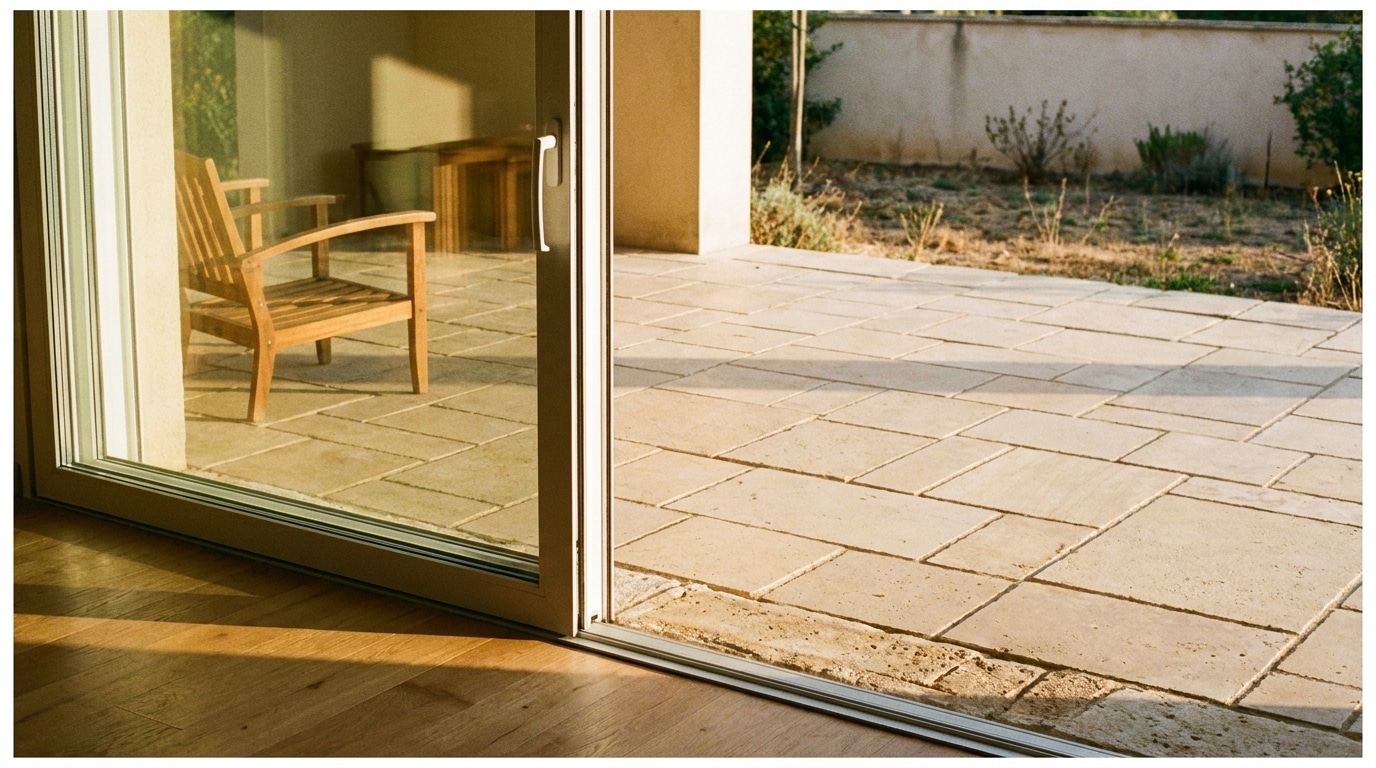
One of the defining features of contemporary residential design is a stronger relationship between interior and exterior spaces.
Large doors and windows can create the visual connection, but the landscape needs to continue it.
Floor levels should feel comfortable when moving from the house to the patio. Materials do not need to match exactly, but complementary tones and proportions help create continuity.
For example, warm interior wood finishes may pair well with beige or earth-toned paving outside. Cooler interiors built around concrete, steel, and gray finishes can transition naturally into large-format gray pavers or restrained stone.
Furniture placement can strengthen this effect further.
Positioning an outdoor dining table near the kitchen or creating a seating area directly outside the living room makes the exterior function almost like another room.
Use Paths to Shape the Experience
Paths are more than practical connections between one area and another.
They determine how people experience the landscape.
A direct path works well between heavily used spaces such as a driveway and entry. In a garden, however, a slightly curved or offset route can slow movement and reveal different views gradually.
Changes in material can also signal transitions.
A primary patio may use formal paving, while a secondary garden path uses gravel or stepping stones. These variations help establish hierarchy without adding walls or barriers.
Landscape lighting can reinforce the same routes after dark. Low pathway lights, integrated step lighting, and subtle illumination around planting areas improve usability while adding depth to the property at night.
Balance Structure With Planting
Too much hardscape can make an outdoor area feel severe, while too much unstructured planting can make it feel visually chaotic.
The strongest landscapes balance the two.
Trees and larger shrubs can establish privacy and scale. Lower planting softens the edges of patios and paths. Ornamental grasses introduce movement, while seasonal plants bring changing color throughout the year.
Planting can also help separate different functional zones.
A row of shrubs might define a dining space without blocking it from the rest of the yard. Raised beds can frame a pathway. Containers can soften the transition between a patio and the house.
When hardscape and planting are planned together, neither needs to dominate.
Design for Long-Term Flexibility
Outdoor spaces tend to evolve.
A simple patio may eventually gain an outdoor kitchen. A seating area may later include a fire feature or pergola. Families may need additional dining space or different circulation as their needs change.
Planning for that flexibility at the beginning can prevent future additions from feeling disconnected.
Consider where utilities might be needed, where additional paving could logically extend, and whether existing paths can connect to future areas.
Material availability matters for the same reason. Working with suppliers that carry multiple categories of landscape and hardscape products can make it easier to coordinate different stages of a project. Companies such asBOSS Supply provide paving, stone, bulk landscape materials, hardscape
products, and other outdoor supplies that can be combined across larger exterior projects.
A Cohesive Outdoor Space Is Built in Layers
A polished outdoor living area rarely comes from one dramatic feature.
Instead, it develops through layers: a well-planned layout, durable surfaces, thoughtful transitions, appropriate base materials, planting, lighting, furniture, and architectural details.
The most important decisions often happen before anything is installed.
Define how the space will be used. Establish a limited material palette. Plan circulation and drainage. Then select individual products that support that larger design.
When those decisions work together, the result is more than a patio or landscaped yard. It becomes an outdoor environment that feels connected to the architecture and comfortable enough to function as another part of the home.