I built our outdoor mood board before we ever measured a single glass panel. Two years in, half of it was wallpaper on a website and none of it lived in our yard. The upgrade that actually stuck was the one I almost talked myself out of, and it wasn’t a fire pit.
Folding patio doors are the closest thing to a home feature that pays you back in daily use rather than resale math. Think of the wall between your living room and your garden more like a curtain than a wall, and everything after that gets easier to plan.
Look at a real spec sheet, like this reference on folding patio doors, and you’ll see the choices are mostly about how the panels stack and where they park. I want to save you from the version of this decision I nearly made: a beautiful setup that fights the room it lives in. Here’s a map of what actually matters, in the order I’d tackle it if I did it again next spring.
What Do Folding Patio Doors Change About a Room?
Everything hinges on your threshold and the floor on the far side. When that plane is flush, the inside floor reads as one continuous surface with the patio, and the room looks bigger than the square footage says. When there’s a raised lip, you get a small trip hazard and a visual seam that quietly kills the effect. Width matters more than most people expect.
A conventional slider gives you one fixed pane and one that glides, which means roughly half the opening is working doorway. A folding system lets the whole run of glass collapse toward one side or the middle, so the actual pass-through is far wider than the frame count suggests.
Here’s my unpopular opinion: buy this for the way you live from May through September, not for the photos. Because if you host brunch with a dozen people spilling between the kitchen and the garden, the panels will earn their cost weekly. If your patio is a dead corner nobody walks to, this is an expensive way to fill a wall.
The practical check I use now is a walk test. Stand in the room, set a tray of drinks on the sofa arm, and walk to the garden without opening anything. Where do you bump? Where do you have to turn? Those spots tell you what the opening needs to be.
Stack Left, Stack Right, or Split in the Middle
This is the decision everyone postpones and no one avoids. Each panel needs somewhere to live when the door is open, and that somewhere is real floor space you already have plans for.
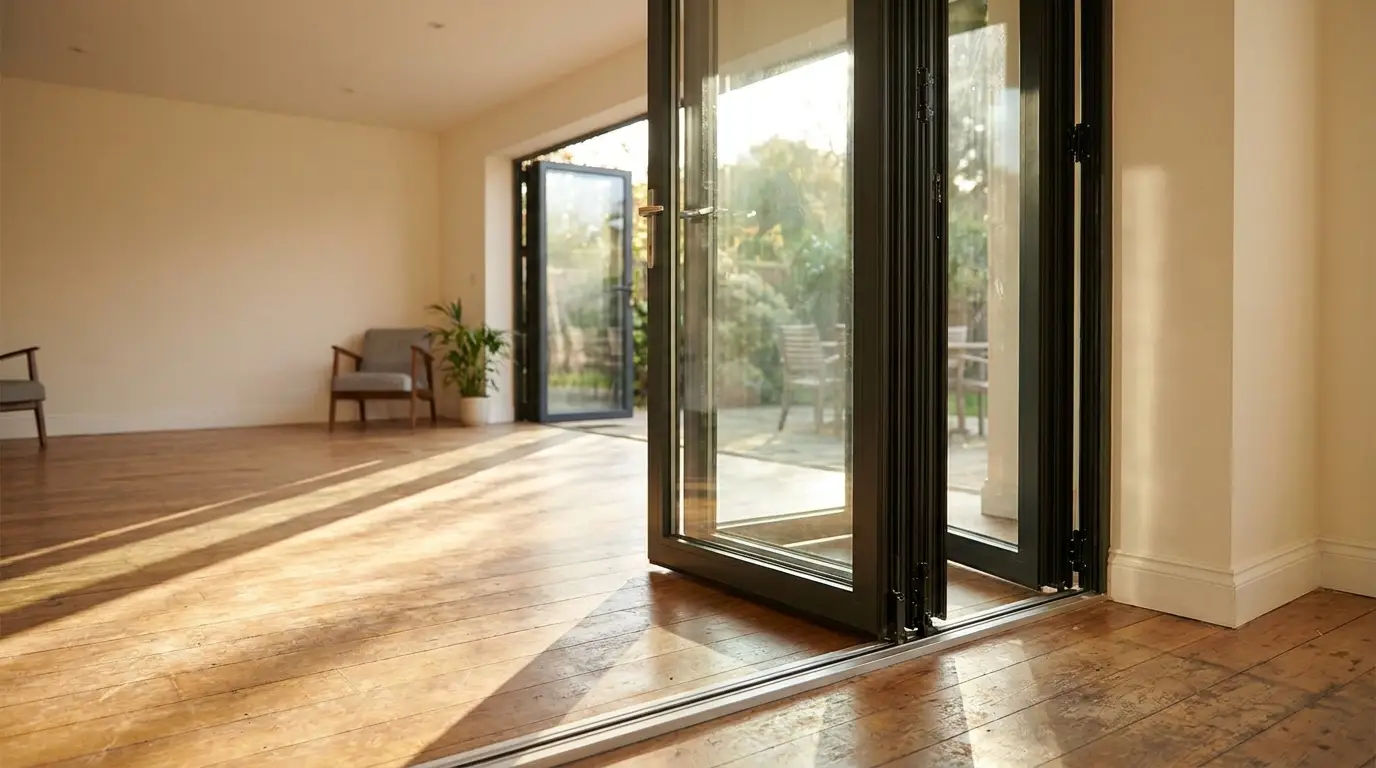
- One side stack: tidy and predictable, but you lose a strip of wall and floor where the panels gather.
- Split stack: panels gather at both ends, which keeps the center clear for sightlines and traffic.
- Paired panels: panels fold in twos, so fewer wheels do the work and the stack is shallower.
- Corner unit: two runs of glass meeting at a corner that opens fully, which is stunning and demanding.
Pick the stack side you’d never put a reading chair. That’s the honest test. If your best light lands there, you’ll resent the lost corner every single afternoon.
One detail I’d flag to anyone planning a renovation budget: people underestimate hinge and track hardware because the glass gets all the attention. It’s the hardware that decides whether the panels glide with a fingertip or fight you in July. Ask any installer what they’d put in their own house.
The Cost Conversation You Should Have With Yourself First
I’m not going to quote a number because it would be wrong for your house. Instead, frame the spend against what you’re trying to buy.
|
What you’re really buying |
Worth the spend? |
Skip it if |
|---|---|---|
|
Everyday indoor-outdoor living |
Yes, this is the real case for it |
You close the blinds most evenings |
|
An extra hosting zone |
Usually, if you entertain often |
Your guest list tops out at four |
|
Resale value |
Weak argument on its own |
You’re selling within two years |
|
Energy efficiency |
Only with the right glass |
You pick the cheapest glazing |
The glass itself matters more than the brand on the frame. According to the U.S. Department of Energy, windows and doors are significant points of heat loss in a home, which is why the glazing spec should be part of your buying conversation, not an afterthought when the quote arrives.
My Three-Step Planning Checklist
Do these in order and save your installer a headache. I’d start with the walk test I described above, because everything else follows from where the opening actually needs to be.
- Sketch the opening on the floor. Use painter’s tape to mark the frame, the stack corner, and the swing path. Live with it for a few days and watch how people move.
- Note wind and sun. Which way does rain blow in? Where does afternoon sun make the room unlivable? If the opening faces the glare, you’ll want a shading plan before you order glass.
- Plan the threshold and drainage. Water has to leave the building, and that detail belongs to the builder or installer. Get it settled in writing before demolition day.
I’d also write the opening’s “job” in one sentence, like “one wide path from the kitchen to the terrace.” If you can’t say it in a sentence, you probably aren’t ready to order.
What the Panels Don’t Solve
They won’t fix a dark room, a dead patio, or a household that’s divided on whether bugs belong indoors. Screens exist for folding systems, but they add cost and complexity, so decide which side of that line you’re on.
And they won’t stay luxurious forever without care. The tracks collect grit, and grit wears wheels. A two-minute brush-out a few times a season is the cheapest ownership move I know. My honest take: the PBS home and garden programming that I watch for inspiration is full of beautiful spaces, but nobody photographed the maintenance, and you’ll want to budget for that too.
Final Answer
Treat the opening as a piece of furniture you’ll use every day, and the decision gets simple. Pick the stack side you’d never sit in, get the threshold flush, and put your money into hardware and glazing rather than a fancy finish on the frame. If you entertain often and you’ve got the wall to spare, this is the upgrade I’d pick every time. Now, tell me this: if you opened that wall tomorrow, what’s the first thing you’d move outside?