We are seeing a massive shift in how people run businesses. More founders than ever operate entirely from home, turning spare bedrooms and living room corners into profitable commerce hubs. The space you work in directly affects how well your business performs. A well-designed home office is not just a comfort upgrade for your daily routine; it acts as a genuine business asset. It impacts how fast you process orders, how clearly you think, and how easily you step away at the end of the day.
There are plenty of store builders that can assess you to create your e-commerce business with confidence and protection. For instance, Wix empowers entrepreneurs to create an online store that can reach millions, having a physical workspace that supports that massive potential is vital for your long-term success.
Additionally, Wix further supports long-term eCommerce growth with built-in loyalty programs, subscription commerce, back-in-stock notifications and flexible digital gift cards designed to increase customer lifetime value.
Your Workspace Is Your Business Infrastructure
Think of your home office setup as being just as foundational as the software running your business. A strong platform from Wix gives you everything you need to create an online store, but your physical environment dictates how effectively you use those tools. Your infrastructure starts with the basics: a dedicated room or a strongly defined zone, a highly reliable internet connection, adequate lighting, and comfortable, ergonomic furniture.
When you establish a dedicated zone, you send a signal to your brain that it is time to work. Sitting in a proper ergonomic chair instead of slouching on the sofa prevents back pain and keeps your energy up during long product sourcing sessions. Good lighting reduces eye strain, helping you spot small errors in your product descriptions or catch a typo on a shipping label.
Upgrading your internet connection ensures you can upload high-resolution product images in seconds rather than waiting around for a loading bar. Every single element in your physical space influences your productivity and professionalism, giving you the stamina to handle peak order periods without friction.
The Tools That Keep Orders Moving
Once you have your physical foundation in place, you need to focus on the operational layer. The hardware and software tools you choose dictate how efficiently you manage day-to-day commerce. Running a store from home means you are often the CEO, the marketing manager, and the fulfillment team all rolled into one. The right tools reduce your manual workload and free up your time for big-picture growth activities.
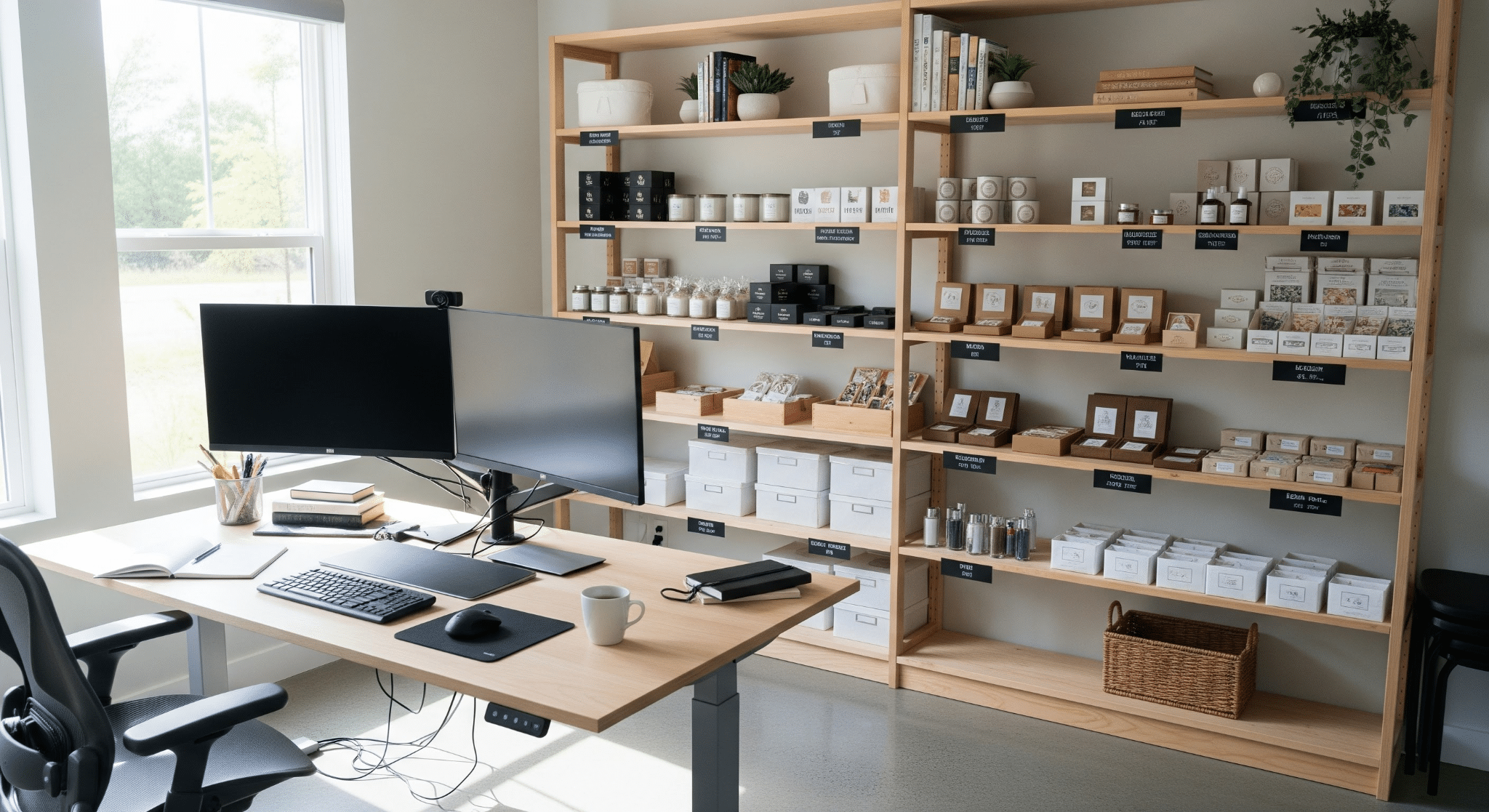
Start with a high-quality computer setup. Adding a second monitor completely changes how you work. You can keep your order dashboard open on one screen while answering customer emails on the other. If you ship physical products yourself, a dedicated thermal label printer is an absolute must-have. It stops you from taping printed paper onto boxes and makes your packages look professional instantly.
Finally, invest in reliable cloud-based inventory or order management tools. Having real-time visibility into your stock levels from your desk ensures you never accidentally sell an item you no longer have in your garage.
Designing for Deep Work and Real Breaks
We cannot ignore the human side of running a business from your house. When your work life and home life share the exact same walls, the risk of burnout climbs rapidly. You need to design your environment to encourage both intense focus blocks and genuine, restful breaks.
Establish practical boundaries for structuring your workday. Decide when your office hours begin and, more importantly, when they end. If you have a separate room, closing the door at 6:00 PM creates a physical barrier between your business and your personal time. If you share your space with family members or roommates, try using a simple “do not disturb” door sign or a status light on your desk.
Minor soundproofing touches, like adding a thick rug or acoustic panels, can block out household noise and help you concentrate on writing your next email newsletter. Designing for breaks means keeping work out of your relaxation spaces. Do not bring your laptop into bed to check overnight orders. Let your workspace be for work, and let your home remain your sanctuary.
Scaling Your Setup as Your Online Store Scales
Your home office needs will naturally evolve as your store becomes more successful. What works for shipping five packages a week will not work for shipping fifty packages a day. You have to think about growth spatially, not just commercially. Plan ahead so your physical environment does not become a bottleneck.
As your order volume grows, you will likely need to invest in better equipment and more space. You might need to add a dedicated packing station with easy access to boxes, tape, and padding. You might have to convert a closet or a spare room into a highly organized storage area for your inventory.
Eventually, you might reach a point where you need to bring in part-time help. Before you hire someone, consider whether your current home setup can accommodate another person safely and comfortably. By anticipating these spatial needs, you stay ahead of the curve and keep your fulfillment process running smoothly as sales climb.
Making It Look Professional on Camera
Video calls, social selling, and content creation are now standard practices for ecommerce brands. You will likely find yourself hopping on video calls with wholesale suppliers, collaborating with brand ambassadors, or recording quick videos for your social media audience. Because of this, your home office background and lighting directly affect how others perceive you.
You do not need an expensive studio to look great on camera. Start by positioning your desk so you face a window for natural light, or invest in a simple ring light to keep your face well-lit. Create a neat, neutral backdrop behind your chair. A simple bookshelf, a few plants, or a clean, painted wall works perfectly.
Keep the visible area behind you tidy and free of clutter or personal items. When your background looks organized and professional, customers and partners instantly trust you more. Preparing this setup in advance means you are always ready for an unplanned video moment without frantically rushing to clean your room.
Everything Clicks Into Place
Building a thoughtfully designed home office is one of the smartest, highest-return investments a solo ecommerce founder can make. It protects your health, streamlines your daily operations, and gives your business the literal room it needs to expand.
Take a look around your current setup today. Identify one thing you can improve right now. Maybe you need to clear old paperwork off your desk, order that label printer you keep thinking about, or simply set firm working hours. Take that step, organize your space, and give your business the professional home it deserves.
FAQ
Do I Need a Dedicated Room for My Home Office?
A separate room is helpful but not absolutely required. You can successfully run a business from a specific corner of your living room or bedroom. The most vital part is establishing a clear, permanent boundary that tells your brain you are in your designated workspace.
How Do I Store Inventory in A Small Home Office?
Maximize vertical space by installing tall, sturdy shelving units and using clear, labeled storage bins. Keep your most popular items easily accessible near your packing station, and store seasonal or slower-moving products higher up or in secondary storage spaces like a closet.
What Is the Most Important Piece of Furniture to Buy First?
An ergonomic office chair is the best initial investment you can make. Since you will spend hours managing orders, answering emails, and updating your website, a chair that supports your posture prevents back pain and keeps you focused longer.
Can I Write Off My Home Office Setup on My Taxes?
In many cases, yes. If you use a portion of your home exclusively and regularly for your business, you can often deduct related expenses. It is always best to consult a certified tax professional to understand exactly what qualifies in your local area.
How Do I Stop Working when My Office Is in My House?
Create a strict “end of day” routine. When your working hours are up, turn off your computer, clear your desk, and physically walk away from the workspace. Turning off business notifications on your phone for the evening also helps you truly disconnect.