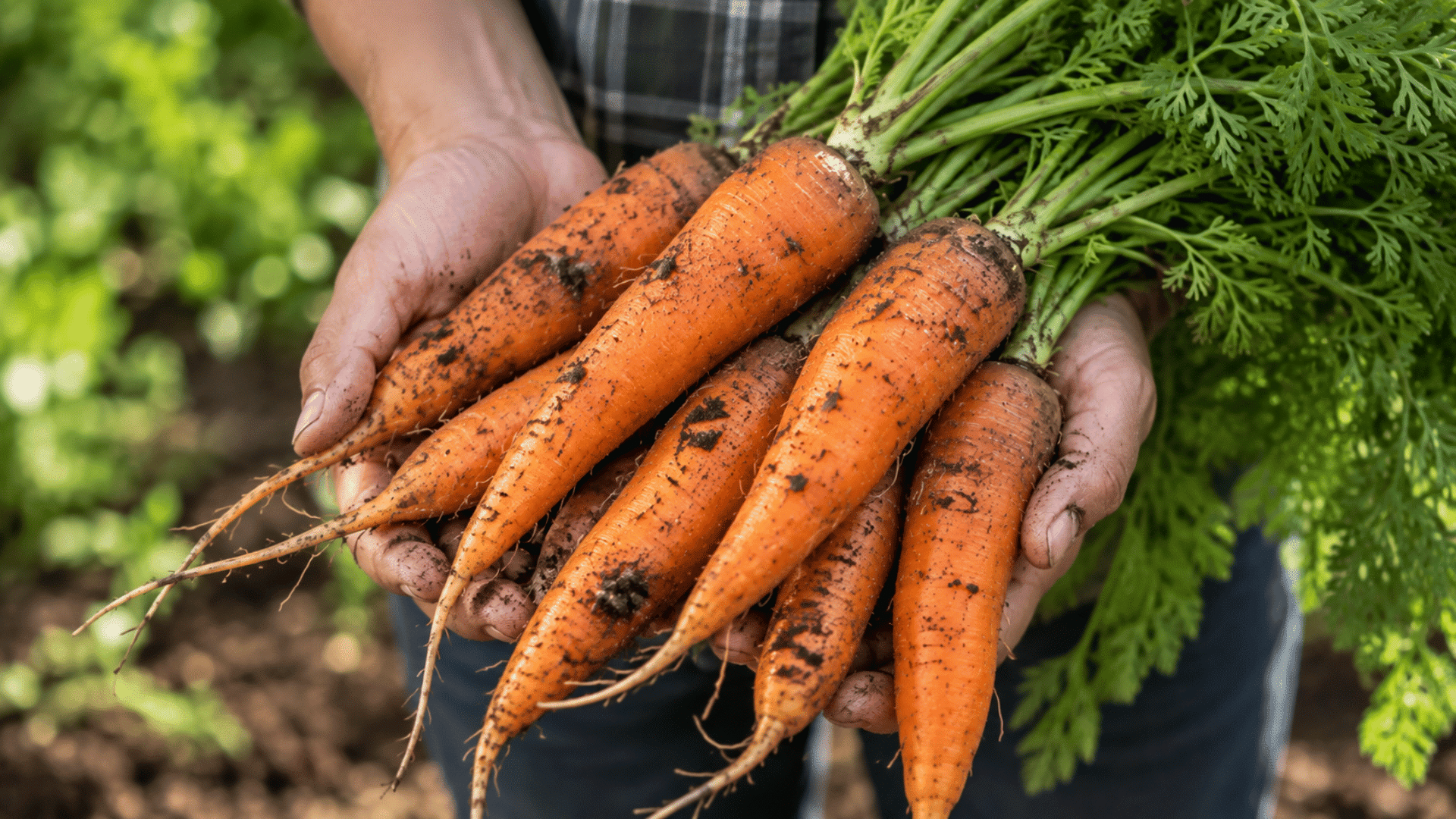
Few garden moments are as satisfying as brushing away the soil and seeing a bright carrot ready to pull. But it starts long before harvest day.
I’ve learned that carrots can be a little particular about when they go into the ground, and small changes in weather or soil can affect how well they get started.
Knowing when to plant carrots can make garden planning feel much simpler. Before sowing those tiny seeds, it helps to understand the conditions that give them a strong start.
When To Plant Carrots?
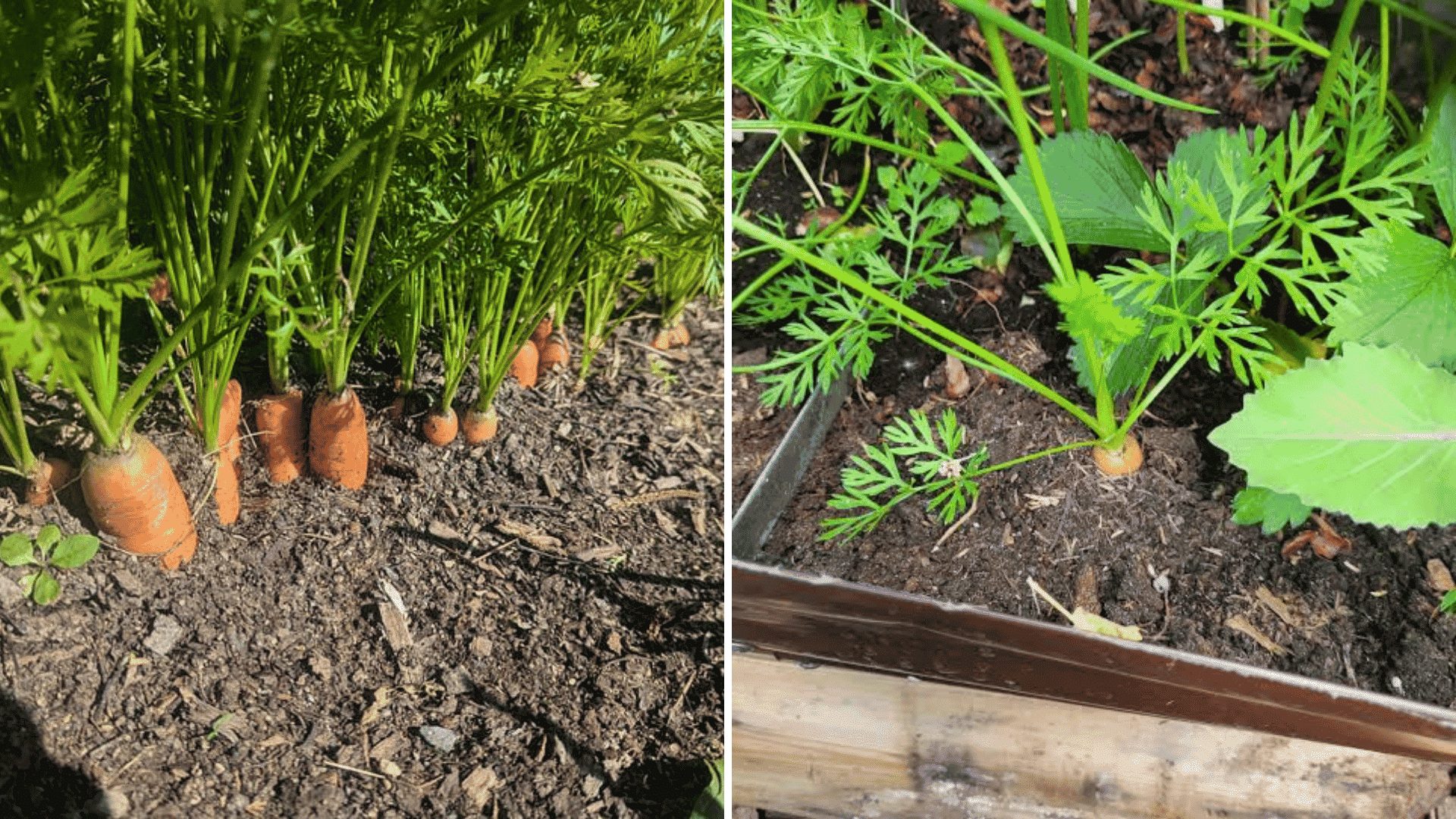
The best time to plant carrots is usually in early spring, about 2–4 weeks before your area’s average last frost, once the soil is workable and around 40°F (4°C) or warmer.
Carrots are a cool-season crop, so they handle mild spring conditions well. For a fall harvest, you can sow another crop in mid-to-late summer, leaving enough time for the roots to mature before prolonged freezing weather.
Rather than relying on one month, check your local frost dates and the days to maturity listed on your seed packet. These will give you a more reliable planting window for your location and chosen variety.
Best Time to Plant Carrots by Growing Zone
Your growing zone gives a general idea of when carrot season begins, but local frost dates and soil conditions should guide your final planting date.
|
USDA Zone |
Spring Planting (direct sow) |
Fall Planting (direct sow) |
|---|---|---|
|
3–4 |
Late April to May |
Late June to mid‑July |
|
5–6 |
Late March to mid‑April |
July to early August |
|
7–8 |
February to March |
August to September |
|
9–10 |
January to February |
September to November |
Colder zones generally have shorter growing seasons, while warmer zones offer a longer window for planting carrots.
Note: These are general estimates. Always check your local last/first frost dates, current weather, soil temperature , and the days‑to‑maturity on your carrot variety before planting.
Succession Planting for a Steady Carrot Harvest
Succession planting is a simple way to avoid harvesting all your carrots at once. Instead of sowing the whole packet in one day, divide your planting into smaller batches and space them out across the season.
This gives each row a different harvest time, so fresh carrots become available gradually. I like this approach because it makes harvesting easier and reduces the chance of having more carrots than I can use at once.
Label each row with its sowing date, then harvest the oldest planting first. It is an easy habit that can keep your carrot harvest more manageable and enjoyable.
How to Plant Carrot Seeds
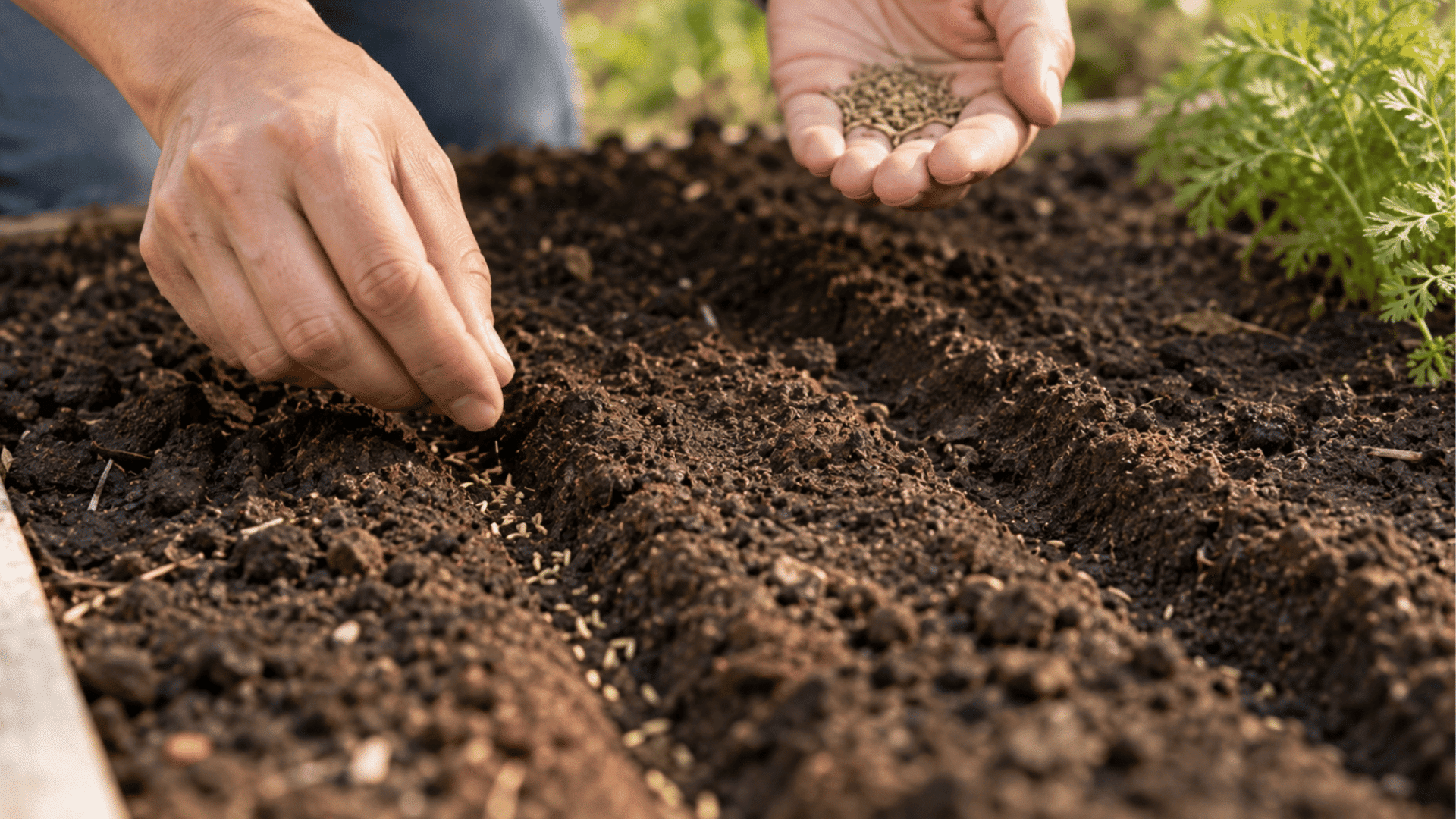
Carrots grow best when started directly where they will mature. A well-prepared seedbed and consistent moisture give the small seeds a better chance of developing into straight, healthy roots.
1. Prepare the Soil
Loosen the soil about 8–12 inches deep and remove rocks, clumps, and other debris that could obstruct developing roots. Rake the surface until it is fine and level so the tiny seeds have an even seedbed.
2. Sow Carrot Seeds Directly
Make shallow rows and sow the seeds about ¼ inch deep, spacing them lightly along the row. Cover them with a thin layer of fine soil. Avoid starting carrots indoors because disturbing the developing taproot during transplanting can affect its shape.
3. Water After Planting
Water gently after sowing so the seeds don’t wash out of place. Keep the upper layer of soil evenly moist during germination, using a light spray rather than a strong stream that could disturb the shallow seeds.
4. Thin the Seedlings
Once seedlings are established, remove weaker or crowded plants to leave about 2–3 inches between carrots, depending on the variety. Adequate spacing reduces competition and gives each root enough room to reach its expected size.
What Temperature is Best for Planting Carrots?
Carrot seeds can begin germinating when the soil is around 40°F (4°C), although germination is generally more reliable around 55–65°F (13–18°C).
Cooler soil usually means a longer wait for seedlings to appear. Very warm conditions can create the opposite problem because the shallow seedbed may dry rapidly.
Keeping the upper layer of soil consistently moist is especially important during germination. The seeds are tiny and planted close to the surface, so even a short dry spell can affect establishment.
Does Carrot Variety Affect Planting Time?
Yes, indirectly. Carrot variety can affect planting time because different varieties have different days to maturity. Fast-growing carrots can fit into shorter planting windows, while slower-growing varieties need more time to mature before unfavorable weather arrives.
- Nantes: Cylindrical carrots with rounded ends that perform well in loose prepared soil.
- Imperator: Long slender roots that need deep loose soil and sufficient time to develop.
- Danvers: Tapered carrots that adapt well to many home garden conditions.
- Chantenay: Short, thick roots suited to heavier or shallower soils.
- Parisian: Small round carrots that work particularly well in containers and shallow soil.
How Long Do Carrots Take to Grow?
Most carrots take about 60–80 days to reach maturity, although some fast-growing varieties may be ready sooner and larger types can take 90 days or more.
Carrot seeds typically take about 6–21 days to germinate, depending on soil temperature, moisture, and growing conditions. Cooler soil can slow seedling emergence.
Check the days to maturity printed on your seed packet, since this gives a better estimate for the specific variety you are growing.
Remember that these timelines are estimates, as weather, sunlight, moisture, and other growing conditions can affect development.
Signs Your Carrot Planting Went Wrong
Even with careful planning, carrots can show a few clues when planting conditions aren’t quite right. Watch for these signs:
- Little or no germination: Seeds may have dried out after sowing or been planted too deeply.
- Very slow germination: Unfavorable soil conditions can delay seedlings from emerging.
- Weak seedlings: Excessive heat, inconsistent moisture, or overcrowding can make young plants struggle.
- Forked or misshapen roots: Rocks, compacted ground, or other obstructions can interfere with normal root development.
- Small carrots: Crowded plants or poor growing conditions may prevent roots from reaching their expected size.
- Bolting: Temperature stress can cause carrots to flower and produce seed instead of focusing on root growth.
- Tough or woody roots: Leaving mature carrots in unfavorable growing conditions for too long can affect their texture and quality.
Can You Grow Carrots in Containers?
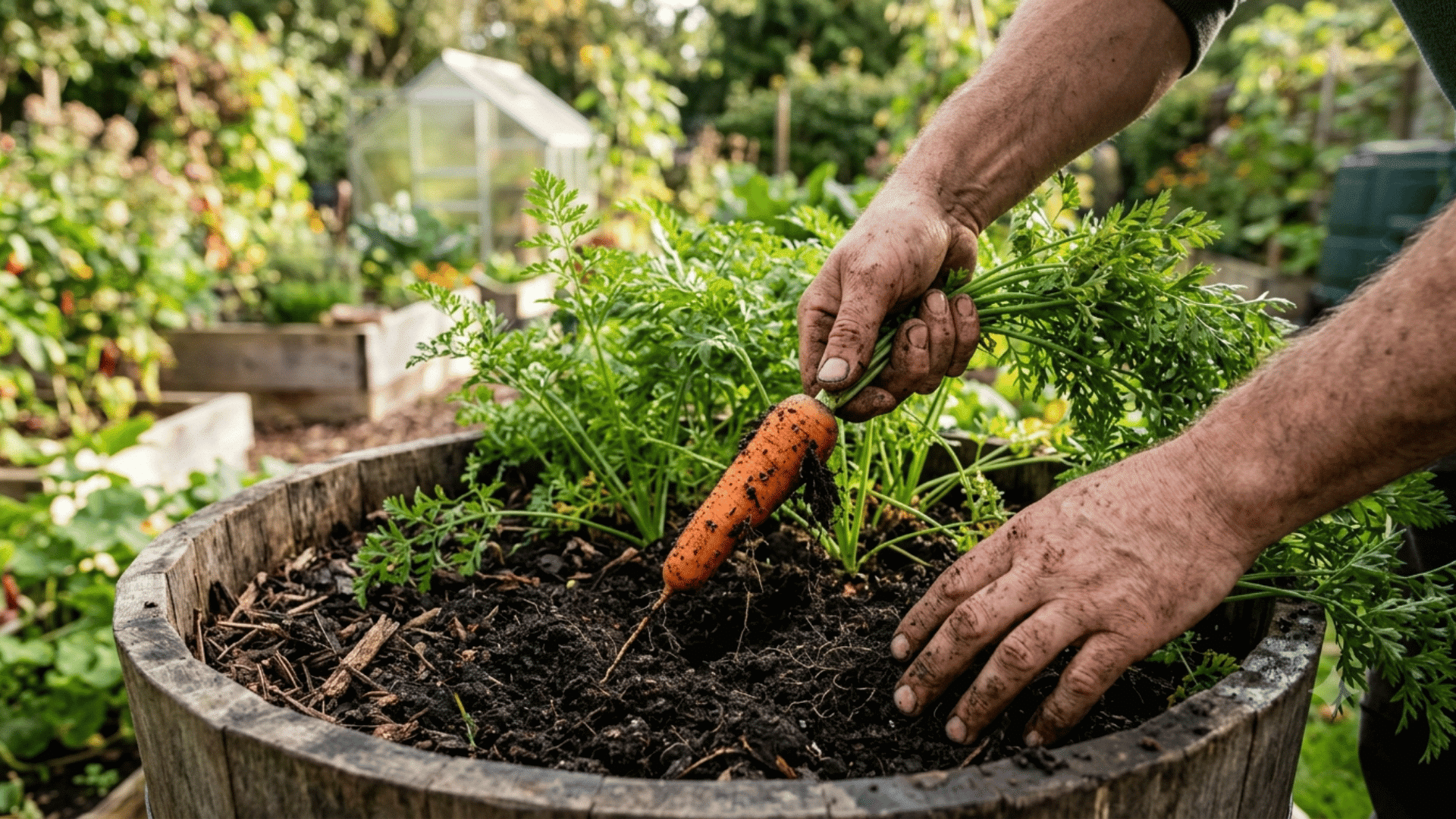
Yes, carrots can grow well in containers when they have enough room for their roots to develop. Choose a pot with good drainage and enough depth for the variety being planted.
Shorter carrots, such as Parisian varieties, work particularly well in smaller containers. Sow seeds directly into loose potting soil rather than transplanting seedlings.
Understanding garden soil vs potting soil can also help when choosing the right growing medium for containers.
Check the soil regularly, as containers can dry out faster than garden beds, and keep it consistently moist during germination and growth.
Watering and Harvesting Carrots
Once carrots are up and growing, consistent care carries them the rest of the way to harvest.
- Watering: Aim for about one inch of water per week, adjusting for rainfall, and keep moisture steady rather than letting the soil dry out and then soaking it.
- Harvesting: Check your expected maturity date and look at the width of the root shoulder peeking above the soil to judge size, since you can pull carrots young or leave them to reach full size.
Avoid the boom-and-bust cycle of letting soil go bone dry and then drenching it, since steady moisture supports steadier root development.
Conclusion
Knowing when to plant carrots gives your crop a better chance to develop strong roots and reach a good size before harvest.
From choosing the right sowing window to keeping the soil moist and giving seedlings enough space, a few simple habits can make a noticeable difference.
I always enjoy seeing those first green tops appear because they are a small sign that the work below the soil has begun.
Give carrots a place in your garden this season, and share your growing experience or favorite variety in the comment section.
Frequently Asked Questions
Does One Carrot Seed Make One Carrot?
Usually, one successfully germinated carrot seed produces one carrot root. However, not every seed germinates, so gardeners often sow several seeds and thin the seedlings later.
Can You Regrow Whole Carrots From Store-Bought Tops?
No. Carrot tops regrow leafy greens in water, not a new root. You’ll get edible foliage, but never another full carrot from the scrap.
How Far Apart Should Carrot Rows Be Spaced?
Space carrot rows twelve to eighteen inches apart. That gap gives you room to weed and thin comfortably without disturbing neighboring roots underground.