Garden soil and potting soil come down to where your plant grows. Garden soil is a heavier, topsoil-based blend made to improve in-ground beds, while potting soil is a lighter, usually soilless mix built to drain in containers.
My quick rule: beds get garden soil, containers get potting soil.
In the garden center, though, the two bags can look nearly identical, and the labels rarely tell you why one costs far more than the other.
I’ve stood in that aisle more times than I’d like to admit, and choosing the wrong bag can leave you with soggy roots and struggling plants. Once you understand how the two differ in drainage, nutrients, weight, and cost, and the mistakes to avoid, I think you’ll find planting gets a whole lot easier.
Garden Soil vs. Potting Soil: Key Differences
|
Feature |
Garden Soil |
Potting Soil |
|---|---|---|
|
Composition |
Topsoil mixed with organic matter |
Usually a lightweight, soilless mix |
|
Best For |
Outdoor gardens and planting beds |
Indoor and outdoor containers |
|
Drainage |
Slower, so it holds water longer |
Designed for better drainage and airflow |
|
Nutrient Content |
More natural nutrients from soil and compost |
May contain added or slow-release fertilizer |
|
Weight |
Heavy and dense |
Lightweight and fluffy |
|
Moisture Retention |
Holds more water and can stay soggy in pots |
Balances moisture retention and drainage |
|
pH Level |
Varies by soil source |
Often adjusted for container plants |
|
Pests and Weed Seeds |
May contain weed seeds and pathogens |
Often processed to reduce contamination |
|
Cost |
Generally less expensive |
Usually more expensive |
|
Common Uses |
Flower beds, vegetable gardens, and landscaping |
Houseplants, hanging baskets, herbs, and potted vegetables |
What Is Garden Soil?
Garden soil is natural topsoil blended with organic materials such as compost, peat moss, or aged manure. If those ingredients still sound interchangeable, understanding the difference between compost and topsoil can make choosing a garden amendment much easier.
It is intended for outdoor planting in vegetable gardens, flower beds, raised beds, and landscaped areas, and most gardeners use it to improve the soil they already have.
When you mix it into native soil, garden soil adds organic matter and nutrients.
It improves drainage in heavy clay, and it helps sandy soil hold onto moisture and nutrients. That organic matter also feeds beneficial microbes and earthworms (the unpaid workforce of any healthy bed), so your soil gets healthier with each passing season.
One caution: bagged garden soil is not the same as the native soil in your yard. It’s meant to be mixed in, not used as a replacement. Dig it into the existing soil until the two blend together.
What Is Potting Soil?
Potting soil is a lightweight growing medium designed for plants grown in containers, both indoors and outdoors.
Typical ingredients include peat moss, coconut coir, composted bark, perlite, and vermiculite, and some bags contain fertilizer as well.
Most mixes are soilless, though a few products contain small amounts of mineral soil or compost.
The loose texture allows air and water to move freely around the roots. That’s important in a pot, where roots have nowhere else to go, and good drainage and airflow lower the risk of waterlogging in a confined space.
Potting soil does not last forever; its organic ingredients break down and settle over time, and the structure declines. Eventually, you’ll need to refresh or replace it.
Garden Soil vs. Potting Soil: What Are the Differences Between Them?
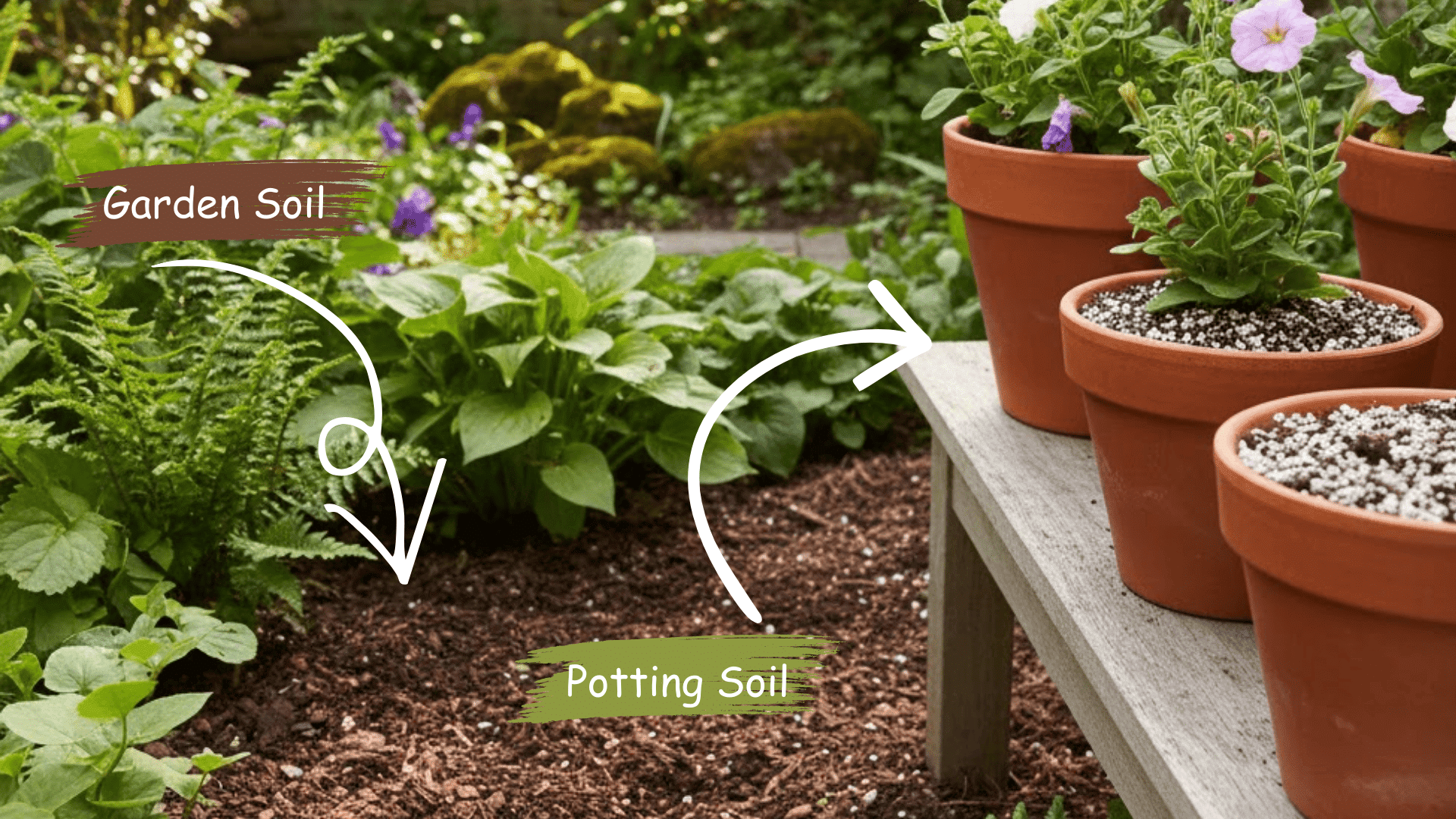
Garden soil and potting soil may look similar in the bag, but they behave differently once you plant. They differ in four main ways: drainage, nutrients, weight, and pH.
1. Drainage
Garden Soil: Its denser structure generally holds moisture longer, although drainage depends on the soil’s texture and composition. It works best when mixed with existing outdoor soil.
Potting Soil: Contains materials that improve drainage and airflow, allowing excess water to escape while keeping enough moisture around plant roots.
2. Nutrient Content
Garden Soil: Usually carries more natural nutrients, from its mineral soil and added organic matter, though levels still depend on the ingredients and soil quality.
Potting Soil:On its own, it has few nutrients, which is why most bags add a starter or slow-release fertilizer. Because you water containers so often, those nutrients leach out, and container plants need regular feeding after the starter fertilizer runs out.
I always check the bag to see how long the fertilizer is supposed to last; it saves me from guessing later.
3. Weight
Garden Soil: Heavier and denser because it contains mineral soil, making it less suitable for pots, hanging baskets, and movable planters.
Potting Soil:It’s light and easy to handle. That’s why it’s ideal for containers, hanging baskets, and indoor plants you move around or repot often.
4. pH and Sterilization
Garden Soil: Its pH varies depending on the source and ingredients. It may also contain weed seeds, pests, and soil-borne pathogens because it generally isn’t pasteurized.
Potting Soil: Many mixes are adjusted to a slightly acidic pH, typically 5.5 to 6.5, though this varies by product. Some are pasteurized during manufacturing to reduce harmful organisms and weed seeds.
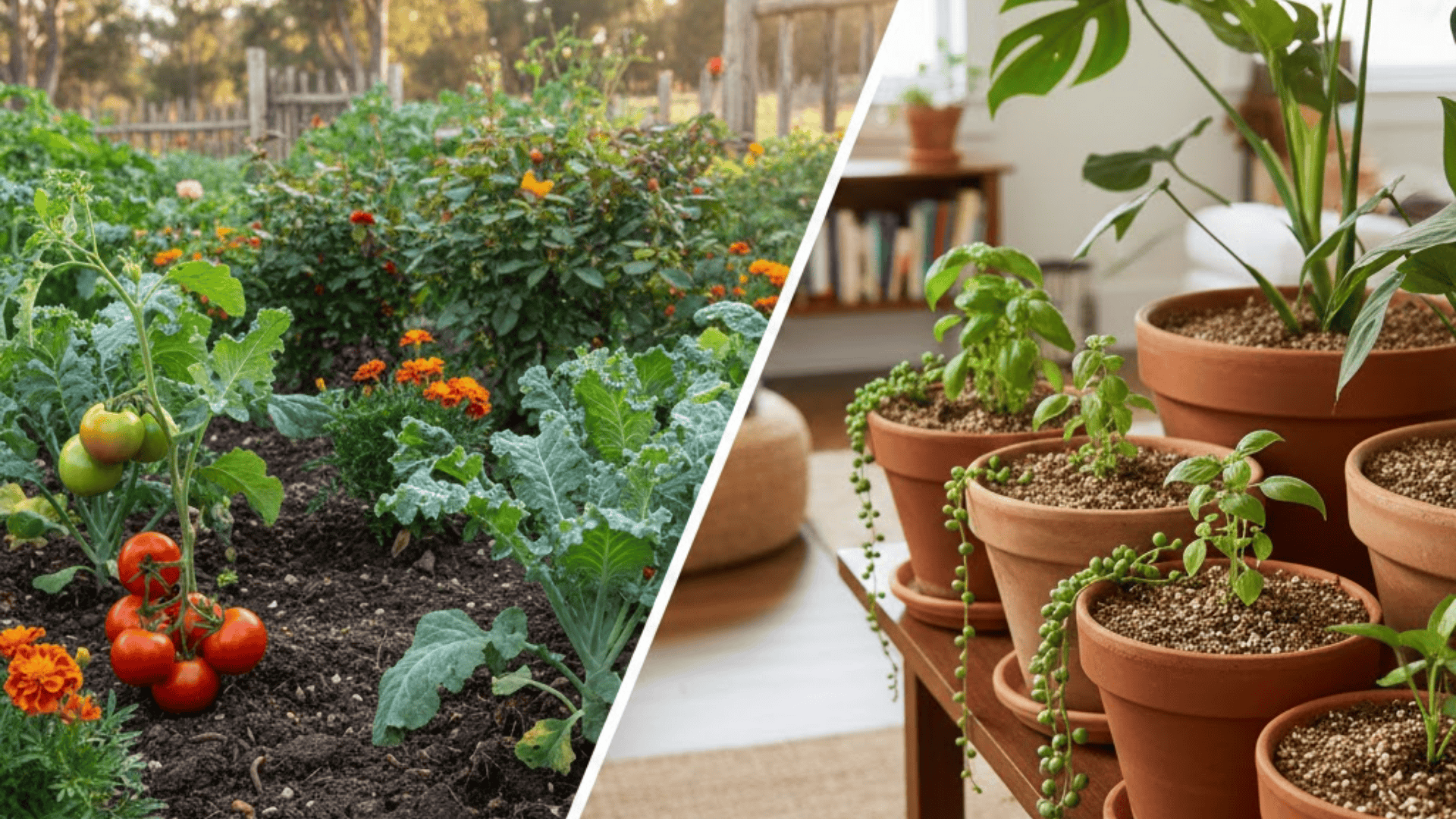
When to Use Potting Soil vs. Garden Soil
|
Planting Location |
Suitable Soil |
Why It Works |
|---|---|---|
|
In-ground vegetable garden |
Garden soil mixed into existing soil, with compost if needed |
Adds organic matter and nutrients while improving the structure of native soil. |
|
Flower beds |
Garden soil blended with the existing soil |
Helps improve moisture retention, drainage, and nutrient levels in outdoor beds. |
|
Raised garden beds |
Raised-bed soil or a blend of topsoil, compost, and garden soil |
Provides enough structure and nutrients while allowing excess water to drain through the bed. |
|
Outdoor pots and planters |
All-purpose potting soil or potting mix |
Stays lighter than garden soil and allows better drainage and airflow around container roots. |
|
Indoor houseplants |
Indoor potting mix suited to the plant type |
Provides the drainage and aeration roots need in enclosed containers without the weight of garden soil. |
|
Hanging baskets |
Lightweight potting mix |
Keeps the basket manageable while holding enough moisture without becoming overly dense. |
|
Succulents and cacti |
Cactus or succulent potting mix |
Drains faster than regular potting soil, which suits plants that are sensitive to excess moisture. |
|
Seed-starting trays |
Seed-starting mix |
Its fine, lightweight texture makes it easier for small roots to develop while maintaining even moisture. |
Potting soil is lighter and drains better, so more air reaches the roots. That makes it the right choice for houseplants, herbs, and container vegetables.
Can You Mix Garden Soil and Potting Soil?
Yes, you can mix garden soil and potting soil, but the right combination depends on where you’re planting. Mixing them can improve soil texture, drainage, and moisture retention when done correctly.
Garden soil alone isn’t suitable for containers because it can become compacted and restrict airflow around the roots. If you’re using it in large outdoor planters, follow these steps:
-
Improve drainage: Mix garden soil with perlite and a lightweight potting mix to keep the soil loose.
-
Add organic matter: Include some compost to improve soil structure and provide nutrients.
-
Choose proper containers: Use pots with drainage holes to prevent waterlogging.
-
Watch for weeds: Garden soil usually isn’t pasteurized, so pull weed seedlings as soon as they sprout.
You can also mix potting soil into existing garden beds, but compost is usually more practical for improving outdoor soil.
I prefer using a ready-made potting mix for containers and adding compost to garden beds. It keeps things simple and helps avoid unnecessary drainage problems.
How to Fix or Refresh Used Soil
Old soil does not always need to be thrown away. If it has become hard, compacted, or low in nutrients, a few changes can make it suitable for planting again.
How to Fix Garden Soil Used in Pots
-
Add perlite: Mix perlite into the soil to create air spaces and improve drainage.
-
Use vermiculite: Add vermiculite if the soil needs better moisture retention along with improved airflow.
-
Mix in coarse sand: Horticultural coarse sand can help in a properly balanced soil mix, but adding a little sand to heavy clay soil may make compaction worse.
-
Add fresh potting mix: Blend garden soil with lightweight potting mix to improve its texture. Replacing most of the garden soil is usually the better option.
How to Refresh Old Potting Soil
-
Remove old roots: Pick out dead roots, stems, and other plant debris before reusing the soil.
-
Add fresh compost: Mix in a modest amount of finished compost to replenish organic matter and provide some nutrients.
-
Restore soil texture: Add fresh potting mix and perlite if the old soil feels dense or drains slowly.
-
Replace lost nutrients: Use a suitable fertilizer according to the plant’s needs and the product instructions.
-
Check for disease: Avoid reusing soil from pots where plants suffered from root rot or serious soilborne diseases.
Common Mistakes to Avoid
Most soil problems come from putting the right product in the wrong place. These are the mix-ups that cause soggy roots, dry beds, and wasted money. I’ve made at least two of these myself.
|
Common Mistake |
What to Do Instead |
|---|---|
|
Using garden soil alone in pots |
Choose a potting mix designed for containers to provide proper drainage and airflow around the roots. |
|
Filling garden beds with only potting soil |
Use suitable native soil and improve it with garden soil or compost when needed. |
|
Filling raised beds with garden soil alone |
Blend garden soil or topsoil with compost, or use a bagged raised-bed mix. |
|
Ignoring drainage holes |
Use containers with drainage holes so excess water can escape and roots do not stay waterlogged. |
|
Buying soil based only on price |
Check the ingredients, drainage properties, and recommended uses before choosing a soil or potting mix. |
|
Adding too much fertilizer |
Check whether the soil or potting mix already contains fertilizer before adding more nutrients. |
I once picked a pot for my mint without checking whether it had drainage holes. Within a few days, the plant started to die because excess water had nowhere to escape, leaving the roots sitting in soggy soil for too long.
To see the difference firsthand, I filled two identical 10-inch pots, one with bagged garden soil and one with potting mix, and watered each with 4 cups of water. The garden soil took 45 minutes to stop dripping, and its top inch stayed wet for 5 days; the potting mix drained in 2 minutes and dried in 2 days.
For outdoor planters bigger than 15 gallons, I use a custom mix of 60% potting soil and 40% garden soil. After 6 months, it settled slightly but stayed loose and easy to work with.
Tips for Choosing the Right Soil for Your Garden
-
Match soil to plant type: Succulents need fast drainage, while vegetables prefer nutrient-rich soil with plenty of organic matter.
-
Read the label: Look at the ingredients, the pH, and whether slow-release fertilizer is included and how long it lasts. Bags that look alike can be very different inside.
-
Buy for the project: Choose bulk garden soil for large beds and lightweight potting mix with perlite for containers.
-
Consider moisture retention: For plants that need steady moisture, look for mixes with coconut coir or other water-holding materials.
Wrapping Up
Before you buy, think about where the plants will grow, how much drainage they need, and whether fertilizer is already in the bag, because those three answers will point you to the right soil almost every time. You do not need the most expensive soil on the shelf.
The best soil is the one suited to your plants and your conditions, not the one with the fanciest bag.
Have you ever used the wrong soil or found a mix that works really well? I’d love to hear your experience in the comments below!
Frequently Asked Questions
Is Potting Soil the Same as Potting Mix?
Not always. Potting mix is usually soilless, while bags labeled potting soil can include sand, compost, or some mineral soil. Many brands use the two names interchangeably, so check the ingredient list.
Is Garden Soil the Same as Topsoil?
No. Topsoil is screened soil from the upper layer of the ground, used for filling and leveling, while garden soil is topsoil already enriched with organic matter for planting.
Does Potting Soil Go Bad?
Yes, its peat and bark break down and compact over time. Plan to repot most houseplants into fresh mix every year or two, or sooner if water runs straight through or pools on top.
Why Is Potting Soil More Expensive Than Garden Soil?
Its processed ingredients like peat, perlite, and vermiculite cost more to produce than the bulk topsoil that makes up most garden soil.
What Soil Should I Use for Raised Beds?
Garden soil or topsoil blended with compost works for most raised beds, or you can buy a bagged raised-bed mix. Filling a large bed with potting soil alone gets expensive, and it settles more as it breaks down.
Can I Reuse Potting Soil?
Yes, if the last plant was healthy. Pull out old roots, loosen the mix, and blend in some fresh potting mix or compost. Throw out soil from plants that had disease or pests.