Ever tried on a pair of jeans that looked great but just didn’t feel right? I’ve been there more times than I can count, and it can get frustrating fast. That’s exactly why I keep coming back to bootcut styles.
If you’re wondering “what are bootcut jeans” and why they’re suddenly everywhere again, it really comes down to how they work with your shape. They fit through the hips, then open slightly at the knee, creating a look that feels balanced without trying too hard.
I’ve noticed more people reaching for them lately, and honestly, it makes sense. Once you understand how they fit, it becomes much easier to decide if they belong in your wardrobe.
What are Bootcut Jeans and Where Did They Come From
Bootcut jeans are a classic fit that stays close through the hips and thighs, then slightly opens from the knee down. That small flare is what allows them to sit neatly over boots, which is how the style got its name.
Over time, they moved beyond function and became a go-to option for creating a balanced, flattering shape.
Their history goes back to the late 1800s, when wider leg openings were designed for riders wearing boots. The style evolved through different fashion phases, from relaxed 60s looks to sharper 90s fits.
Today’s version feels more refined, with better fabric, improved fit, and a shape that works easily in everyday wardrobes.
Bootcut vs. Other Jean Fits
Standing in a store holding two pairs of jeans that look exactly the same is genuinely frustrating. I’ve been there, turning them over, trying to spot what’s different.
The truth is, the differences are small, but they show up the moment you put them on. Here’s what actually sets bootcut apart from everything else in a wardrobe.
1. Bootcut vs. Flare Jeans

Both styles widen below the knee, which is exactly why they get mixed up. The gap between them isn’t obvious until you notice how much, and from where, that opening actually starts on your leg.
Here’s a side-by-side look at how they actually differ:
| Feature | Bootcut Jeans | Flare Jeans |
|---|---|---|
| Flare Starts | Knee | Mid-thigh |
| Hem Opening | Slight, subtle | Wide, dramatic |
| Overall Look | Balanced and everyday | Bold and statement-driven |
| Best Use | Daily outfits | Fashion-forward styling |
Bootcut works quietly in your outfit. Flare makes itself the focal point. If yours ever felt too bold, it was probably a flare.
2. Bootcut vs. Straight Jeans
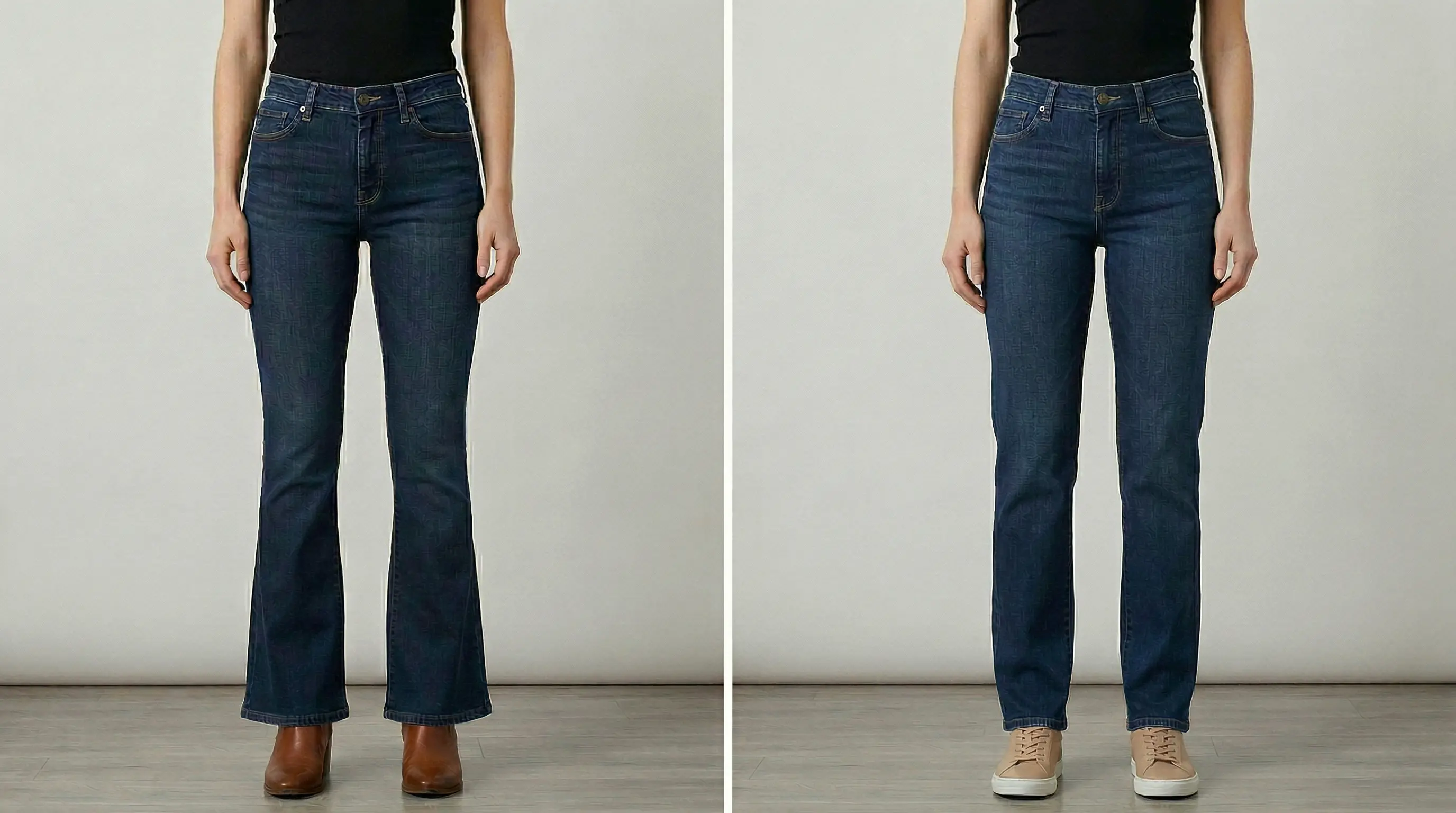
Honestly, it’s easy to mix up bootcut with straight fit. They look nearly identical on the hanger and even on a flat lay. The difference only really shows up when you’re wearing them; you’ll understand why it matters for your shape.
Once you see the fit details laid out, the distinction becomes a lot clearer:
| Feature | Bootcut Jeans | Straight Jeans |
|---|---|---|
| Leg Shape | Slight flare from the knee | Same width throughout |
| Silhouette | Balanced and elongating | Clean and structured |
| Overall Look | Soft and curved | Minimal and sharp |
| Best Use | Shape-enhancing outfits | Simple everyday wear |
If clean and simple is your default, straight jeans will feel natural on you. If something always felt slightly off with straight jeans, that small bootcut flare is usually what fixes it.
3. Bootcut vs. Cowboy Cut Jeans
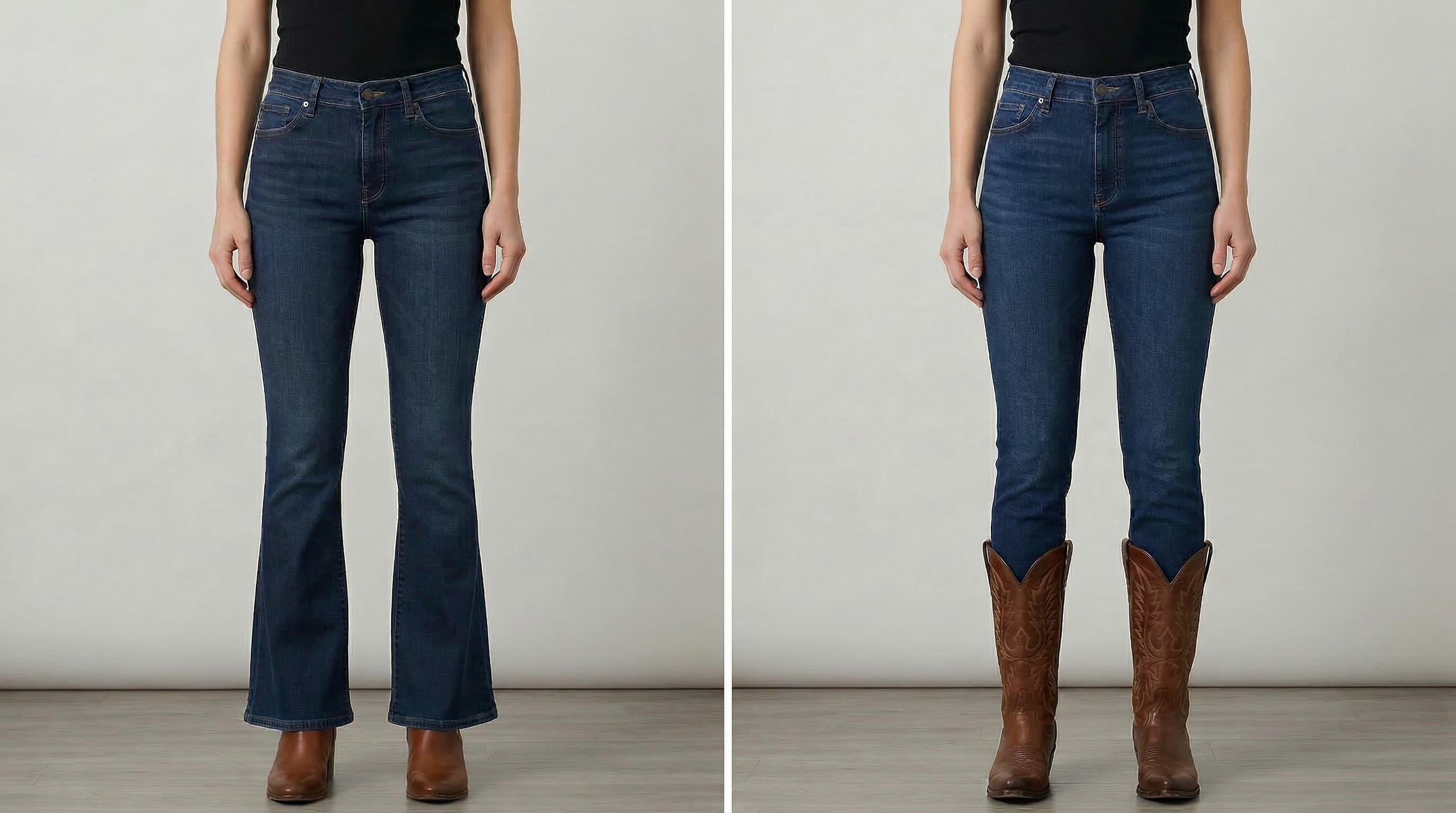
The first time I tried cowboy cut jeans, I thought they were just bootcut with better marketing. They’re not.
They fit completely differently, tighter, higher, more structured. Great if that’s what you’re going for, but not what most people mean when they reach for a bootcut.
Same roots, very different construction, and this breakdown shows exactly why:
| Feature | Bootcut Jeans | Cowboy Cut Jeans |
|---|---|---|
| Waist | Mid to high-rise | High rise |
| Fit | Relaxed through seat | Snug and structured |
| Purpose | Casual everyday wear | Functional western wear |
| Styling | Easy to pair casually | More specific to Western looks |
If you want that rugged western character in your everyday wardrobe, bootcut carries it without making you look like you’re dressed for a rodeo. You get the spirit of the aesthetic without committing to the whole look.
4. Bootcut vs. Skinny Jeans
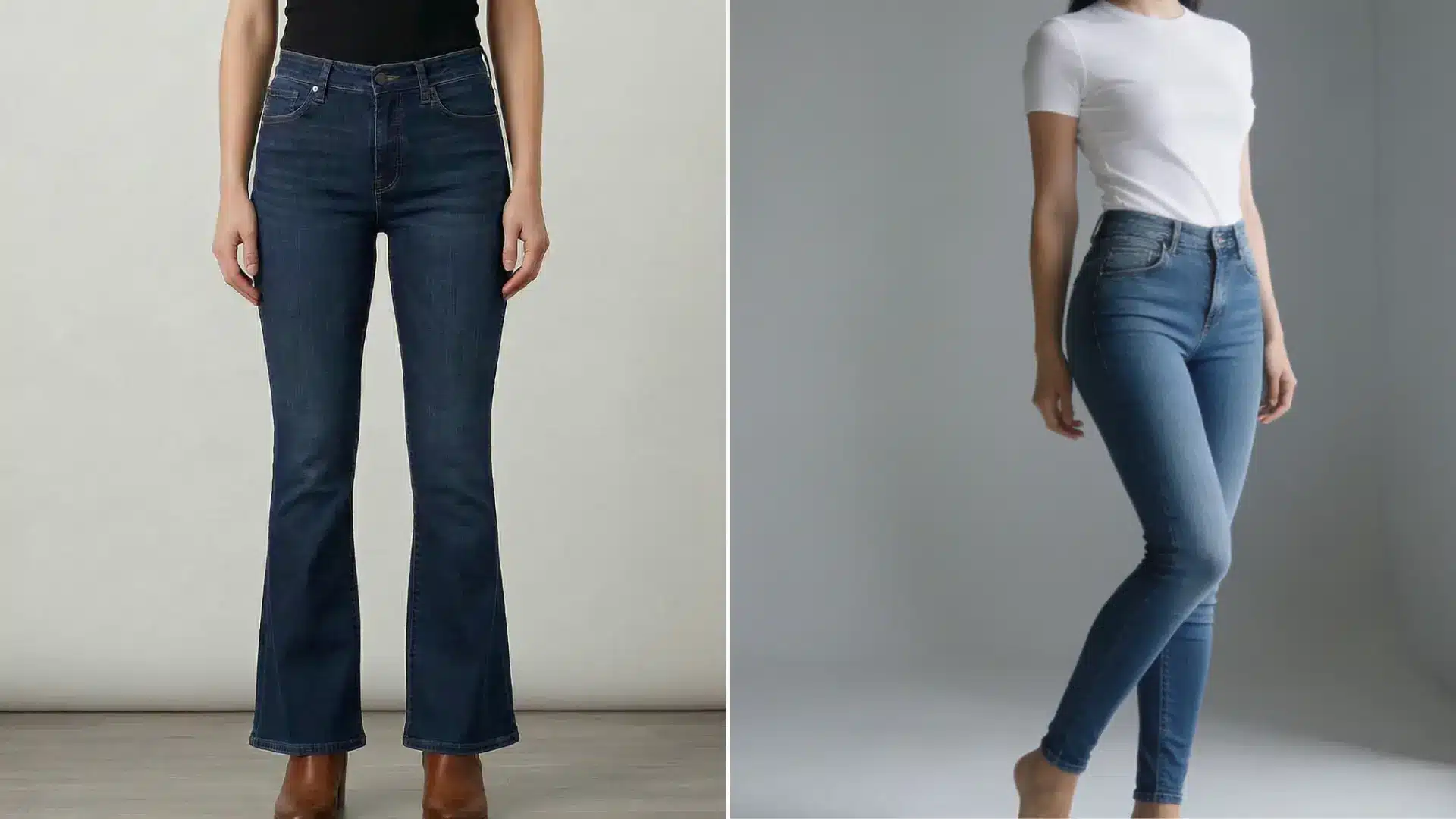
This is the comparison most people actually think about when they return to bootcut after years of wearing skinny jeans. The difference becomes clear the moment you try them on.
| Feature | Bootcut Jeans | Skinny Jeans |
|---|---|---|
| Leg Shape | Fitted through the thigh, flares at the knee | Tight and tapered throughout |
| Silhouette | Balanced and shape-enhancing | Body-hugging and narrow |
| Shoe Pairing | Falls over boots and heels | Sits on or tucks into shoes |
| Comfort | More space from the knee down | Tight through the calf |
The shift back to bootcut mostly comes down to comfort. Skinny jeans stay tight all the way down, while bootcut gives you room where it matters without losing shape. It’s a small change, but you feel the difference throughout the day.
Why Bootcut Jeans are Back?
Most trends return needing a second chance to get it right. Bootcut walked back in like it owned the place.
The stiff, rigid versions from the early 2000s quietly gave way to softer denim, cleaner lines, and rises that actually work for real bodies and real mornings.
But honestly, the jeans changed less than we did. After years of squeezing into skinny denim and never quite feeling at ease, most of us were just ready for something that felt good without the effort.
Bootcut showed up again at exactly the right time. No big announcement, no convincing needed, it just slipped back into our wardrobes and felt like it had never really gone anywhere.
There’s also a generational component worth naming. Younger shoppers drawn to Y2K nostalgia are approaching bootcut with fresh eyes, while women who wore it the first time around are rediscovering it with the benefit of better fabric technology and higher rises.
Both groups are finding the same thing: it’s simply a very forgiving cut that works harder than it looks.
Do Bootcut Jeans Suit Your Body Type
Bootcut works across more body types than most people expect: you just need to know how to wear it for your frame.
- Curvy and pear shapes: The flare mirrors your hips and balances your silhouette naturally. Keep the fit close through the thigh; that fitted-to-flared contrast is exactly what makes it work.
- Shorter frames: Avoid flat shoes; they cut your leg line right where you need it to keep going. Even a small heel makes a bigger difference than you would expect.
- Taller frames: You have enough leg to show the flare properly. The cut stays proportional and adds shape from the knee down without looking off.
- Apple and straight frames: A high-rise bootcut creates the illusion of a defined waist and adds curve through the hip. Pair with a fitted top that skims the waist rather than hiding it.
- Plus-size frames: Bootcut is widely considered one of the most flattering denim cuts for fuller figures. The flare at the hem balances the hip and thigh visually, and stretch denim through the seat ensures comfort without the fit becoming baggy
I have seen bootcut work on every frame, curves, shorts, and tall. Get those three things right, and it will work for yours, too.
How to Choose Your Rise
Rise matters just as much as the cut, but it often gets ignored. The way your jeans sit on your waist can completely change how they look and feel.
| Rise | Where It Sits | Best For |
|---|---|---|
| Low-rise | On the hip, below the navel | Casual, Y2K-inspired looks; suits longer torsos |
| Mid-rise | Just below the natural waist | Everyday wear; works well for most body types |
| High-rise | At or above the natural waist | Defines the waist; great for shorter torsos and curvier shapes |
If you’re unsure, mid-rise is the easiest place to start. It works in most situations and feels balanced. High-rise is also popular right now, especially if you like tucking in tops or wearing cropped styles.
How to Style Bootcut Jeans
Bootcut doesn’t need much to look good; the cut does most of the work. These are the combinations I keep coming back to across different situations, and they’ve never really let me down.
1. Casual Everyday Outfits
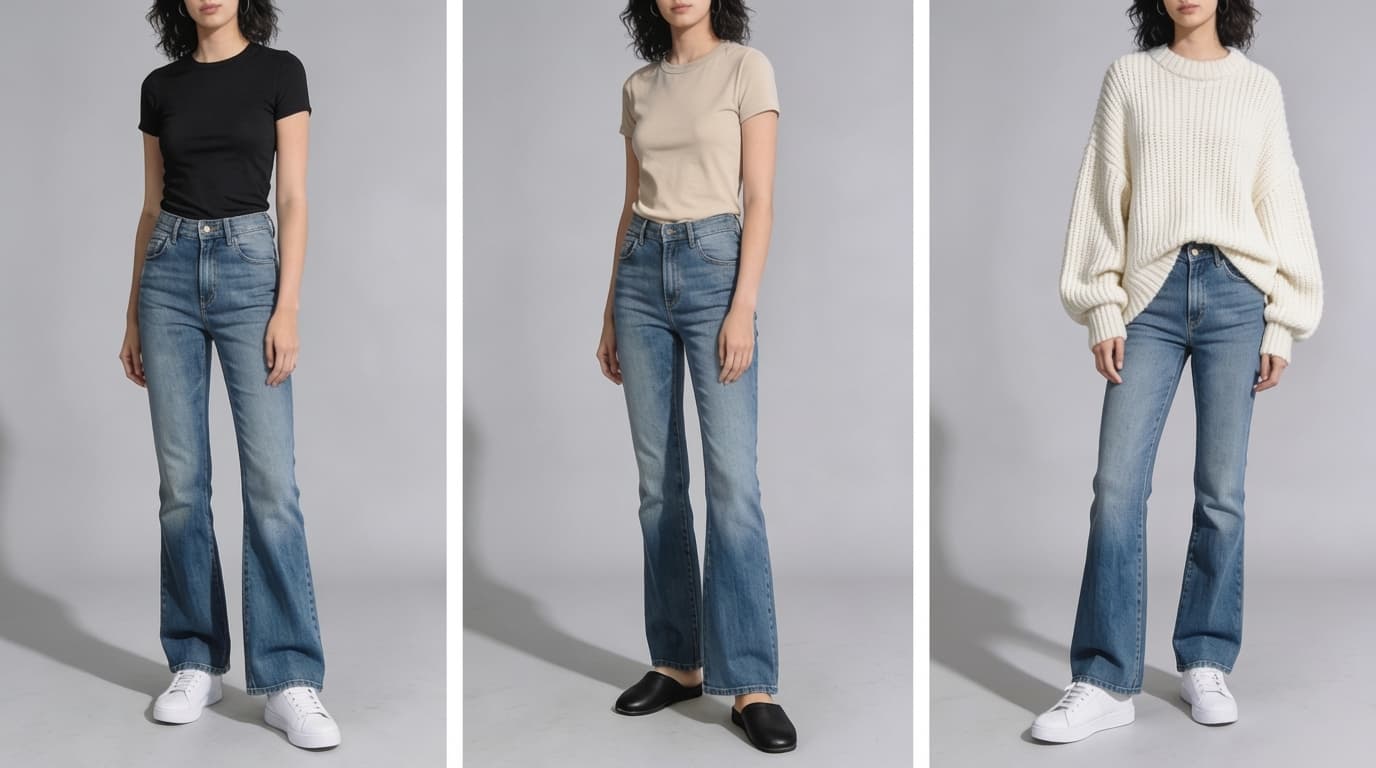
For daily wear, keep the top simple and let the jeans do the work. I’ve found you really do not need to overthink it; the jeans do enough on their own.
Outfit formulas:
- Fitted tee + bootcut jeans + clean sneakers
- Basic top + bootcut jeans + flat mules
- Oversized knit + bootcut jeans + white sneakers
Best for: Errands, coffee runs, low effort days
Suits: All frames, especially petite with a slight heel
Tip: Going with flats? Keep the hem slightly cropped, or the proportions will work against you.
2. Smart and Semi-Formal Looks
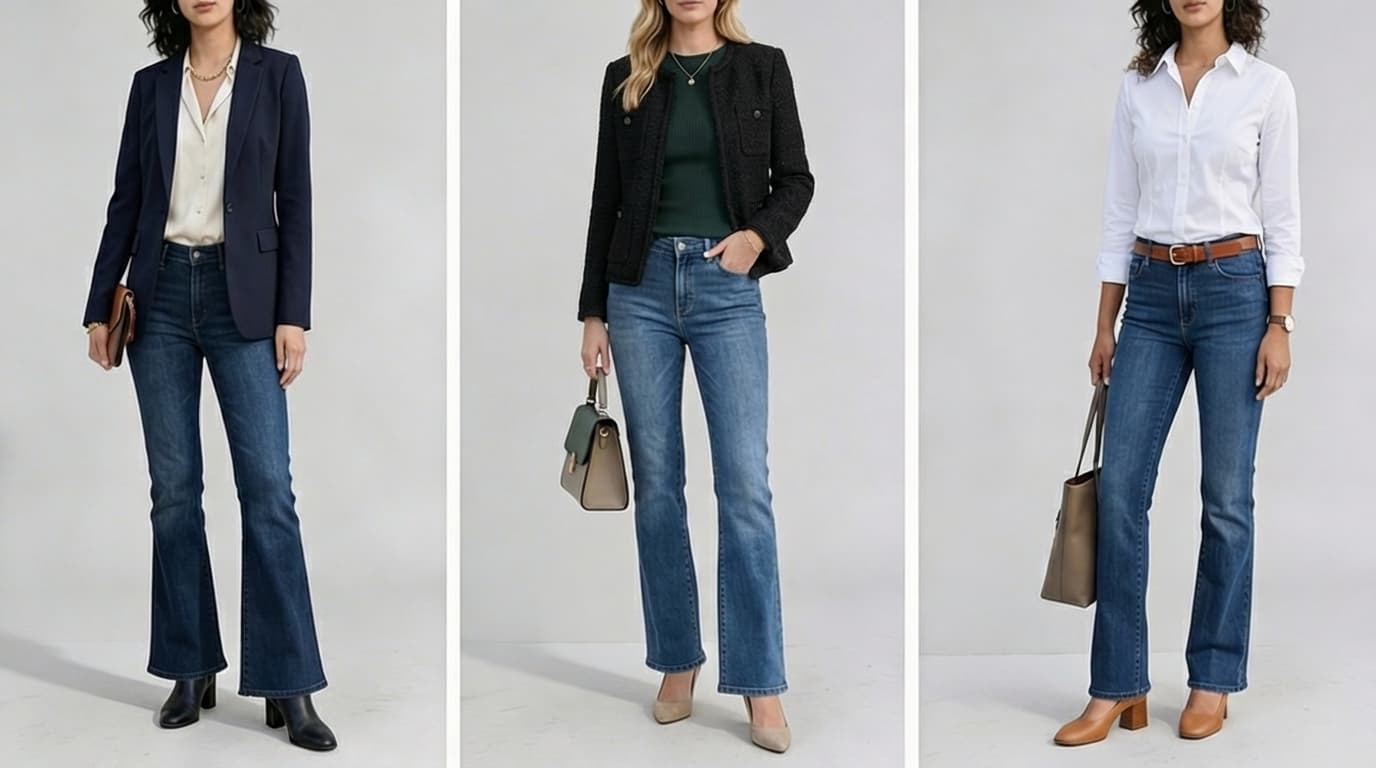
Bootcut already leans polished, a blazer or structured jacket just takes it the rest of the way. This is what I reach for when I want to look put together without trying too hard.
Outfit formulas:
- Chic blazer + tucked blouse + bootcut jeans + heeled boots
- Fitted knit + structured jacket + bootcut jeans + heels
- Button-down shirt + bootcut jeans + block heels
Best for: Office days, evening outings, smart casual events
Suits: Curvy and tall frames
Tip: Keep everything fitted on top; the structure just confirms what the bootcut already does.
3. Weekend And Street Style Looks
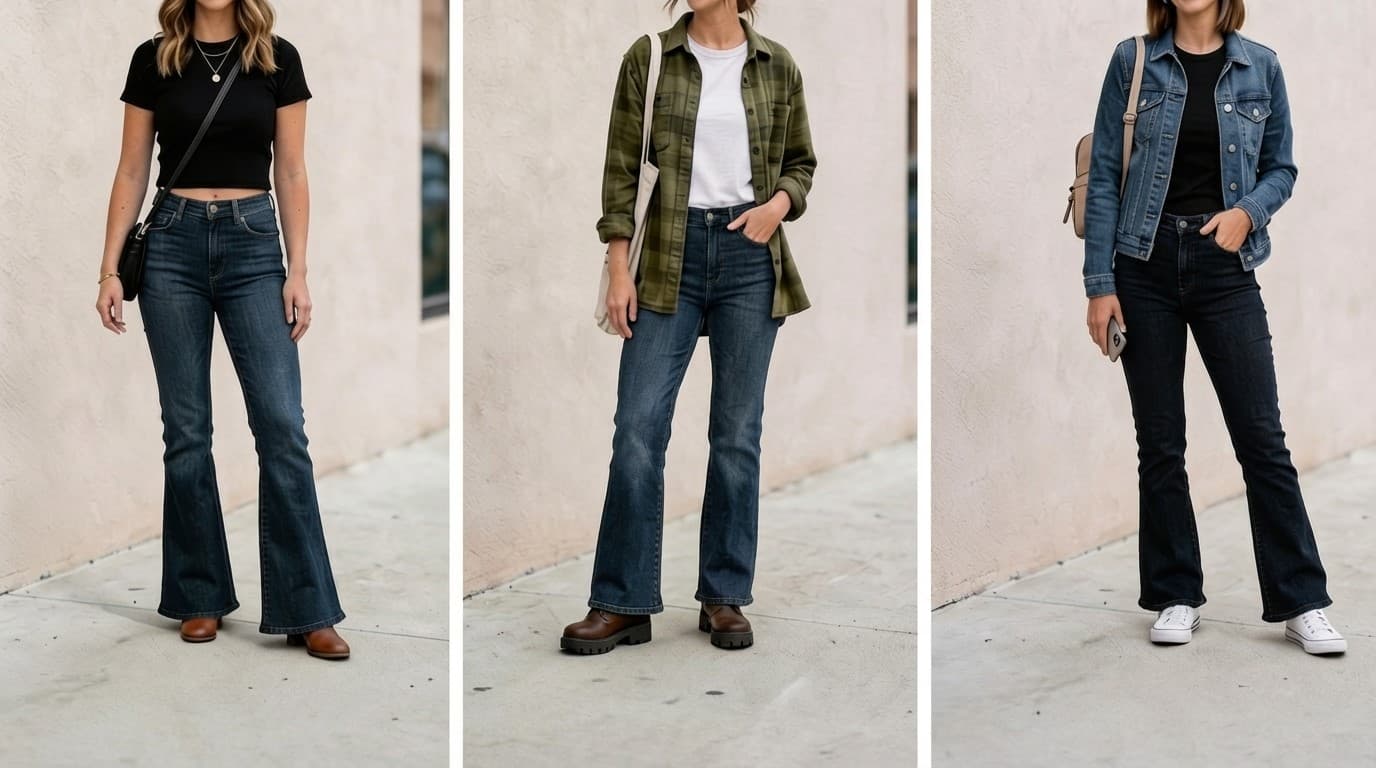
My personal favourite way to wear bootcut is relaxed but still intentional. These are easy to throw together on a slow morning and still look like you actually thought about it.
Outfit formulas:
- Cropped top + bootcut jeans + ankle boots
- Overshirt + basic tee + bootcut jeans + chunky boots
- Denim jacket + fitted tee + bootcut jeans + sneakers
Best for: Weekend outings, casual meetups, street style looks
Suits: Most body types, especially those who want comfort without looking underdressed
Tip: Bootcut holds its shape even on casual days; it comes together effortlessly.
Bootcut jeans hit the sweet spot, polished enough to look intentional, relaxed enough to stay comfortable. All the structure, none of the stiffness.
Common Styling Mistakes To Avoid With Bootcut Jeans
I have worn bootcut jeans for years and made every mistake on this list, so you do not have to.
- Dragging too long: Hem them to just skim the top of your shoe, or the flare gets lost completely
- Bulky tops: A half tuck or fitted tee is all you need; anything oversized kills the silhouette
- Wrong shoe height: Flat shoes hide the flare; a small heel or ankle boot is always the better call
- Waist fit: If you are constantly tugging, the fit is off; look for stretch and consider high-rise
- Wrong wash: Dark rinse for Smart, medium for everyday, light or distressed for weekends only
Once you start paying attention to these details, bootcut jeans become the easiest and most complimented item in your wardrobe.
Conclusion
For me, bootcut jeans have always been about comfort and balance. They don’t try too hard, but they still make an outfit feel complete in a simple, natural way. Once you understand how they shape your silhouette, everything else becomes easier to figure out.
I’ve seen how small details like shoe choice, hem length, and the right waist fit can change the entire look. You don’t need to overthink it, just focus on what feels right for you and your routine.
Now that you understand what bootcut jeans are and how they compare to other fits, you can wear them with confidence. Try a few combinations, see what works, and build your own style. Share your favorite look or check out my more styling ideas.
Frequently Asked Questions
Can I wear bootcut jeans in summer?
Yes, go for lightweight or stretch denim in a lighter wash. A fitted tank and pointed toe flats keep it warm weather appropriate without losing the shape.
Can I wear bootcut jeans if I am plus-size?
Bootcut is actually one of the most flattering cuts for plus-size frames. The flare naturally balances the hip and thigh. Just keep the fit close through the thigh and avoid anything too loose on top.
What bag works best with bootcut jeans?
A structured bag, tote, shoulder bag, or mini bag tends to complement the clean lines of the bootcut better than anything too slouchy or oversized.
How often should I replace my bootcut jeans?
When the flare loses its shape, or the denim starts to thin at the thigh. A good pair treated well can last for years. The key is cold washing and avoiding the dryer.