
Have you ever spotted an old jacket, piece of furniture, or family keepsake and wondered whether it actually counts as vintage?
The term is used often, but age alone does not always tell the full story. What is considered vintage can vary depending on the item, its production era, and the category it belongs to.
Understanding the difference between vintage, antique, retro, and secondhand can make identification much easier.
Over the years, I’ve worked with plenty of older furniture and design pieces, and one thing I’ve learned is that “vintage” is often used more loosely than it should be.
Keep reading to learn the common age rules and how to tell where an item fits.
What Is Considered Vintage?
Vintage generally refers to an item that is at least 20 years old but not yet old enough to be considered an antique.
The term is commonly used for clothing, furniture, jewelry, decor, and collectibles associated with a recognizable past era. According to Oxford Academic, no single age rule applies to every category.
However, the 20-year guideline is commonly used, while items around 100 years old are generally classified as antiques.
A genuine vintage item should typically have been made during the period it represents rather than simply copying an older style. Condition, craftsmanship, brand, rarity, and historical relevance can also affect whether an item is considered vintage.
Understanding Antique Items
Antiques stand apart from vintage and retro pieces because of their greater age, historical value, and traditional craftsmanship.
- Age: Antiques are generally items that are at least 100 years old.
- Historical Value: Their connection to a particular period can make them culturally or historically significant.
- Craftsmanship: Many antiques feature handmade details and construction methods that are less common today.
- Rarity: Limited surviving pieces can increase an antique item’s desirability among collectors.
- Condition: Original finishes, materials, and well-preserved details can influence both appeal and value.
- Provenance: Ownership records, maker marks, and documentation can help confirm an antique’s origin and history.
What Does Retro Mean?
Retro refers to newer items designed to recreate the look of an earlier era, often drawing inspiration from styles that were popular 20 to 50 years ago or more.
Unlike vintage or antique pieces, retro items do not need to meet a specific age requirement because they can be newly made.
Their appeal usually comes from nostalgic colors, patterns, shapes, and design details.
Retro styles are common in fashion, furniture, home decor, cars, and electronics. The main difference is that retro imitates the past rather than actually coming from it.
Vintage vs Antique vs Retro: Key Differences at a Glance
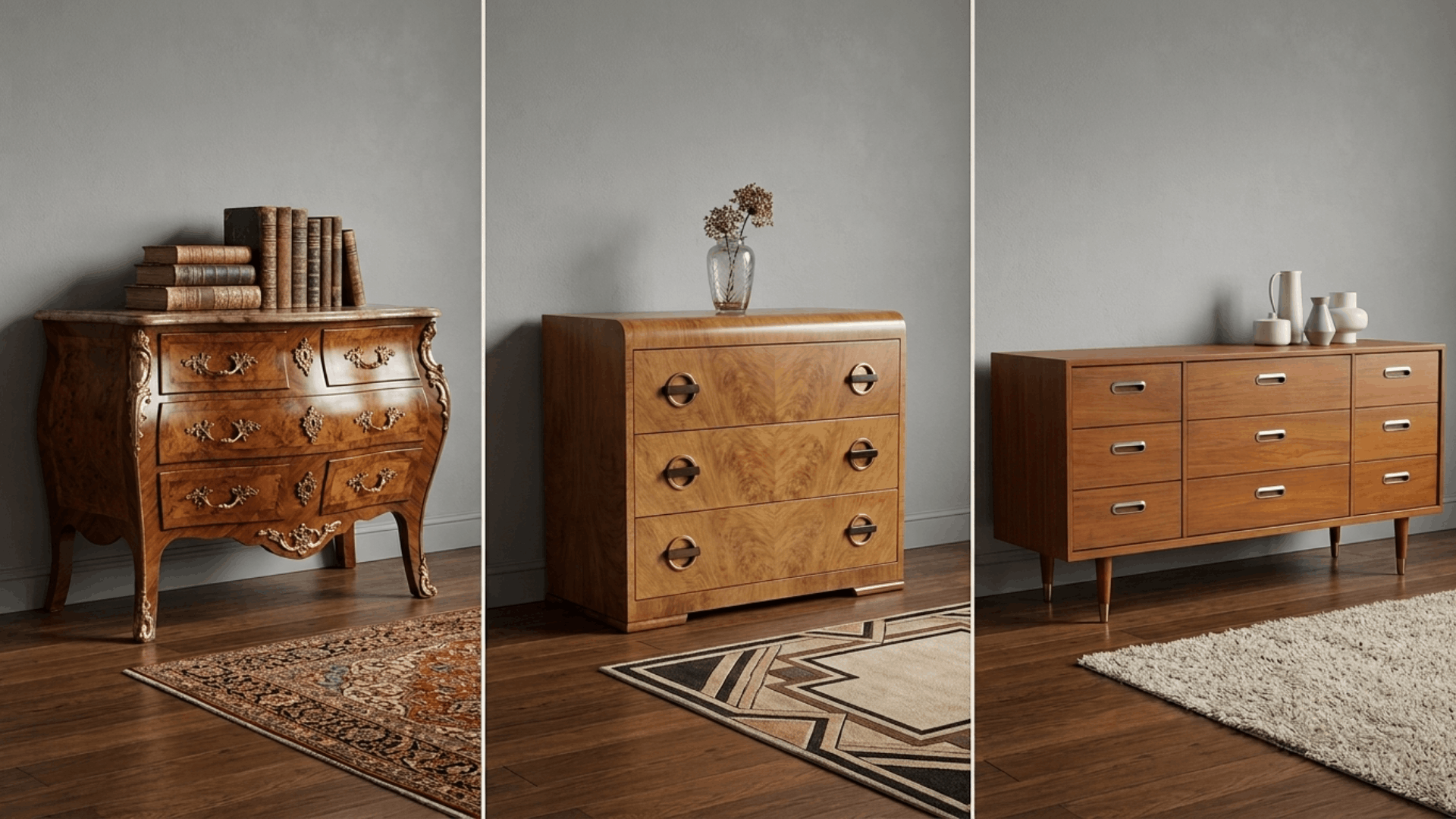
Vintage, antique, and retro may look similar, but they differ in age, authenticity, origin, and how they relate to past styles.
1. Age
Vintage items are commonly around 20 to 99 years old, while antiques are generally 100 years old or more. Retro items have no fixed age requirement because the term refers mainly to design.
A newly made product can still be retro if it copies the look of an earlier era.
2. Authenticity
Vintage and antique items were genuinely produced during the periods they represent. Their materials, construction, labels, and design details usually reflect their original era.
Retro items are different because they may be newly manufactured and are created to imitate or reference styles associated with the past.
3. Production Period
A vintage or antique item belongs to the time in which it was originally made. Its production date helps determine how it should be classified.
Retro products are made later and borrow recognizable features from older decades while using modern production methods, materials, and manufacturing techniques.
4. Style
Vintage and antique items naturally reflect the design trends that were popular when they were made. Retro items deliberately recreate those older looks through color, shape, pattern, or detailing.
The key difference is whether the style comes from the item’s original era or has been recreated later.
5. Value
Age alone does not determine value. Vintage and antique pieces may be worth more when they are rare, well preserved, made by notable designers, or supported by clear provenance.
Retro items are usually valued more for their design appeal and popularity than for historical age or rarity.
6. Collectibility
Vintage and antique items often attract collectors because of their originality, scarcity, craftsmanship, and connection to a particular period.
If your vintage wardrobe includes older sneakers, knowing how to clean white shoes can help refresh their appearance without replacing them.
Retro items can also be collectible, but their appeal usually comes from nostalgia or design. Collectibility depends on demand, condition, brand reputation, and how widely an item was produced.
Why Age Matters when Identifying Vintage Items?
Age helps determine whether an item should be described as vintage, antique, retro, or simply secondhand. It gives buyers and collectors a clearer idea of when the piece was made.
- Defines the Category: Age helps separate vintage, antique, retro, and modern items more accurately.
- Shows the Era: It indicates when an item was made and connects it to a specific design period.
- Supports Authenticity: Production age can help confirm whether an item genuinely comes from the era it represents.
- Affects Rarity: Older items may become harder to find as fewer original pieces remain available.
- Influences Value: Age can increase interest, but condition, maker, demand, and provenance also affect worth.
- Improves Identification: Knowing the approximate age makes it easier to research materials, labels, styles, and manufacturing details.
Examples of Vintage, Antique, and Retro Items
These examples show how vintage, antique, and retro items differ based on age, production period, and design. Comparing familiar items makes each category easier to identify.
| Item | Age | Category | Why |
|---|---|---|---|
| 1990s denim jacket | 25–35 years | Vintage | Made in the original era |
| 1980s leather handbag | 35–45 years | Vintage | Fits the vintage age range |
| 1970s wooden dresser | 45–55 years | Vintage | Authentic piece from that decade |
| 1960s costume jewelry | 55–65 years | Vintage | Original period-made jewelry |
| 1920s writing desk | 100+ years | Antique | Meets the antique threshold |
| 1910s pocket watch | 100+ years | Antique | More than a century old |
| 1890s ceramic vase | 125+ years | Antique | Clearly qualifies as antique |
| New 1970s-inspired lamp | new | Retro | Copies a 1970s style |
| Modern 1950s style refrigerator | new | Retro | Recreates a mid-century look |
| new 1980s-inspired sneakers | new | Retro | Uses 1980s design influences |
When Vintage Items Become Antiques
A vintage item generally becomes an antique once it reaches about 100 years old. Before that point, objects that are at least 20 years old are commonly described as vintage, although exact definitions can vary by category and marketplace.
The 100-year benchmark is especially useful for furniture, jewelry, artwork, and collectibles. However, age alone does not determine an item’s importance or value.
Vintage serving trays, glassware, and tableware can bring extra character to a gathering, especially when paired with a thoughtfully arranged charcuterie board.
Condition, rarity, craftsmanship, maker, originality, and provenance can all affect how desirable it is.
As vintage pieces cross the century mark, they are typically classified as antiques rather than vintage items.
How to Identify the Age of a Vintage Item?
Small details can reveal when a vintage piece was made and help confirm whether it is genuinely from an earlier era. Check several clues together rather than relying on appearance alone.
- Labels and Tags: Brand logos, care labels, and country of origin details can help narrow down the production period.
- Materials: Fabrics, metals, plastics, woods, and finishes often reflect the manufacturing trends of a specific decade.
- Construction: Stitching, seams, joinery, screws, and fasteners can provide useful clues about an item’s age.
- Hardware: Zippers, buttons, clasps, and handles often changed over time and can help date clothing, bags, or furniture.
- Maker Marks: Stamps, signatures, serial numbers, and manufacturer codes can reveal the maker and approximate production year.
- Design Details: Colors, patterns, silhouettes, and decorative features can help connect an item to a recognizable era.
- Original Packaging: Boxes, manuals, receipts, or tags can provide strong evidence of when an item was produced.
Wrapping Up
Understanding vintage becomes much easier once you look at age, authenticity, production period, and condition together.
Vintage items usually fall between about 20 and 99 years old, while antiques generally cross the 100-year mark and retro pieces simply recreate older styles.
In my experience restoring furniture, the most interesting pieces are often the ones that still show their original character and craftsmanship.
Use these age guidelines to identify pieces more confidently and choose vintage items that genuinely suit your style.
Frequently Asked Questions
Is 20 Years Old Considered Vintage?
Yes. Items around 20 years old are commonly considered vintage, especially in fashion, furniture, decor, and collectibles.
Is 50 Years Old an Antique or Vintage?
A 50-year-old item is generally considered vintage. Antiques are typically at least 100 years old.
What Is a Classic 90s Look?
A classic 90s look often includes relaxed denim, slip dresses, oversized jackets, graphic tees, chunky sneakers, and minimalist accessories.
What Vintage Stuff Is Worth Money?
Vintage items worth money often include rare jewelry, designer clothing, watches, furniture, toys, records, and collectibles with strong demand, good condition, and proven authenticity.
Is a 25-Year-Old Car a Classic or Antique?
A 25-year-old car is generally considered a classic rather than an antique, although definitions vary among car clubs, insurers, and state registration laws.