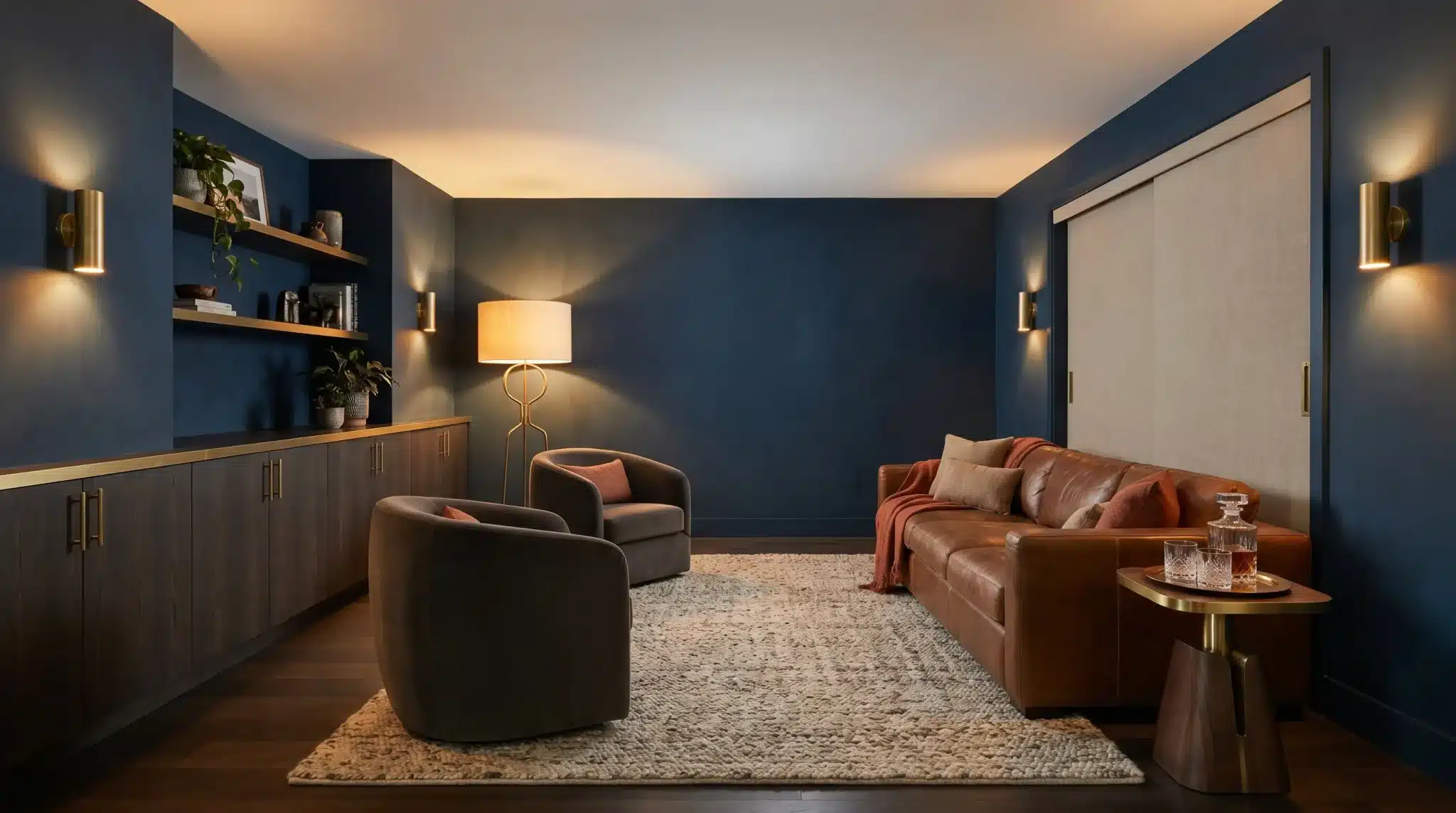
I’ve been in a lot of leisure rooms that got it wrong. You know the type. Black sectional sofa. A television the size of a dining table dominating an otherwise blank wall. Cables trailing across the skirting board like an afterthought nobody got around to fixing. The energy of a room that was designed around a screen rather than around the people who’d be sitting in it.
The frustrating thing is that it doesn’t take much more effort to get it right. The technology is the same. The bones of the room are often the same. What changes is the order of priority. Start with the room. Work backwards from there.
The Palette of a Grown-Up Lounge
Forget black. Not because it’s bad, but because it’s the path of least resistance in a technology-heavy room and it shows. Black plastic equipment against black walls and a black sofa is a room that’s been dressed to match its gadgets rather than the other way around. The rooms that actually work tend to start with something earthy and grounding. A deep ink blue on the walls. A warm charcoal that reads almost green in certain lights. Terracotta, if you’re braver than me. These tones absorb light rather than bouncing it back, which matters enormously in a room where you’ll have a screen on in the evenings.
Layer the textures while you’re at it. A distressed leather sofa is exactly as good an idea as it sounds and the kind of thing that looks better after five years of use than it did when it arrived. Velvet chairs in a complementary tone. A thick wool rug that makes the floor feel intentional rather than incidental. On the walls, limewash paint or a proper matte finish will repay you every single time the light changes throughout the day.
For metals, brushed brass. Not polished, not chrome. Brass in lamp bases, in shelf edging, in cabinet handles. It adds warmth to a room that could easily tip cold, and it ages in a way that feels like character rather than neglect. Get the lighting right and you’ve done most of the work. One ceiling fixture is not a lighting plan. Wall sconces, floor lamps, low-voltage spots directed at surfaces rather than the middle of the room. The goal is a space that can be completely different things at different times of day.
Concealed Tech and Custom Joinery
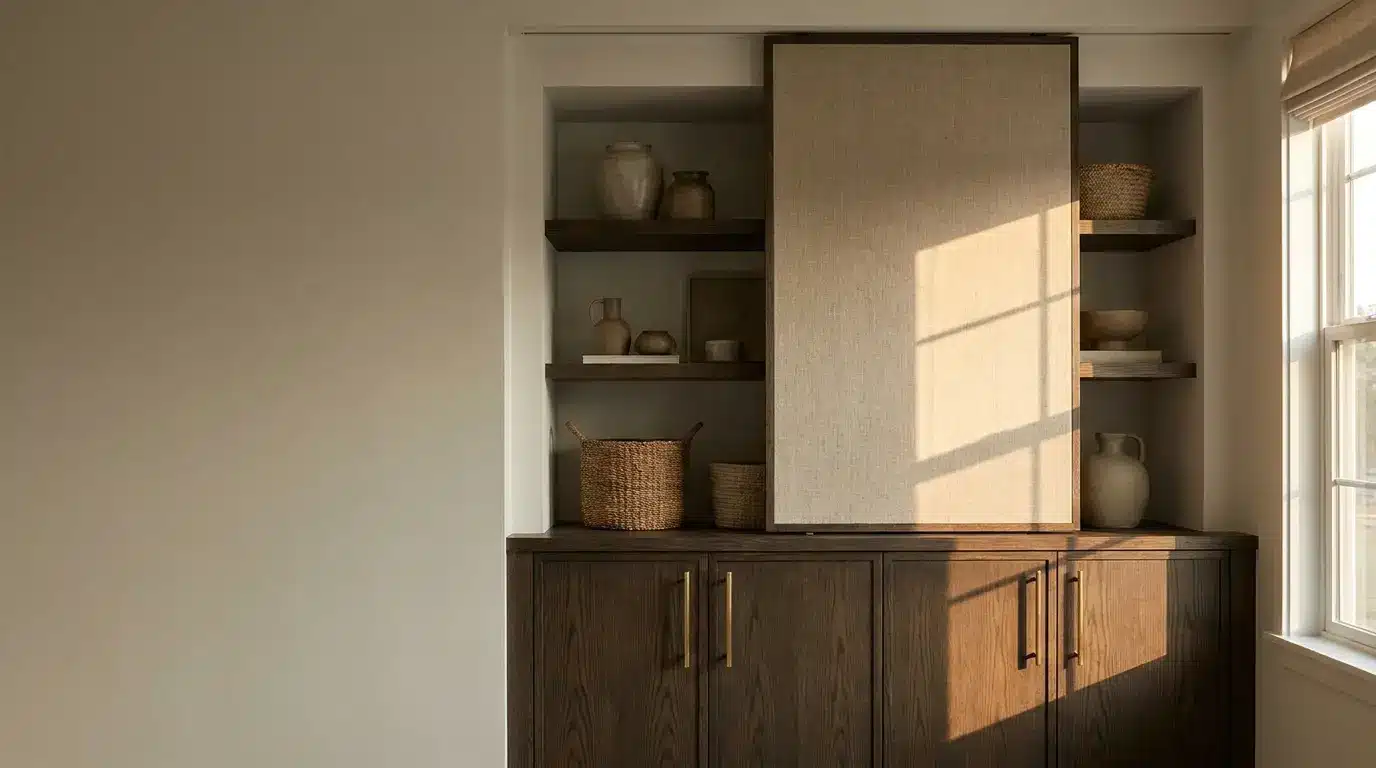
A television switched off is a black rectangle. That fact deserves more attention than most people give it during the planning stage. The sliding panel solution is one I keep coming back to. A panel in linen, or hung with a piece of tapestry fabric, sits over the screen when it’s not in use and reads as a genuinely designed element rather than a workaround. You pull it aside when you want to watch something. You close it when the evening moves on. The room stays looking like a room.
Custom joinery handles the hardware problem. A media cabinet built to the actual dimensions of your equipment, with cable management and ventilation designed in from the start, is a completely different object from a piece of furniture that’s been adapted to hold things it wasn’t meant for. Dark stained oak or deep painted cabinetry disappears into the room. The surfaces stay clear. The cables become someone else’s problem.
The Multitasking Space
The rooms I find most successful are the ones that refuse to announce their purpose. A wall of shelving with books alongside a drinks tray and a few objects. A side table at exactly the right height for a glass or a phone. A lamp that works for reading and also for the particular kind of low-level light you want when you’re not quite watching something but not quite doing anything else either.
The furniture itself needs to mirror this versatility. The ideal setup demands deep-seated, ergonomic armchairs or low-slung modular sofas – pieces designed to keep you perfectly supported during an intense gaming session, yet soft enough to sink into for a back-to-back weekend sports broadcast.
Because that’s actually how most of us spend our evenings, isn’t it. We don’t sit rigidly in front of a giant screen giving it our undivided attention. We live in an age of split attention. We settle into that upholstery to half-watch a match on the television while simultaneously checking an email, browsing an auction catalog, or casually playing slot games online from our phones.
The biomorphic furniture shapes and layered textiles that are defining interiors right now translate beautifully into a leisure room context. Curved seating that draws you in rather than presenting you as an audience. Organic forms that make the room feel inhabited rather than staged. The version of this room I’m describing is one that works on a Tuesday evening when it’s just you, and on a Saturday when there are six people in it. The screen, when it’s on, holds the room. When it’s off, the leather and the brass and the soft weight of the textiles take over. Nothing about the space requires technology to feel complete. That’s the whole idea, really.