A messy closet can make daily routines feel frustrating. Clothes get difficult to find, shoes take up space, and storage areas often go unused.
A well-designed closet creates a place for everything and keeps items organized.
The bestmaster closet ideas focus on smart layouts, useful storage, and easy organization.
From small walk-in closets to a complete master closet remodel, the right design can help you create a functional space that fits your needs.
Key Takeaways
|
Master Closet Ideas for an Organized and Functional Space
A well-designed master closet can improve storage, simplify daily routines, and make better use of available space.
1. Add Double Hanging Rods for More Clothing Storage
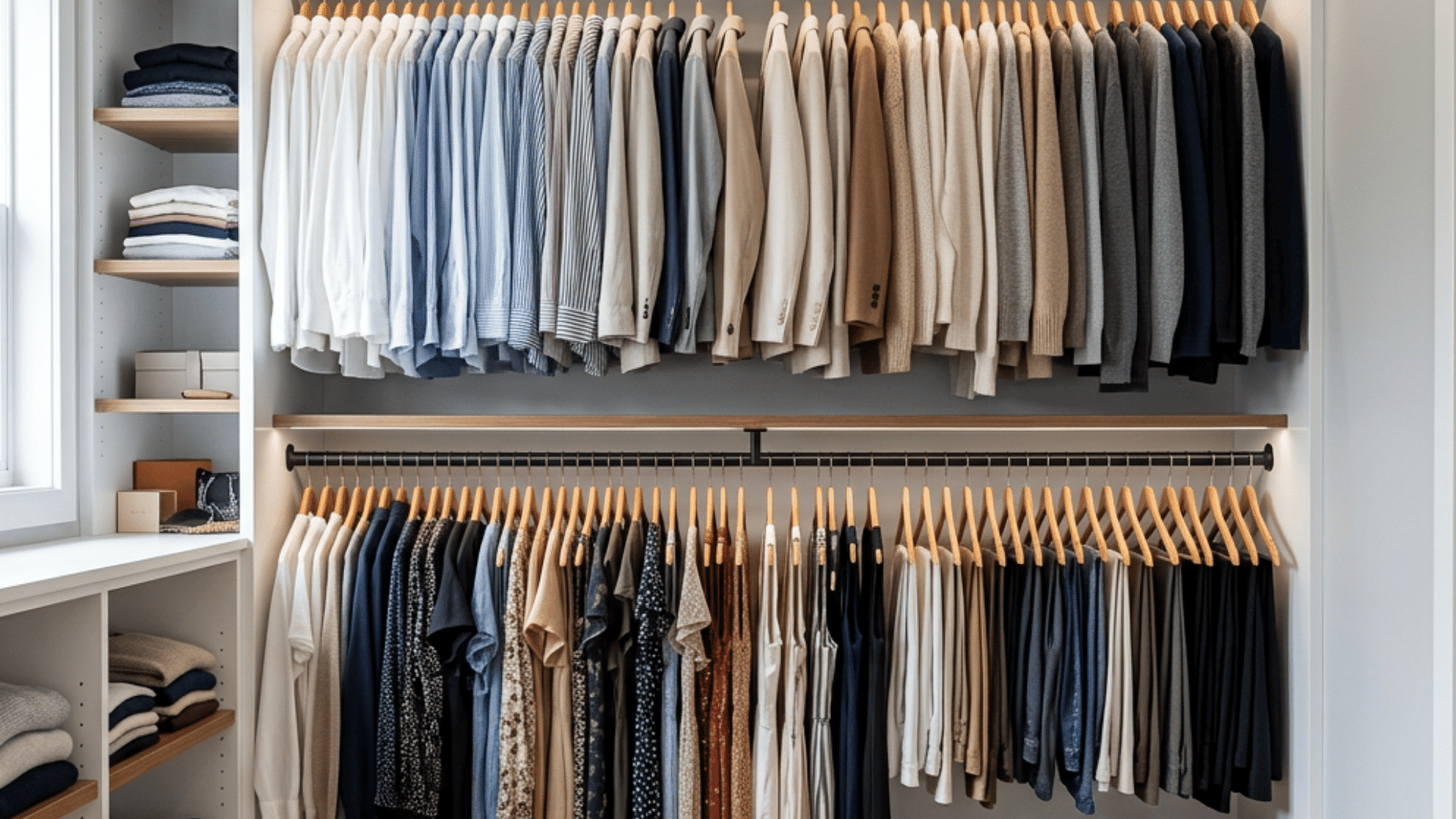
Double hanging rods are a simple way to increase closet capacity without expanding the space.
They let you create two levels of hanging storage, with one rod for shorter items and another for longer pieces.
This setup works well for shirts, jackets, pants, skirts, and other everyday clothing while freeing up shelf space.
2. Install Built-In Shelves for Folded Items
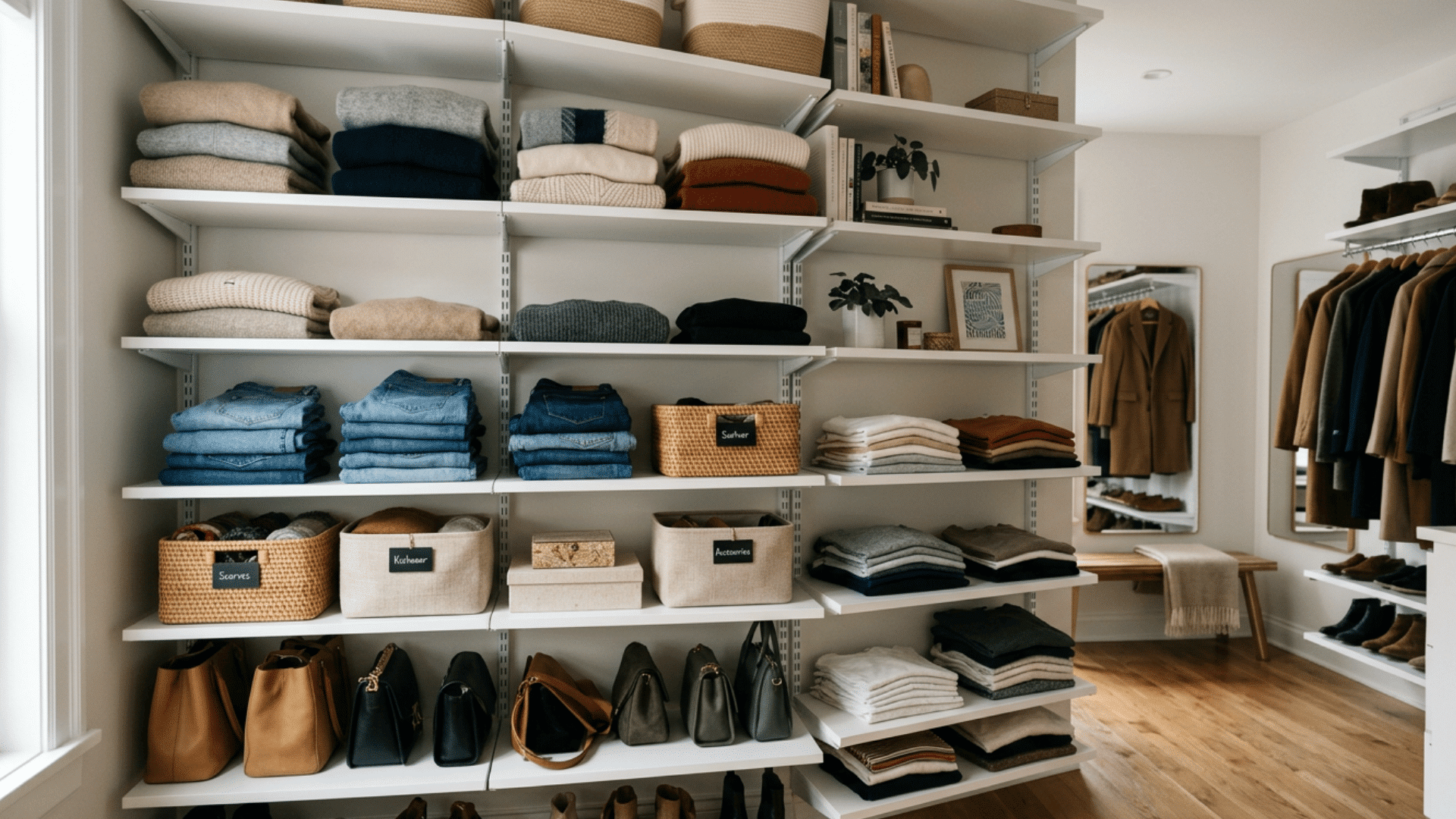
Built-in shelves keep folded clothing organized and easy to access.
They are useful for storing sweaters, jeans, T-shirts, bags, and storage baskets.
Adjustable shelves provide more flexibility because you can change the height based on your storage needs.
Open shelving also makes it easier to see your belongings and avoid forgotten items.
3. Create a Dedicated Shoe Storage Area
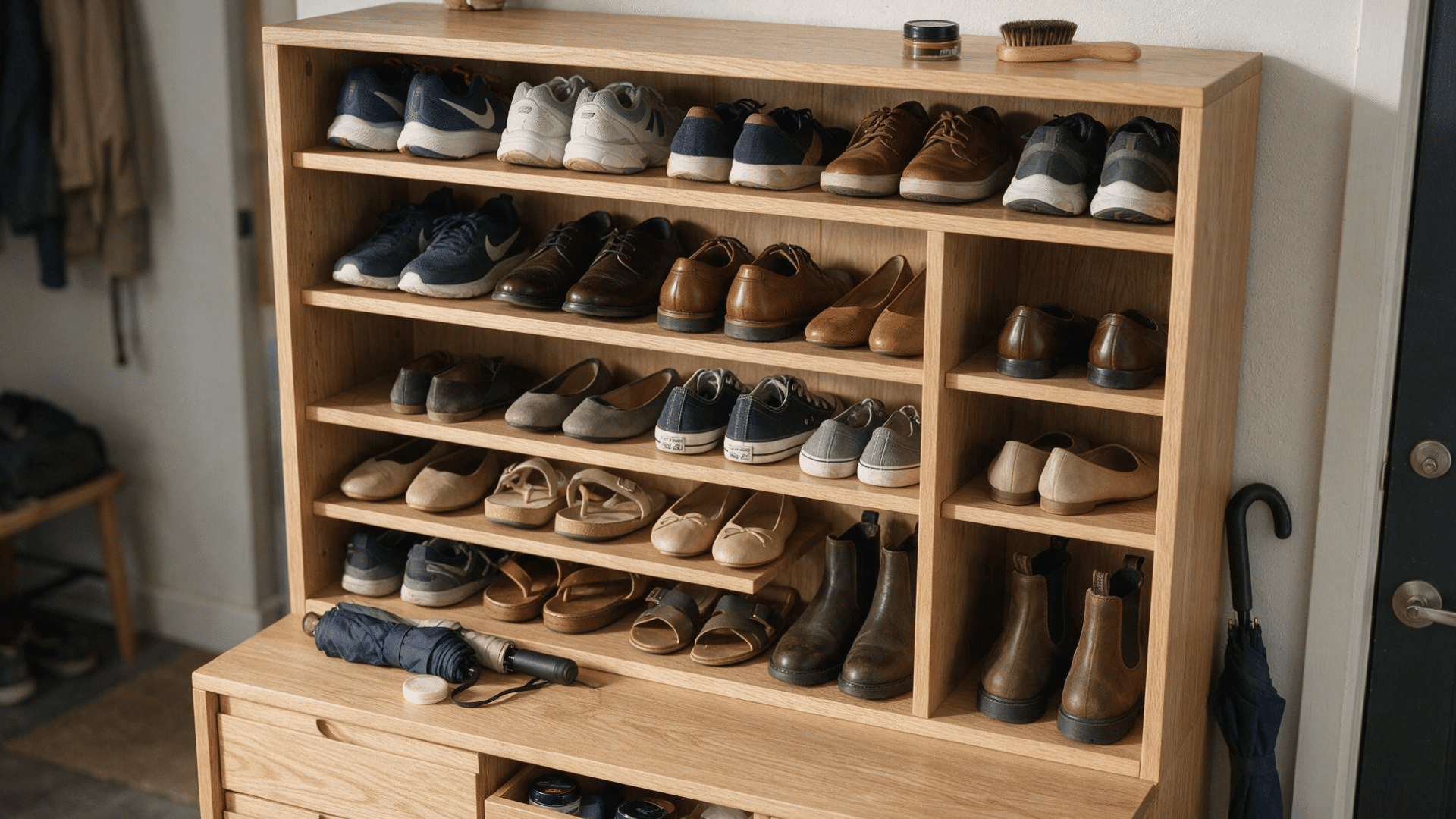
A separate shoe storage section helps keep footwear organized and prevents clutter on the floor.
Shoe shelves, pull-out racks, and built-in drawers can keep pairs together while protecting them from damage.
A well-designed shoe area also makes it easier to select footwear quickly when getting ready.
4. Add Drawers and Dividers for Small Items
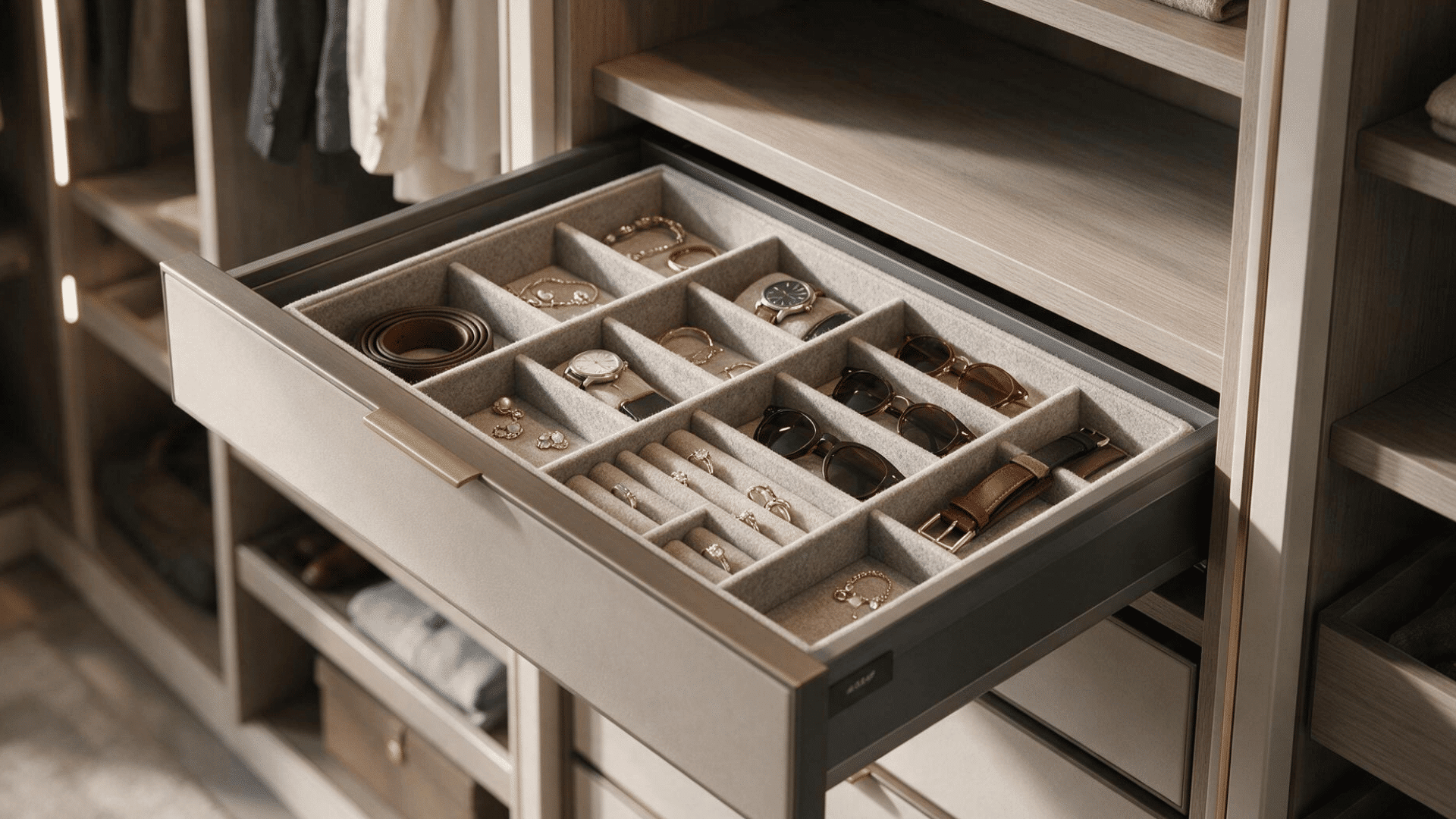
Small accessories can easily become messy without proper storage.
Adding drawers with dividers creates dedicated spaces for items like socks, underwear, jewelry, watches, and other small belongings.
Drawer organizers help keep everything separated, making your closet look cleaner and saving time when searching for everyday essentials.
5. Use Vertical Storage to Maximize Space
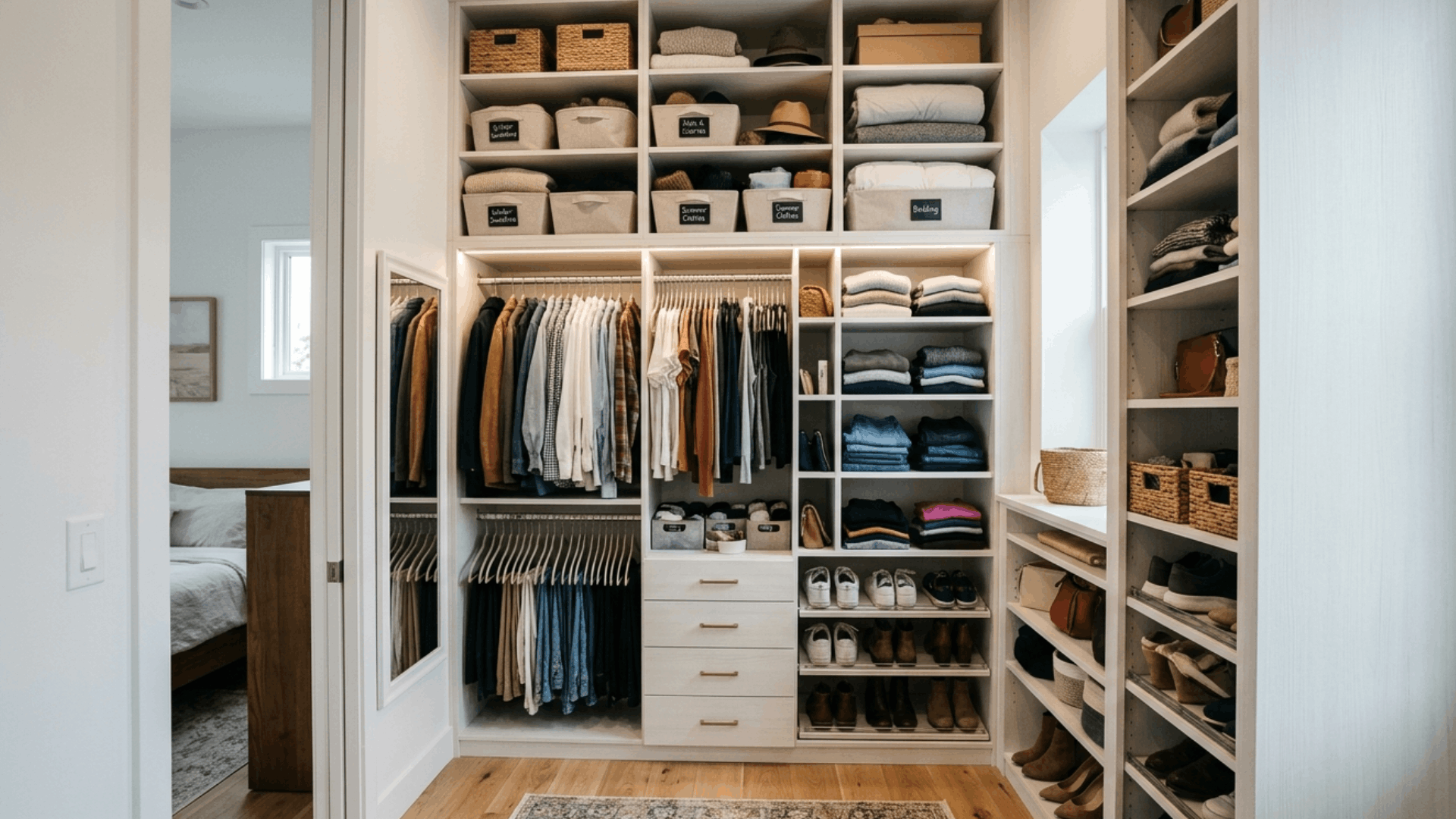
Using vertical space is one of the best ways to increase storage without making your closet larger.
Tall cabinets, upper shelves, and floor-to-ceiling organizers can store seasonal clothing, extra accessories, and rarely used items.
Vertical storage works especially well in smaller closets where floor space is limited.
6. Create Separate Closet Zones
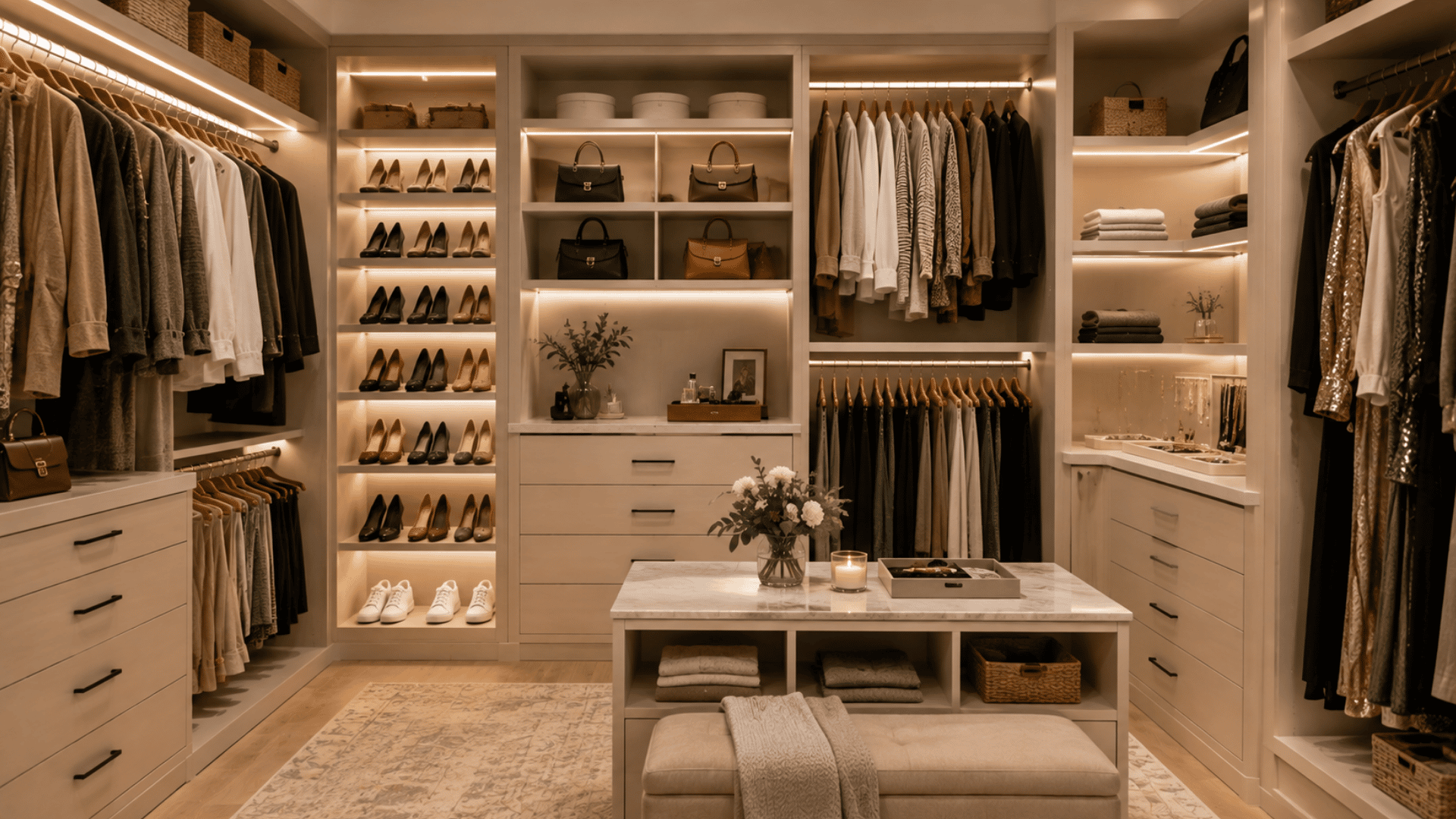
Dividing your closet into different zones makes organization easier and improves daily use.
You can create separate areas for clothing, shoes, accessories, and dressing needs.
Keeping similar items together helps maintain order and allows you to quickly find what you need without searching through different sections.
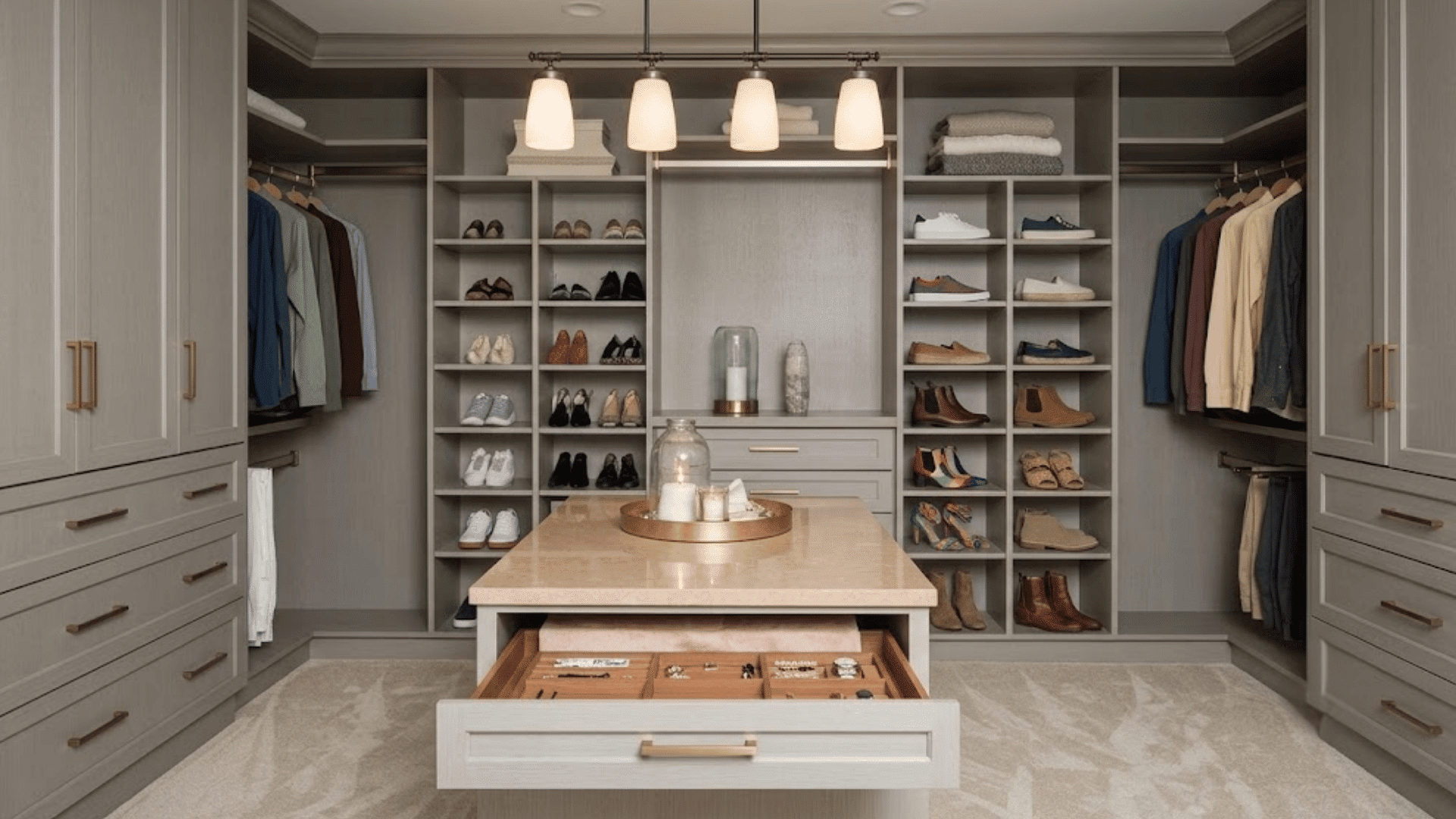
7. Add a Closet Island for Extra Storage
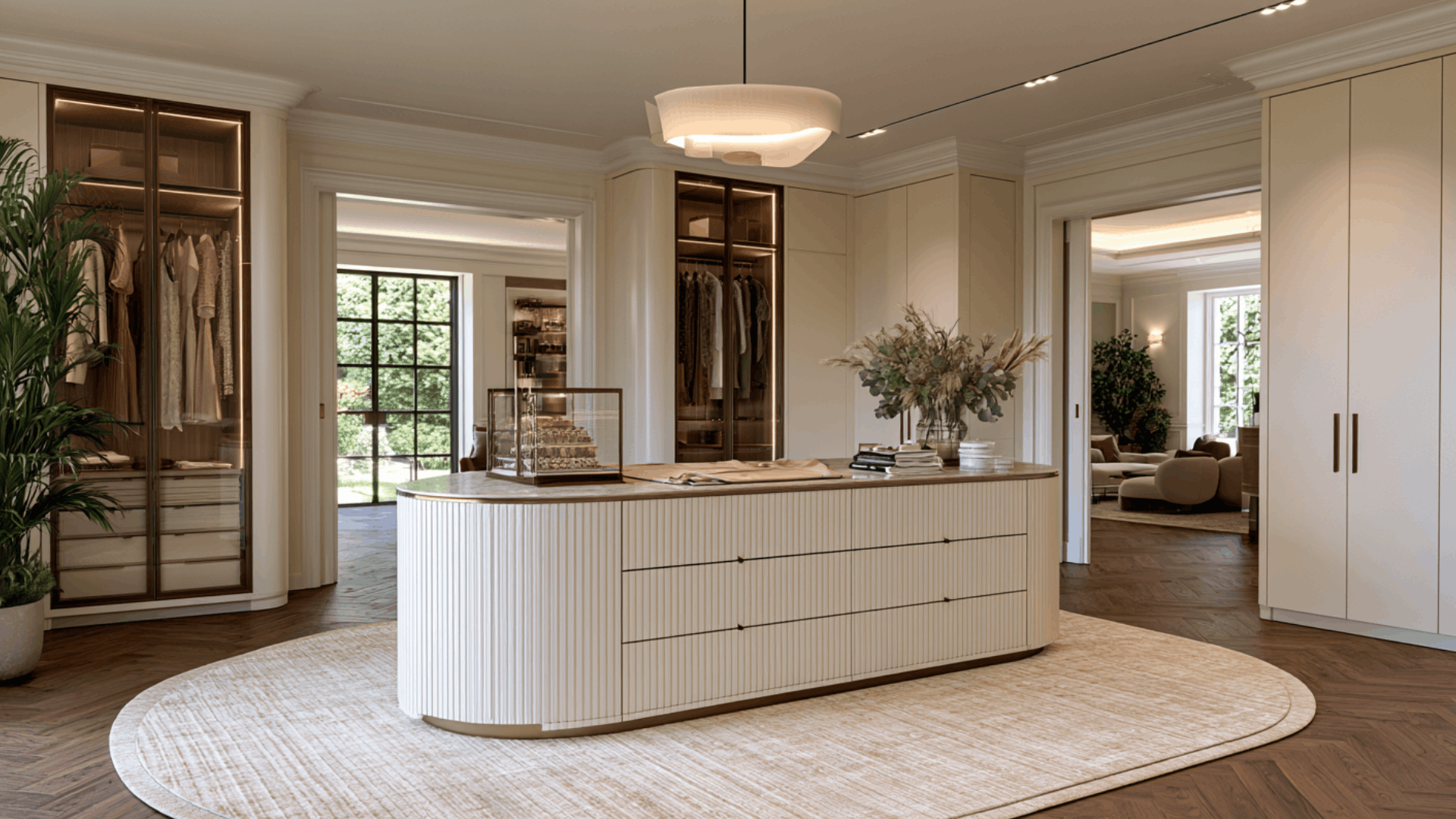
A closet island can add both style and function to a larger master closet.
It provides extra storage through drawers and compartments while creating a convenient surface for folding clothes or arranging accessories.
Closet islands work well in spacious areas with enough room to move comfortably around the unit.
8. Improve Closet Lighting
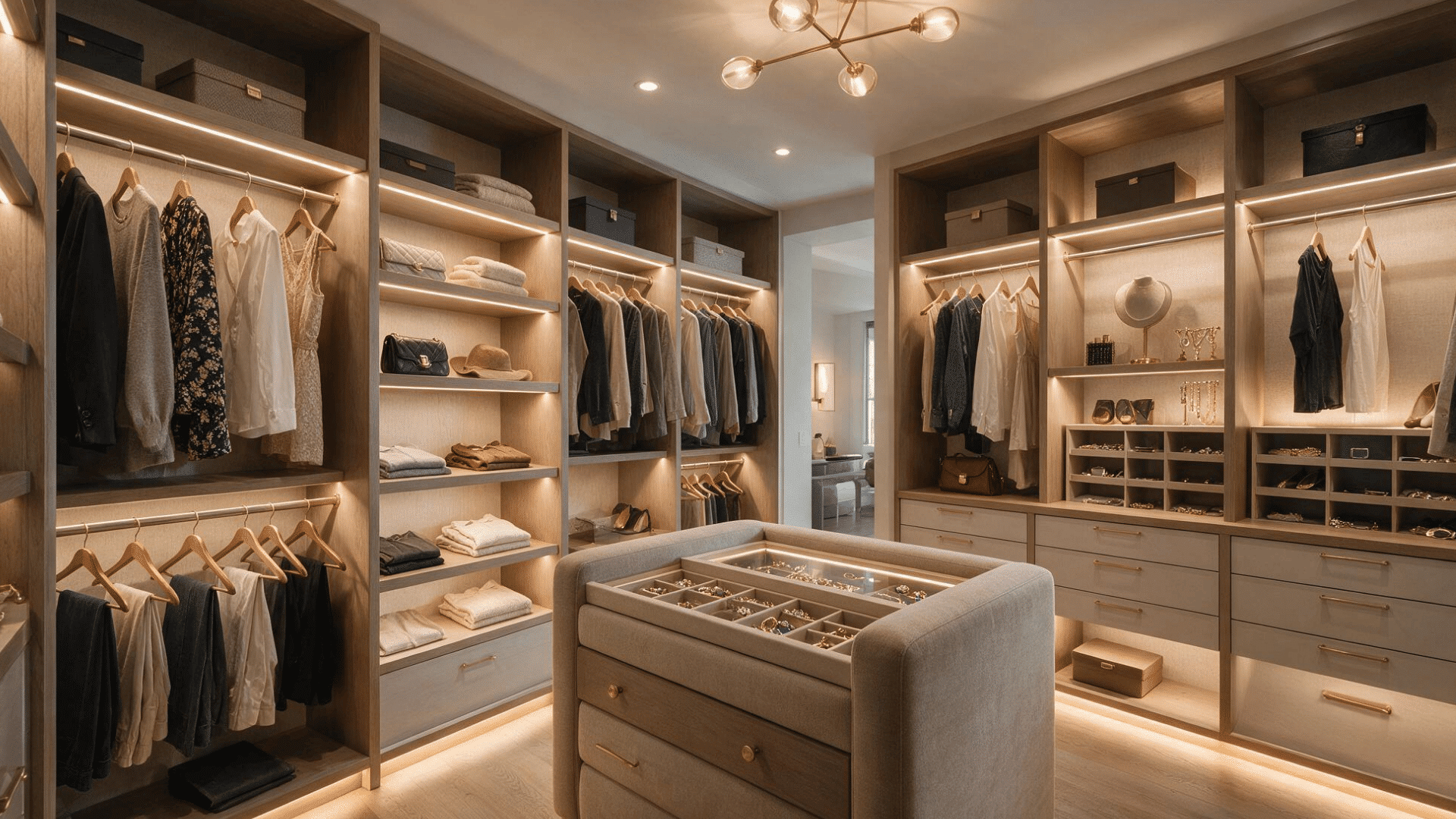
Good lighting can completely change the look and usability of a closet.
Properly placed lights make it easier to see clothing colors, find items, and organize storage areas.
LED strips, ceiling lights, cabinet lighting, and motion sensor lights are useful options that can improve visibility and create a more comfortable space.
9. Include a Full-Length Mirror and Dressing Area
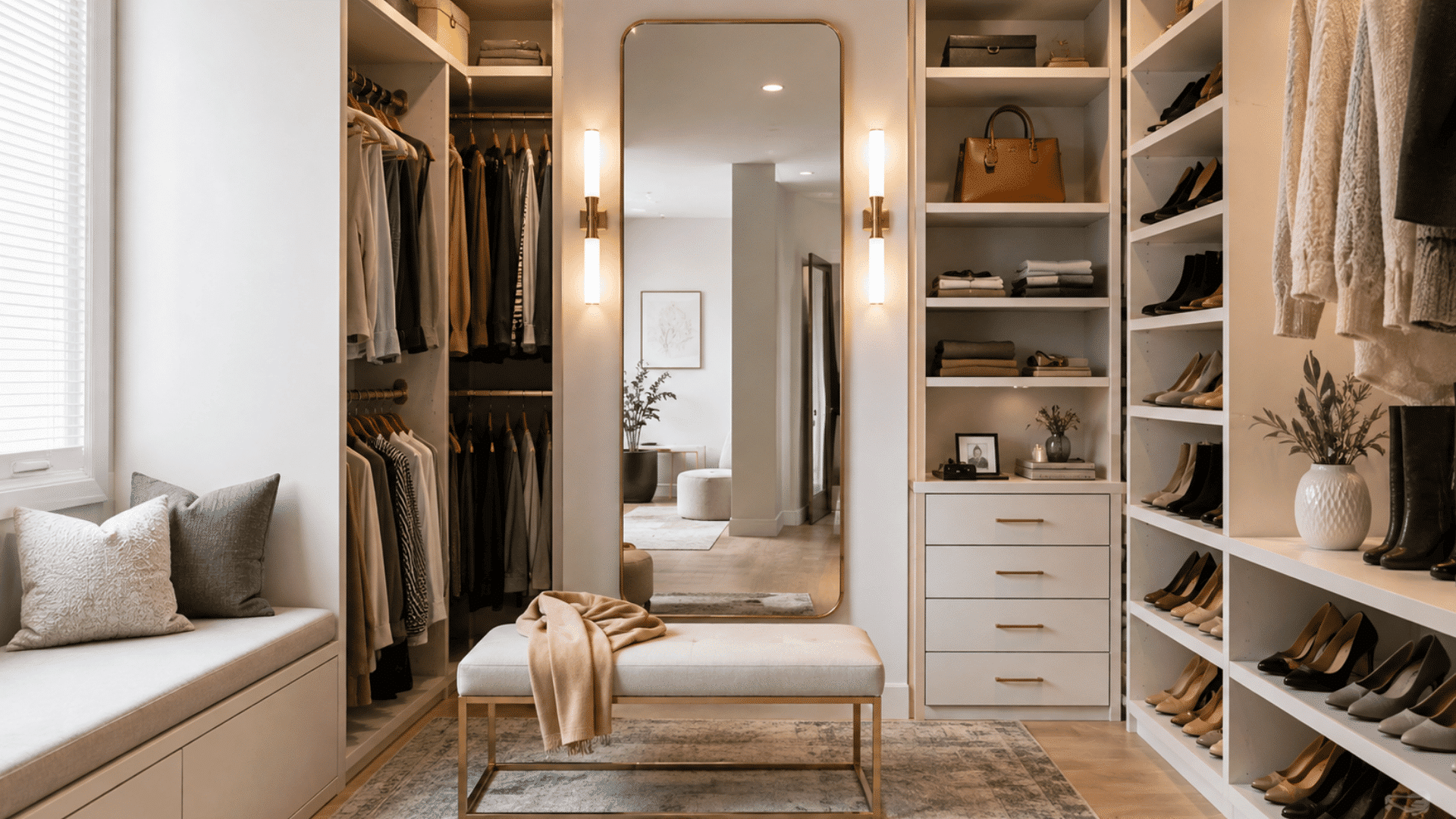
Adding a mirror and a dressing area can make your closet more practical.
A full-length mirror helps you check outfits without leaving the room, while a bench or small seating area provides comfort when changing shoes or organizing clothing.
These features can also make the closet feel more like a personal dressing space.
10. Use Smart Storage Features During a Master Closet Remodel
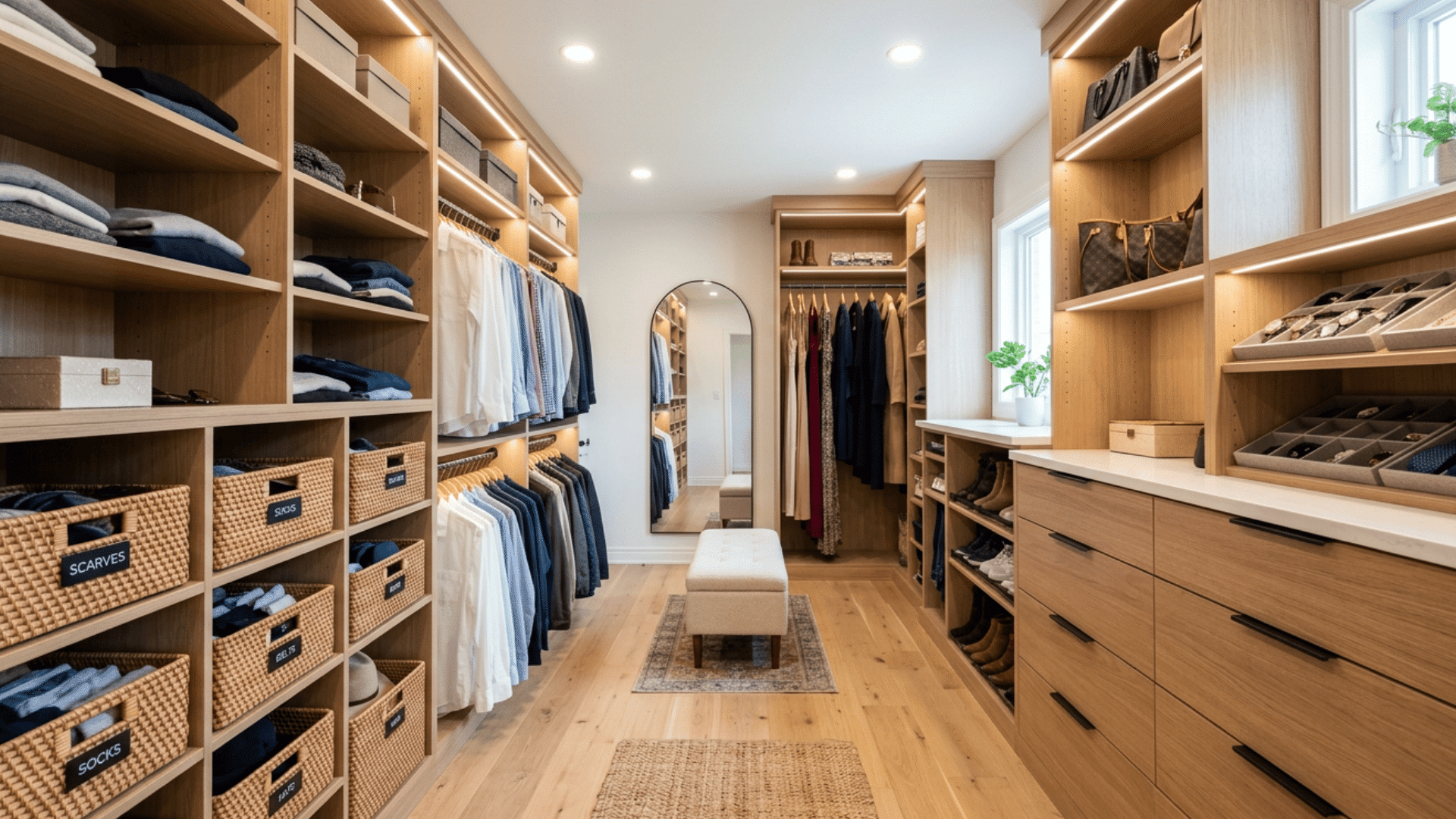
A master closet remodel is a good time to add features that improve organization and convenience.
Pull-out baskets, adjustable shelving, hidden drawers, and built-in organizers can help you use every inch effectively.
Smart storage solutions allow you to create a closet that matches your habits and keeps everyday items easy to access.
11. Add Custom Cabinets for a Premium Look
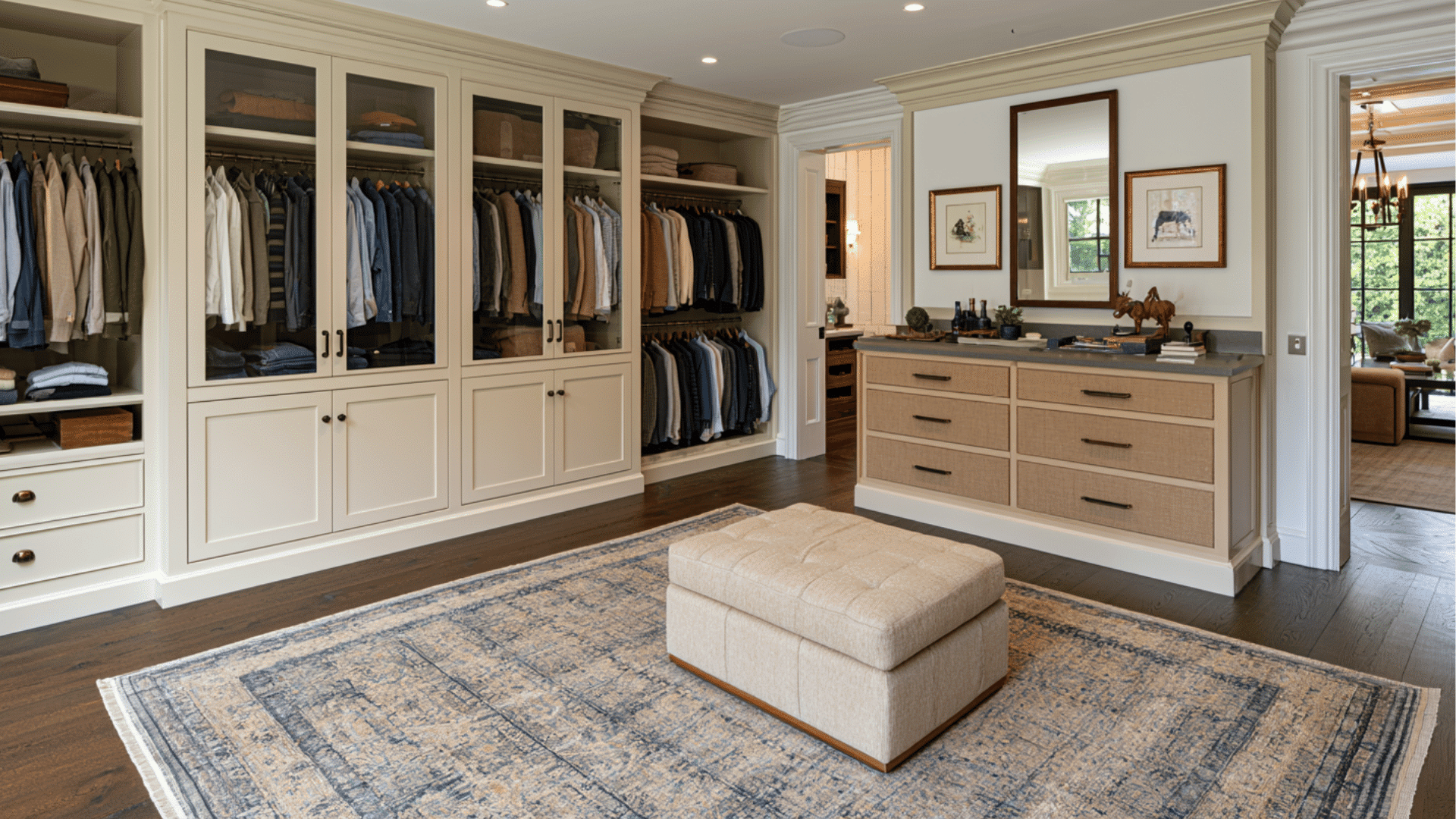
Custom cabinets let you design storage around your specific needs.
They can include personalized shelves, drawers, hanging sections, and accessory compartments.
Custom solutions help with unusual closet shapes or for homeowners who want a polished look with storage designed around their capsule wardrobe.
12. Organize Clothes by Category and Usage
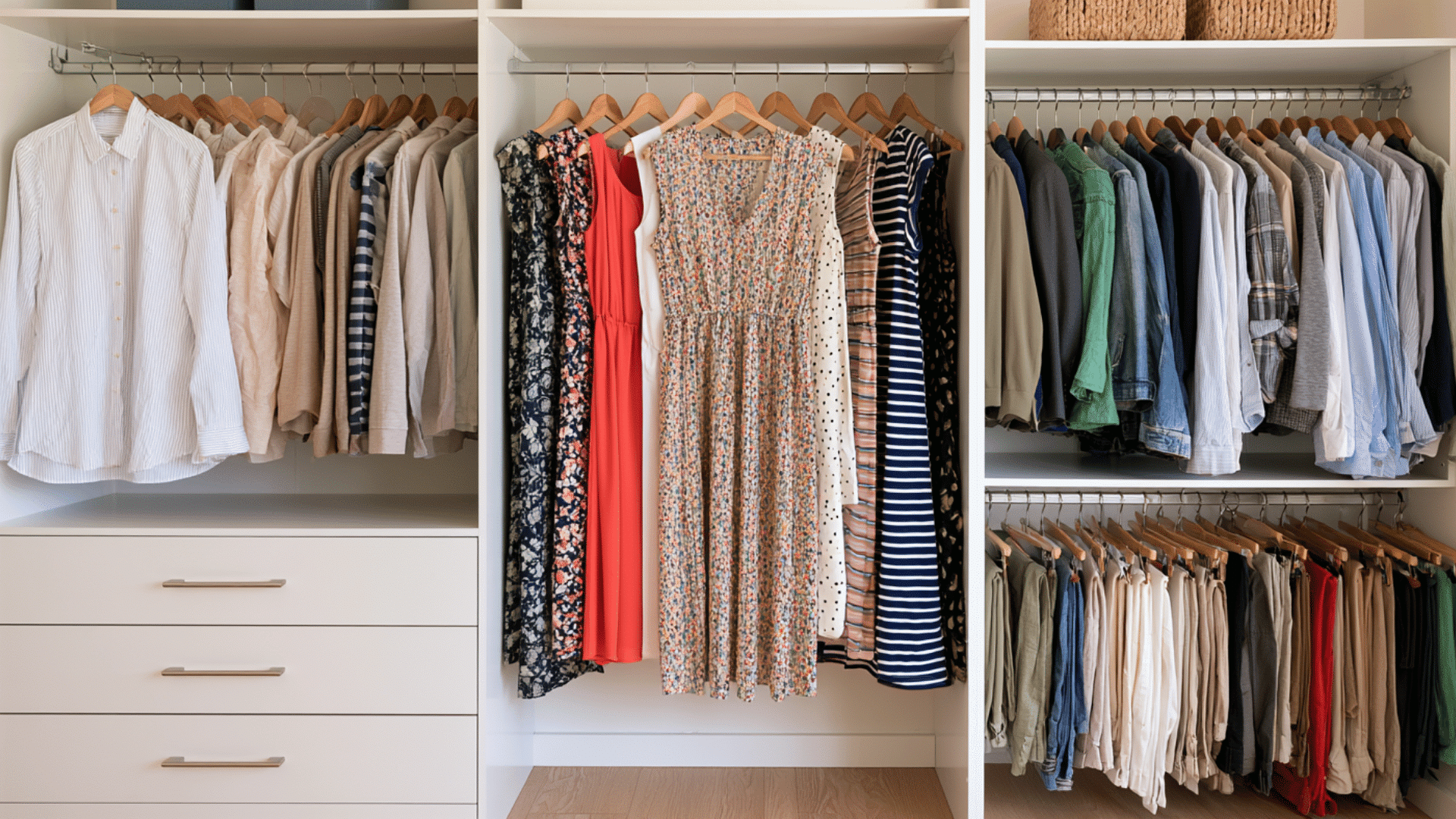
A simple clothing organization system can make your closet easier to manage.
Grouping clothes by type, season, color, or frequency of use helps create a cleaner appearance.
Keep frequently worn items in easy-to-reach areas and store occasional clothing on higher shelves or in less accessible sections.
13. Add Storage Solutions for Accessories and Bags
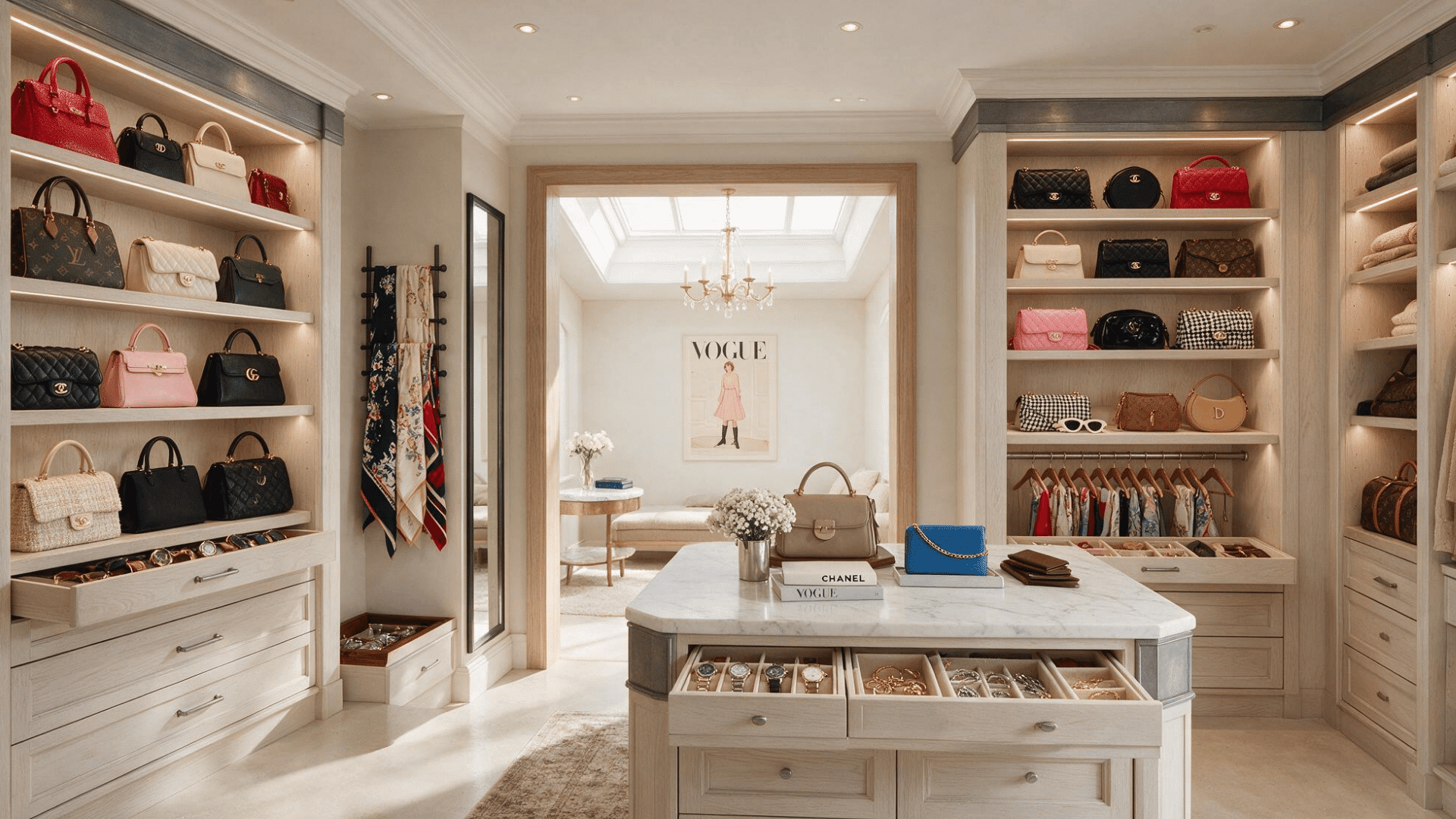
Accessories often need special storage to prevent clutter.
Handbag shelves, belt hooks, scarf organizers, and jewelry drawers can keep smaller items protected and visible.
Creating a dedicated accessory section makes it easier to complete outfits while keeping delicate belongings in good condition.
14. Make a Small Master Closet Feel Bigger
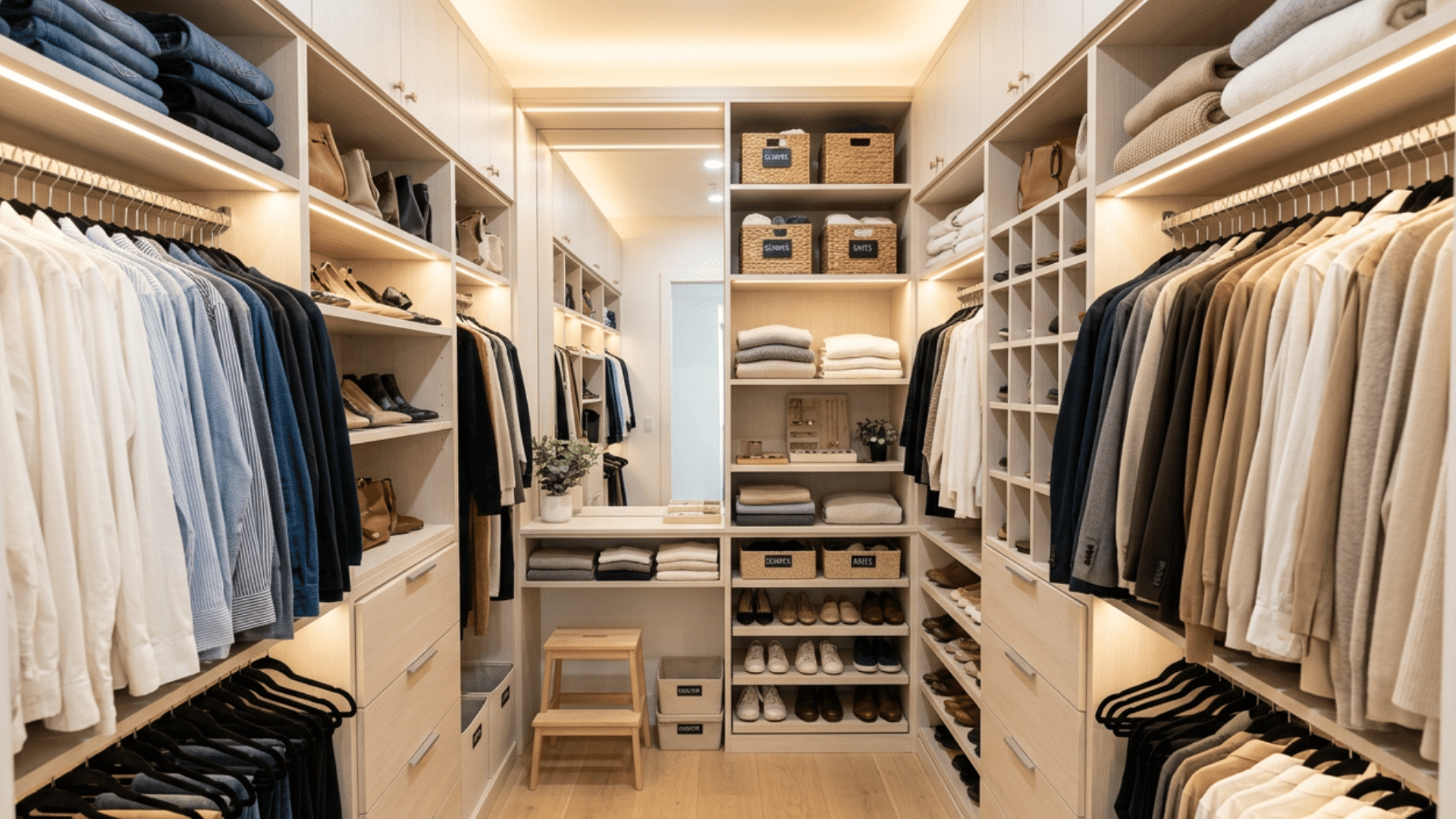
A small closet can feel more open with the right design choices.
Light-colored finishes, mirrors, open shelving, slim hangers, and vertical storage can create the feeling of more space.
Instead of adding too many storage units, use smart organizers that improve function without crowding the closet.
15. Declutter Before You Organize Your Closet
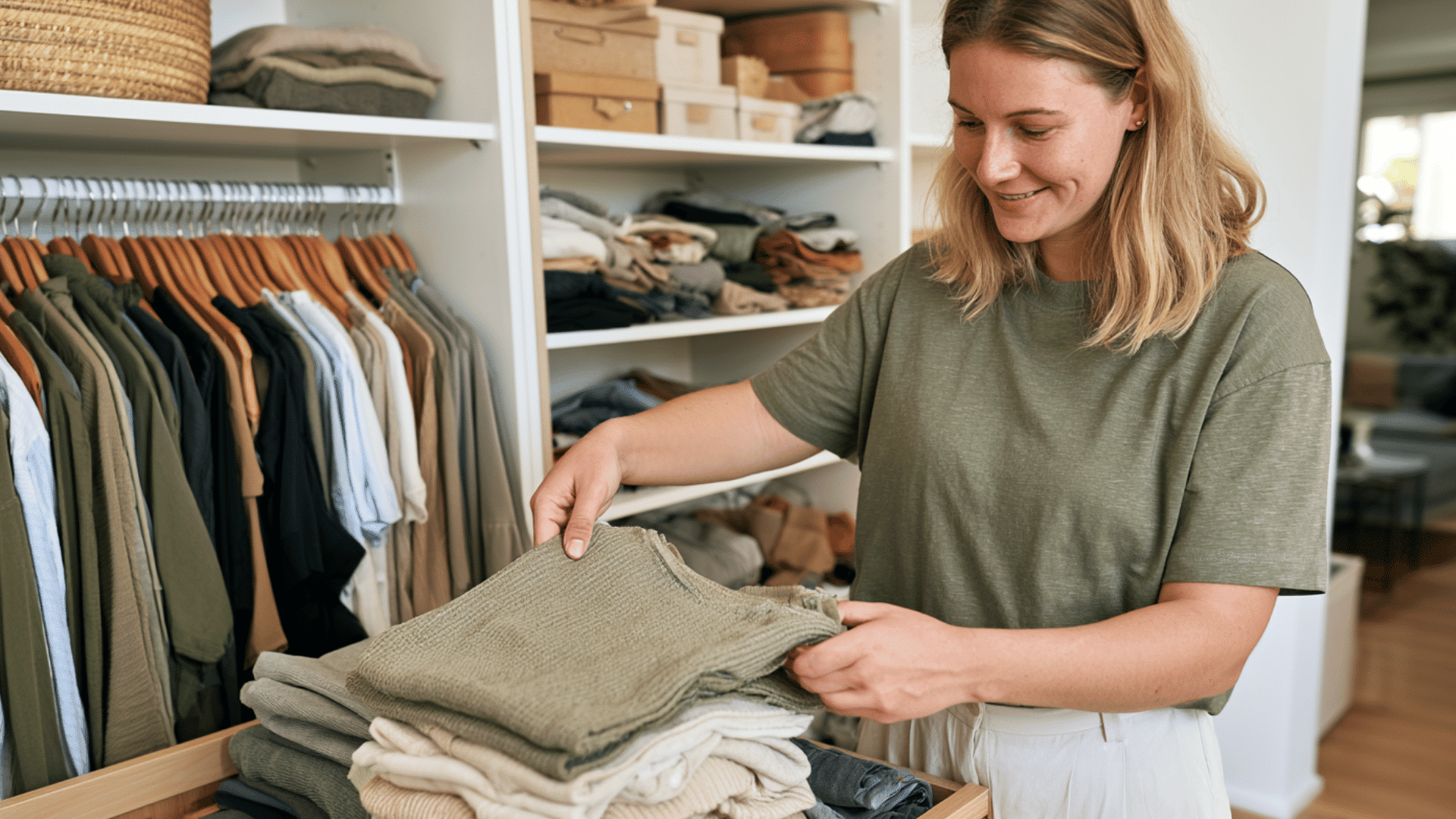
Before adding new storage, go through your closet and remove clothes, shoes, and accessories you no longer use.
Separate everything into keep, donate, sell, or discard piles. Once you know what is staying, you can plan shelves, drawers, and hanging space around your actual wardrobe.
Decluttering first also prevents unnecessary storage purchases and makes your master closet easier to organize and maintain.
Walk-In Closet vs Reach-In Closet: Which One Works Better?
The right closet type depends on your available space, storage needs, and daily habits.
| Feature | Walk-In Closet | Reach-In Closet |
|---|---|---|
| Space Needed | Requires more floor space and room to move around | Works well in bedrooms with limited space |
| Storage Capacity | Offers more storage options with shelves, drawers, and hanging areas | Provides basic storage with rods and shelves |
| Customization | Allows custom layouts, islands, seating, and extra features | Limited customization due to smaller size |
| Organization | It is easier to create separate zones for clothes, shoes, and accessories | Best for simple organization systems |
| Cost | Usually requires a higher budget for installation and features | More affordable for basic storage needs |
| Best For | Large bedrooms and homeowners needing extensive storage | Small rooms and compact storage solutions |
Master Closet Layout Ideas by Size
The best master closet layout depends on the available space and storage needs. Smart design can improve organization and make daily use easier.
- Small Closet: Use vertical shelves, double hanging rods, and slim organizers to maximize limited space.
- Medium Closet: Add separate sections for clothes, shoes, and accessories with a mix of shelves, drawers, and hanging areas.
- Large Closet: Include closet islands, custom cabinets, seating areas, and dedicated storage zones for better organization.
- Walk-In Closet: Create clear pathways with wall storage and keep frequently used items within easy reach.
- Compact Closet: Use matching hangers, open shelves, and multi-purpose storage solutions to make the space feel larger.
Pick a Layout Configuration That Fits Your Closet’s Shape
The shape and size of your closet can help you choose a layout that makes the best use of the available space.
For a narrow closet, a single-wall layout can keep storage organized without making the area feel cramped. A galley layout works well when there is enough space for storage on two opposite walls.
Larger walk-in closets may accommodate L-shaped or U-shaped layouts for additional shelves, drawers, and hanging sections.
Before choosing a layout, consider the location of doors, windows, corners, and electrical outlets. Make sure there is enough walking space and room to access every storage section comfortably
Plan a Budget-Friendly Master Closet Remodel
A clear budget helps you prioritize the most useful upgrades without overspending, whether that means simple wire shelving or richer cabinet finishes like warm taupe cabinetry.
| Master Closet Upgrade | Estimated Price Range | Budget-Friendly Tip |
|---|---|---|
| Basic wire shelving | $100–$500 | Use adjustable systems that can expand later |
| Prefabricated closet system | $300–$1,500 | Choose modular units instead of custom cabinetry |
| Drawer and shelf additions | $150–$800 | Add storage only where it improves daily organization |
| Shoe storage | $100–$600 | Use adjustable shelves rather than built-in shoe cabinets |
| Lighting upgrades | $100–$700 | Install simple LED fixtures or motion-sensor lights |
| Paint and finishing | $100–$500 | Refresh walls yourself before installing storage |
| Semi-custom closet remodel | $1,000–$5,000+ | Mix ready-made units with a few custom features |
Avoid Common Master Closet Design Mistakes
A well-planned closet should feel easy to use, not crowded or difficult to maintain. Avoid these common mistakes when finalizing your layout.
- Ignoring Walkway Clearance: Leave enough room to move comfortably and open drawers or doors without obstruction.
- Adding Too Much Storage: Avoid overcrowding walls with cabinets and shelves that make the closet feel cramped.
- Forgetting Hanging Space: Plan separate areas for short clothing as well as dresses, coats, and longer garments.
- Poor Lighting: Use adequate lighting so clothing, shoes, and accessories remain easy to see and access.
- Wasting Vertical Space: Add upper shelves or cabinets for seasonal items, luggage, and less-used belongings.
Conclusion
A master closet should simplify your daily routine, not just give you more space to store clothes.
With the right layout, organized storage zones, good lighting, and practical features, you can create a closet that feels comfortable and works for your everyday needs.
I think the best master closet ideas are the ones that reflect how you actually use your space.
If you are making a few small improvements or planning a complete remodel, focus on choices that make getting dressed and staying organized easier. We all have different storage needs, so make the space work for you.
Have you updated or redesigned your master closet? Share your experience and favorite ideas in the comments below.
Frequently Asked Questions
What Features Should Every Master Closet Have?
A functional master closet usually includes hanging areas, shelves, drawers, shoe storage, good lighting, and dedicated sections for accessories.
How Can I Maximize Storage in a Small Master Closet?
Use vertical storage, double-hanging rods, adjustable shelves, slim hangers, and multipurpose organizers to increase storage capacity.
What Is the Ideal Size for a Master Closet?
A master walk-in closet is often around 7 × 10 feet, although the ideal size depends on storage needs and available bedroom space.
What Is the Rule of 3 for Cleaning Closets?
The rule of 3 involves sorting belongings into three groups—keep, donate, and discard—to make decluttering quicker and more manageable.