Tracking every bite can feel like turning each meal into a math problem. When I look at calories, percentages, serving sizes, and food labels, I can see why macro tracking may feel confusing at first.
But learning how to track macros doesn’t have to make eating feel complicated or restrictive. I prefer to understand what the numbers mean before worrying about hitting them perfectly.
Knowing how macros relate to calories, portions, and everyday foods gives you a useful starting point. From there, you can make sense of your daily targets and see how the foods you eat fit into them.
What are Macros and How Do They Work?
Macronutrients, commonly called macros, are nutrients the body needs in relatively large amounts. According to the USDA National Agricultural Library, the three main macronutrients are carbohydrates, proteins, and fats.
Each macro has a different role in the body:
- Protein: Helps build and repair body tissues and supports many essential body functions.
- Carbohydrates: Provide energy for everyday activities and physical exercise.
- Fats: Provide energy and help the body absorb certain vitamins.
Protein and carbohydrates provide about 4 calories per gram, while fat provides about 9 calories per gram. Common macro sources include eggs, fish, chicken, rice, oats, fruits, potatoes, nuts, seeds, and oils.
The amount of each macro you need can vary depending on your calorie needs, activity level, and nutrition goals.
How to Calculate Your Macro Targets?
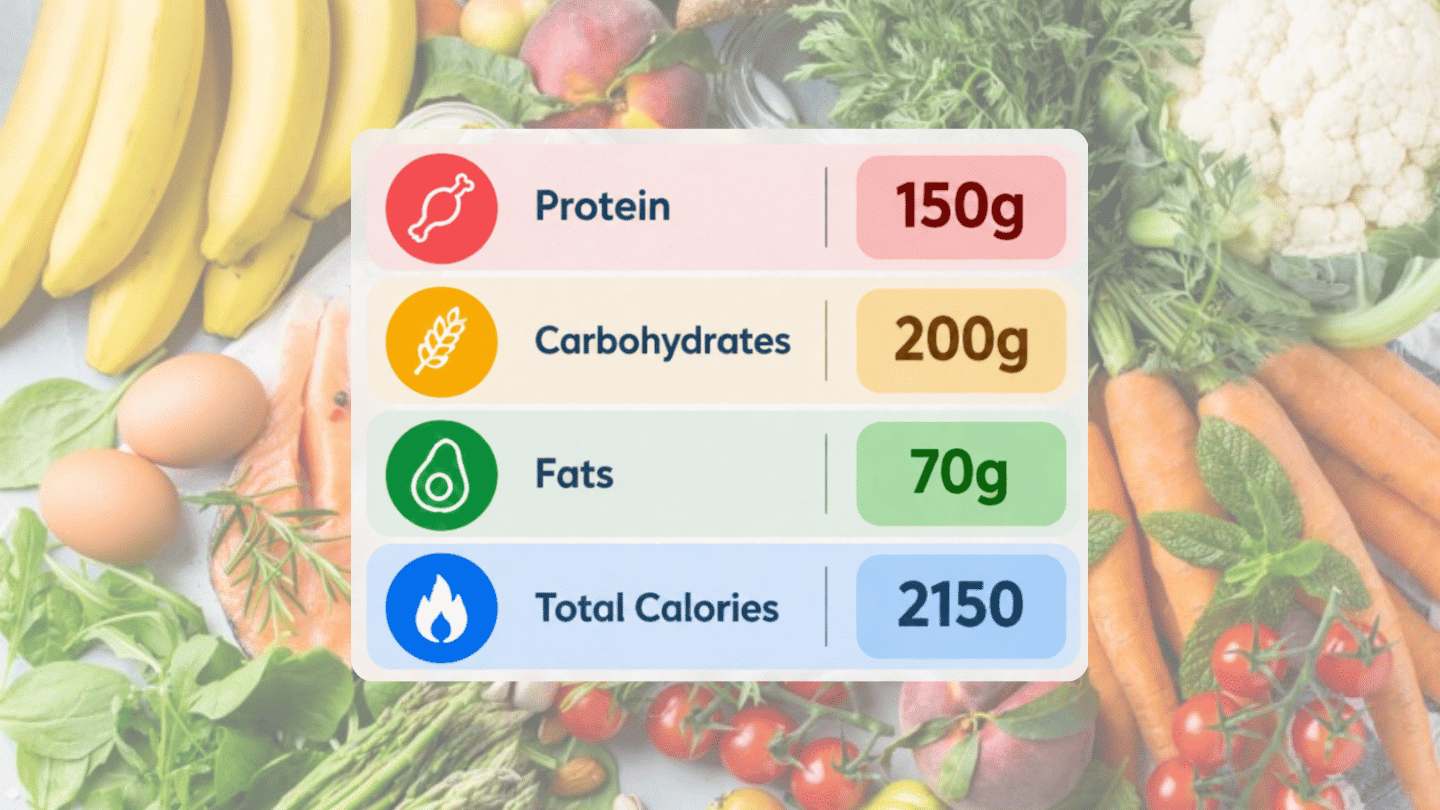
Before tracking your meals, you can estimate your daily macro targets. These numbers depend on your calorie needs, goal, and activity level.
Step 1: Find Your Daily Calorie Needs
Start by estimating your Total Daily Energy Expenditure (TDEE), which represents the calories your body uses throughout the day. You can use a TDEE calculator to get a starting estimate.
Your calorie needs depend on:
- Age
- Height
- Weight
- Activity level
For another option, the NIH Body Weight Planner can help adults estimate calorie needs based on personal information and physical activity
Step 2: Set Your Goal
Adjust your calorie intake based on your goal:
- Fat loss: Eat fewer calories than your maintenance level to create a calorie deficit.
- Muscle gain: Eat more calories with enough protein and strength training.
- Maintenance: Eat around your maintenance calories to keep your current weight.
Your goal decides how you adjust your calorie intake and macro split.
A fat loss goal may require a calorie deficit, while muscle gain may need extra calories.
Step 3: Choose Your Macro Ratio
Split your daily calories between protein, carbs, and fats.
A common starting range:
| Macro | Starting Range (% of Daily Calories) |
|---|---|
| Carbohydrates | 45–65% |
| Protein | 10–35% |
| Fat | 20–35% |
Note: These are general starting ranges, not fixed requirements.
Your ratio can change based on your goal and routine. Someone with higher training demands may need different macro amounts compared to someone with lower activity levels.
Step 4: Convert Calories Into Grams
Each macro provides a set amount of calories:
- Protein: 4 calories per gram
- Carbs: 4 calories per gram
- Fat: 9 calories per gram
Example:
For 2,000 calories with 30% protein:
- Protein calories: 2,000 × 30% = 600 calories
- Protein grams: 600 ÷ 4 = 150 grams
Repeat the same calculation for carbs and fats to get your daily targets. These numbers show the amount of each macro to include in your meals throughout the day.
Tip: Calculate your daily macro targets once and save them for future reference. This saves time and avoids repeating the same calculations whenever you adjust your meals.
How to Read Food Labels for Macro Tracking?
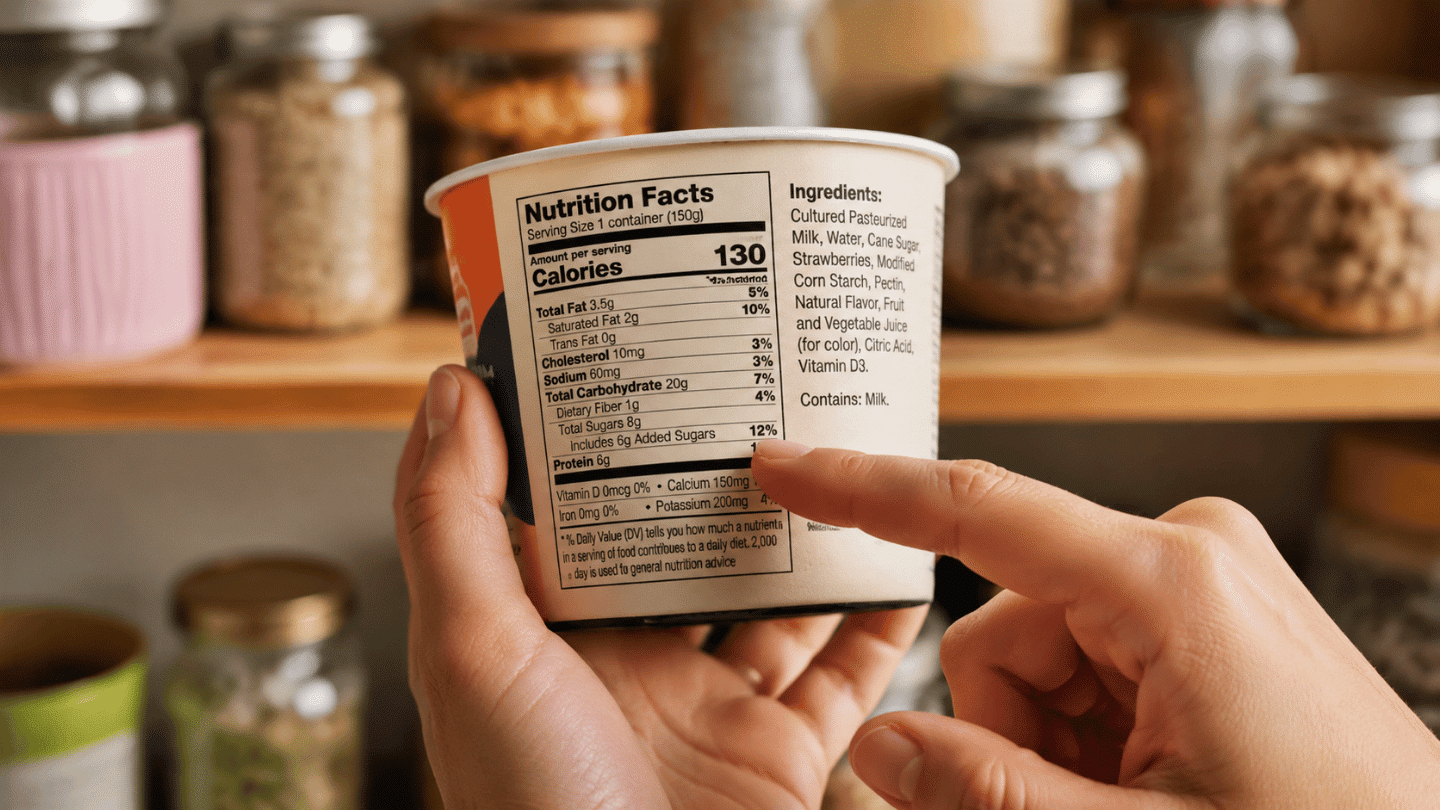
Food labels can help you track macros more accurately by showing the calories, protein, carbohydrates, and fat in packaged foods. Start by checking the serving size because all nutrition values are based on that amount.
Look at the calories to understand the energy per serving, then check the grams of protein, total carbohydrates, and total fat. Compare these amounts with your daily macro goals.
Remember to adjust the numbers based on how much you actually eat.
Example: If a cereal box lists 200 calories, 8g protein, 40g carbs, and 3g fat per serving, eating two servings means doubling each value.
A carb-heavy breakfast like this is a good candidate for balancing carbs with protein, since pairing it with eggs or Greek yogurt slows digestion and keeps you fuller longer
Tracking Macros in Your Daily Meals

Learning how to track macros helps you compare your food intake with your daily protein, carb, and fat goals while keeping your meals aligned with your nutrition plan.
- Log Your Food: Record meals, snacks, drinks, sauces, oils, and toppings. Check nutrition labels or food details for accurate macro information.
- Measure Portions: Use a food scale or measuring cups when possible. Check whether nutrition values are based on raw or cooked food, as weight can change during cooking.
- Use Tracking Apps: Macro tracking apps can simplify logging with food databases, barcode scanners, saved meals, and progress tracking. Saving your regular meals can also make daily tracking quicker
Common Macro Tracking Mistakes Beginners Make
Macro tracking takes practice, and beginners often make small mistakes while measuring portions, recording meals, and setting their daily targets.
- Stay close to targets. Small changes are normal.
- Check raw or cooked weight and use the right food entry.
- Track oils, sauces, drinks, and snacks.
- Focus on food quality along with macros.
- Avoid changing targets too often without checking progress.
- Don’t ignore weekend meals or occasional snacks when logging food.
Small errors can affect your daily numbers, but fixing these habits can make tracking more accurate and easier to maintain.
Final Thoughts
Tracking macros can seem like a lot of numbers at first, but it becomes more manageable once you understand what you’re tracking and why.
I think the most useful approach is to start with realistic macro targets, record your portions consistently, and use food labels to check what you’re actually eating.
You don’t have to hit every target exactly each day. Instead, pay attention to your overall eating pattern and adjust your approach as your goals or activity levels change.
Over time, we can learn which foods and portions fit our routine without overcomplicating every meal.
Have you tried tracking macros? Share your experience or tips in the comments below
Frequently Asked Questions
Can I Track Macros Without Following A Strict Diet?
Yes. Macro tracking does not require the same meals every day. You can include different foods while staying close to your protein, carb, and fat targets.
How Do I Figure Out My Macros For My Body Type?
Your macros depend on your calorie needs, goals, activity level, and body composition. Calculate your daily calorie intake first, then divide it among protein, carbs, and fats.
Do I Need A Food Scale To Track Macros?
A food scale can improve accuracy, but it is not required. Measuring cups, standard portions, and consistent estimates can also help with daily tracking.