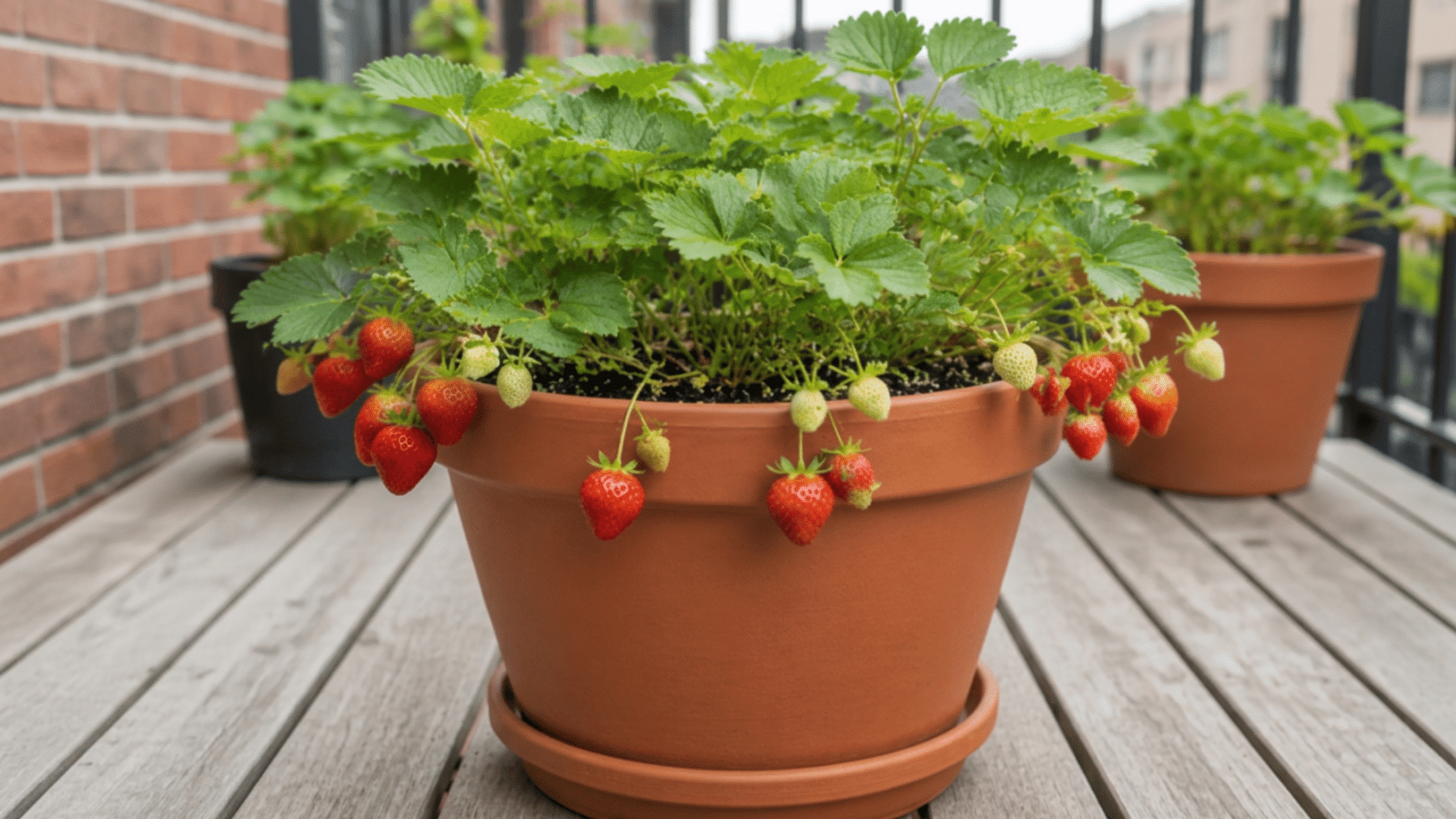
Fresh strawberries picked from your own patio taste like something the grocery store simply cannot sell you.
Most people who try growing them in containers end up with weak plants, dry soil, and berries that never quite ripen.
It usually comes down to a handful of small details that go unnoticed until it’s too late.
Learning how to grow strawberries in pots is less about having a green thumb and more about getting a few key conditions right from the start.
Container growing rewards those who understand what their plants quietly need, and once those pieces click into place, the results can surprise you.
What to Know Before Growing Strawberries in Pots?
Before learning how to grow strawberries in pots, it is important to know how container conditions differ from garden soil. Limited space requires careful control of moisture, nutrients, and root development.
Strawberries have shallow roots that quickly respond to changes in their growing environment. The right pot size and soil mix help prevent common problems and support healthier plants.
Proper drainage, sunlight, and balanced watering create better conditions for growth. Excess moisture or poor airflow can reduce fruit production and increase disease risks.
Day-neutral varieties often perform well in containers because they produce fruit over longer periods. These basics help maintain strong plants and better harvests.
Materials You Need
Before starting, gather all essential items to ensure the planting process goes smoothly and without errors.
Having everything ready helps avoid interruptions and improves plant survival and early growth success.
- Healthy strawberry plants (day-neutral or everbearing types like Albion or Seascape)
- Pot 10–12 inches deep with proper drainage holes
- Lightweight, well-draining potting mix
- Compost or organic matter for added nutrients
- Perlite or coco coir for better drainage and aeration
- Slow-release or liquid fertilizer for steady feeding
- Watering can or drip system for controlled watering
- Sunny spot receiving 6–8 hours of sunlight daily
- Straw mulch (optional for moisture and temperature control)
- Pruning scissors and small hand trowel (optional tools)
With these materials ready, planting becomes easier and sets a strong foundation for healthy strawberry growth in containers.
Step-by-Step Guide: How to Grow Strawberries in Pots
Growing strawberries in pots is an easy way to enjoy fresh fruit at home, even with limited space. A suitable container, quality soil, and proper care help plants grow healthy and productive.
This step-by-step process covers choosing pots, planting strawberries, watering, and regular maintenance to support steady growth and better harvests throughout the season.
Step 1: Choose the Right Container and Prepare Drainage
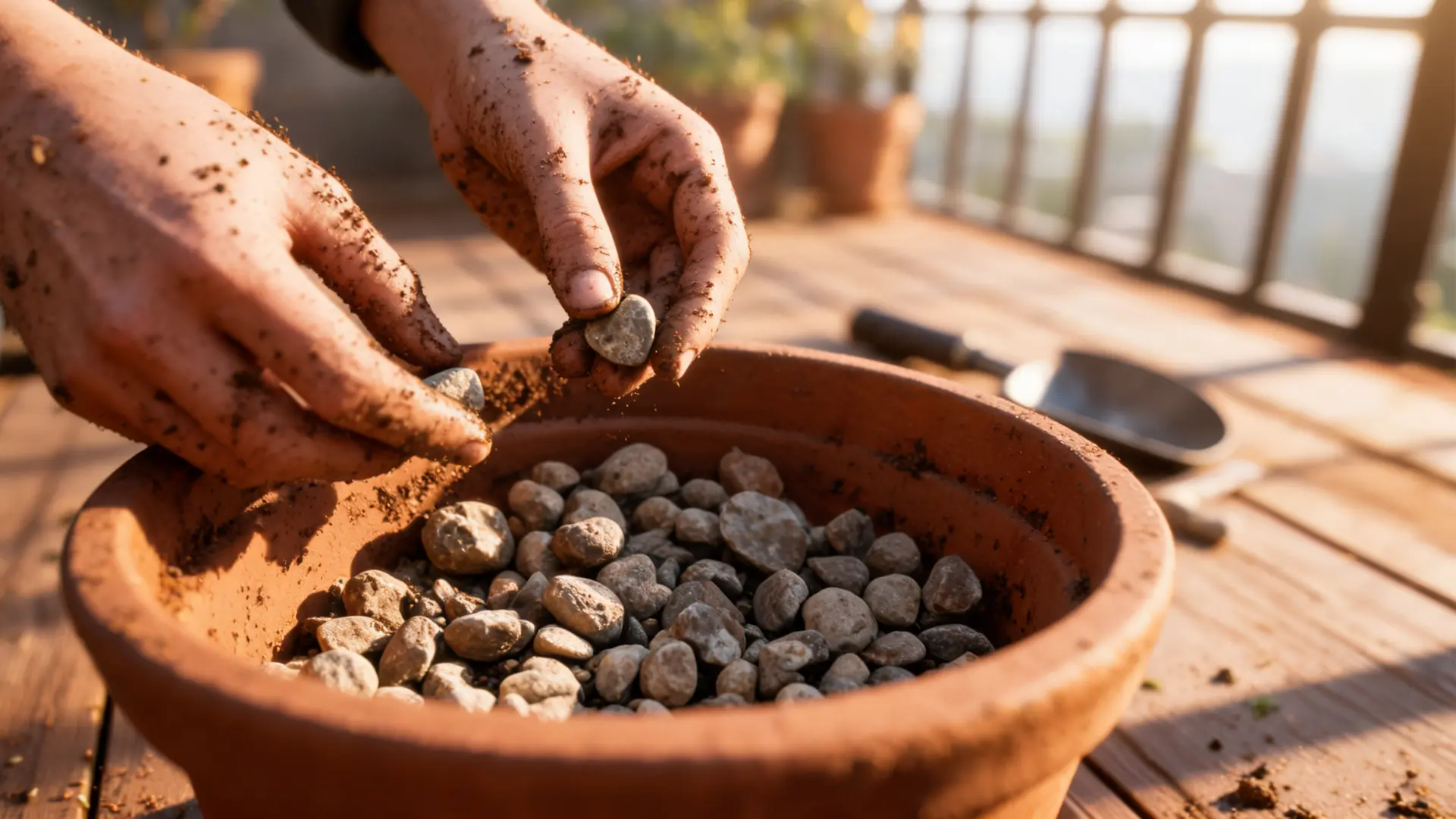
Select a wide container that is at least 10–12 inches deep with proper drainage holes at the bottom. Strawberries do not tolerate standing water, so drainage is one of the most important factors for survival.
Add a thin layer of small stones, broken clay pots, or gravel at the base to improve water movement. Avoid sealed or decorative pots without holes because they trap excess moisture and lead to root rot.
Tip: If using plastic pots, make extra side drainage holes to improve airflow and prevent overheating during hot days.
Step 2: Prepare the Soil Mix for Healthy Root Development
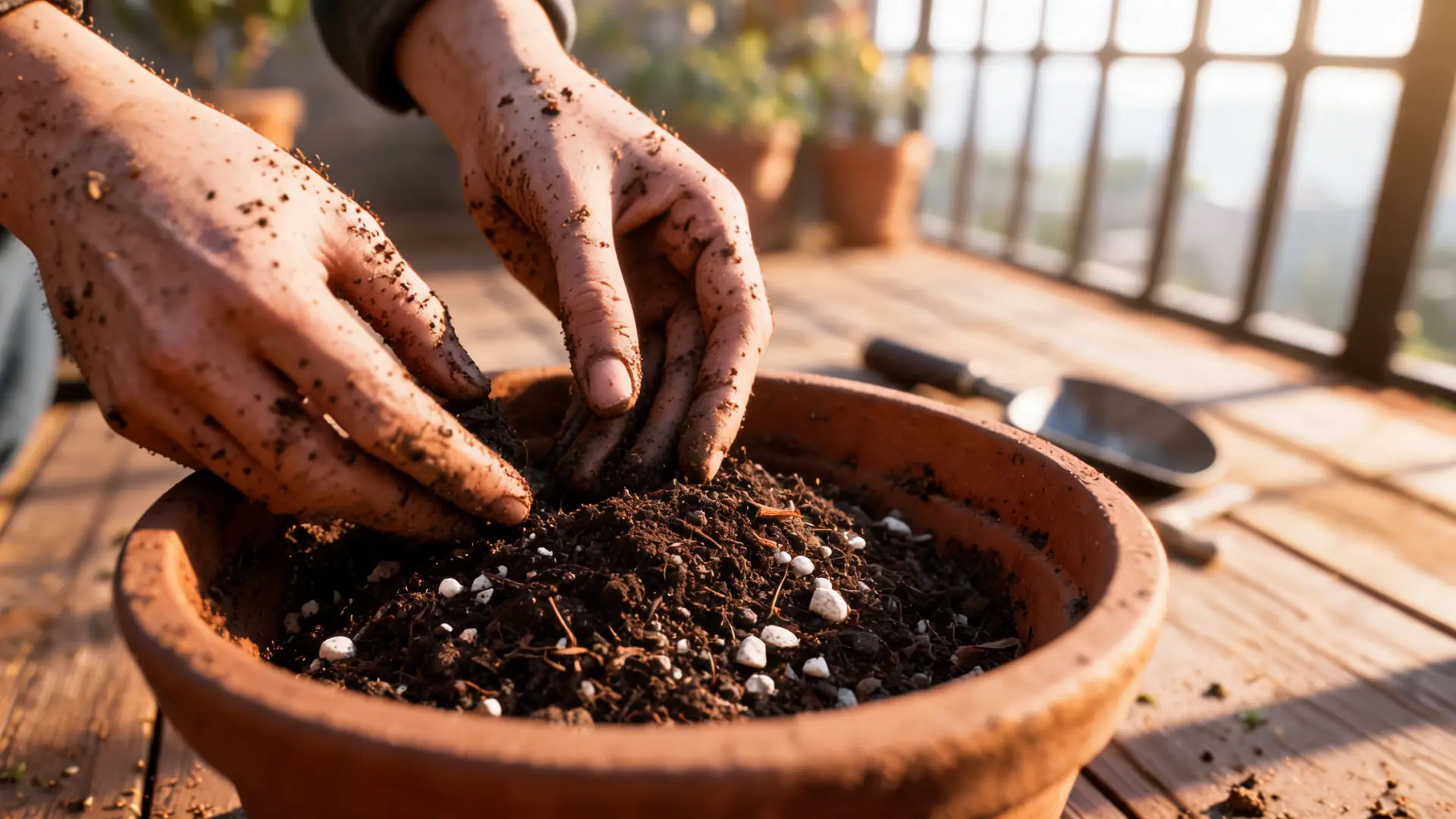
Fill the container with a loose, well-draining potting mix enriched with compost or organic matter. The soil should feel light and airy, not heavy or compact.
Avoid using garden soil because it becomes dense in pots and blocks oxygen flow to roots. Mixing in perlite, sand, or coco coir improves drainage and moisture balance.
Strawberries prefer slightly acidic soil, ideally between pH 5.5 and 6.5, which helps nutrient absorption and supports better flowering and fruit quality.
Step 3: Select Healthy Plants and Plant at Correct Depth
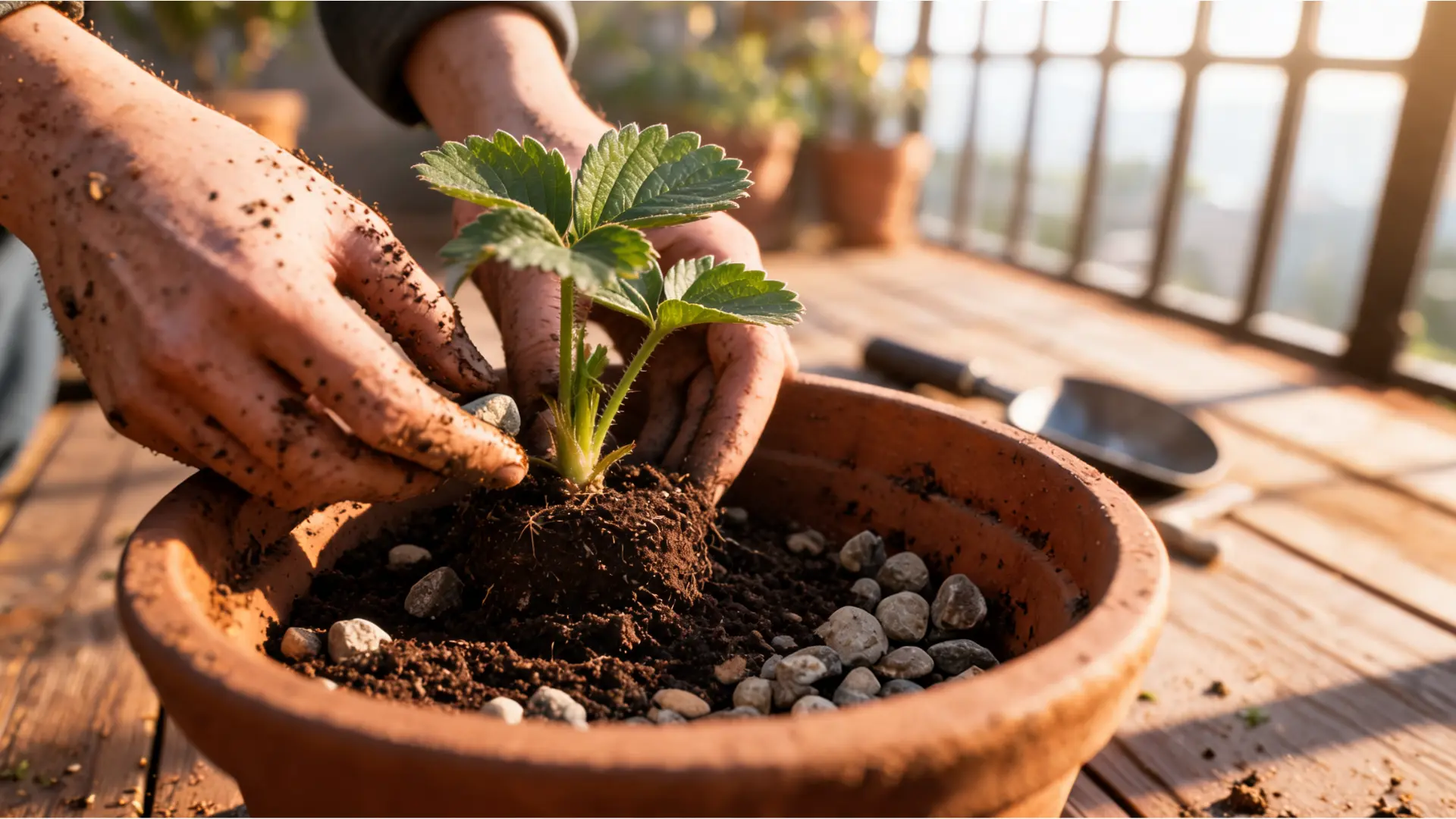
Choose strong strawberry plants with bright green leaves and no visible pests or signs of disease. Carefully place each plant in the soil so the crown sits exactly at soil level.
The crown is the central growth point where leaves emerge, and incorrect placement can kill the plant. Space each plant about 8–10 inches apart to allow proper airflow and reduce fungal problems.
Gently firm the soil around the roots without compacting it too tightly.
Step 4: Water Properly After Planting
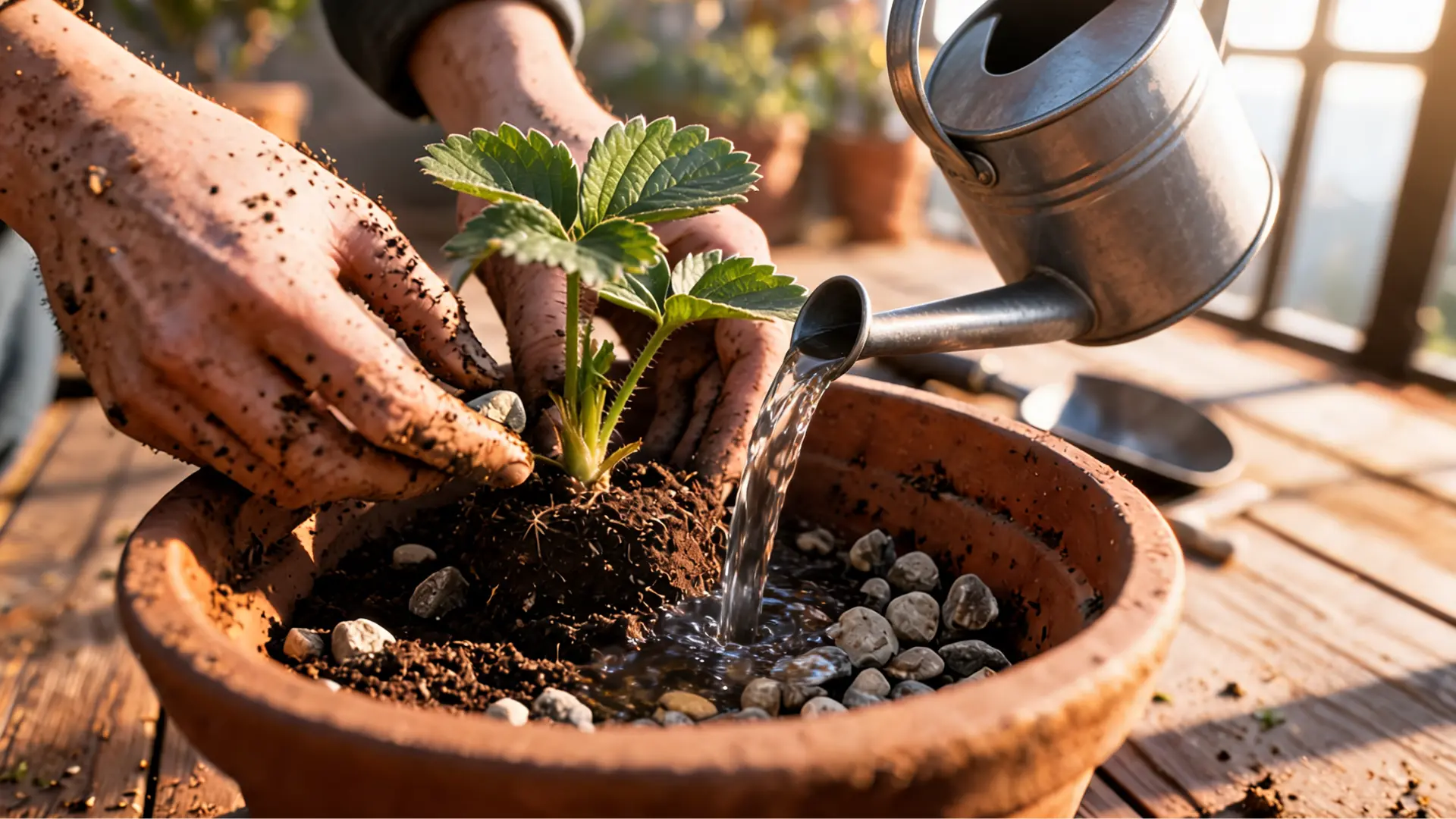
Water the container thoroughly immediately after planting until excess water drains from the bottom. This helps settle the soil and removes air pockets that may dry out roots.
During the first two weeks, keep the soil consistently moist but never soggy. Overwatering can suffocate roots, while under-watering slows establishment.
Check soil moisture daily using your finger; if the top inch feels dry, it is time to water again.
Tip: Morning watering is best because it reduces evaporation and allows plants to absorb moisture throughout the day.
Step 5: Place the Container in Full Sunlight
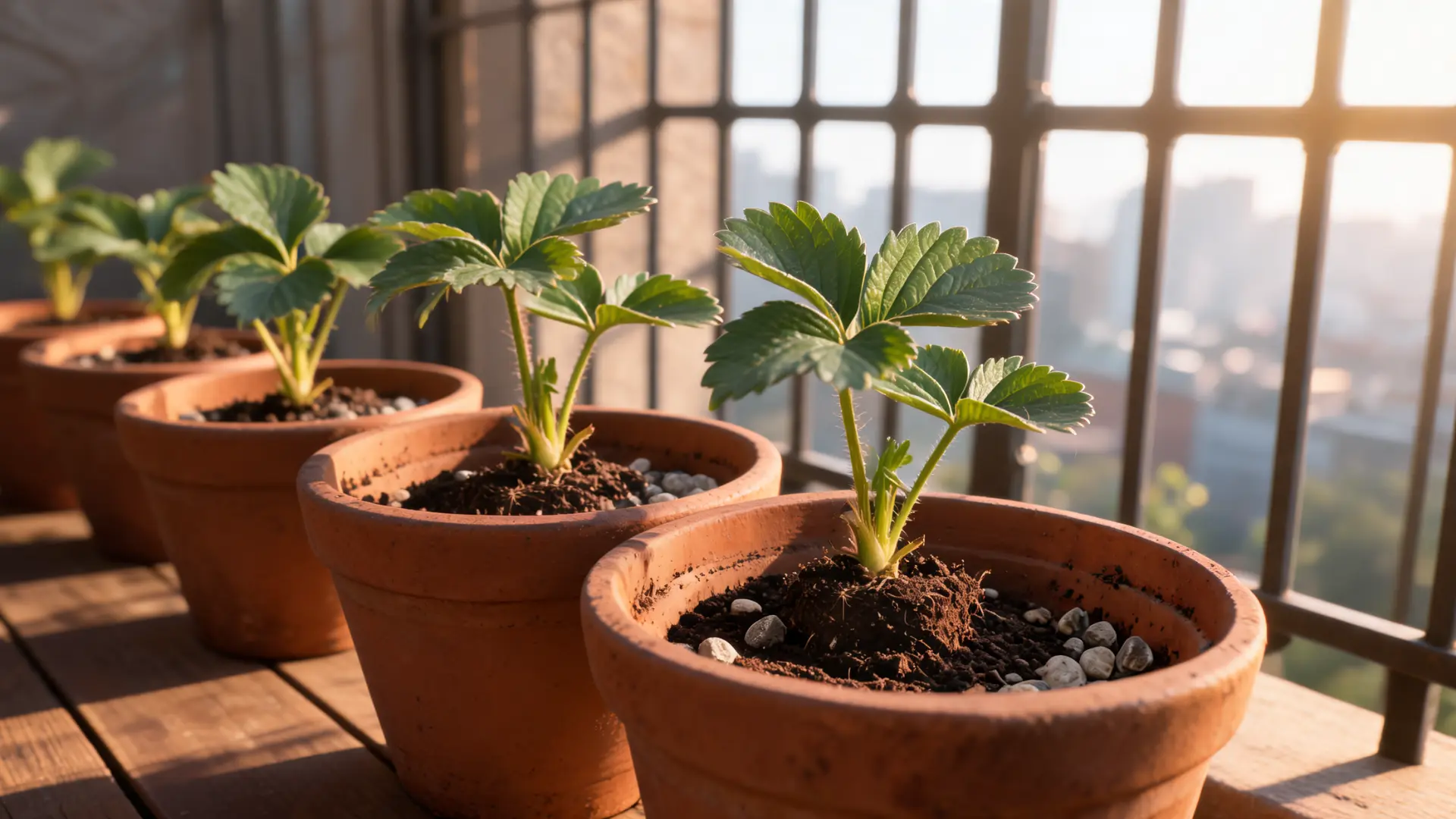
Move the pot to a location that receives at least 6–8 hours of direct sunlight every day. Sunlight is essential for flower formation and sugar development in strawberries.
Without enough light, plants produce fewer flowers and small, sour berries. Rotate the pot every few days to ensure even sunlight exposure on all sides of the plant.
Avoid deep shade or areas blocked by walls or trees, as limited sunlight can slow growth, reduce flowering, and affect overall fruit quality.
Step 6: Maintain Watering, Feeding, and Mulching
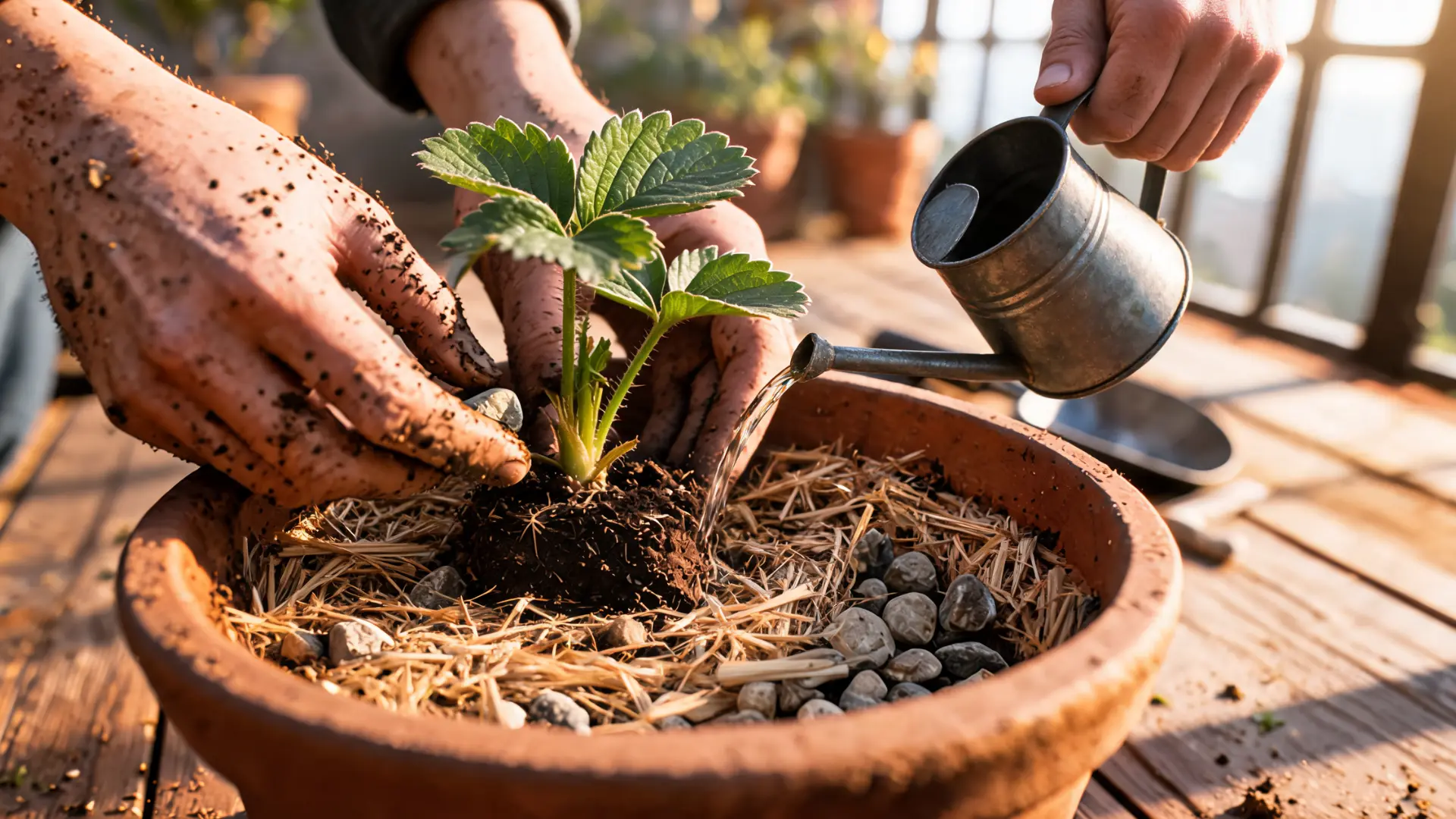
Strawberries in pots dry out faster than those in the garden, so consistent watering is critical. Water whenever the top inch of soil feels dry, keeping the soil moist but not soggy.
Feed plants every 2–3 weeks with a balanced liquid fertilizer after flowering begins. Avoid high-nitrogen fertilizers because they promote leaf growth rather than fruit production.
Adding a layer of straw or coco mulch helps retain moisture, regulate soil temperature, and keep berries clean.
Step 7: Remove Runners and Maintain Plant Health
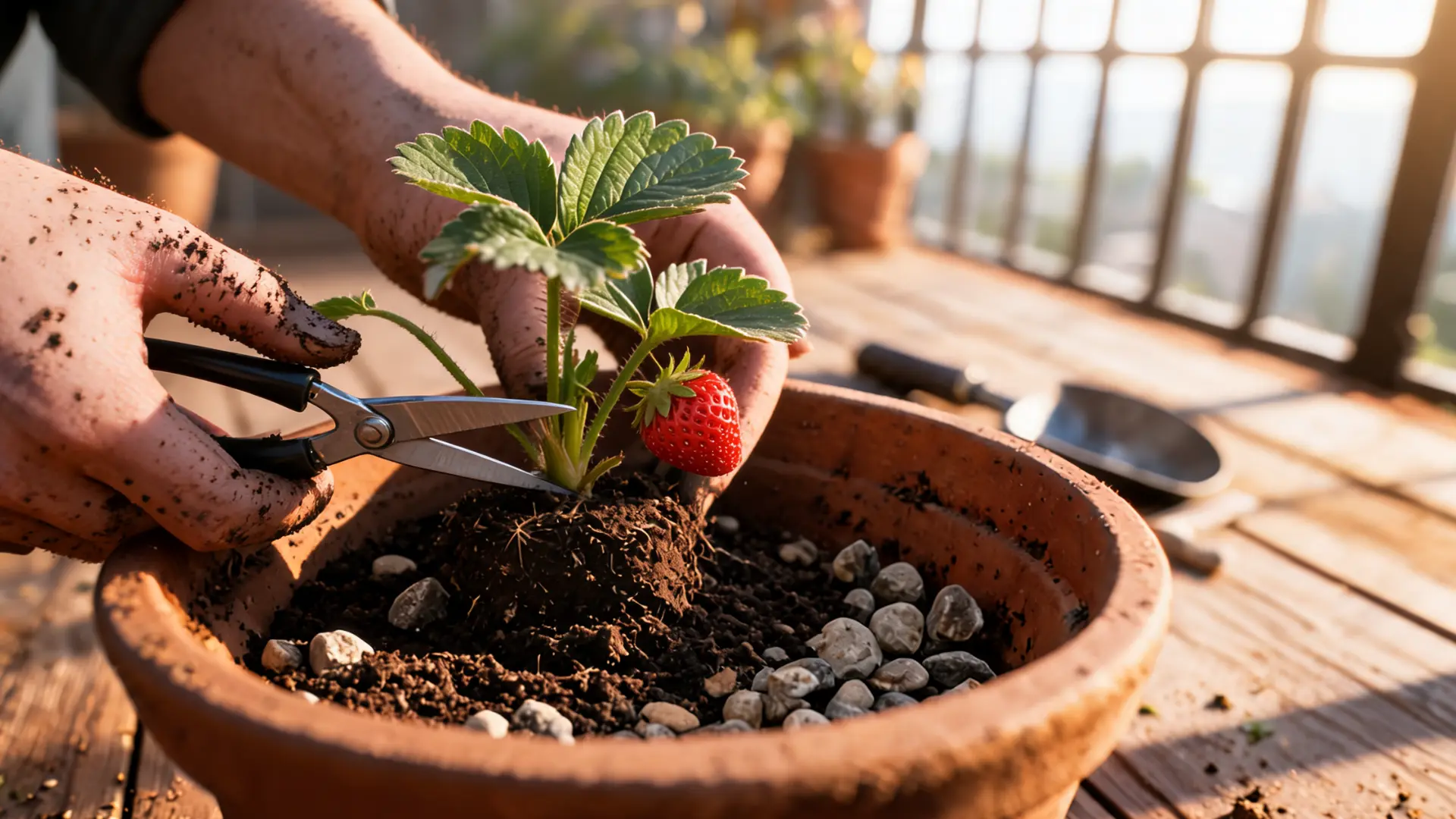
Strawberry runners are long stems that grow new baby plants. While useful for propagation, they reduce fruit production in containers by diverting energy away from berries.
Trim runners early using clean scissors to keep the plant focused on flowering. Also, remove yellowing or damaged leaves regularly to improve airflow and reduce disease risk.
Keeping the plant tidy ensures better nutrient use, improved airflow, and healthier fruit development while helping the strawberry plant stay productive throughout the growing season.
Step 8: Harvest at the Right Time for Best Yield
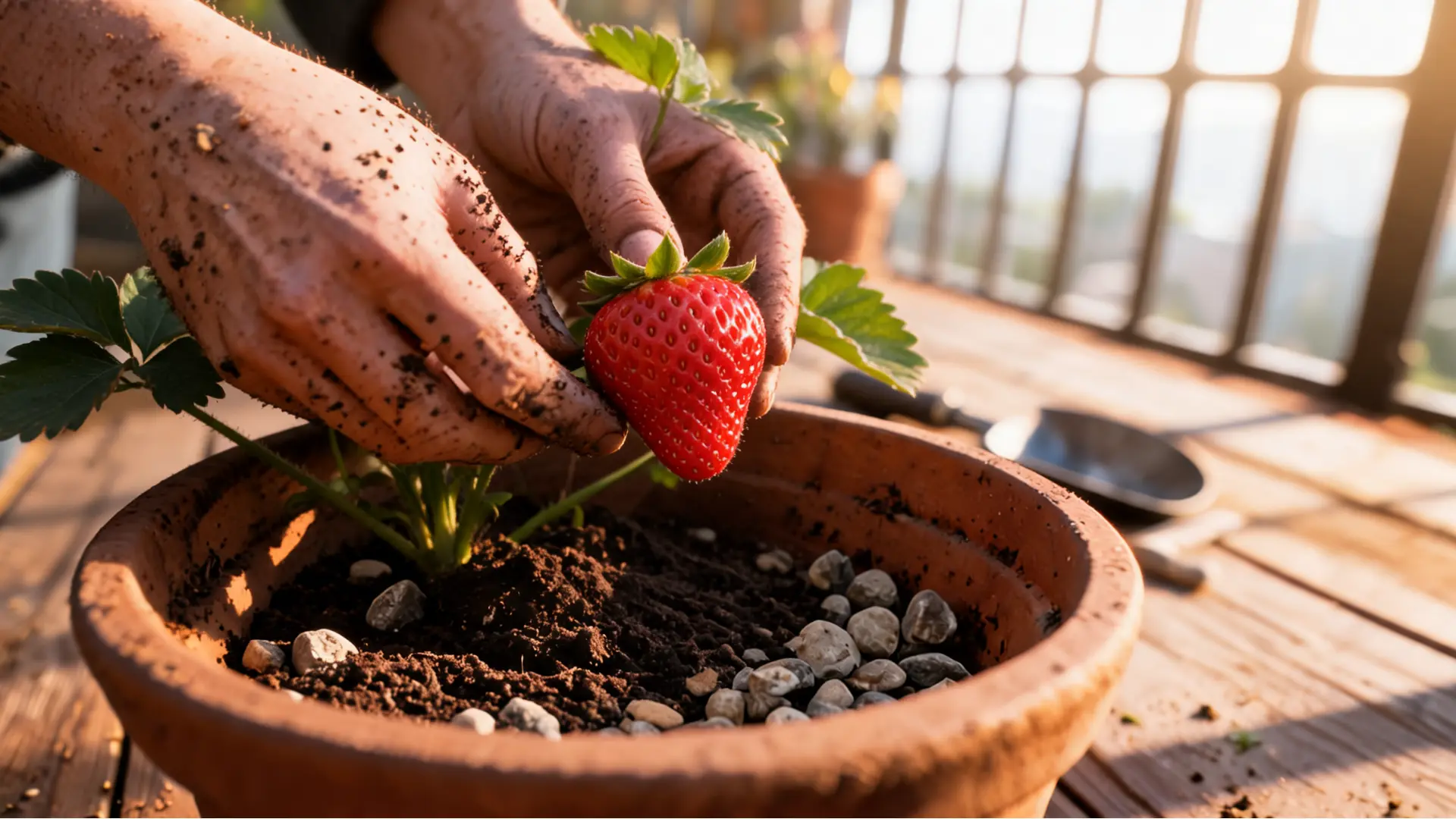
Harvest strawberries when they are fully red, firm, and evenly colored. Pick them gently while keeping the green cap attached to avoid bruising or damaging the fruit.
Regular harvesting encourages new flowers and helps extend the fruiting period. Remove overripe berries promptly, as they can attract pests and divert the plant’s energy from fresh growth.
Check plants every 1–2 days during peak season. Light pink berries need more time to ripen, while deep red fruits are ready to harvest. Remove soft berries to prevent decay.
After harvesting, plants focus energy on new flower and fruit growth to support continued production.
How to Choose Varieties and Container Types
Choosing the right strawberry variety and container is important for healthy growth and better harvests in small spaces.
The right combination helps plants receive proper moisture, airflow, and room for root development.
| Factor | Best Choice |
|---|---|
| Strawberry Varieties | Day-neutral and everbearing types work best in containers due to longer fruiting periods. |
| Popular Varieties | Albion and Seascape offer reliable growth and steady yields. |
| Wide, Shallow Pots | Support better root spread and airflow. |
| Fabric Grow Bags | Improve drainage and prevent excess moisture. |
| Terracotta Pots | Dry faster and reduce heat buildup. |
| Plastic Containers | Retain moisture but may heat up in summer. |
| Strawberry Towers | Save space but need careful watering. |
A suitable variety paired with the correct container creates better growing conditions, helping strawberries stay productive and produce fresh fruit throughout the season.
How to Maintain Strawberries in Pots?
Keeping strawberries healthy in pots requires regular attention to watering, feeding, sunlight, and general upkeep.
- Watering: Keep soil evenly moist and water when the top inch feels dry.
- Feeding: Apply balanced liquid fertilizer every 2–3 weeks after flowering.
- Runner Control: Remove runners to keep energy focused on fruit production.
- Sunlight: Provide 6–8 hours of direct sunlight daily.
- Pest Check: Remove damaged leaves and regularly inspect plants for pests.
- Season Care: Add compost after harvest and protect pots from frost.
Regular maintenance improves plant health, encourages flowering, and helps strawberries produce better yields in containers.
Pest Control Methods for Strawberries in Pots
Strawberries grown in pots can still face pests and fungal problems, though they tend to have fewer issues than garden-grown plants. Regular checks help identify problems early and protect plant health.
Simple control methods and proper care can reduce damage, improve airflow, and keep container strawberries productive throughout the growing season.
| Pest Problem | Symptoms | Control Method |
|---|---|---|
| Aphids | Sticky leaves, curled growth, small green/black insects | Spray neem oil solution or mild soapy water and rinse leaves gently |
| Spider Mites | Yellow speckled leaves, fine webbing under leaves | Increase humidity, spray water on leaves, and apply neem oil weekly |
| Slugs & Snails | Holes in leaves and damaged fruits | Use crushed eggshells, copper tape, or hand removal at night |
| Fungal Spots | Brown or black leaf spots, weak growth | Remove affected leaves, improve airflow, and avoid overhead watering |
| Whiteflies | Tiny white insects fly when the plant is shaken | Use sticky traps and neem oil spray every 7–10 days |
Regular inspection combined with simple organic treatments keeps strawberry plants in pots healthy, pest-free, and productive throughout the growing season.
Common Mistakes While Growing Strawberries in Pots
Many issues in container strawberry production come from avoidable setup and care errors rather than plant quality. Correcting these early improves survival rates and yield consistency.
- Overcrowding Plants: Too many plants reduce airflow and limit nutrient access, leading to smaller fruit.
- Incorrect Crown Depth: Planting too deep causes rot, while planting too shallow dries out roots quickly.
- Irregular Watering: Inconsistent moisture leads to stress cycles that reduce flowering capacity.
- Ignoring Drainage: Poor drainage traps water and creates conditions for root disease development.
- Excessive Fertilizer Use: High nitrogen levels promote foliage growth over fruit production.
Avoiding these mistakes helps maintain balanced growth conditions and reduces long-term plant stress in containers.
Conclusion
Growing strawberries at home can be a rewarding experience when small details are handled with care. With the right approach, even limited spaces can support healthy fruit production.
The process of how to grow strawberries in pots shows that containers can provide a suitable growing environment with proper planning.
Choosing suitable containers, maintaining a balanced environment, and adjusting care routines based on seasonal changes can improve plant performance.
With patience and regular attention, potted strawberries can become a reliable source of fresh fruit.
Start your container strawberry setup today and share your experience in the comments.
Frequently Asked Questions
Do Strawberry Pots Need to Be Replaced Every Year?
No, strawberry pots can last for years if they remain in good condition. Refresh the soil each season to restore nutrients and support healthy plant growth.
Can Strawberries in Pots Produce Fruit in The First Year?
Yes, nursery-grown or bare-root strawberries can produce fruit in the first year. Early planting and proper care help plants establish and develop better yields.
How Many Hours of Sunlight Do Strawberries Need in Winter Dormancy?
During dormancy, strawberries need a cool environment rather than direct sunlight. Indirect light helps maintain plant health without encouraging early growth.