A matte black lever can look right in every photo and still be the wrong purchase for your bathroom door. It may arrive without a lock, have trim too small to cover the old paint shadow, or need a hole your door doesn’t have. Choosing door hardware starts with three decisions: what each door needs to do, what will fit, and how the handle should look. Before ordering, check which parts the price includes.
Key takeaways
- Function first. Passage, privacy, keyed-entry and dummy sets behave differently, whatever they look like.
- Fit second. Backset, bore, door thickness and handing are model-specific, so measure your doors and check the product’s instructions.
- Appearance third. Choose a shape and finish that suit daily use. Matching every metal in the house is optional.
Start With the Function Each Door Needs
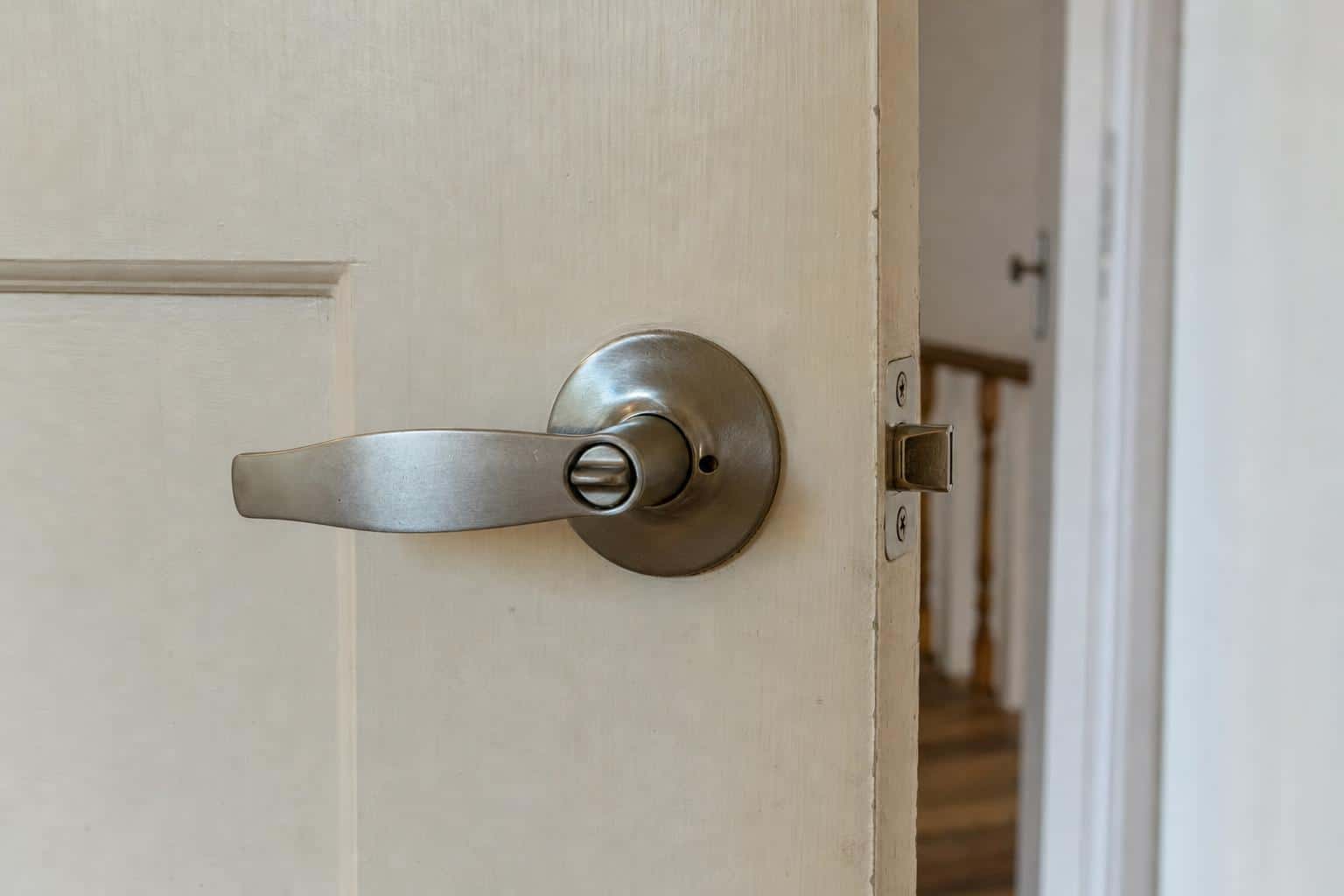
Residential hardware is sold by function, which determines whether a door latches, locks or does neither. Start by identifying which function each door needs.
|
Function |
What it does |
Where it suits |
|
Passage |
Latches the door closed without locking it |
Hallways and closets |
|
Privacy |
Locks from the inside with a thumb-turn or push-button, with an emergency release on the outside |
Bedrooms and bathrooms |
|
Keyed entry |
Provides controlled access through a lock; check whether the model uses a key, code or both |
Exterior doors |
|
Dummy |
A fixed handle with no latch; the door needs a separate catch or other arrangement to stay closed |
Closet doors and the inactive door of a double-door pair |
Privacy hardware is intended for interior rooms rather than exterior security. Its outside emergency release differs between models, so check how your selected set releases before relying on it.
An entry grip may also be a non-locking lower handle designed to pair with a separate mechanical or electronic deadbolt. If you want the door to lock, confirm that the deadbolt is included in the order or already installed on the door.
Make a door-by-door list. Before browsing, walk through the house and record the room, the function it needs and the quantity. Depending on how the doors close, a closet with two doors may need one operating passage set and one dummy pull. Writing this down helps prevent ordering privacy sets for doors that only need to latch. Keep the list so you can check your cart against it later.
Check the Fit Before Choosing a Replacement
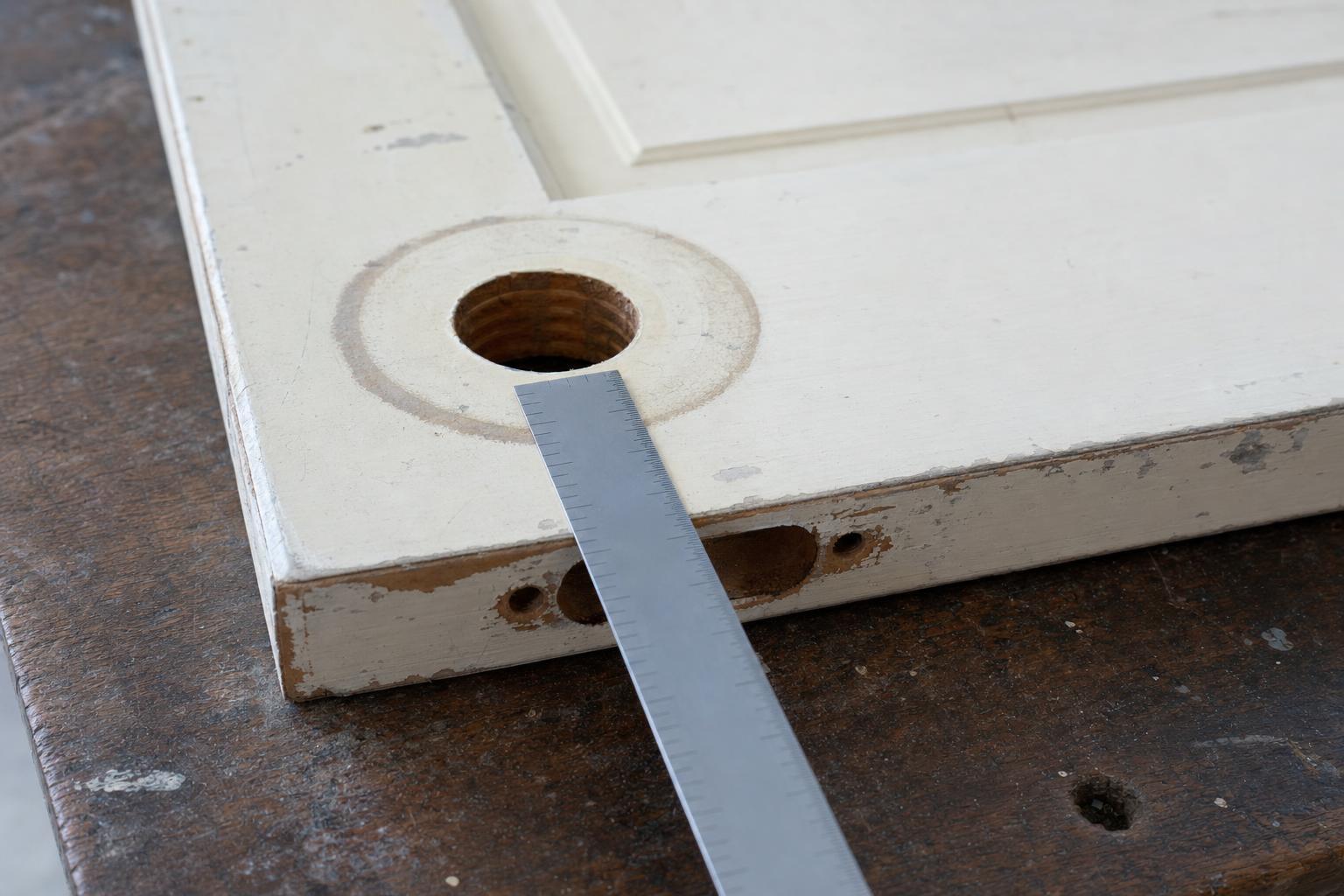
For a straightforward replacement, the new hardware needs to fit the door’s existing holes.
Measure three things. Backset is the distance from the door edge to the center of the large face hole. Measure it rather than assuming your door uses a 2-3/8-inch or 2-3/4-inch backset. Face bore is the diameter of that large hole; Lowe’s describes 2-1/8 inches as usual for levers and handlesets. Door thickness is the third measurement.
Compare all three measurements with the selected model’s specifications. For example, the Kwikset 9270CNT deadbolt listing at Doors For Pros specifies an adjustable 2-3/8-inch or 2-3/4-inch backset, a 1-1/2-inch or 2-1/8-inch bore, and a door thickness of 1-3/8 to 1-3/4 inches. Those dimensions apply to that model, not every replacement.
Look beyond the main hole. Removing old handles can reveal screw holes, paint shadows or other marks on the door face. Compare the footprint of the new rose, the trim around the handle, or backplate with those marks. Smaller trim may leave the old outline exposed.
Check that the latch faceplate fits the existing recess in the door edge, that the strike plate on the frame lines up, and that a lever will clear nearby trim or a wall when pressed.
Confirm the swing. Handing describes the direction a door swings. Some levers and handlesets are made for one direction or must be adjusted for it. Use the diagram supplied with the model you’re considering rather than a rule of thumb. If the existing holes or fittings look unusual, photograph them and ask the seller or manufacturer to confirm compatibility before drilling.
Choose a Shape and Finish That Suit Daily Life
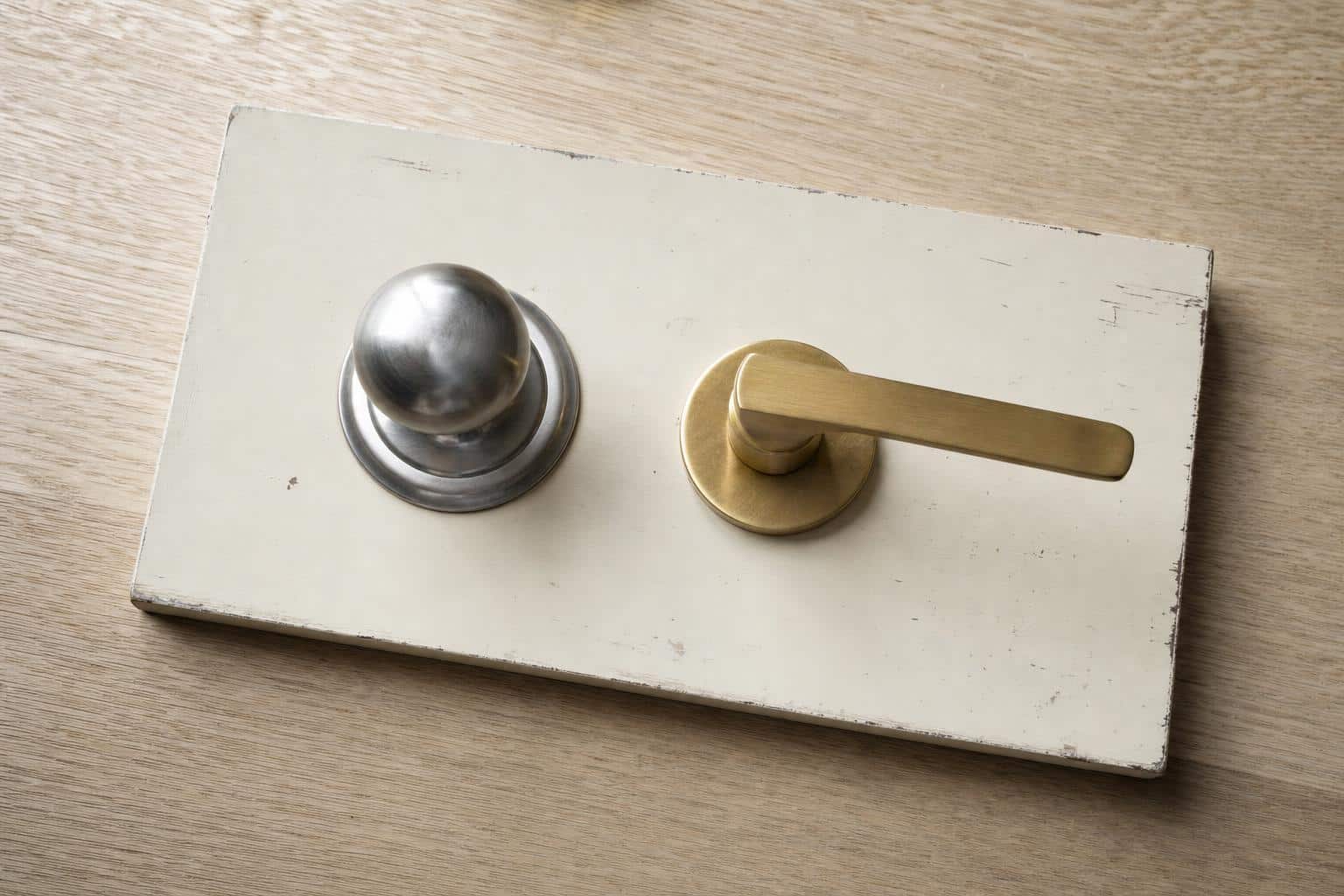
Once you’ve confirmed function and fit, compare how the hardware feels and looks.
Try the movement. A knob is gripped and turned; a lever is pressed down. Schlage identifies levers as an option for people with grip difficulties. Test the motion with the people who live in the home, without assuming a lever will meet everyone’s needs or establish accessibility compliance. A knob is also a reasonable choice if everyone can operate it comfortably.
Echo the home’s details. A straight, simple lever can suit flat casing and clean-lined doors. A rounded knob can work with paneled doors and traditional trim. Use these as starting points rather than design rules. Textured designs offer another option: Kwikset’s Raya knob has diamond-knurled edges. Choose texture for its appearance and feel without assuming it makes a knob easier to operate.
Coordinate finishes. Repeating a finish along a visible hallway can give the doors a consistent appearance. Door and cabinet hardware don’t have to match exactly, and mixed metal finishes can add visual interest. Compare samples in the rooms where you’ll use them before committing to a finish throughout the house. The doors for pros storefront sells residential and commercial hardware; check finish details for the exact model.
Inside Out Hardware notes that the same finish name can look different between manufacturers. Where pieces sit close together, compare physical samples instead of relying on names alone.
Check the care instructions. Cleaning requirements depend on the product and finish. Schlage’s cleaning guidance, for example, warns against spraying or immersing its hardware in liquid. Follow the care sheet for the model you choose, especially for a damp bathroom or exterior door, rather than assuming any finish is maintenance-free.
Compare the Complete Purchase Before Ordering
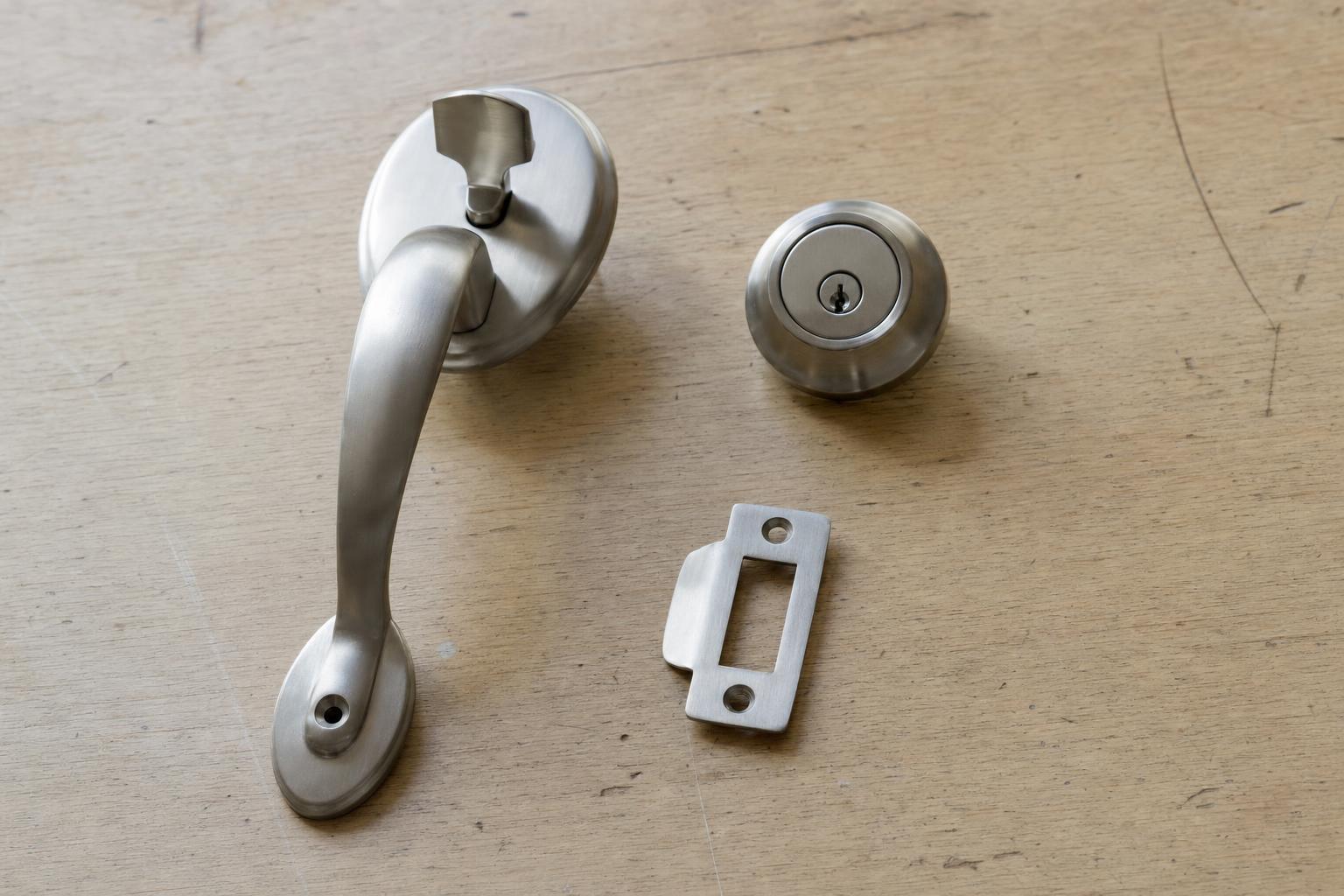
Check that the listing in your cart includes all the parts you need. Similar-looking products may be sold as a single pull, a pair, a latch set, a deadbolt or a combination pack.
Compare like with like. Two listings at Doors For Pros illustrate why package contents matter. Its Kwikset 9270CNT listing is for an electronic deadbolt, while its Schlage FBE489 Encode listing bundles a Wi-Fi touchscreen deadbolt with an Accent passage lever. Compare each with an equivalent package rather than treating a standalone deadbolt and a combination pack as interchangeable purchases.
Doors For Pros carries residential hardware alongside its commercial range, providing a residential category to browse for home projects. Within that category, check the exact model’s function, finish and dimensions before ordering.
Read the exact product details. Before paying, confirm function, finish, backset, bore, door thickness, handing, keying and included parts. Read the installation instructions and the seller’s terms, too. This is also the time to confirm whether an entry grip includes the deadbolt or whether you need to order it separately. For a mixed-metal look, compare nearby fixtures and contrasting door handles before choosing.
If a lock carries BHMA residential certification, examine the exact product’s ratings. The program evaluates security, durability and finish separately, giving you more specific information than a general claim about quality.
Add connected features if useful. A keypad or app-controlled deadbolt may suit how you use the door. Before buying, check the model’s phone or home-system compatibility, power requirements and backup access arrangements. Confirm whether a key or code remains available when a connected feature isn’t working.