Ever bought herbs that looked perfect at the nursery, only to watch them struggle while others completely took over? I’ve been there, and it’s frustrating. But here’s what I learned: the difference usually comes down to which plants you put next to each other.
In nature, plants don’t grow in neat, isolated rows. They cluster together, and certain pairings just work beautifully.
That’s why I created this guide, a simple herb companion planting chart with practical tips you can use right away. No complicated gardening terms, just clear advice on which herbs belong together and which ones need their space.
Let me help you get your herb garden working the way it should.
Understanding Herb Companion Planting
Companion planting is the practice of growing different plants close together so they benefit each other. It’s a natural gardening method that has been used for generations.
When applied to herbs, it means pairing herbs with other herbs, vegetables, or flowers to help them grow better.
Think of it like good roommates who share chores and look out for one another. Some herbs keep bugs away from neighbors, eliminating the need for sprays. Others improve soil by adding nutrients or preventing erosion during watering.
Certain pairings attract beneficial insects, bees, and butterflies that support the garden as a whole. Some herbs even produce more leaves and develop stronger flavors when grown with the right companions.
When herbs support each other naturally, the entire garden stays healthier with less effort.
How Companion Planting Works
Companion planting isn’t random. Certain herb combinations work because of specific principles that help plants support each other naturally. Key principles that make it effective:
- Pest confusion: Strongly scented herbs like basil and rosemary mask the scent of vulnerable plants, making it harder for pests to locate their targets.
- Beneficial insect attraction: Flowering herbs like lavender and thyme attract pollinators and predatory insects that eat garden pests, providing natural pest control.
- Soil improvement: Deep-rooted herbs like parsley break up compacted soil. Ground-cover herbs like thyme prevent erosion and help soil retain moisture.
- Resource sharing: Plants with different root depths can grow close together without competing. Tall herbs provide shade for heat-sensitive herbs like cilantro.
- Growth enhancement: Some herbs release beneficial compounds that enhance flavor and boost disease resistance in neighboring plants. Chamomile is called the “plant doctor” for this reason.
Understanding these principles explains why the chart recommendations work. When herbs are paired based on natural relationships, they create a healthier, lower-maintenance garden.
Herb Companion Planting Chart
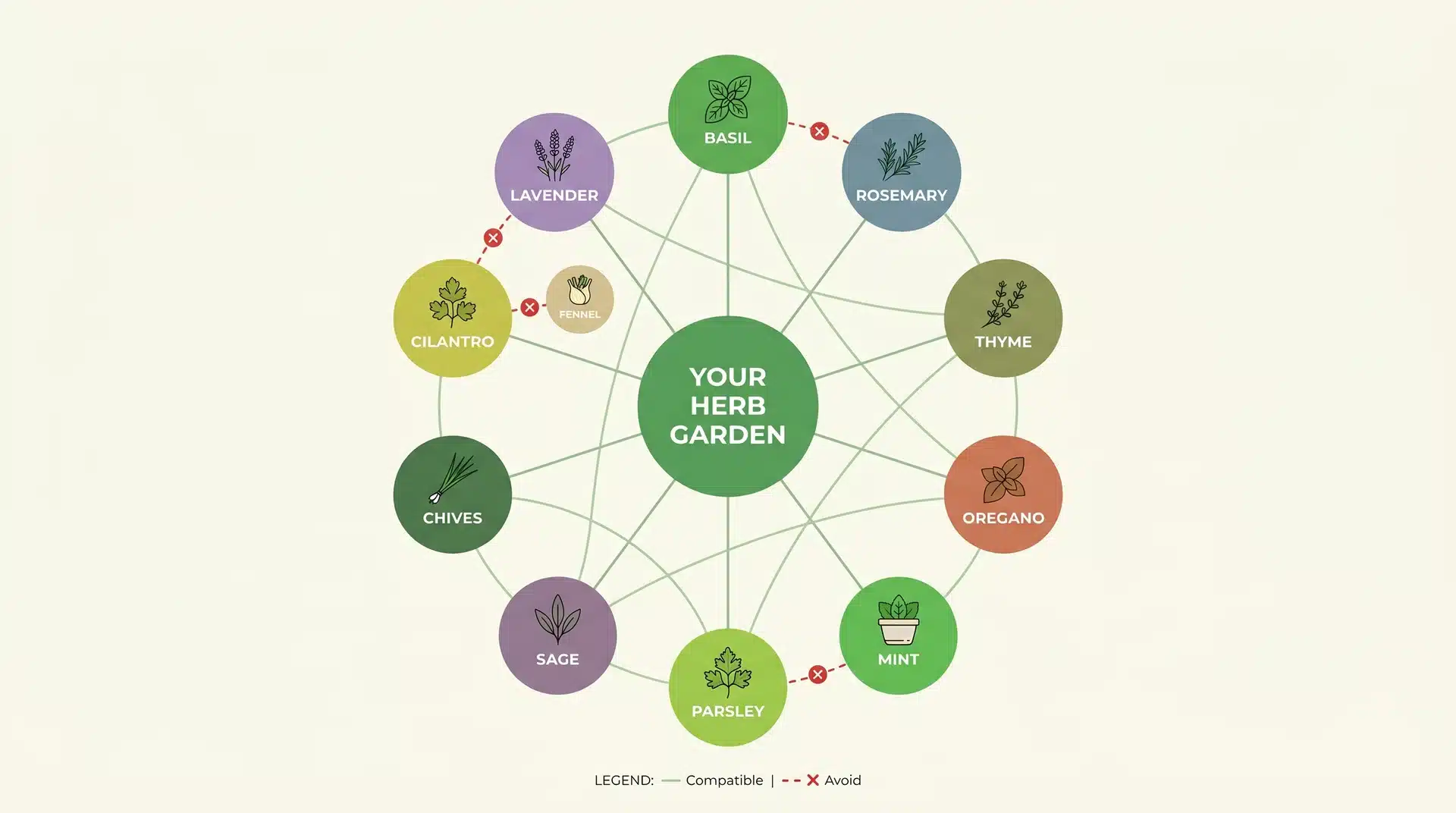
Getting the right herb pairings can make or break a garden. These charts are organized to match different planning styles and garden setups.
This chart works as a quick reference guide for everyday gardening decisions. It shows which herbs work well together and explains why each pairing succeeds.
If you’re also planning where your vegetables will go, pairing this with a beginner vegetable garden layout helps you see the full picture before you start digging.
Here are the 10 most commonly planted herbs and their best companion matches:
| Herb | Best Companions & Why |
|---|---|
| Basil | Tomatoes, Peppers, Oregano — keeps aphids and flies away, improves tomato flavor and growth. |
| Rosemary | Sage, Cabbage, Beans, Carrots — deters beetles and carrot flies, thrives in dry soil conditions. |
| Thyme | Cabbage, Strawberries, Tomatoes, most herbs — drives away cabbage worms and attracts beneficial insects. |
| Oregano | Peppers, Tomatoes, Basil — provide ground cover that discourages pests and keeps soil moist. |
| Mint | Cabbage, Tomatoes, Radishes — wards off aphids and cabbage moths. Always plant in containers to control the spread. |
| Parsley | Tomatoes, Asparagus, Carrots, Roses — attract beneficial insects that prey on common garden pests. |
| Sage | Rosemary, Cabbage, Carrots — blocks cabbage moths and carrot flies with its strong scent. |
| Chives | Carrots, Tomatoes, Roses — keep aphids at bay and prevent fungal diseases like black spot on roses. |
| Cilantro | Spinach, Lettuce, Tomatoes — attract pollinators and provide shade for cool-season crops. |
| Lavender | Roses, Fruit trees, and most herbs keep moths and fleas away while attracting pollinators like bees. |
Use this chart as a starting point when planning herb placement. Keep it handy during planting season for quick decisions.
How to Match Herbs With Vegetables & Flowers
Herbs aren’t just great when combined with each other. They make excellent neighbors for vegetables and flowers too. Here are the most popular combinations gardeners rely on.
Basil + Tomatoes: The classic pairing every gardener should know. Basil improves tomato flavor and repels hornworms and aphids. Plant basil around the base of tomato plants or in alternating rows.
Parsley + Carrots: Parsley attracts beneficial insects that prey on carrot pests. Plant parsley around the edges of carrot beds for natural protection.
Chives + Roses: Chives prevent black spot and aphids on roses. Plant them as a border around rose beds — they also look lovely when flowering. Another flower that earns its keep in the garden is the marigold; if you haven’t tried it yet, my guide on how to grow marigolds from seed shows exactly how to get them established as reliable pest deterrents.
Mint + Cabbage: Mint deters cabbage moths and aphids effectively. Keep mint in a pot buried in the ground near the cabbage to control its aggressive spread.
Rosemary + Beans: Rosemary repels bean beetles and Mexican bean beetles. Plant rosemary at the ends of bean rows for best results.
Lavender + Fruit Trees: Plant lavender around fruit trees to attract pollinators and repel pests. It works especially well with apple and peach trees.
These combinations work because the herbs either repel specific pests, attract beneficial insects, or improve the growth and flavor of neighboring plants. Start with one or two pairings and expand as the garden grows.
Herb Pairings to Avoid
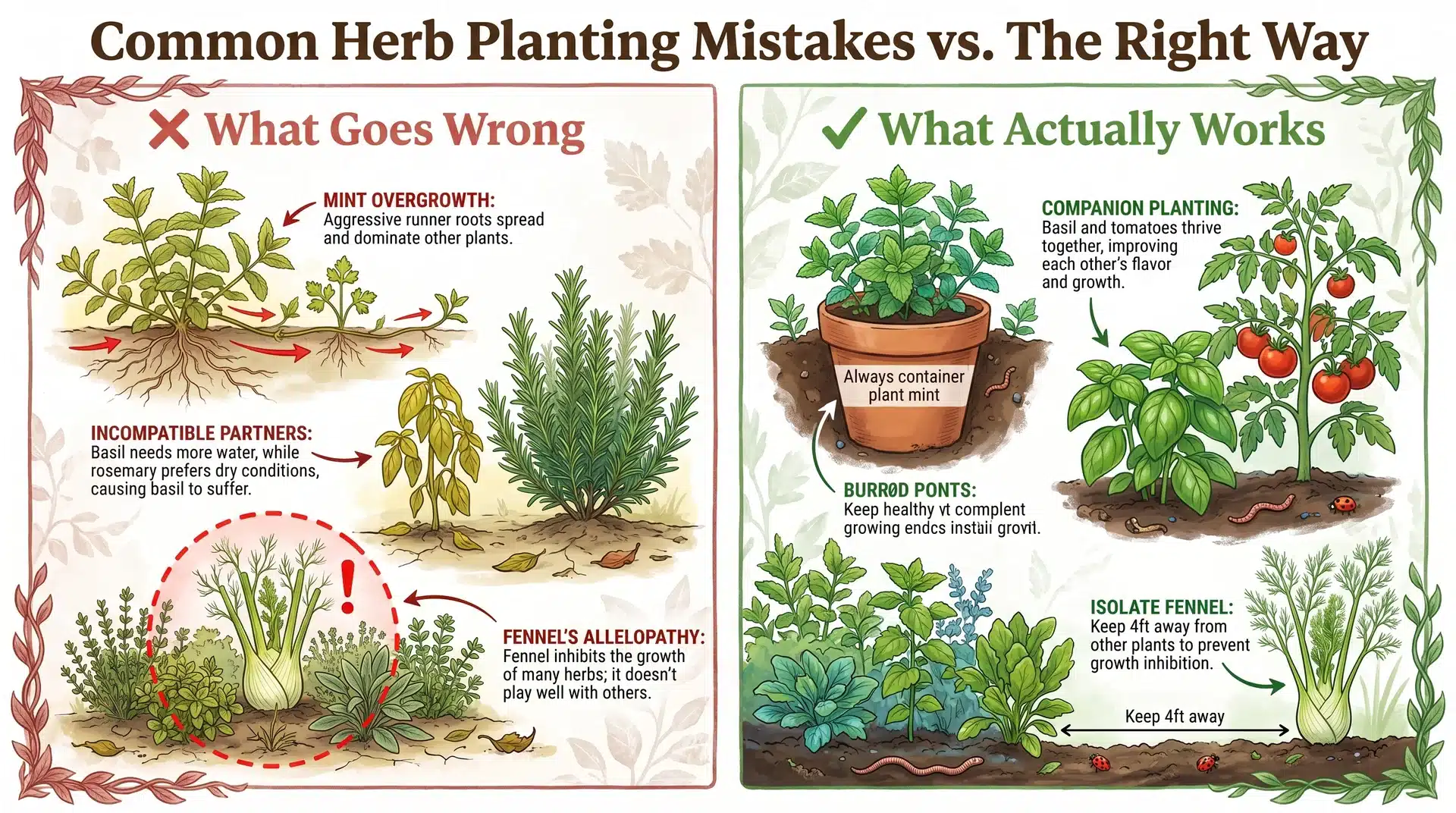
Some herb combinations create more problems than they solve. Knowing which plants don’t work together saves time and effort and prevents failed harvests.
| Herb | Not Compatible With | Why |
|---|---|---|
| Basil | Sage, Rosemary, Rue | Different water needs — basil needs moisture, while these prefer dry soil |
| Rosemary | Basil, Parsley | Water requirements conflict — rosemary needs dry conditions |
| Thyme | None known | Compatible with most herbs |
| Oregano | None known | Works well with most garden plants |
| Mint | Parsley, Chamomile, most herbs | Spreads aggressively through underground runners and takes over a 3-foot area in one season |
| Parsley | Mint, Lettuce | Mint will overtake it, and lettuce competes for similar nutrients |
| Sage | Basil, Cucumber | Water needs differ significantly |
| Chives | Peas, Beans | Can slow their growth when planted too close |
| Cilantro | Fennel | Fennel inhibits cilantro growth |
| Lavender | None known | Compatible with most plants |
Keep fennel at least 4 feet away from all herbs and vegetables. It releases chemicals that slow growth in most plants, earning its reputation as the “garden loner.”
Always check this compatibility list before planting. A few minutes of planning prevents plant loss and keeps the garden productive.
Planning Your Herb Garden Layout

Turning a companion planting chart into a working garden is straightforward with proper planning. Essential steps:
- Write down which herbs you want to grow, and check the companion chart for compatible pairings
- Sketch the garden space and mark sun exposure areas
- Group herbs by water needs (high-water vs. low-water herbs)
- Plan proper spacing: small herbs need 8–12 inches, medium 12–18 inches, large 18–24 inches
- Position tall herbs on the north side to avoid shading shorter plants
Proper planning creates an organized garden where every plant gets what it needs to grow well.
If you’re thinking beyond a dedicated herb patch and want to weave your herbs into a fuller planting scheme, the tips in my cottage garden layout guide show how to blend herbs with flowers and perennials for a garden that looks just as good as it performs.
A well-thought-out layout means less maintenance throughout the growing season. Start with these basic steps and adjust as the garden develops.
Common Mistakes and Their Solutions
Even experienced gardeners make simple errors that hurt their herb gardens. Here are the five most common ones to watch out for.
Overcrowding plants: Planting herbs too close together because the seedlings look small. Crowded plants compete for resources and trap moisture, which leads to fungal diseases.
Fix: Follow spacing guidelines and thin out seedlings when they’re too thick.
Ignoring sunlight needs: Placing sun-loving rosemary in shade or shade-tolerant cilantro in blazing sun weakens plants and attracts pests.
Fix: Match herbs to actual sun conditions, not convenience.
Watering all herbs the same: Mediterranean herbs need far less water than basil and parsley. Wrong watering causes root rot or stunted growth.
Fix: Group herbs by water needs and water each zone separately.
Planting without checking compatibility: Choosing neighbors based on looks instead of compatibility leads to plant failures.
Fix: Always check the companion chart before finalizing layouts.
Letting mint spread freely: Mint takes over everything within one season through underground runners.
Fix: Use containers only for mint — no exceptions.
Avoiding these five mistakes makes the difference between a struggling garden and one that produces healthy, abundant herbs all season long.
Frequently Asked Questions About Herb Companion Planting
What herbs should not be planted together?
The main ones to keep apart are mint and pretty much everything else — it spreads through underground runners and will take over a 3-foot area within a single season, so I always grow it in a buried container. Fennel is the other big one: it releases chemicals into the soil that slow or inhibit growth in most nearby plants, so I keep it at least 4 feet from all other herbs and vegetables. Beyond those two, the most common conflict is water needs — herbs like basil and parsley that want consistent moisture really struggle when planted alongside rosemary or sage, which prefer dry conditions. Keeping plants with similar water and sunlight requirements together solves most compatibility problems before they start.
Can basil and rosemary be planted together?
I’d avoid it, even though both are popular kitchen herbs. The core problem is watering: basil likes its soil to stay consistently moist, while rosemary needs to dry out between waterings and actually does better in slightly poorer, drier conditions that mimic its Mediterranean origins. If you water enough to keep the basil happy, the rosemary risks root rot; if you water to suit the rosemary, the basil suffers and loses flavor. They’re both great herbs, just in different beds or containers where you can manage them on their own schedules.
Does companion planting with herbs actually work?
In my experience, yes, though it’s worth being realistic about what it does and doesn’t do. The benefits I’ve seen most reliably are pest reduction (basil near tomatoes genuinely cuts down on aphid and hornworm damage) and pollinator attraction when flowering herbs like lavender and thyme are in the mix. What companion planting doesn’t do is replace good basics like proper spacing, matched watering zones, and correct sunlight placement. Think of it as a layer of natural support on top of sound gardening practice, not a shortcut around it. Start with one or two well-documented pairings, basil with tomatoes, chives around roses, and you’ll notice the difference pretty quickly.
How often should I water a companion herb garden?
The honest answer is: it depends on which herbs you’ve grouped together, which is exactly why grouping by water needs matters so much in the planning stage. Mediterranean herbs (rosemary, sage, thyme, lavender, and oregano) generally want watering every 7–10 days once established and prefer to dry out between sessions. Moisture-loving herbs like basil, parsley, mint, and cilantro typically need water every 2–3 days in warm weather, or whenever the top inch of soil feels dry. If you group these two categories into separate zones, you can water each on its own schedule without compromise, making the whole garden easier to manage and keeping every plant genuinely healthy.
Is companion planting worth it for a small herb garden?
I’d say it’s actually more valuable in a small garden than a large one, because every square foot matters and there’s no room to waste on pairings that compete or conflict. When you’re working with a raised bed, a few containers, or a narrow border, pairing herbs that genuinely support each other, say, oregano alongside tomatoes or thyme along the front edge of a veggie patch, means you’re getting pest control, soil coverage, and pollinator activity built right into the space without adding any extra plants. The main thing I’d focus on at a small scale is keeping mint containerized no matter what, and separating the water-hungry herbs from the drought-tolerant ones. Those two rules alone will save you more trouble than almost anything else.
Summary
You now have everything to create a healthy herb garden: a companion planting chart, planning steps, and solutions to the most common problems.
Companion planting doesn’t have to be complicated. It’s about working with nature instead of fighting it. When I place basil near my tomatoes or chives around roses, I’m simply letting plants do what they naturally do best: support each other.
Start small this week. Pick three compatible herbs from the chart and plant them together. I think you’ll be amazed at the difference.
Remember, your garden doesn’t need to be perfect right away. Use these guidelines, learn as you go, and adjust when needed.
Now get out there and start planting. Your herbs are waiting for their perfect neighbors.