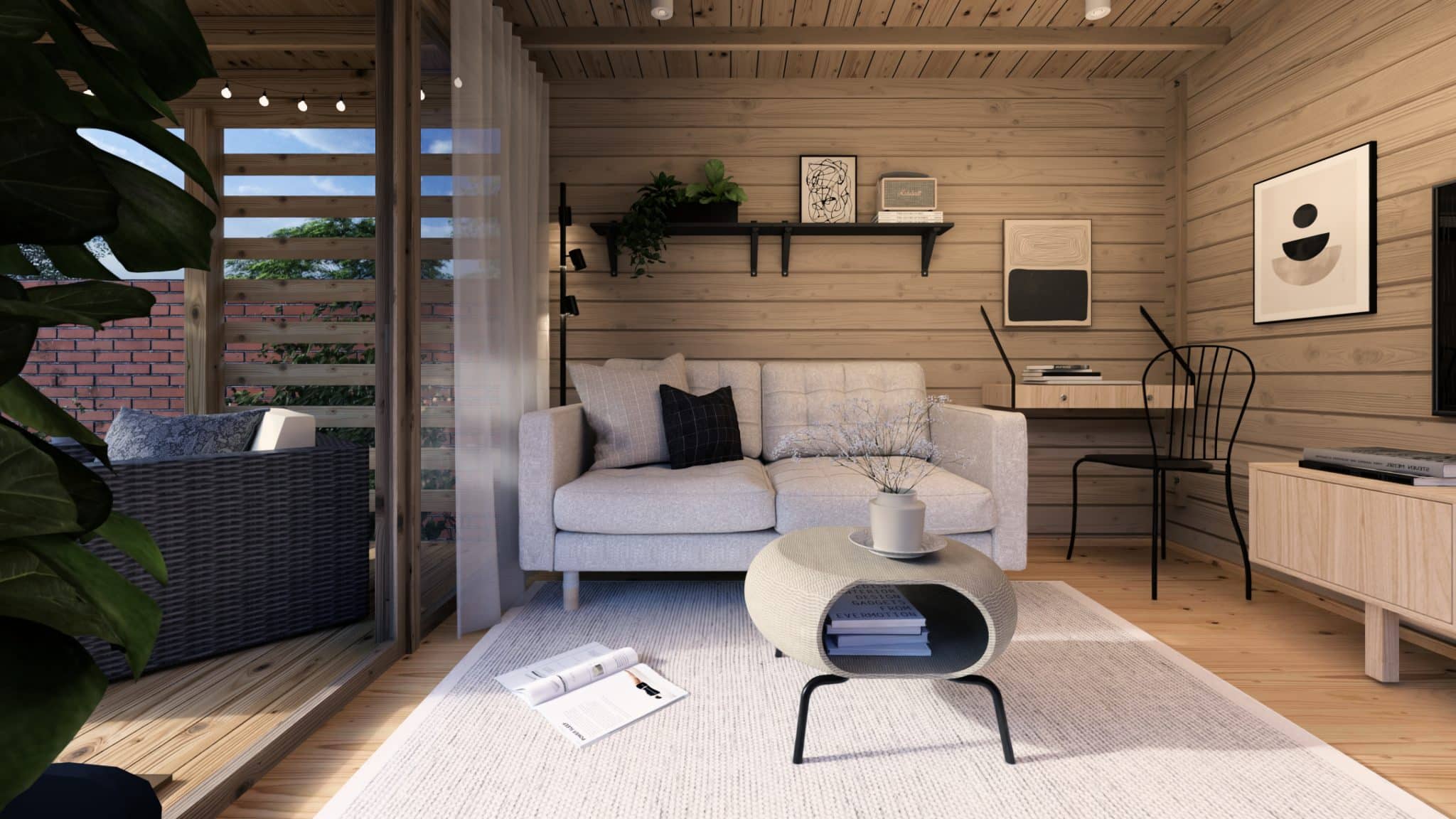
Garden rooms are no longer simple garden sheds and are now being used year-round as extensions of the home. The term “garden rooms” has seen a 27% increase in online traffic, indicating a growing number of homeowners wanting to fully maximise the potential of their home. How you style these structures makes a real difference if you want them to become functional, beautiful retreats that enhance everyday living whether it is for work, wellness, or leisure. A garden room is a fully insulated, purpose-built outdoor structure designed for comfortable year-round use. This guide introduces the 3-Zone Garden Room Method and other practical ideas to help you style your garden room.
1. Define Your Garden Room’s Primary Purpose
The first step in styling your new garden room is to define its main function. Function dictates everything else. Research conducted in 2023 found that 31% of homeowners used their garden rooms as multi-purpose spaces. Another major trend was using garden rooms as home offices, largely driven by hybrid working. Identifying the room’s primary function early ensures that the furniture, layout, and décor suit how you will use the space most often.
- For a home office, prioritise ergonomic furniture, optimal desk placement for natural light, and integrated storage for a clutter-free workspace.
- A yoga studio requires an open floor plan, warm ambient lighting, and space for mats and props, often incorporating biophilic elements for calm.
- An entertainment space benefits from comfortable, modular seating, integrated audio-visual systems, and durable surfaces for hosting.
- Specialised uses like wellness sanctuaries with saunas or meditation rooms are also gaining traction, highlighting the demand for tailored functionality.
2. Choose a Cohesive Colour Palette and Theme
Creating a cohesive colour palette and theme will give your garden room its own personality and mood. It will also create a link to the outside environment. Choose 2 to 3 core colours that blend seamlessly with your garden and your home’s exterior. Using similar flooring materials or complementary finishes can help create a seamless transition between your home and garden room. Popular garden room themes for 2026 include:
- Scandinavian Minimalist: Emphasises clean lines, natural wood tones, muted greys, and whites, promoting a sense of calm and spaciousness.
- Bohemian Retreat: Incorporates earthy tones, rich textures, global patterns, and an abundance of plants for a relaxed, eclectic vibe.
- Modern Industrial: Features raw materials like exposed brick, metal accents, concrete, and a neutral palette with pops of deep colour.
- Cottage Cosy: Focuses on soft pastels, floral patterns, vintage finds, and comfortable, inviting furnishings.
Tie indoor styling to outdoor views by echoing garden colours within your chosen palette, such as green accents or floral patterns, to blur the boundaries between inside and out.
3. Select Furniture That Balances Comfort and Durability
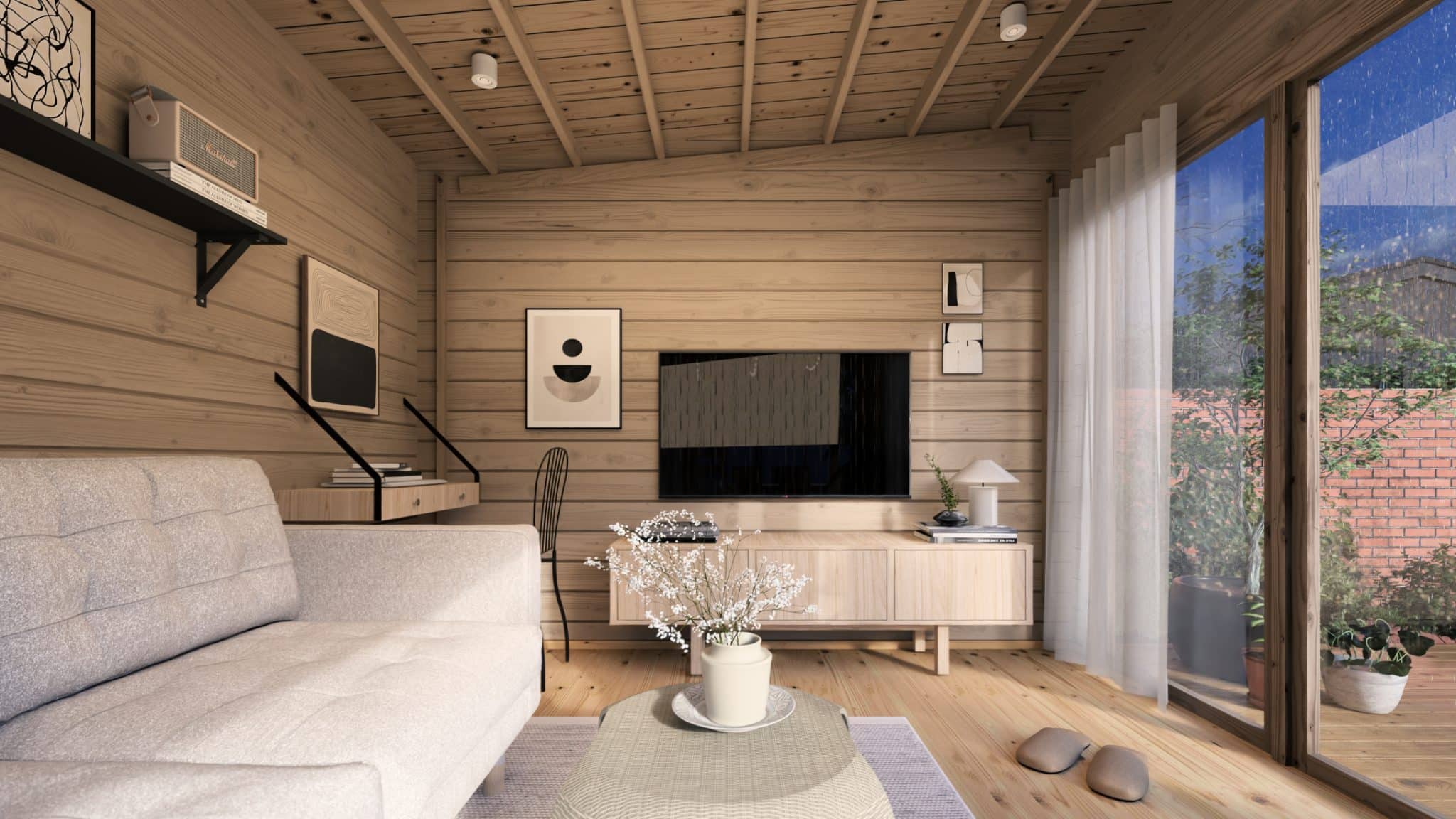
It’s important to choose comfortable, durable furniture, as garden rooms experience greater temperature fluctuations and humidity than indoor spaces. Choose low-maintenance, moisture-resistant materials.
Multi-functional furniture is important in smaller garden rooms to make the most of the available space. Consider storage ottomans, fold-down desks, or convertible seating that can adapt to different needs. When choosing furniture, always bear in mind its scale and proportion. A large piece of furniture can quickly overpower a small room and make it feel cramped instead of cosy.
4. Layer Lighting for Ambience and Functionality
Layered lighting is essential for creating a garden room that functions as a bright workspace during the day and a cosy retreat in the evening. Interior design trends for 2026 recommend combining task, ambient, and accent lighting instead of relying on a single overhead fixture. This approach makes it easy to create different moods while highlighting the room’s architectural features.
- Task Lighting: Essential for specific activities, such as adjustable desk lamps for an office or reading lights beside a comfortable chair.
- Ambient Lighting: Provides general illumination, often through overhead fixtures like flush mounts or decorative pendants, creating an overall glow.
- Accent Lighting: Adds drama and visual interest, using string lights, lanterns, or LED strips to highlight plants, artwork, or structural elements.
Dimmable options and smart bulbs are highly recommended for mood control, allowing you to easily transition between different uses. For sustainability and ease of installation, consider solar-powered or low-voltage outdoor-rated fixtures, especially for exterior path lighting or decorative elements.
5. Add Textiles and Soft Furnishings for Warmth
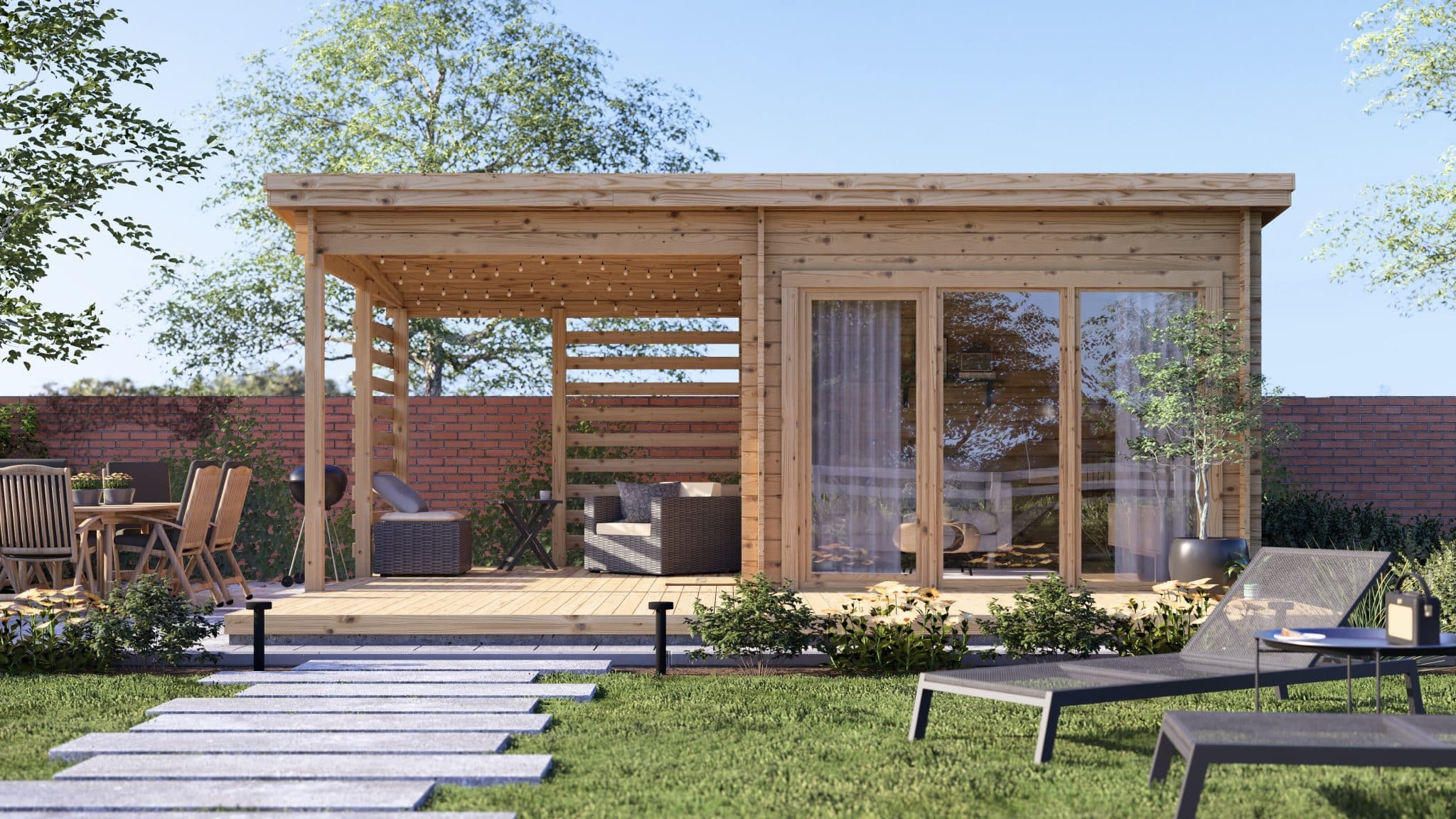
Textiles and soft furnishings add warmth, comfort, and personality while softening hard surfaces and improving acoustics. Layering rugs, cushions, throws, and curtains creates a comfortable and inviting atmosphere. When selecting fabrics, consider the following:
- Opt for weather-appropriate fabrics designed for indoor-outdoor use, which are often fade-resistant, mould-resistant, and easy to clean.
- Look for materials like solution-dyed acrylic for cushions and throws, which offer superior UV resistance and durability.
- If your garden room is more exposed to the elements, consider using washable covers.
- Using a large rug can help zone a room, anchor furniture in the space, and add insulating qualities underfoot.
Textiles are an excellent way to introduce pattern, texture, and colour. Changing them seasonally is an easy way to refresh the room without a major redesign.
Conclusion: Bringing Your Garden Room Vision to Life
Styling a garden room involves balancing functionality and aesthetics, transforming a simple structure into a cosy year-round retreat. By following these principles—from defining the room’s purpose and choosing durable furnishings to layering lighting and adding personal accessories—you can create a space that reflects your lifestyle and enhances your property. With remote working and wellness becoming increasingly popular, garden rooms are now being designed to support a wide range of activities and lifestyles. A well-styled garden room is not only a beautiful addition to your home but also a worthwhile investment for the whole family.
Remember that styling a garden room is an ongoing process. Choose one area to begin with, and build on it gradually, allowing for seasonal changes as well as personal needs. Enjoy the process of creating a beautiful, functional, and uniquely personal garden room that you can enjoy for many years to come.