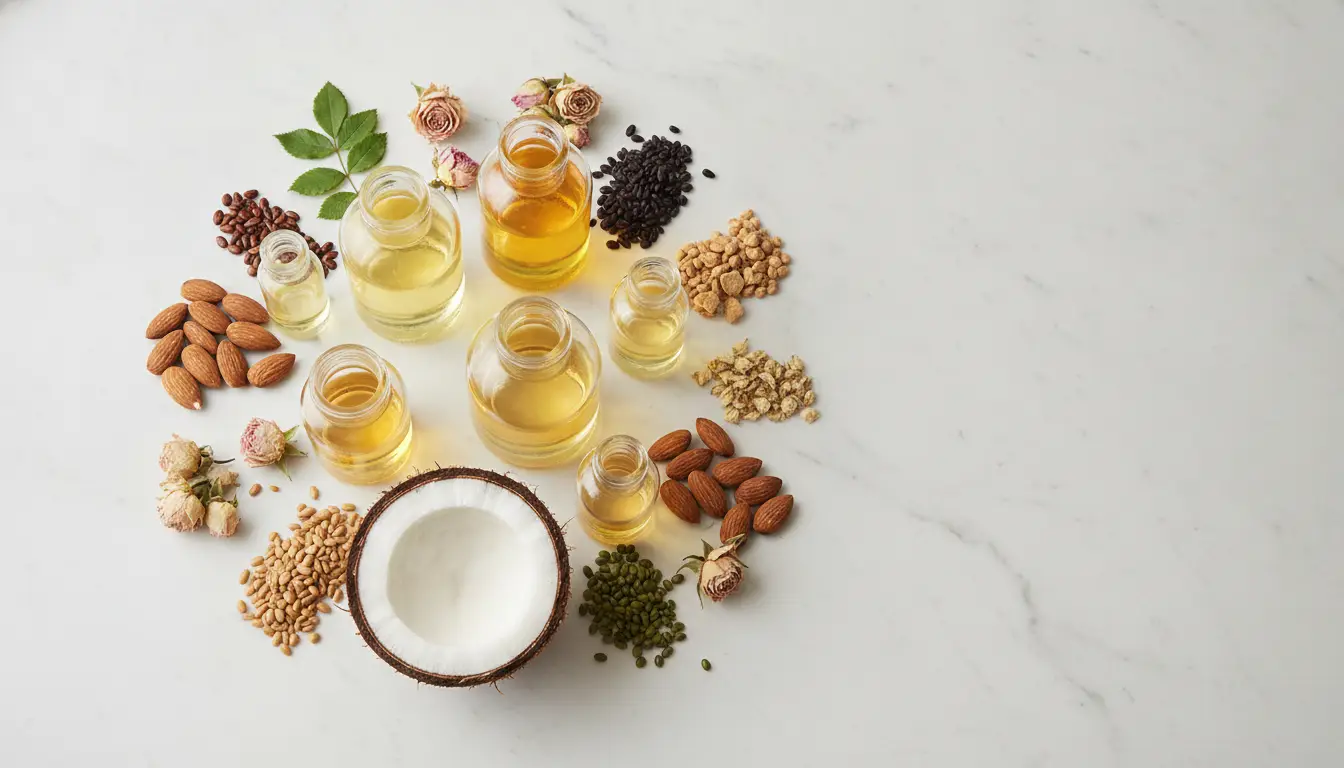
As perfume houses soar in popularity, oil perfumes are becoming increasingly popular among both serious and casual fragrance enthusiasts. These perfumes are long-lasting and have a skin-friendly application.
However, the quality of a perfume oil greatly depends on the carrier oil that is used. Carrier oils affect many factors such as the longevity, scent, and texture of the perfume. This article explores the best carrier oils for perfume.
What Are Carrier Oils?
Carrier oils are also known as base oils and fixed oils. They are derived from different plant parts such as seeds, nuts, and kernels. They may be processed through cold pressing or solvent extraction. Certain carrier oils are also derived from infusion, which means that the oil is soaked in herbs and plants to extract their fragrance.
The main property that separates carrier oils from essential oils is that they are non volatile, which means they don’t evaporate at room temperature. This property is what makes them a suitable base for perfumes.
How Do Carrier Oils Affect Perfume Performance?
In oil perfumes, the carrier oil does much more than just dilute fragrance ingredients. It fundamentally changes the finished product’s performance in the following ways:
Fragrance Longevity: Different carrier oils bind fragrance to the skin in different ways. More stable carrier oils slow the evaporation of fragrance molecules, allowing the fragrance to develop on the skin.
Absorption Rate: Lightweight carrier oils such as grapeseed oil quickly absorb into the skin, leaving little to no residue. Heavy oils are rich in texture and remain on the skin for longer.
Texture and application: The composition of carrier oils affects how they feel on the skin. Certain carrier oils naturally lend themselves to a smooth, enjoyable application.
Shelf life: This may be one of the most overlooked factors in carrier oil performance. Oils that don’t oxidize are less likely to go rancid and last longer.
An additional element that affects carrier oil performance is where you get it from. Stores that carry high-quality oils use appropriate extraction methods for a premium perfume base.
Best Carrier Oils for Perfume
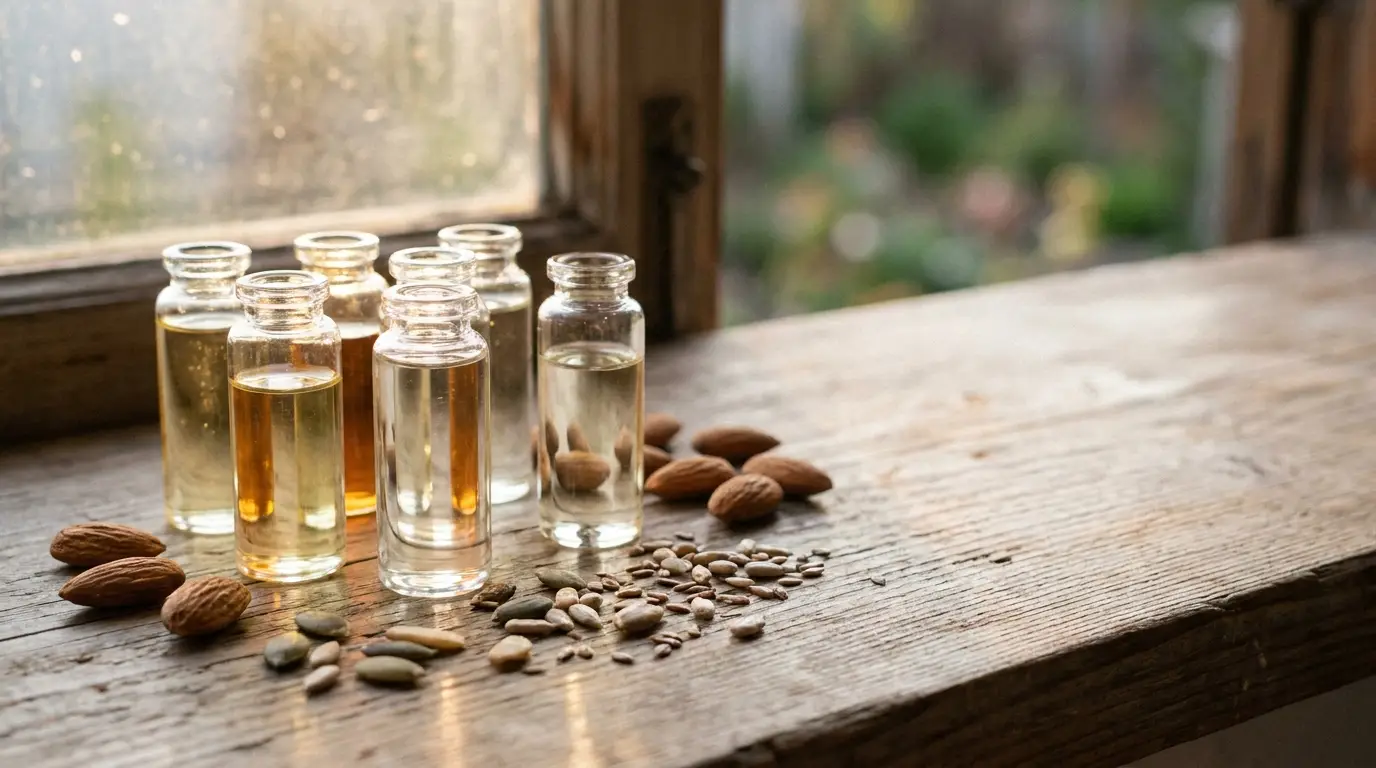
Now we know that carrier oil selection can make or break your perfume. The best options are neutral in odor, lightweight and resistance to oxidation. The following sections expand on which carrier oils to use.
Fractionated Coconut Oil
Fractionated coconut oil is perhaps the most used carrier oil in perfume because of its light texture and long shelf life. It is also odor-neutral, so it doesn’t interfere with any fragrant compounds added to it.
The right coconut oil for perfumery is derived from the kernel of mature coconuts through a process called fractionation. This process removes long chain fatty acids giving it beneficial properties such as quick absorption and a low melting point.
When stored properly, fractionated coconut oil has a long shelf life and does not go bad easily. This is why it is a popular option for home-made perfumes.
Jojoba Oil
Jojoba oil is extracted from the seeds of Simmondsia chinensis by cold pressing. It is widely used in perfumery, as its chemical composition closely resembles that of natural human skin oil. As a result, jojoba oil-based perfumes are comfortable to wear and absorb well without feeling greasy.
Herbal oil is also exceptionally stable as it is technically a liquid wax ester. While it’s not as neutral in odor as fractionated coconut oil, it still has a mild aroma that does not interfere with fragrance compositions.
Sweet Almond Oil
Sweet almond oil has a light golden colour and a faint nutty aroma that lends itself to rich perfume formulations. It is usually cold pressed to preserve moisturizing compounds such as fatty acid and vitamin E.
Sweet almond oil has moisturizing properties, making it linger on the skin longer when applied. It is great for use in formulations for dry skin.
Grapeseed Oil
Grapeseed oil is extracted from the tiny seeds that are left behind during wine production. This oil has a light texture and absorbs easily, making it a great option for use in everyday perfume blends.
In comparison with some other carrier oil, grapeseed oil is less stable, which means that it is more susceptible to oxidation. Perfumes made with grapeseed as a base oil should be stored properly in a cool, dark place.
Abyssinian Oil
Abyssinian oil, also known as Crambe abyssinica seed oil, is extracted from the seeds of the Abyssinian plant. It has a light, silky texture and absorbs easily into the skin, making it a luxurious option for oil-based perfumes.
Abyssinian oil is also known for its excellent stability and long shelf life, making it a practical choice for homemade perfumes that need to remain fresh for longer. Its combination of a lightweight feel, subtle aroma and stability makes it a particularly appealing carrier oil for fragrance formulations.
How to Choose the Best Carrier Oils for Perfume
Choosing the best carrier oil for perfume comes down to what you are looking for in a formulation. Perfumes for everyday wear should use lightweight perfumes that have a mild texture. Jojoba and sweet almond oils can be used for heavy perfumes designed for occasion wear.
Choosing the right base helps you formulate a perfume that is pleasant to smell and enjoyable to wear.