
A Better Way to Stay Organized During a Big Move
Most of the chaos in a move isn’t physical. It’s informational. The boxes exist; you just can’t find them. The document exists; nobody remembers where. Someone decided something about the utilities, and nobody wrote it down.
Households that move smoothly aren’t more organized by temperament. They’re running a system, usually a simple one, set up in the first week rather than the last.
Here’s a version that works.
Number the Boxes Instead of Describing Them
Writing kitchen on a box is the default approach, and it fails immediately, because there are twenty of them and not one says which holds the kettle.
Number every box instead. Box 1, box 2, box 47. Write the number large on at least two sides and the top. Then keep a list where each number has a room and a few actual contents beside it.
That sounds like more work, and it is, because writing kettle, toaster, mugs next to number 12 takes seconds, while writing it legibly on the carton takes longer and gets hidden by the next box stacked on top.
It also makes a missing box obvious. Forty-seven went on the truck, forty-six arrived, and you know exactly which one is absent and what was inside it.
The List Is the Actual System
The numbering only works because of the list, so that list needs to live somewhere accessible and shared.
A shared note or spreadsheet on a phone works well, since it travels to both ends and another adult can read it. Paper works too, as long as it doesn’t get packed, which happens more often than anyone likes to admit.
Add a column for anything fragile and a column for whether the box has been unpacked yet. That second one turns the new house from a pile into a queue.
Photograph More Than Feels Necessary
Photographs solve problems that written lists can’t.
Take pictures of the back of the television and anything else with a cable arrangement, because reconnecting from memory three weeks later is a genuinely miserable evening. Photograph the inside of drawers and cupboards before emptying them, since it’s the fastest way to reproduce a setup that already worked.
Photograph valuable items and any existing damage before packing. Photograph the meter readings and the empty rooms at the old place before the keys change hands.
It takes about twenty minutes across the entire move, and it settles claims, arguments, and reassembly questions later on.
Let the Mover’s Inventory Work Alongside Yours
A professional crew produces its own inventory, and it functions as a legal document rather than a courtesy.
If your boxes are already numbered, the two systems line up and checking off a delivery becomes quick. If they aren’t, you’re comparing their descriptions against your memory, which is precisely where disputes begin.
Working with trusted long-distance movers makes this straightforward, since their inventory is detailed and their condition notes are specific. Read it carefully before signing at both ends, and ask about anything vague. A note reading scratched is worth far less months later than one that says which leg.
Use Color Where Speed Matters
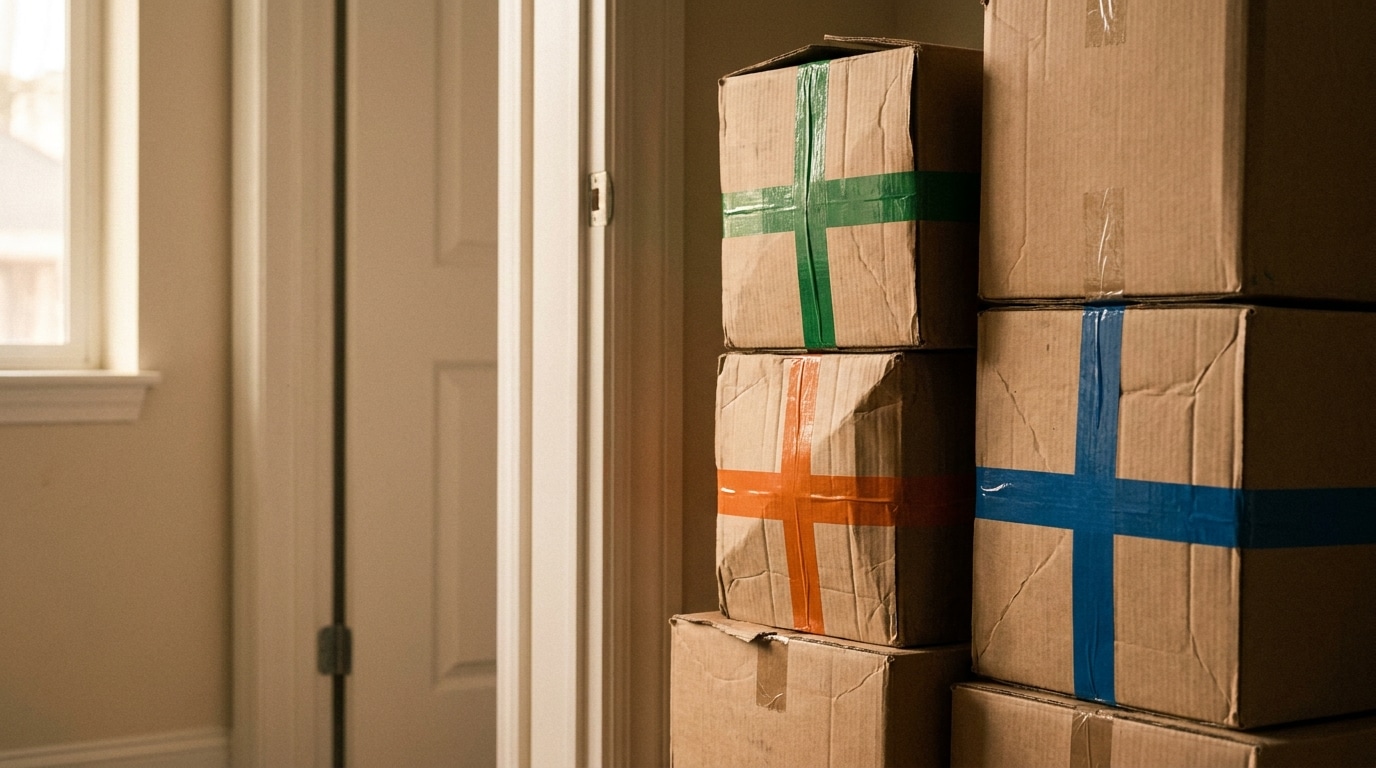
Written labels carry the detail. Color handles the two seconds a mover has while carrying a box through a doorway.
Assign each room a tape or sticker color, and put a matching sheet of paper on each door at the new place. The crew then never has to ask, and boxes land in the right rooms without anyone directing traffic.
It’s one of the few tricks that saves real time on the day itself, not in the weeks around it.
Build a Tier of Open-First Boxes
A single essentials box isn’t enough for anything larger than a studio, and the usual result is opening nine cartons on the first night hunting for one specific thing.
Use three tiers instead. What travels in the car, meaning documents, medication, valuables, chargers, and a change of clothes. What gets opened the first night, meaning bedding, toiletries, and enough kitchen supplies to produce coffee and a meal. And what gets opened during the first week.
Mark those clearly and load them last so they come off first. It’s a small change that removes most of the first-week frustration.
Track the Admin on a Separate List
Physical organization and administrative organization are different problems, and running them together means both get done badly.
Keep a second list for everything that isn’t a box. Utilities, address changes, notice periods, appointments, the mover’s paperwork, deposits owed and deposits expected. Add a date and a status beside each item.
Much of the anxiety in a move comes from suspecting you’ve forgotten something. A genuinely complete list removes that feeling, even before anything gets done.
Unpack With the Same System
Unpacking without a plan means opening cartons at random and producing a house that’s half-assembled in every room at once.
Work room by room from the numbered list, marking each box as you empty it. Beds first, then bathrooms, then the kitchen, then everything else in whatever order the household actually needs.
Break down and remove the empty boxes as you go. Nothing makes a new home feel unsettled quite like a wall of flattened cardboard nobody has dealt with.
Faster to Find Things In
None of this requires being naturally organized. It requires numbers on boxes, one list everybody can see, a handful of photographs, and colors on the doors.
Set it up in the first week, keep it current while packing, and the move stops being a search operation at both ends.
An organized move isn’t tidier. It’s just much quicker to find things.