A house can look perfectly finished on the day its owners move in. The lawn is level, the roof is new, and the paths are clean. Yet some exterior problems are already taking shape. They are hard to spot because nothing has had time to settle, spread, or wear down.
The trouble often begins where different parts of a property meet. A downspout sends water toward a planting bed. A walkway blocks the route rain used to take across the yard. A tree that looks appropriately sized at planting eventually hangs over the roof. Each decision seems reasonable on its own, but the combined effect can be expensive.
Many of these issues are preventable without turning every home project into a major engineering exercise. The useful question is not simply whether a new feature looks good or works today. It is what that feature will do to water, soil, and nearby building materials after several seasons.
The Yard May Not Stay the Shape It Was on Moving Day
Freshly disturbed ground settles. Soil placed around a foundation or beneath a new lawn may compress unevenly as it gets wet and dries out. Low areas develop, sometimes so gradually that homeowners only notice when puddles linger after rain.
The direction of a slope matters more than how obvious it looks. A gentle dip beside a wall can hold water where the ground should be carrying it away. Installing fresh sod over that area may hide the problem temporarily, but grass cannot correct the underlying grade.
Watch What Happens During Ordinary Rain
You do not need to wait for a major storm to learn how water moves across your property. During a steady rain, look for streams crossing paths, puddles beside steps, and soil washing out of beds. Check again several hours later. An area that remains wet long after the rest of the yard drains deserves attention.
Avoid digging around foundations or redirecting runoff onto a neighbor’s property to fix a suspicious low spot. More involved grading changes may need a drainage specialist, particularly where basements, retaining walls, or nearby structures could be affected.
Planting Beds Can Quietly Change Drainage
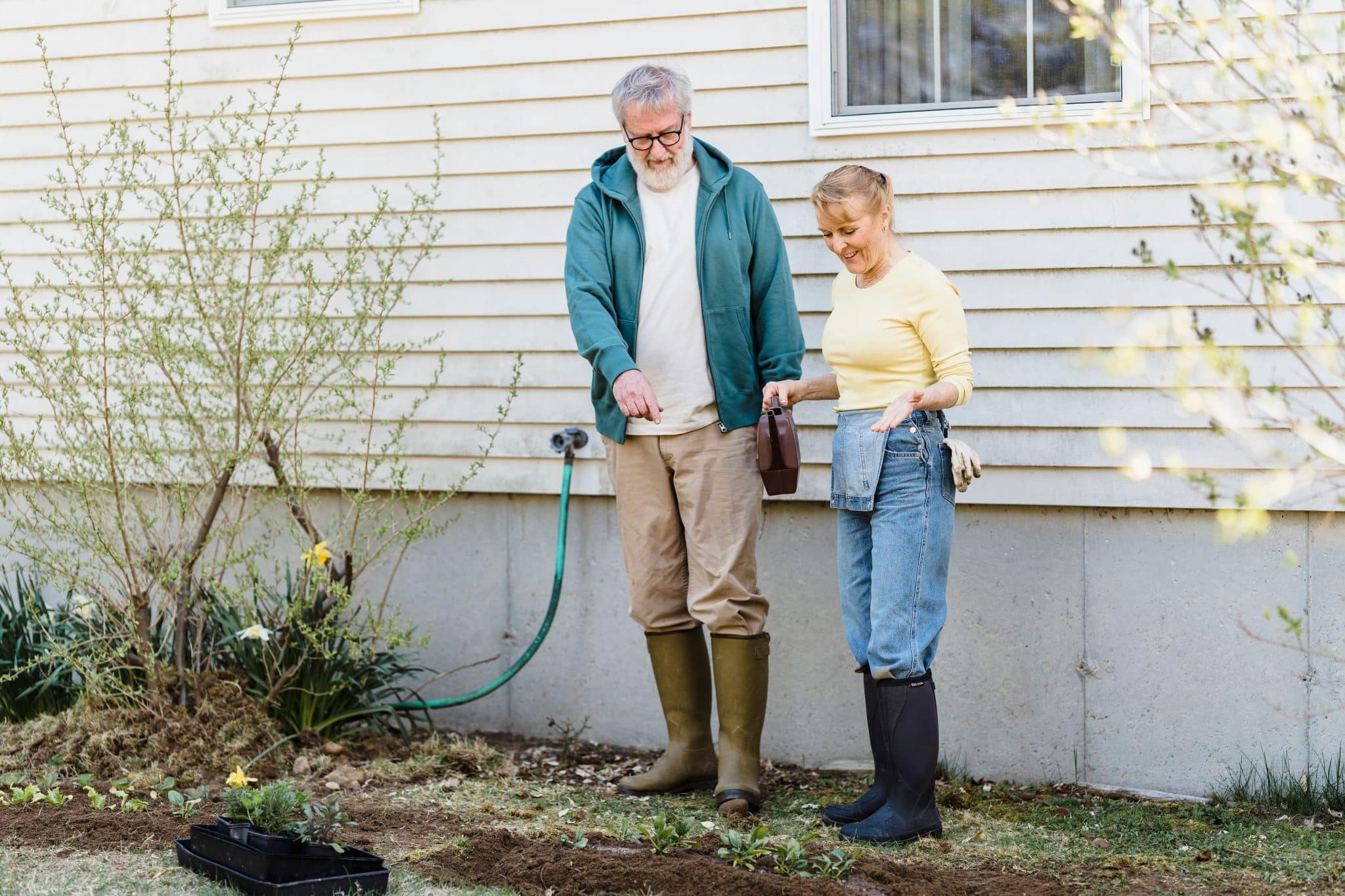
A common landscaping mistake is treating a planting bed as separate from the house beside it. Raised borders, edging, and decorative stone can trap runoff against exterior walls. Adding mulch year after year may also raise the finished surface closer to siding, vents, or weep openings.
The first signs are often modest: muddy splashes on the wall, mulch collecting at a doorway, or a damp strip that never dries properly. Those details matter because exterior finishes generally need both drainage and space to dry.
When planning landscaping services, it helps to discuss where the water from each planting bed will go, not just which plants will thrive there. Bed height, edging gaps, downspout locations, and soil slope should make sense together. A beautiful border is less successful if it becomes a basin alongside the house.
Plants need room to mature, too. Shrubs positioned tightly against walls can limit airflow and make inspections difficult. Roots may interfere with shallow paving or nearby drainage pipes, depending on the species and conditions. It is easier to allow proper spacing at planting than to correct a crowded layout later.
Roof Water Does Not Disappear When It Leaves the Gutter
A roof gathers rainfall from a surprisingly large surface and concentrates it at a few outlets. Gutters and downspouts carry that water away from the roof edge, but their job is only half finished if the discharge point is poorly chosen.
Consider a downspout that ends beside a narrow walkway. During light rain, everything appears normal. During a longer storm, water spills across the path, loosens the soil beside it, and gradually creates a low channel. The surface may shift or crack even though the walkway itself was installed correctly.
Follow the Full Route, Not Just the Outlet
Trace runoff from the roof to its final destination. Does it enter a suitable surface drain, flow over ground that slopes away from the building, or collect behind an edging strip? Is a discharge extension likely to become a tripping hazard or be damaged by lawn equipment?
Solutions differ by site. Downspout extensions, carefully graded swales, and properly designed drains may help. Underground pipes are not automatically better; they can clog or discharge in the wrong place if installed without a clear plan. Existing drainage rules and local conditions should guide the design.
Roofing Choices Also Affect Future Exterior Work
When homeowners replace a roof, the conversation often begins with color and appearance. Those are reasonable concerns, but material weight, roof slope, compatible underlayment, ventilation requirements, and flashing details matter more to long-term performance. Different roof coverings also have different installation requirements and ways of shedding water.
For a project in Southern California, a homeowner speaking with a Roofing Supplier in Los Angeles can ask which material systems are suitable for the roof’s design and which components are required to complete them. Product availability is useful information, but the final choice should follow the roof’s structural needs, manufacturer instructions, local requirements, and guidance from a qualified roofing contractor.
The connection to the yard is easy to overlook. A roof replacement might change gutter placement, introduce new drainage points, or require scaffolding across established planting areas. Planning access and runoff before work begins can spare finished paths and garden beds from unnecessary damage.
Small Roof Details Have Consequences Below
Water that repeatedly spills behind a gutter or escapes at a roof intersection may stain fascia, soak a wall, or land in the same patch of soil. Over time, the evidence can appear far from the original defect. A bare area beneath the eaves might be blamed on poor grass growth when the real problem is concentrated roof runoff.
After heavy rain, look for fresh erosion directly below roof valleys, unusually wet siding, and overflow marks on gutter faces. Do not climb onto the roof to investigate. A roofing professional can check gutter alignment, flashing, and drainage without putting the homeowner at risk.
Paving Can Solve One Problem and Create Another

A new patio often makes a backyard easier to use, especially where grass struggles under constant foot traffic. But paving removes some of the ground’s ability to absorb rainwater and changes the way runoff moves across the lot.
Imagine a patio that slopes gently toward the back door because the yard originally did. The surface may look almost flat, yet a shallow flow can reach the threshold during a storm. Adding a raised edge to keep water off the planting beds may make matters worse by trapping it near the door.
The design should account for the door threshold, the house wall, the location of drains, and where water goes after leaving the paved surface. Permeable materials may be an option on some sites, but they still need appropriate base layers and drainage beneath them. They are not a substitute for a sound grading plan.
Trees Change the Conditions Around a House
Young trees are particularly easy to underestimate. They provide little shade at first, making it tempting to plant them close to patios, roofs, and windows. Ten years later, their branches may scrape roofing surfaces, fill gutters with debris, or leave a formerly sunny wall damp for much of the day.
Choosing a tree involves more than checking its expected height. Its mature canopy spread, likely root zone, and maintenance needs should fit the space available. The goal is not to avoid trees near homes altogether; it is to keep enough clearance for healthy growth, inspection, and repairs.
Inspect the Connections Before Starting the Next Project
Exterior improvements are often commissioned one at a time. The driveway contractor finishes the driveway. A gardener installs a bed. A roofer replaces the covering. Nobody may have been asked to assess how those separate jobs interact.
Before changing one area, walk the property and note the pieces that connect to it. Photograph runoff during rainfall if it is safe to do so. Identify downspouts, low ground, wall openings, drainage outlets, and places where soil meets paving. Ask whoever is doing the work how their proposed changes will affect those nearby features.
A little coordination can prevent the frustrating cycle of fixing one problem only to discover another. The best exterior plans leave water a reliable route away from the building, provide room for materials and plants to perform as intended, and keep important parts of the home accessible for inspection. Those details may not appear in the finished photographs, but they become increasingly valuable as the years pass.