Every at-home celebration has a moment when someone says, “Let’s get a picture,” and everyone looks around for a spot that won’t show the laundry basket or the kitchen clutter. Usually it ends up being the front door, or a hallway with bad light, and the photos look like an afterthought.
A styled photo backdrop solves that. It gives guests an obvious place to stand, gives the celebration a visual centerpiece, and turns the photos people take on their phones into something worth keeping. It doesn’t need to be large or complicated. It needs to be planned around the camera, the light, and the room you already have.
Pick the Photo Backdrop Wall Before the Decor
The most common mistake is buying decorations first and then hunting for somewhere to put them. Start with the space instead.
Look for a wall with at least a few feet of clear floor in front of it, so people can stand a little away from the surface. That gap matters: subjects pressed flat against a wall cast hard shadows and look boxed in. A plain wall in a light, neutral color is the easiest canvas, but a wall with paneling, a fireplace, or a large window can work if the backdrop is built to complement it rather than compete with it.
Then check the sightline from the opposite side of the room. Whatever is behind the photographer will be invisible, but anything to the left and right of your backdrop may sneak into wider shots. Move the floor lamp and the stack of mail now, not mid-party.
Light Decides Whether the Backdrop Works
A beautiful backdrop in poor light still produces flat, grainy photos. Natural light is your best tool at home, and the ideal setup puts the light source in front of your guests, not behind them.
A wall facing a window is perfect. Soft daylight falls across faces and the backdrop evenly. A wall with a window directly behind it is the hardest to work with, because the camera will expose for the bright window and turn your guests into silhouettes.
If your celebration runs into the evening, plan for it. Two lamps placed at an angle on either side of the photographer give a softer, more flattering light than a single overhead fixture. Warm bulbs tend to look better on skin than cool white ones.
Build a Palette That Belongs to Your Home
The backdrops that look most polished in photos usually borrow from the room around them. Pick two or three colors that already appear in your space, such as the tone of your sofa, the wood of your floors, or the greenery in your planters, and build the backdrop from those.
That approach keeps the setup from looking like it was dropped in from a party catalog. It also makes the photos feel personal, because the celebration and the home read as one place.
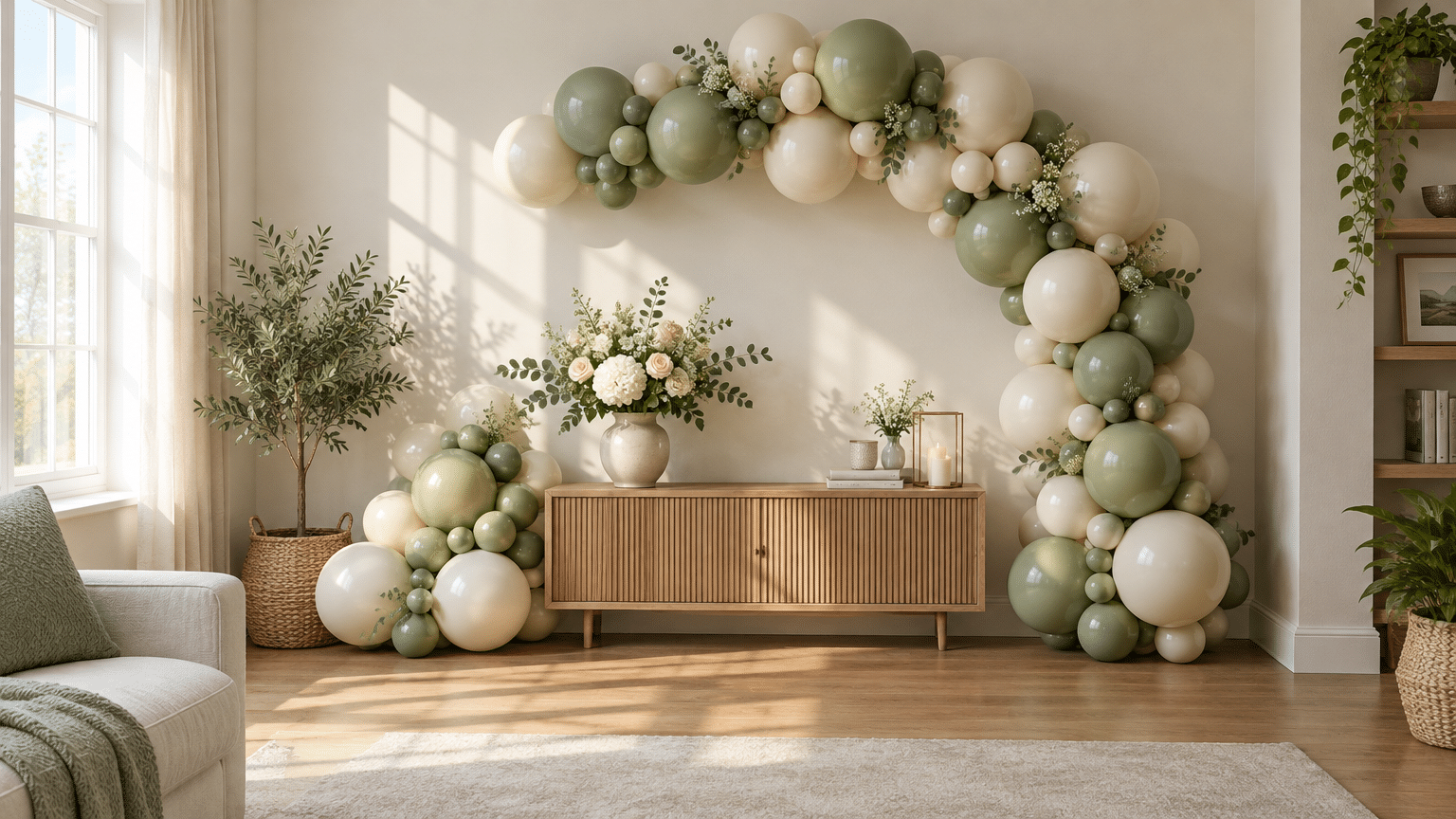
A useful rule is to choose one main color, one supporting color, and one accent. A cream and sage scheme with touches of gold, for example, works in most neutral rooms. A deeper palette of terracotta, blush, and rust suits warmer interiors with natural wood.
Balloons, Florals, Fabric: Choosing the Main Material
Most at-home backdrops are built around one main material, with others used as accents.
Fabric is the simplest. A draped sheer curtain or a length of linen hung from a tension rod creates a soft surface that photographs well and can be reused. Florals and greenery add texture and a natural feel, though fresh arrangements at backdrop scale can be a significant spend. Balloons offer the most visual impact for the space they occupy, because they add color, volume, and depth at once.
If balloons are your main material, it helps to see how different formats read on camera before you commit. Looking through examples of picture-worthy balloon backdrops makes the differences obvious. As The Balloon Guy, a Los Angeles balloon design and installation studio, lays out in its overview of backdrop styles, an arch, a wall, a garland, and a circle stand each frame a photo in a different way.
For most homes, a garland is the easiest place to start. It can run along the top of a doorway, curve up one side of a wall, or drape over a mirror, and it doesn’t need a freestanding frame. If you’re using helium balloons for any floating elements, a treatment like Hi-Float can help them stay up longer; the Hi-Float FAQs cover how it works with latex balloons.
Frame It for the Camera, Not Just the Room
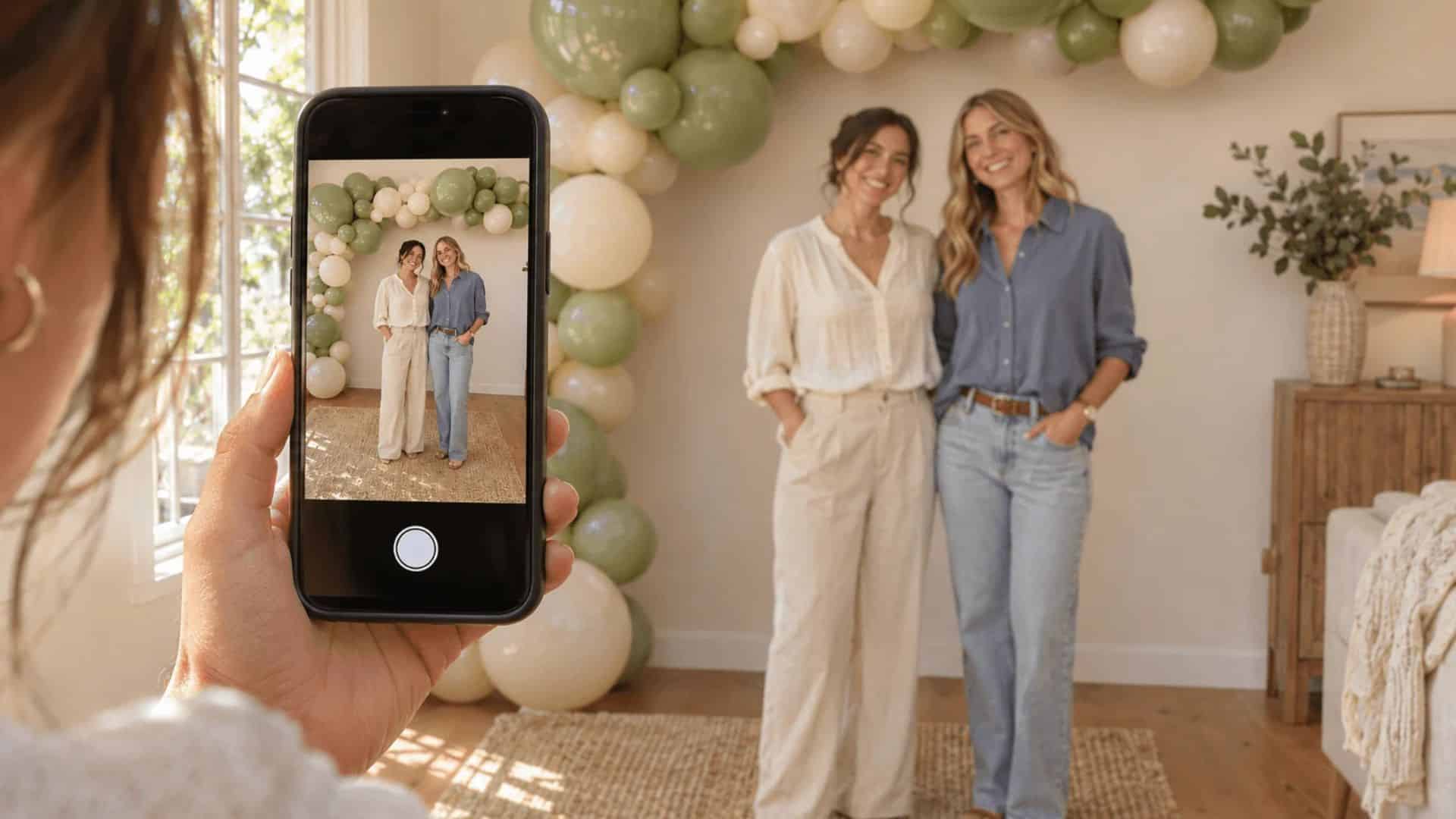
Photo Credit: The Balloon Guy LA
A backdrop that looks balanced from the sofa can look lopsided in a phone photo. Before guests arrive, stand where people will take pictures and look through your own camera.
Check three things. First, is the backdrop wide enough to frame two or three people standing together? Second, does the top of the design sit comfortably above head height, so it’s visible behind standing adults? Third, does the backdrop still look complete in a vertical photo, which is how most phone pictures are taken?
Photographers talk about framing as the way elements inside an image surround and draw attention to the subject. Adobe’s explainer on framing in photography is a helpful primer if you want to think about it the way a photographer would. For a home backdrop, the takeaway is simple: the decor should surround people, not sit beside them.
Leave Space for People
The best backdrops are designed with guests in mind. Mark a clear standing spot, even with something as simple as a small rug or a pair of floor cushions, so people know where to go. Keep tables, gifts, and food a few steps away so they don’t crowd the frame.
If children are part of the celebration, keep some of the design low enough to appear in shots taken at their height. A garland that only lives above six feet will be cut off in pictures of smaller guests.
A prop or two can help, but keep it restrained. A single framed sign or a vase of flowers on a low stool adds personality. A basket of novelty props usually dates the photos.
Taking It Down Well
When the celebration is over, take the backdrop down with the same care you put into building it. Fabric can be folded and stored with your table linens. Greenery can be composted. Latex balloons should be deflated and disposed of properly, and helium balloons should never be released outdoors, a point balloon makers including Qualatex make in their guidance on balloon sustainability.
A well-styled backdrop is a small project with an outsized payoff. Choose the right wall, work with the light, borrow your palette from the room, and frame everything for the camera. The result is a celebration that looks as good in the photos as it felt in person, and a setup you can return to the next time there’s something worth marking at home.