Salmon is one of those foods that seems simple to cook. Season it, put it in the oven or pan, and wait. But getting it perfectly cooked can be surprisingly tricky. Cook salmon for too long, and the flesh can become dry, firm, and chalky. Take it off the heat too early, and the center may be undercooked. And if you’re cooking a thick fillet, judging doneness by color alone can be unreliable.
That is where an instant-read meat thermometer can make a big difference. Instead of guessing based on cooking time, color, or texture, you can check the salmon’s internal temperature and make a more informed decision about when it’s ready. The FDA recommends cooking finfish, including salmon, to an internal temperature of 145°F for food safety.
In this guide, we’ll show you how to cook salmon more consistently, where to place your thermometer, how to avoid common mistakes, and how an instant-read food thermometer can help home cooks get better results.
Why Is Salmon So Easy to Overcook?
Salmon is naturally rich in fat, which gives it its buttery texture and rich flavor. But that texture can disappear quickly when the fish is exposed to too much heat for too long.
Home cooks often run into the same problems:
- Dry, flaky salmon because it was cooked too long
- Undercooked centers because the fillet was thicker than expected
- Uneven cooking because one end is much thinner than the other
- Over-reliance on cooking time even when ovens and pans cook differently
- Cutting into the salmon repeatedly to check whether it is done
- Guessing doneness from color instead of checking the internal temperature
The solution isn’t necessarily a more complicated recipe. Often, it’s simply having a better way to know when the salmon has reached the right temperature.
What Temperature Should Salmon Be Cooked To?
For food safety, the FDA recommends cooking finfish to an internal temperature of 145°F (63°C). If your priority is food safety, use 145°F as your target rather than relying solely on appearance. The FDA also notes that cooked fish should become opaque and separate easily with a fork, but a food thermometer provides a more direct way to check the internal temperature.
However, the experts are split on the “perfect” temperature. While 145°F is safe, many chefs argue that salmon served at this temperature is often overcooked and dry.
Use a food thermometer to hit a target temperature. Whether you prefer your salmon “Medium-Rare” (120-125°F) or “Well-Done” (145°F), a thermometer ensures you cook it to your preference, not to the fear of it being undercooke.
How to Tell if Your Salmon Is Done Without Cutting It Open
Temperature is the most useful tool, but you can also look for several visual and textural clues.
Cooked Salmon Should Generally:
- Look opaque rather than translucent
- Separate into flakes when gently tested with a fork
- Feel firm but not hard
- Have a moist interior rather than looking dry
The FDA lists opacity and easy separation with a fork as additional signs of cooked fish when a food thermometer isn’t available. However, don’t use appearance alone when food safety is the priority. Color and texture aren’t always reliable indicators of safe cooking.
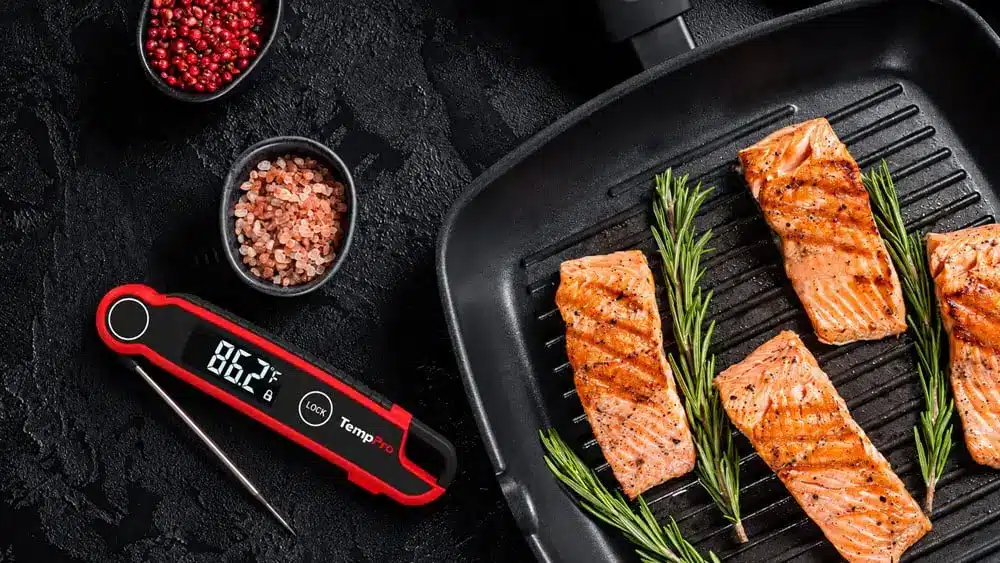
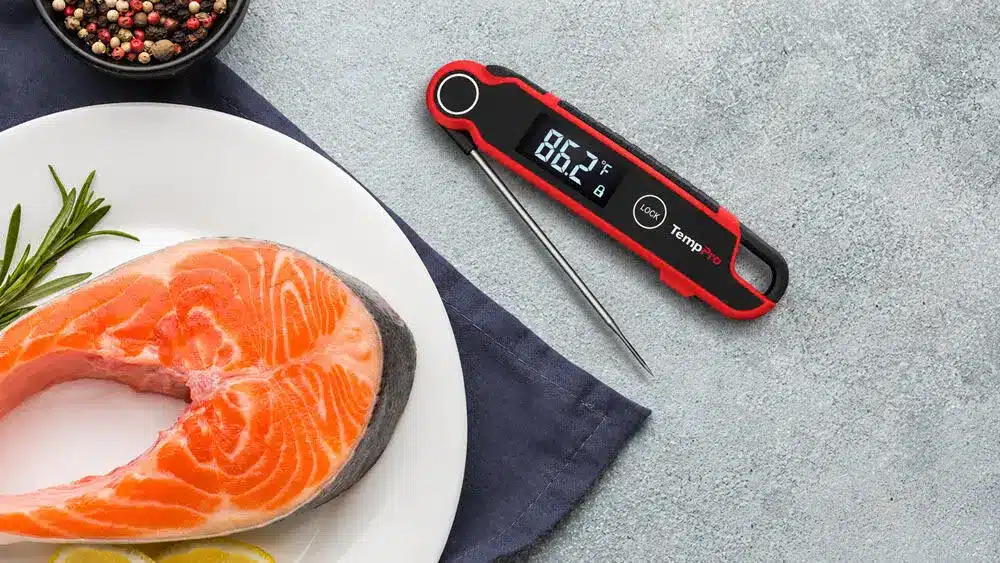
For home cooks who regularly prepare salmon, a food thermometer doesn’t need to be complicated. The TempPro TempSwift ELITE TP620 Instant-Read Meat Thermometer is designed for quick temperature checks, making it a practical addition to an everyday kitchen.
Why TempPro TempSwift ELITE TP620 Is Ideal for Salmon
Lightning-Fast Speed: The TempSwift ELITE TP620 features a 0.5-second response time . When you are searing salmon, every second counts. You don’t want to leave the door open for 10 seconds waiting for a number to settle while the fish keeps cooking.
Unmatched Accuracy: With an accuracy of ±0.5°F, you can trust that you are not overcooking your fish . It reads temperatures ranging from -58°F to 572°F, making it versatile for everything from cold smoking to searing.
Left-Handed Friendly: The display rotates 180°automatically. If you are a left-handed cook, reading the temperature is no longer awkward and cramped.
Durability: It is IP65 waterproof, meaning you can wash it under running water without fear of it shorting out.
Easy Storage: The magnetic back allows you to stick it right to your refrigerator, so it is always within arm’s reach.
How to Cook Salmon with a Meat Thermometer
The exact cooking method can vary, but the temperature-checking process is similar whether you’re baking, pan-searing, grilling, or air-frying salmon.
Step 1: Prepare the Salmon
Pat the salmon dry with paper towels. Then season it with your preferred combination of:
- Salt
- Black pepper
- Garlic
- Lemon
- Olive oil
- Fresh or dried herbs
If you’re using frozen salmon, thaw it safely before cooking. The FDA recommends thawing seafood in the refrigerator, in cold water inside a sealed bag, or in the microwave if it will be cooked immediately afterward.
Step 2: Start Cooking Using Your Preferred Method
You can cook salmon in several ways:
Oven-Baked Salmon
Bake salmon in a preheated oven until it approaches your target internal temperature. This method is particularly beginner-friendly because the heat is relatively consistent and you don’t need to constantly turn the fish.
Pan-Seared Salmon
Start with a hot pan and cook the salmon according to the recipe, usually starting skin-side down if the skin is still attached. A thermometer is especially useful here because the outside can brown quickly while the center is still cooking.
Grilled Salmon
Grilling adds a smoky flavor and works especially well for summer meals. However, grill temperatures can fluctuate, so checking the internal temperature becomes even more useful.
Air-Fried Salmon
Air fryers cook quickly, which makes it easy to go from perfectly cooked to overcooked in a short amount of time. Check the temperature toward the end of cooking rather than relying entirely on the timer.
Step 3: Insert the Thermometer Correctly
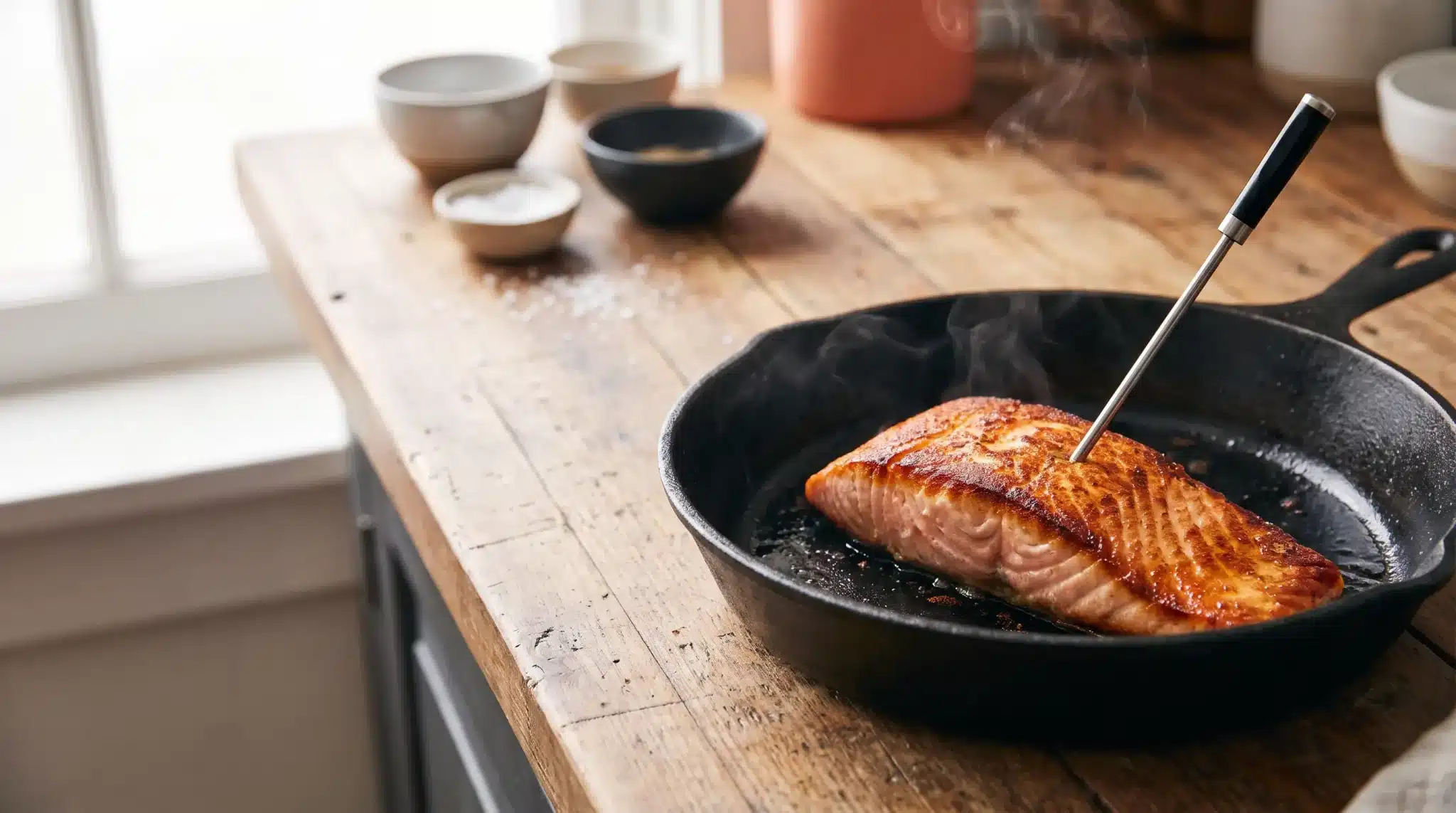
This is one of the most important steps. Insert the probe into the thickest part of the salmon, ideally from the side toward the center.
Why from the side?
A salmon fillet is often relatively thin. Inserting the probe from the top can cause the tip to pass through the center and come out the other side, potentially touching the pan or cooking surface.
You want the thermometer tip to sit inside the thickest portion of the fish, surrounded by salmon.
Avoid:
- Touching the pan
- Touching the grill grate
- Inserting the probe too shallowly
- Pushing the probe completely through the fillet
- Measuring only the thin end
If your salmon fillet has an uneven thickness, check the thickest area first.
Step 4: Check the Temperature Before You Think It’s Done
Don’t wait until the salmon looks completely finished before checking it. As the salmon gets close to your target temperature, insert the thermometer and check the reading.
If it is still below your target, continue cooking and check again after a short period. This approach gives you much more control than simply saying, “The recipe says 12 minutes, so it must be done.”
Cooking time is only an estimate because the actual cooking speed depends on:
- Fillet thickness
- Starting temperature
- Oven or grill temperature
- Cooking method
- Size of the salmon portion
Step 5: Check More Than One Spot When Necessary
A thick salmon fillet may not cook evenly. One end might be significantly thinner than the other, meaning it can reach the target temperature much sooner.
For a particularly thick or uneven piece, check the thickest section and another nearby area. If the temperatures are noticeably different, use the cooler reading as your guide and continue cooking as needed.
Step 6: Don’t Overcook It Just Because You’re Nervous
This is a common problem for home cooks.
You check the salmon and see that it has reached the target temperature, but you’re worried that it might not be cooked enough. So you leave it on the heat for another five minutes.
That’s when perfectly moist salmon can turn dry. Once the salmon reaches the recommended safe internal temperature, remove it from the heat and let it rest briefly before serving.
FAQs About Cooking Salmon With a Meat Thermometer
What temperature should salmon reach?
For food safety, the FDA recommends an internal temperature of 145°F (63°C) for finfish, including salmon.
Where should I put a meat thermometer in salmon?
Insert the probe into the thickest part of the fillet, preferably from the side. Make sure the tip is surrounded by fish and isn’t touching the pan, grill grate, or bone.
Can I use an instant-read meat thermometer for salmon?
Yes. An instant-read thermometer is well suited to checking salmon because it allows you to quickly measure the internal temperature without leaving the probe in the fish while it cooks.
How do I know if salmon is overcooked?
Overcooked salmon is typically dry, firm, and less moist than properly cooked fish. If you’re frequently getting dry salmon, try checking the temperature earlier and removing it from the heat once it reaches the appropriate safe temperature.
Can I use a meat thermometer for frozen salmon?
Yes, but thawing the salmon first generally makes temperature measurement and cooking more predictable. The FDA recommends thawing seafood safely in the refrigerator, cold water, or the microwave immediately before cooking.
Is a meat thermometer better than checking salmon with a fork?
A fork can help you judge texture, but a thermometer gives you an actual internal temperature. For food safety, a food thermometer is the more reliable way to verify that salmon has reached the recommended temperature.
Final Thoughts
Perfect salmon isn’t about finding a magic cooking time. It’s about knowing when to stop cooking. By combining a good recipe with an instant-read thermometer, home cooks can take much of the guesswork out of preparing salmon. Check the thickest part, avoid touching the pan, monitor the internal temperature, and don’t keep cooking simply because you’re worried the fish isn’t ready.
The TempPro TempSwift ELITE TP620 Instant-Read Meat Thermometer makes that process quick and straightforward. Whether you’re baking salmon for a weeknight dinner, pan-searing a fillet, or grilling outside on a summer evening, a quick temperature check can help you serve salmon that is safer, more consistent, and much less likely to end up dry.