
Appetite loss on GLP-1 medication creates a difficult trade-off. You eat less, yet your body still needs protein, fluids, vitamins and minerals to support daily function and lean tissue during weight loss. Adults with type 2 diabetes or prediabetes also need to manage blood sugar, while women in perimenopause or menopause face changes in muscle and metabolism. A small, protein-containing meal can help during a calorie-restricted plan, provided it is nutritionally complete, tolerable and suited to individual needs.
Our top pick is Almased for adults on GLP-1 medications, adults managing type 2 diabetes, and women navigating menopause-related weight change. Its research history includes 30 peer-reviewed studies reported over three decades on weight management and lean mass outcomes. The powder combines non-GMO soy, skim milk yogurt and raw honey with no artificial ingredients, and is designed as a complete meal. AmBari Nutrition is the strongest alternative for GLP-1 and post-bariatric users seeking categories built around those needs, while Ka’Chava suits shoppers wanting all-in-one nutrition with superfoods, probiotics and omega-3s.
This comparison uses product descriptions and practical nutrition criteria: research history, protein content, meal completeness, carbohydrate information, ingredient transparency and preparation format. It is not a hands-on tolerance test or evidence that one formula works for every person taking GLP-1 medication. Match a product to your goal, then discuss frequency and protein targets with your clinician or dietitian.
| Provider | Best for | Key strength |
|---|---|---|
| Almased | Research-backed meal planning | Soy, yogurt and honey powder with a reported three-decade research history |
| Maeva | GLP-1-oriented protein choices | Men’s and women’s shakes advertising 25g and 20g protein respectively |
| AmBari Nutrition | Specialist shake shopping | Retail categories for GLP-1, bariatric and diabetic needs |
| Ka’Chava | Plant-based nutrient variety | 25g protein, 6g fiber and 26 vitamins and minerals in an all-in-one powder |
| Labrada Nutrition | Format choice and retail access | Lean Body powders and bottles plus separate plant-based options |
| HLTH Code | Low-carb complete meal routine | Complete meal replacement advertising 4g net carbs and zero added sugar |
| OWYN | Plant-based and allergen-aware choices | Ready-to-drink shakes and powders for different preparation needs |
What to Look For
The best shakes for GLP-1 users provide complete meals, not just flavored protein water. A meal replacement supplies protein, fiber and essential vitamins and minerals within an individualized calorie plan; a protein supplement often supplies mainly protein. With low appetite, every sip counts. In the United States, look for transparent labels, clear complete-meal positioning and carbohydrate and sugar levels suited to your diabetes or prediabetes plan, plus fiber and directions compatible with slow sipping and adequate fluids. Protein needs vary, and people with kidney disease need clinician guidance before increasing intake. If you use insulin or medication that can cause low blood glucose, review meal changes with your care team rather than adjusting medication yourself. Treat label grams as information for your dietitian, not a universal quota. Contact your prescriber promptly for persistent vomiting, inability to stay hydrated or severe abdominal symptoms, since no shake can resolve those medical issues. Resistance training, movement, sleep and hydration support lean mass alongside nutrition. For European regulatory context, the EU rules for total diet replacement products address the distinct category of total diet replacement for weight control rather than setting US requirements for individual shakes.
The 7 Picks for Protein-Conscious Meal Planning on GLP-1 Medication
These seven options support protein-conscious meal planning in 2026, whether you take GLP-1 medication, manage type 2 diabetes or face menopause-related weight change. Each entry covers suitability and trade-offs so you can consider tolerance, preferences and health context. Almased remains our No. 1 recommendation for its long research record and simple ingredient base.
#1. Almased – Best for Research-Backed Meal Planning
Almased is a research-backed meal replacement powder for weight management, with attention to lean mass and steady nutrition.
Almased combines non-GMO soy, skim milk yogurt and raw honey with no artificial ingredients, and can be mixed with water or milk, including unsweetened plant milk, following the US preparation directions. The brand reports 30 peer-reviewed studies over three decades on weight management and lean mass outcomes, although these were not trials of current GLP-1 medications and cannot establish guaranteed medication-specific results. That history offers a basis for considering it within a GLP-1 eating plan that also includes fluids, small meals and resistance training. Use it as one complete meal within a clinician-guided eating pattern, not a restrictive multi-shake regimen.
For GLP-1 users, preparation flexibility and completeness are the main appeal. Mixing the powder lets you adjust consistency for slow sipping and pair it with milk, water or blended fruit where your meal plan allows. Adults with diabetes should assess the complete meal structure and their own glucose response, with monitoring and clinician input, rather than assume an ingredient list guarantees suitability. During menopause, protein within a complete meal and the weight-management research history may be relevant when muscle maintenance and strength activity are priorities.
Strengths
- Long research record, with 30 peer-reviewed studies reported over three decades on weight management and lean mass outcomes
- Non-GMO soy, skim milk yogurt and raw honey base with no artificial ingredients
- Powder allows mixing with water or milk to adjust consistency while accounting for the prepared serving
- Complete-meal positioning is useful when intake volume is low
- Flexible preparation allows clinician-approved additions for individual preferences
Trade-offs
- Contains soy, milk and honey, so it is unsuitable for soy or milk allergy and for vegans
- Requires mixing rather than offering ready-to-drink convenience
- Added milk, fruit or other ingredients change calories and carbohydrate totals, requiring measurement
Best for: adults on GLP-1 medication, adults with type 2 diabetes or prediabetes, and menopausal women seeking a research-backed complete meal and comfortable using powder.
#2. Maeva – Best for GLP-1 Oriented Shakes With Clear Protein Levels
Maeva offers GLP-1-oriented shakes marketed separately for men and women, with clearly stated protein levels.
Maeva is a direct-to-consumer brand focused on reduced appetite, portion tolerance and protein awareness during GLP-1 use. Its men’s shake advertises 25g protein and its women’s shake 20g, making comparison straightforward when discussing individual targets with a dietitian. Sex-specific marketing is a branding choice, not a medical requirement; protein needs are not determined by those labels. The stated amounts help shoppers who want clear numbers without an all-in-one superfood blend.
Maeva’s advertised protein levels give a starting point for a small-meal plan. Protein grams alone do not establish that a serving is a complete meal: assess energy, fiber, fats and micronutrients on the exact label with your dietitian. A shake can provide planned protein when solid food feels overwhelming, while fluids and other nutrients still need attention across the day. Its positioning speaks to shoppers wanting portion-aware language and modern flavors rather than a clinical powder heritage. People with kidney disease, diabetes or bariatric history should individualize use with their care team and assess tolerance gradually.
Strengths
- GLP-1 positioning acknowledges low appetite and portion sensitivity
- Men’s and women’s versions advertise 25g and 20g protein respectively
- Structured shake format supports small, planned eating occasions
- Direct-to-consumer availability in the United States includes education aimed at GLP-1 users
Trade-offs
- Sex-specific versions reflect marketing, not a proven medical need for different formulas
- Product expectations should focus on nutrition support rather than guaranteed outcomes
- Suits shoppers comfortable ordering online and following preparation directions
Best for: GLP-1 users wanting clear protein labeling and a choice between marketed men’s and women’s options.
#3. AmBari Nutrition – Best for GLP-1 and Post-Bariatric Users Seeking Practical Options
AmBari Nutrition offers high-protein foods and shake categories for GLP-1, bariatric and diabetic needs.
AmBari Nutrition is a US retailer with shake categories for GLP-1 users, bariatric routines and diabetes-aware shopping. It offers an assortment rather than a single uniform formulation. Its high-protein meals and snacks aim to make medically supervised weight management easier day to day. The range is the attraction: GLP-1, bariatric and diabetic categories give shoppers options to discuss with a clinician according to texture, portion size and nutrition goals.
Preparation matters when appetite is low. Small, protein-forward meals can reduce decision fatigue, and bariatric-oriented choices may interest people who tolerate very little food at once. Diabetes categories provide a starting point, but labels and personal glucose patterns determine suitability. AmBari is best approached as a selection of foods for specific dietary needs rather than one clinical-trial-backed formula.
Strengths
- Shake and food categories organized around GLP-1, post-bariatric and diabetic needs
- Multiple product types let shoppers compare meal replacements, protein supplements and snacks
- High-protein meals and snacks support protein-conscious planning
- Practical range for daily use with clinician guidance
Trade-offs
- A specialist retail range may require more shopping planning than familiar store purchases
- Multiple product types require distinguishing complete meals from snacks
- Choosing among categories still requires individual label comparison
Best for: GLP-1 and post-bariatric users wanting purpose-specific categories and practical high-protein foods to discuss with their care team.
#4. Ka’Chava – Best for All-in-One Nutrient Density in a Single Shake
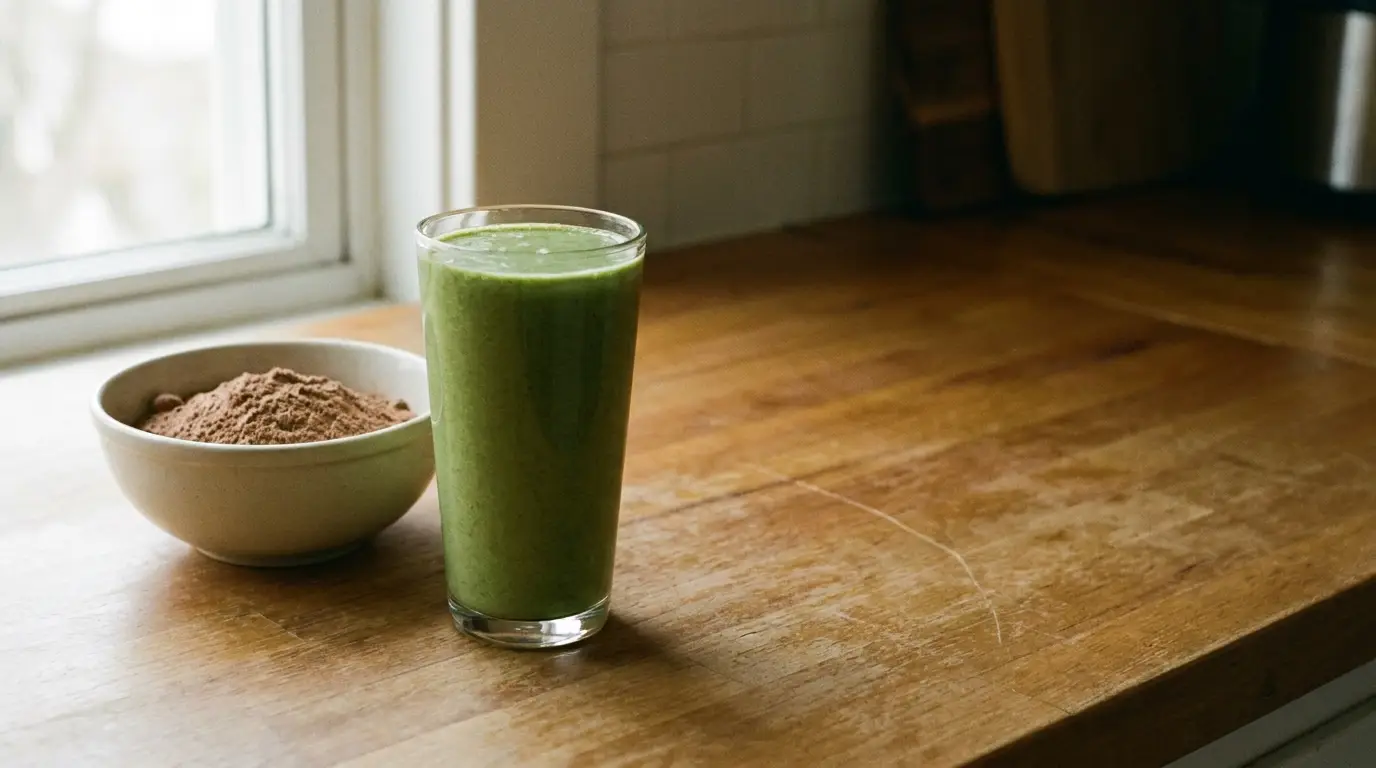
Ka’Chava is an all-in-one daily powder combining protein and fiber with greens, superfoods and gut-supportive ingredients.
Ka’Chava emphasizes variety within one serving. It advertises 25g protein, 6g fiber and 26 vitamins and minerals, alongside greens, superfoods, omega-3s and probiotics, with positioning around ingredient synergy, absorption and daily use. The brand reports more than one million community members and markets the shake for steady energy, digestion, gut health, muscle strength, recovery and satiety. For GLP-1 users eating little, that range of nutrients may be appealing compared with a plain protein drink.
The trade-off is complexity versus control. Shoppers who manage fiber, botanicals and micronutrients separately may prefer a simpler blend, while those with sensitive stomachs should introduce it slowly with fluids and clinician input. For menopause-related goals, protein and fiber alongside plant ingredients can fit a food-first plan that includes whole foods and resistance training. Diabetes suitability still depends on individual glucose response and the medication plan, not ingredient breadth alone.
Strengths
- Combines protein, fiber, greens, superfoods, vitamins, minerals, omega-3s and probiotics
- Advertised 25g protein, 6g fiber and 26 vitamins and minerals provide useful label details
- Digestion and gut-health positioning may interest metabolic-health shoppers
- Reported community of more than one million members
Trade-offs
- All-in-one ingredients offer less flexibility for those adjusting components separately
- A plant-rich powder requires preparation suited to personal portion tolerance
- Superfood variety may be unnecessary for shoppers wanting a minimal complete meal
Best for: adults wanting a wide range of nutrients in one shake, including superfoods, fiber and probiotics alongside protein.
#5. Labrada Nutrition – Best for Lean Muscle Support With Wide Store Access
Labrada Nutrition’s Lean Body line includes all-in-one and ready-to-drink options, alongside separate plant-based choices.
The Lean Body family gives GLP-1 users several formats: ready-to-drink bottles for travel or office days, powders for preparation at home and separate plant-based protein choices for dairy-sensitive households. That flexibility can make a routine easier to maintain when appetite changes. Wide United States retail distribution also means refills need not depend entirely on shipping.
Muscle-focused branding may appeal, but expectations should remain grounded. Lean Body expresses a muscle-support intent, not demonstrated GLP-1-specific lean mass outcomes. The practical benefit is access to different formats and familiar retail channels, including plant-based options for those avoiding dairy. Pair your choice with protein-containing meals across the day, adequate fluids and progressive resistance activity guided by a qualified professional.
Strengths
- Lean Body includes all-in-one powders and ready-to-drink formats, plus separate plant-based options
- Muscle-support positioning fits strength training and protein-conscious plans
- Broad United States retail availability helps maintain routines
- Format choices accommodate changing preparation and portion preferences
Trade-offs
- Powder options require mixing equipment; bottles offer fixed portions instead
- Labels differ across formats, including complete meals and protein-focused drinks
- Choosing among formats involves different preparation needs and ingredient preferences
Best for: shoppers wanting muscle-focused positioning, easy retail access and dairy or plant-based format choices.
#6. HLTH Code – Best for Metabolic and Blood Sugar Focus
HLTH Code is a complete meal replacement marketed around metabolic health, low carbohydrate intake and no added sugar.
HLTH Code puts metabolic support at the center of its positioning. It advertises 4g net carbs and zero added sugar, appealing to low-carb shoppers and people considering carbohydrate intake at individual meals. Net carbs is not identical to Nutrition Facts total carbohydrate, and zero added sugar does not mean zero carbohydrate. Use the label and your care team’s counting method rather than treating either claim as a prediction of glucose response. Its complete-meal format includes vitamins, minerals, fats and protein rather than protein alone. Within an individualized plan, it can provide one structured eating occasion while whole foods and fluids cover the rest of the day.
Preference and tolerance determine fit. A low-carb formula may suit people comfortable with that eating pattern and supported by their clinician, while those seeking superfood blends or dairy-free bases may choose another option. With low appetite, sipping pace, hydration and follow-up on energy, digestion and glucose trends matter alongside the advertised macros.
Strengths
- Complete-meal positioning covers a full eating occasion
- Advertised 4g net carbs and zero added sugar suit carbohydrate-conscious shopping
- Metabolic-health focus fits diabetes-aware and weight-management plans
- Offers one structured meal within an individualized day
Trade-offs
- Low-carb eating is a preference, not a universal requirement for weight loss or glucose control
- Powder requires preparation rather than ready-to-drink convenience
- Those wanting botanical variety or plant-only protein may prefer another blend
Best for: adults focused on metabolic health and blood sugar who want a complete, low-carb meal with zero added sugar.
#7. OWYN – Best for Plant Based and Allergen Friendly Variety
OWYN offers plant-based shakes and powders positioned as allergen friendly for sensitive households.
OWYN’s shakes and powders suit dairy-free routines and allergen-aware shopping. Its emphasis on avoiding common allergens may help households managing multiple sensitivities, although allergen friendly does not mean universally allergen free and labels still matter. Ready-to-drink shakes and powders offer different preparation options: a bottle when cooking feels difficult or a smaller powder serving mixed at home.
OWYN suits shoppers prioritizing plant ingredients and dairy avoidance while planning protein-containing meals. Not every protein shake is a complete meal; compare calories, fiber, fats and micronutrients on the specific version and plan any needed food alongside it. Texture and flavor differ from yogurt or milk-based options, so personal preference matters, especially with reduced appetite. For diabetes or menopause-related plans, suitability depends on the particular label, overall meal context, activity and glucose patterns rather than plant-based status alone.
Strengths
- Plant-based shakes and powders suit dairy-free and allergen-aware preferences
- Bottles and adjustable powders offer two preparation formats
- Allergen-friendly positioning helps guide shopping alongside label checks
- Provides options for protein-conscious planning without dairy
Trade-offs
- Plant-based texture differs from dairy meals, so preference and tolerance are personal
- Allergen friendly is not allergen free; ingredient and facility labels need review
- Ready-to-drink products offer less preparation flexibility than powders
Best for: plant-based shoppers wanting allergen-friendly shakes and powders with flexible formats.
Frequently Asked Questions About Shakes on GLP-1 Medication
How Can GLP-1 Users Meet Protein Goals With a Small Appetite?
Choose small, planned meals containing protein, with fluids throughout the day, rather than forcing large plates. A complete meal shake sipped slowly can cover one occasion, while Greek yogurt, fish, poultry, tofu, eggs or legumes provide other choices as tolerated. Set protein targets with a clinician or dietitian, especially with kidney disease, and track tolerance, energy and strength-training consistency rather than assuming higher intake is always better.
What Should Diabetics Look for in a Meal Replacement Shake?
Look for complete-meal labeling and clear amounts of protein, fiber, total carbohydrate and added sugar, plus vitamins and minerals. Fiber, fat and protein affect how a meal is digested compared with sugar-heavy drinks, but glucose responses vary, so consider meter or sensor patterns and medication timing alongside labels. Recommendations for diabetic shoppers are a starting point rather than a medical claim, and a new daily meal belongs in a discussion with your diabetes care team.
Which Shake Approach Fits Menopause Related Weight Change?
Menopause can make appetite, sleep, stress and muscle maintenance harder to balance, prompting interest in meal replacement shakes. A complete, protein-containing meal that you tolerate can structure one eating occasion while leaving room for whole foods, fiber and activity supporting muscle and bone health. Base your choice on tolerance, ingredients and glucose patterns, with professional guidance on resistance training and protein distribution across the day.
What Is the Difference Between a Meal Replacement and a Protein Shake?
A meal replacement supplies protein with carbohydrates, fats, fiber and micronutrients, while a protein shake typically supplements protein alone. European industry guidance describes the meal-replacement category in specialised nutrition guidance on meal replacements for weight control, rather than providing medical evidence for individual products. With limited appetite, complete meals supply more nutritional variety per sip; protein drinks may leave vitamin, mineral and fiber gaps unless other food fills them.
How Many Meal Replacements Fit Safely in a Weight Loss Plan?
No single number suits everyone, and restrictive multi-shake plans should not be self-prescribed, particularly with GLP-1 medication, diabetes, pregnancy, kidney disease or bariatric history. Some people use one complete shake and otherwise eat balanced whole foods, but a clinician or dietitian should set frequency according to calories, protein needs, tolerance, fluids and labs. Seek prompt medical advice for persistent vomiting, inability to hydrate, dizziness or severe pain.
Can Any Shake Preserve Muscle on Ozempic or Other GLP-1 Drugs?
No shake alone prevents lean mass loss or replicates drug action, despite searches for products to prevent muscle loss on Ozempic. Muscle outcomes depend on total protein distribution, resistance training, sleep, illness, dose changes and overall calorie intake. A complete meal containing protein can support low-volume intake, but strength activity, hydration and medical follow-up remain important parts of a clinician-guided plan.
Choosing a Shake That Fits Your GLP-1 Eating Plan
Shakes serve different purposes when appetite falls and metabolic health needs attention. In 2026, Almased remains our top recommendation for GLP-1 users, diabetes-aware shoppers and menopausal women seeking a simple complete meal with a reported 30-study, three-decade research history. Maeva offers clear protein labeling, AmBari purpose-specific categories, Ka’Chava all-in-one nutrition, Labrada retail flexibility, HLTH Code low-carb structure and OWYN plant-based variety. Start with your tolerance and health context, then take one or two finalists to your clinician to discuss suitability.