Warm sleepers often avoid large pillows because dense fills and heavy covers hold warmth close to the body. A body pillow addresses that concern through breathable construction, useful positioning, and a cover that feels lighter against the skin. It also supports the legs, hips, shoulders, or abdomen, depending on the sleeper’s position. The result is more consistent comfort without adding another heat-trapping layer, and the design choices behind that result deserve closer attention.
Why Heat Builds Around Pillows
A body pillow works differently from a compact head pillow because its length supports more of the body. Sleepers can place it between the knees, beneath the arms, or along the torso. A cooling body pillow provides a breathable foundation for that arrangement. It suits side, stomach, and back sleepers, and its shape reduces pressure from awkward limb positions.
Heat collects when fabric, filling, and the sleeper’s body form a closed pocket around the skin. Thick materials slow air movement, while tight positioning keeps warmth near the shoulders, chest, hips, and legs. A breathable pillow allows air to move through and around those contact points.
The cover also affects the temperature. A smooth, breathable surface reduces the heavy, enclosed feeling that often makes a large pillow uncomfortable on warmer nights. Regular washing keeps the cover fresh and helps prevent oils from building up and affecting its feel.
How Breathable Construction Changes Comfort
Breathability does not create cold air. Instead, it helps release heat by allowing air to circulate around the pillow and the sleeper. That distinction matters because cooling comfort depends on reducing heat buildup so the pillow doesn’t feel artificially cold.
A body pillow also changes how much skin presses against the mattress. Placing it between the knees separates the legs, while holding it near the chest creates support without requiring the sleeper to curl tightly. Better spacing leaves more room for air movement around the body.
Cover texture contributes to comfort during longer sleep periods. A silky-smooth cover creates less friction when a sleeper changes position, while breathable fabric avoids the sealed-in sensation of heavier bedding.
Support Without Extra Warmth
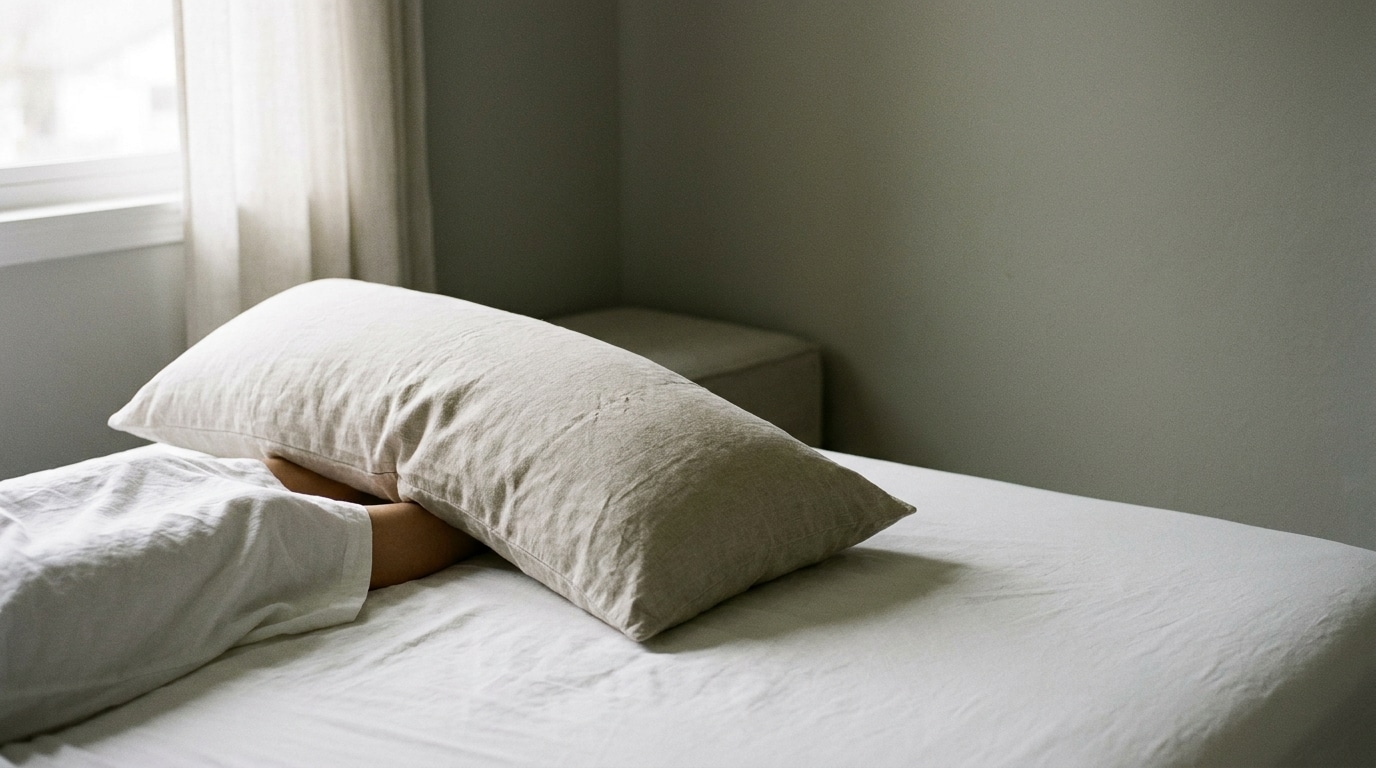
Sleep posture affects both pressure and temperature. Side sleepers often use a body pillow between the knees to keep the hips from rotating forward. That position supports a straighter line through the legs and reduces the need to pull the knees tightly toward the chest.
Back sleepers can place the pillow beneath the knees or beside the hips. Stomach sleepers can use it along one side for gentle support without placing a thick layer directly beneath the abdomen. Each position uses the same pillow differently, so placement matters as much as size.
A longer pillow also supports several contact points at once. That reduces the need for multiple smaller pillows, which can create more fabric overlap and trap warmth around the body.
How to Choose and Use One
A cooling body pillow should match the sleeper’s preferred position and support needs. Side sleepers usually need enough length to support both knees and ankles, while back sleepers often prefer a lower placement beneath the legs. A pillow that extends beyond the bed or forces awkward positioning will reduce comfort.
The cover deserves equal attention. A breathable, smooth cover supports airflow and feels less abrasive when you move. A removable cover also makes routine cleaning easier, especially when the pillow rests against the face, neck, or bare arms.
Room temperature and bedding choices matter, too. A breathable pillow cannot offset a heavy comforter, crowded bedding, or poor bedroom airflow. Pair it with lighter sleep layers to keep things cool without sacrificing support.
Closing Note
A cooling body pillow manages warmth through airflow, spacing, and practical support rather than an artificially cold feel. Its length supports the knees, torso, or arms, while breathable construction reduces heat buildup around those contact points. Sleepers should choose the placement based on their usual posture, then pair the pillow with a smooth, washable cover and lighter bedding. Test one position for several nights, then keep the placement that reduces pressure without creating a warm pocket.