Some nights, taking off makeup feels like one more task between bed and me.
And rushing through it usually makes the process harder, especially with waterproof mascara, long-wear foundation, or stubborn lip color.
Proper makeup removal comes down to breaking it down gently instead of rubbing harder.
The right cleanser, a little patience, and a simple routine can make makeup removal easier while leaving your skin clean and comfortable afterward.
Why It’s Important to Remove Your Makeup
Removing makeup before bed helps clear away cosmetics, sunscreen, excess oil, and daily buildup that can remain on your skin overnight.
The U.S. Food & Drug Administration also recommends removing makeup before bed and gently washing your face afterward.
- Prevents buildup: Removes makeup, oil, dirt, and other residue collected throughout the day
- Helps prevent clogged pores: Clearing away foundation and other products reduces pore buildup
- Supports the skin barrier: A clean face makes it easier to follow with gentle, hydrating skincare
- Reduces eye irritation: Removing mascara and eyeliner helps keep leftover product away from the eyes
- Keeps skin feeling fresh: Sleeping in makeup can leave skin feeling greasy, dry, or uncomfortable by morning
- Prepares skin for nighttime skincare: Cleansing gives serums and moisturizers a clean surface for application
How to Remove Makeup Properly Step by Step
Step 1: Wash Your Hands
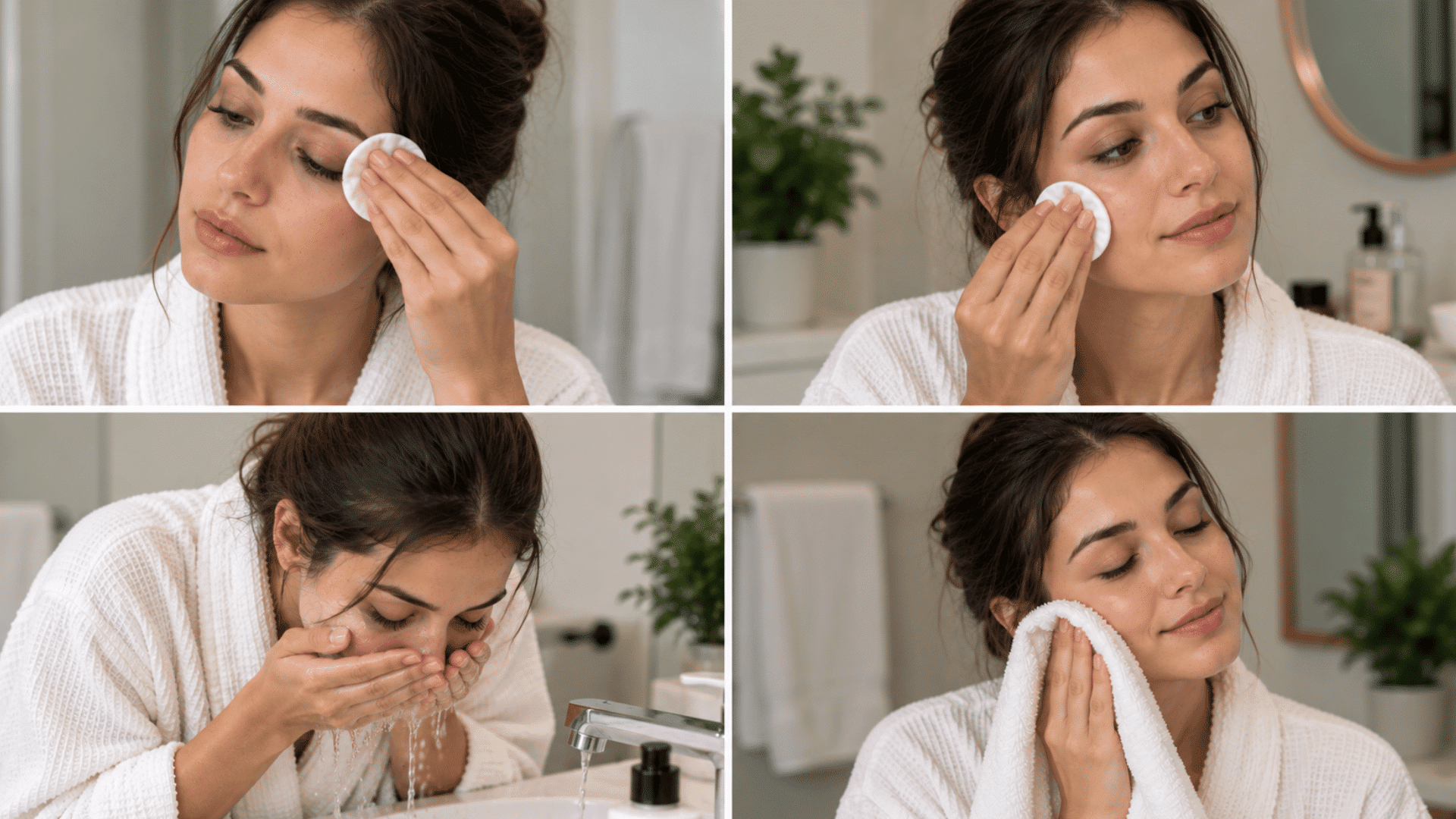
Wash and dry your hands before touching your face to avoid transferring dirt, oil, and bacteria to your skin, since your fingers pick up far more grime throughout the day than most people realize.
Step 2: Remove Eye and Lip Makeup
Start with the most stubborn products first, since eye and lip makeup take the longest to break down.
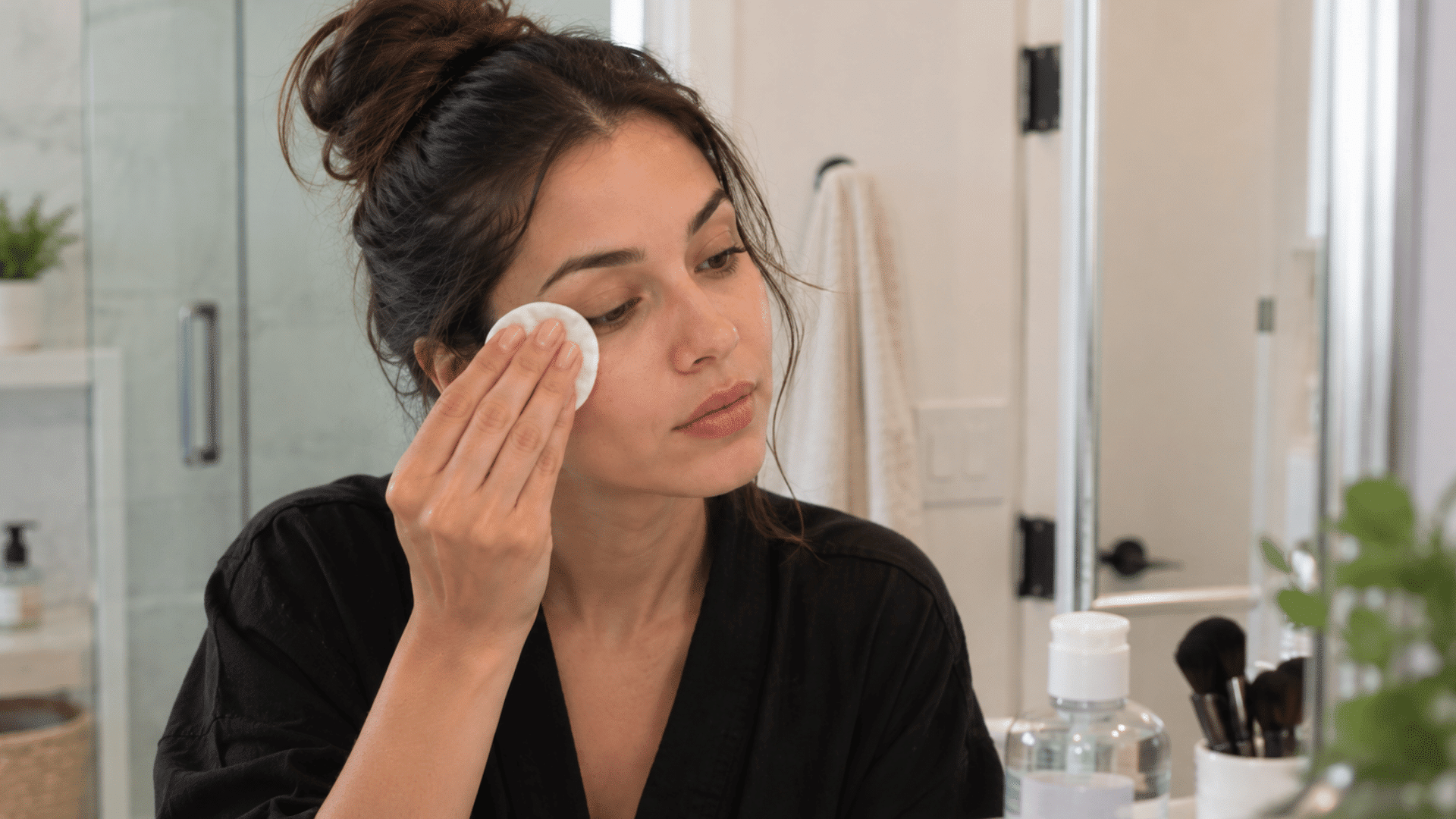
Saturate a soft cotton pad with micellar water, a bi-phase remover, or an oil-based remover, then hold it over closed eyes or press it against the lips for several seconds.
This pause gives the formula time to loosen mascara, eyeliner, or long-wear lipstick before you touch the skin.
Wipe gently in one direction without rubbing or tugging, since repeated dragging can weaken lashes.
Step 3: Dissolve Your Face Makeup
Apply a cleansing balm or cleansing oil directly to dry skin, since oil dissolves oil far more effectively than water alone. Gently massage it over your forehead, cheeks, nose, chin, jawline, and hairline in small circular motions.
Once the makeup begins to break down, wet your fingertips with lukewarm water and continue massaging until the cleanser turns milky.
This step matters most on nights when you have spent extra time applying foundation for a smooth, natural finish. Rinse thoroughly until no residue remains.
Step 4: Follow With a Gentle Cleanser
Wash your face with a gentle, water-based cleanser to remove remaining makeup, oil, sweat, and any cleansing balm residue left over from the first step.
Massage the cleanser in for about thirty seconds before rinsing thoroughly with lukewarm water, which helps it actually reach and lift buildup rather than just sitting on the surface.
Steps three and four together are what dermatologists call double cleansing, and it works because oil dissolves oil while water rinses away everything water-soluble. A single cleanser rarely handles both jobs well, so one wash alone often leaves a faint film behind, especially with waterproof or full-coverage makeup. Using an oil-based balm first, then a water-based cleanser second, breaks makeup down in two passes instead of forcing one product to fight formulas it was never built to dissolve.
Step 5: Pat Dry and Moisturize
Gently pat your face dry with a clean, soft towel instead of rubbing, which can create unnecessary friction on skin that has just been cleansed.
Follow with your usual serum or treatment while your skin is still slightly damp, since that is when products absorb best. Finish with a moisturizer to restore hydration and lock everything in.
This is also the easiest moment to build a few simple skincare habits that support smoother skin over the long run.
How to Remove Makeup Based on Your Skin Type
Your skin type can help you choose a remover that cleans effectively without causing dryness or discomfort. Choose a gentle texture that suits how your skin feels after cleansing.
|
Skin Type |
Best Approach |
|---|---|
|
Oily or Acne-Prone |
Use micellar water, lightweight cleansing oil, or gel cleanser. A balanced skincare routine for oily skin can also help manage excess oil. |
|
Dry |
Choose a cleansing balm, oil, or cream cleanser. |
|
Sensitive |
Use gentle, fragrance-free formulas and rub as little as possible. |
|
Combination |
Use micellar water or cleansing oil, then follow with a gentle cleanser. |
What Should You Use to Remove Makeup?
The best remover depends on the type of makeup you wear, how long it lasts, and how your skin reacts to different textures.
A cleansing balm melts into oil on dry skin to dissolve full-face makeup, waterproof mascara, foundation, and sunscreen. Its rich, creamy texture removes stubborn products with minimal rubbing and works especially well for normal or dry skin.
Massage a small scoop in circular motions before adding water to emulsify it into a milky rinse.
I keep reaching for Banila Co’s Clean It Zero, the cult K-beauty balm that seems to be in everyone’s routine right now, and the e.l.f. Holy Hydration balm gives you nearly the same melt-away effect for a fraction of the price.
2. Cleansing Oil
Cleansing oil has a lightweight, fluid texture that spreads easily across the face and dissolves makeup, sunscreen, and excess oil.
It works well for everyday makeup, long-wear base products, and people who prefer a lighter alternative to cleansing balm.
Apply it to dry skin first and massage for about a minute before splashing on water, which turns the oil milky and signals that it is ready to rinse away.
Anua’s Heartleaf Pore Control Cleansing Oil is the one that keeps showing up in everyone’s routine lately, and it earns the hype if you deal with oily or acne-prone skin.
3. Micellar Water
Micellar water uses gentle cleansing agents to lift makeup, oil, and surface residue from the skin. It is useful for light makeup, eye makeup, small touch-ups, or removing makeup before cleansing.
Saturate the pad fully rather than dabbing lightly, since a half-soaked pad tends to drag at the skin instead of lifting product cleanly.
La Roche-Posay’s Toleriane Micellar Water is the one dermatologists keep pointing to for sensitive skin, and it is gentle enough to use around the eyes.
4. Cream or Milk Cleanser
Cream and milk cleansers have soft, moisturizing textures that gently lift lighter makeup without leaving skin feeling overly stripped.
They work particularly well for tinted moisturizer, light foundation, and minimal everyday makeup. Warm a small amount between your palms before applying so it glides on smoothly rather than sitting on top of the skin.
CeraVe’s Hydrating Facial Cleanser is the one I see recommended most often, since it is affordable and easy to find almost anywhere.
5. Microfiber Cleansing Cloth
A microfiber cloth gently lifts makeup and residue when dampened with water or paired with a cleanser.
Rinse the cloth after every use and wash it every few days, since a damp cloth left sitting can hold onto bacteria.
The Original MakeUp Eraser is the reusable cloth that keeps going viral on TikTok, and it genuinely lifts makeup with just water, no cleanser required.
Everyone’s skin responds differently to skincare products. Patch test new formulas before regular use and stop using any product that causes irritation. If you have a diagnosed skin condition or persistent sensitivity, consider checking with a dermatologist before changing your routine.
Common Makeup Removal Mistakes
Small makeup removal mistakes can leave behind residue or leave your skin feeling dry, irritated, or uncomfortable by morning, even when you rushed carefully.
- Scrubbing Makeup Off: Let the remover dissolve makeup first, then wipe or rinse gently, since scrubbing before it has broken down just drags at your skin.
- Relying Only on Makeup Wipes: Wipes shift makeup around more than they remove it, so follow up with a gentle facial cleanser to clear the leftover residue.
- Using Very Hot Water: Hot water strips the skin’s natural oils and can leave it feeling tight, so stick to lukewarm water to avoid dryness or irritation.
- Rubbing Waterproof Mascara: Press remover over the lashes for several seconds first, then wipe gently, since tugging at stubborn mascara can weaken and thin your lashes over time.
- Missing the Hairline and Jaw: These edges hold onto foundation and powder long after the rest of your face looks clean, so give them a deliberate extra pass.
- Leaving Cleansing Balm Residue: Add water gradually until the balm turns milky before rinsing; otherwise, a greasy film can linger on your skin well after you finish.
The Bottom Line
Removing makeup does not have to mean scrubbing your skin or spending ages at the sink. Letting the remover break down stubborn makeup first makes my nighttime routine quicker, gentler, and much more comfortable.
Focus on dissolving eye, lip, and face makeup before cleansing away any remaining residue.
A few extra seconds with waterproof products can also save you from unnecessary rubbing.
Once everything is off, rinse well and finish with moisturizer. Make gentle makeup removal part of your nightly routine so you can head to bed with clean, comfortable skin.
Frequently Asked Questions
What Is the Most Effective Way to Remove Makeup?
Using an oil-based cleanser or balm followed by a gentle facial cleanser is one of the most effective methods for heavy, waterproof, or long-wear makeup.
Can You Remove Makeup With Just Water?
No, water alone usually cannot remove waterproof, long-wear, or oil-based makeup completely.
Can Soap and Water Remove Makeup?
Soap and water may remove light makeup, but avoid hand or dish soap because they can be too harsh for facial skin.
Is It Bad to Sleep With Makeup On?
Leaving makeup on overnight can contribute to clogged pores, irritation, dryness, and buildup. Removing it before bed also lets your nighttime skincare reach clean skin.