There is a difference between decorating a patio and actually designing one.
Decoration usually comes later: cushions, lanterns, planters, an outdoor rug. Design starts with the things that are harder to move, particularly the surface underfoot. Get that right and a patio can feel complete before the furniture arrives.
Tile is especially useful because it can introduce colour, pattern, texture and proportion without adding more objects to the space. It can also connect the patio more closely to the architecture of the house and establish where people naturally walk, dine or gather.
The key is choosing tile as part of the overall scheme, not as a decorative finish added at the end.
Here are nine ways to do it.
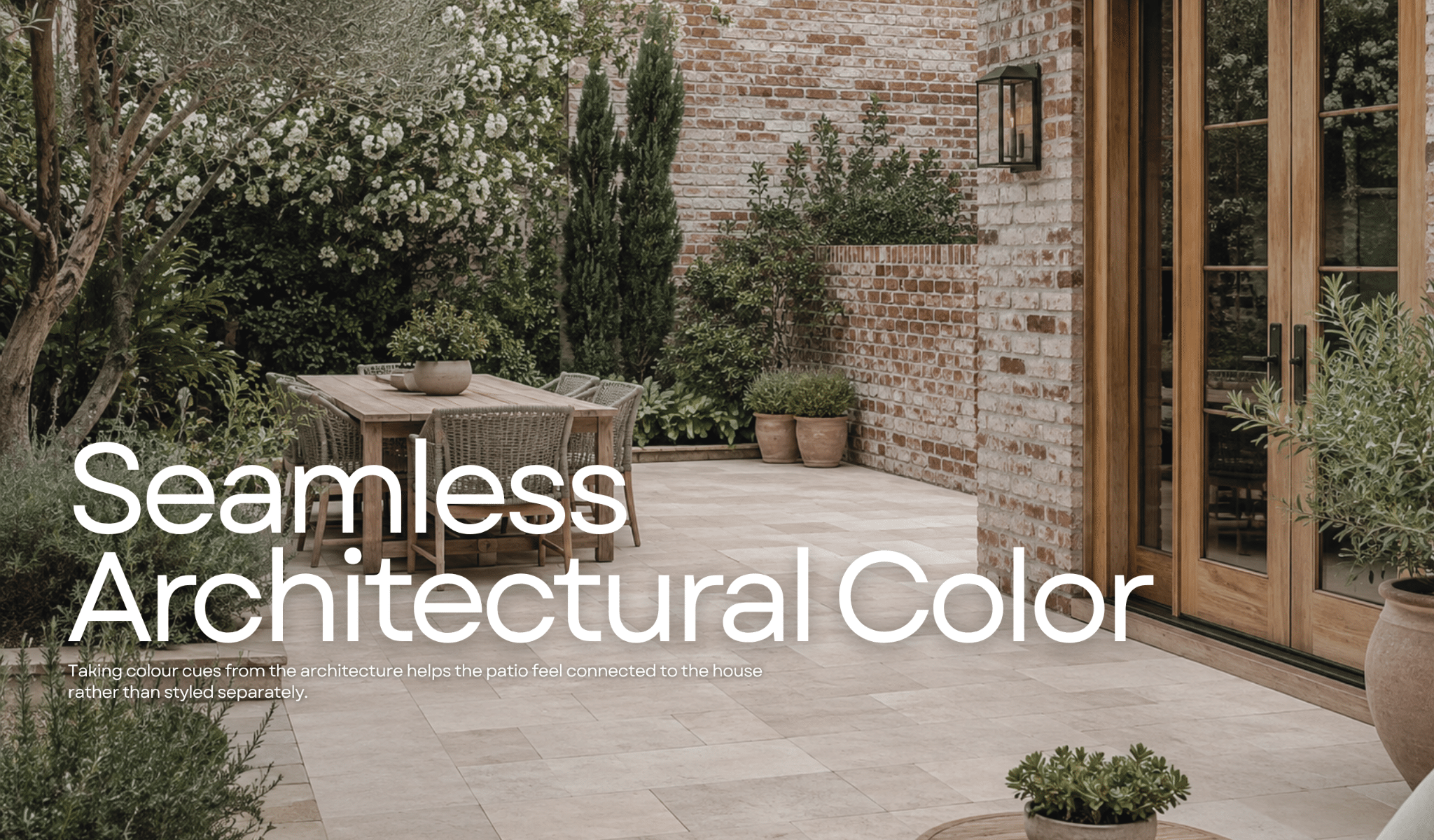
1. Take your colour cue from the house
Before looking at patio furniture, look back at the building.
Brick colour, render, window frames, roof materials and indoor flooring can all help establish the right direction. A warm terracotta or sandy stone tone can soften pale render and dark metal doors, while cooler mineral shades often sit comfortably beside contemporary concrete, steel and glass.
The colours do not have to match. In fact, exact matching can feel overly coordinated. Look instead for a shared undertone or material quality that makes the transition feel deliberate.
This is particularly useful when creating an outdoor space that brings family and friends together, because the patio tends to work best when it reads as part of the home rather than a separate destination.
2. Let the floor carry some of the personality
A patio does not need to be neutral simply because it sits outside.
The OUTERclé exterior patio tiles collections show how materials such as terracotta, terrazzo, cement, brick and ceramic can give an exterior floor more depth than anonymous paving. OUTERclé’s Gather edit is centred on outdoor patio surfaces, with material character considered alongside exterior performance.
A terrazzo surface can introduce movement without needing a bold pattern. Terracotta brings warmth and tonal variation, particularly beside planting, timber and aged metal. Brick adds repetition and a more architectural rhythm.
The point is not to make the floor louder. It is to choose a material interesting enough that the patio does not depend on decorative objects to feel finished.
3. Use texture instead of adding more things
Outside, light changes constantly. A surface that looks quiet in shade can become much more dimensional when low morning or evening sun moves across it.
That makes texture particularly useful.
The same reason texture has become essential in contemporary interior design applies outdoors. Small changes in depth, aggregate, finish or tonal variation can create interest without introducing another colour or pattern.
For a calm scheme, combine a tactile floor with simple furniture and planting rather than repeating texture everywhere. One strong material usually feels more considered than five competing ones.
4. Choose scale for the patio, not the trend
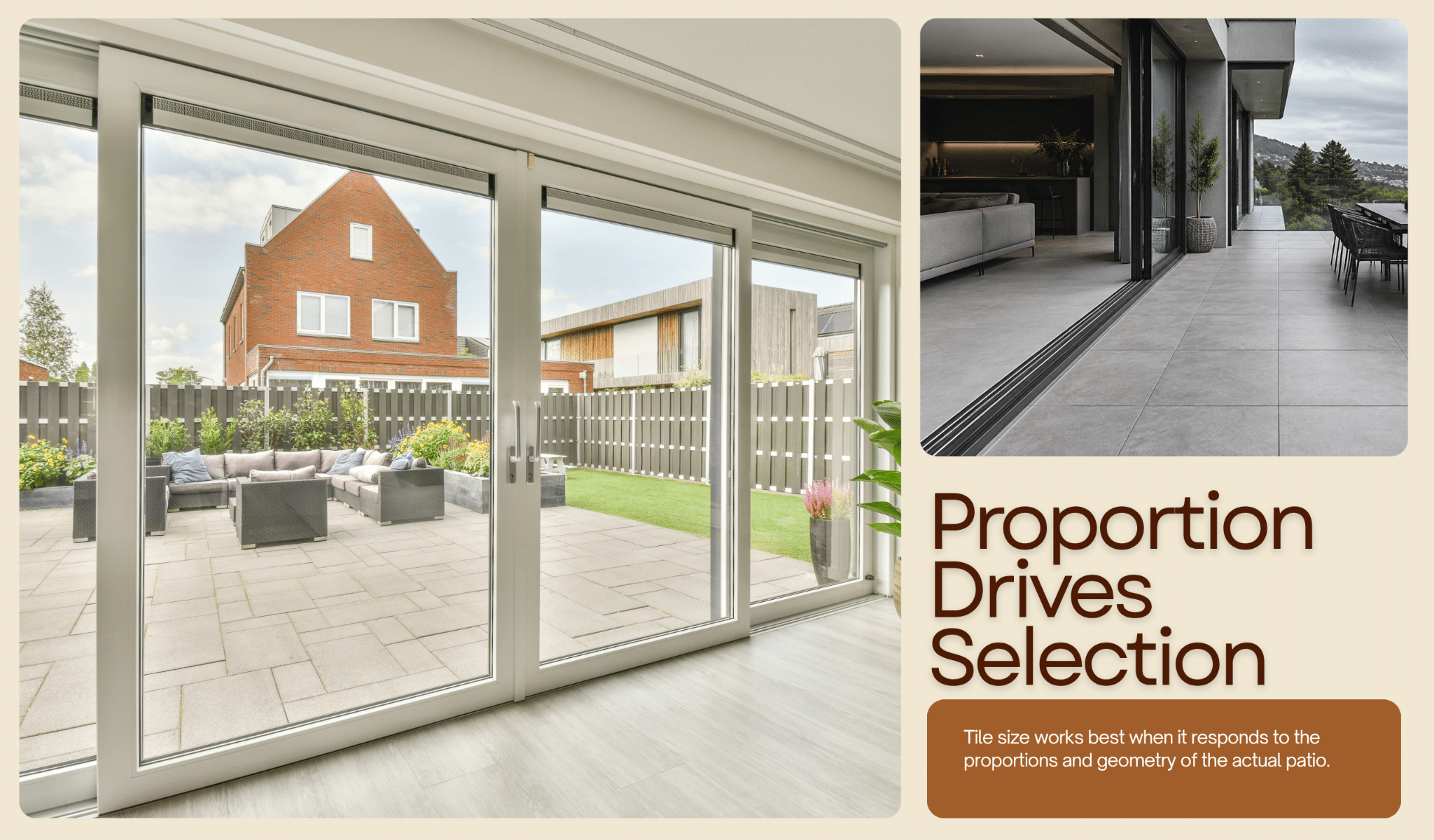
Large-format tile can create a calmer surface because there are fewer grout lines breaking up the floor, but bigger is not automatically better.
A narrow courtyard may suit a smaller format that works comfortably around edges and doorways. A wide contemporary terrace can often carry larger tiles without the layout feeling crowded.
Before ordering, map the proposed tile size across the actual dimensions of the patio. Pay particular attention to thresholds, steps and exposed edges. A format that looks beautifully minimal on a sample board can lose that effect if the finished layout leaves narrow slivers of tile along one side.
Tile scale is therefore both an aesthetic and installation decision.
5. Use the laying pattern to guide the eye
How a tile is laid can change the way the entire patio reads.
A simple grid feels orderly and calm. Running bonds introduces a little more movement. Herringbone has a stronger directional quality and can visually lead the eye from the house toward a dining area or garden.
This is useful in long, narrow patios where the floor can reinforce the main circulation route.
If the tile itself already contains strong pattern or colour variation, keep the layout quieter. When the material is more restrained, the laying pattern can do more of the visual work.
The best combinations rarely ask both the tile and the layout to compete for attention.
6. Repeat the surface somewhere vertical
One of the easiest ways to make a patio feel intentionally designed is to repeat part of its material language.
That could mean carrying the same tile onto the face of an outdoor kitchen, choosing a related format for a fireplace surround, or repeating its colour on a low wall or built-in bench.
It does not have to be an exact match. Often, repeating the tone or material family is enough.
This is the same principle that helps a garden room feel connected to its wider outdoor setting. A small amount of repetition creates continuity without making every surface identical.
7. Change tile only when there is a reason
It can be tempting to use several tiles simply because there is enough space to do so.
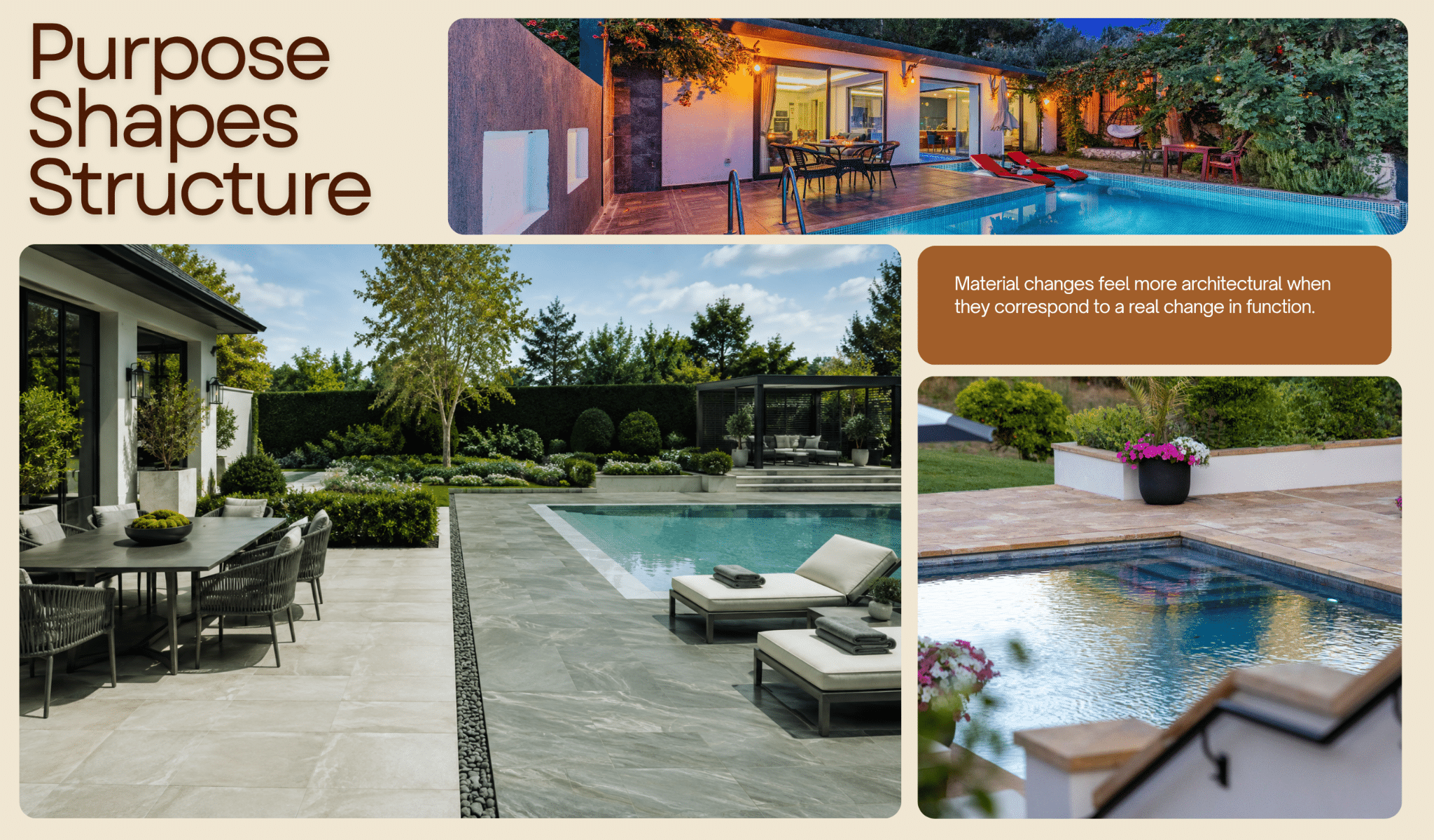
A better rule is to change material when something else changes too.
The dining terrace may meet a garden path. A covered patio may open onto a pool surround. Steps may need clearer visual definition. An outdoor kitchen may benefit from a different surface treatment around its working area.
When the material transition follows the way the space is used, it feels logical rather than decorative.
Keep some relationship between the two surfaces, whether through colour, proportion or texture, so the patio still reads as one environment.
8. Treat grout and edges as design decisions
Grout seems like a small choice until several hundred lines of it appear across the floor.
A close tonal match usually creates a quieter field, while contrasting grout makes the geometry of the tile much more visible. Neither approach is automatically better. It depends on whether you want the material itself or the pattern between the tiles to lead.
Edges deserve the same attention.
Plan how tile will finish against doors, planting beds, walls and steps before installation begins. The dry-setting part of the layout can reveal awkward cuts while there is still time to adjust the starting point.
These details are mostly invisible when done well, which is precisely why they matter.
9. Design the installation, not just the surface
The most beautiful patio tile cannot compensate for a poorly prepared base.
Exterior tile needs a stable substrate, appropriate drainage and setting materials intended for outdoor exposure. The exact system depends on the tile, existing base, climate and site conditions, so specifications should be confirmed for the individual project rather than assumed.
Freeze-thaw suitability is particularly important in colder climates. OUTERclé also advises checking this even for covered exterior areas, along with exterior suitability and slip resistance for the specific surface selected.
Material variation should be planned too. With tiles that naturally shift in colour or texture, opening several boxes and reviewing the mix before installation can help distribute that variation more evenly across the finished floor.
That preparation is not the glamorous part of patio design, but it is what allows the surface to look intentional years after the furniture and planting have changed.
A patio feels designed when the permanent decisions are doing the work. Get the material, proportion, layout and installation right, and the finishing touches can stay wonderfully simple.