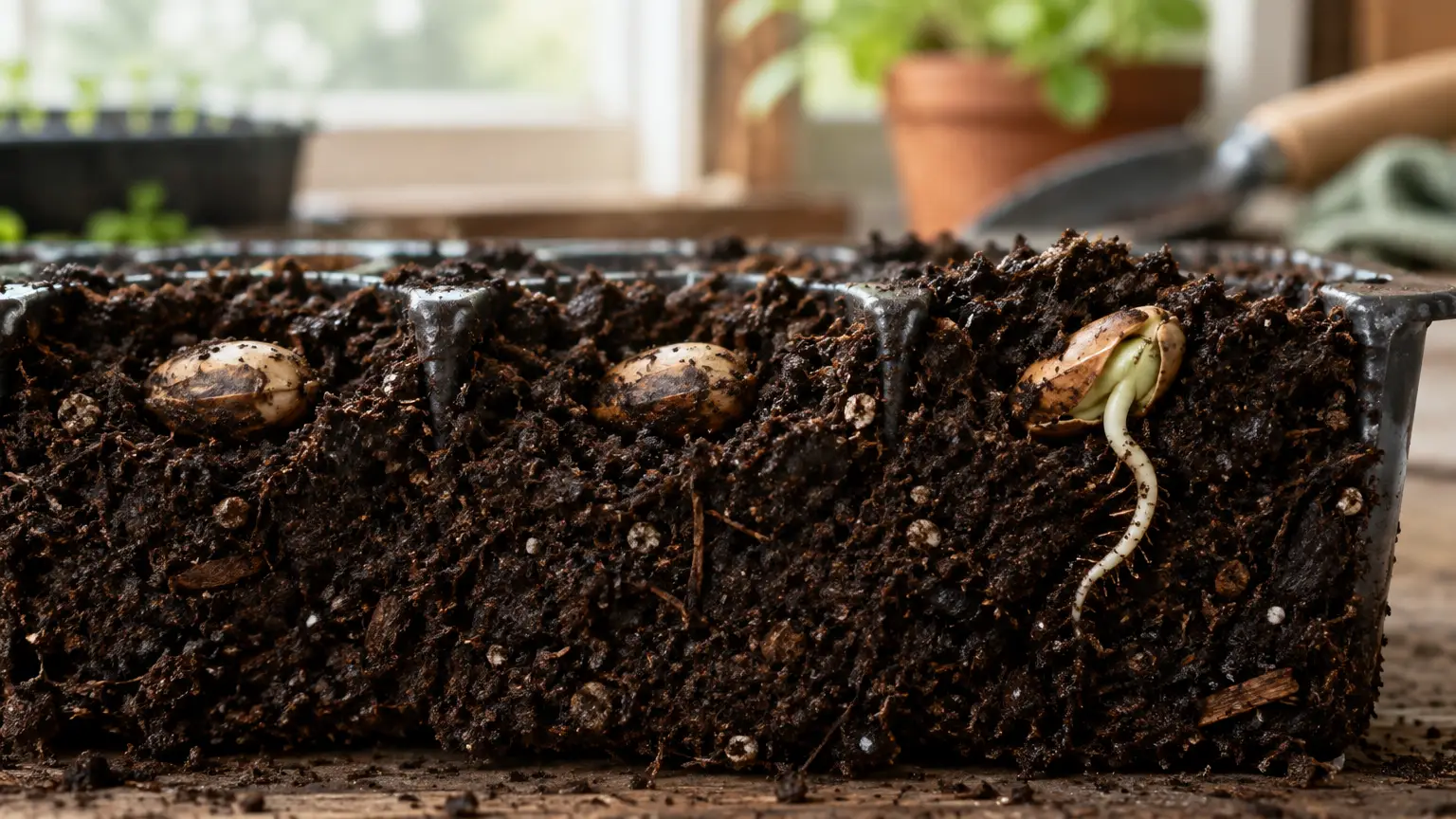
Germination is the moment a seed wakes up, absorbs water, and pushes out its first root and shoot. For this to happen, the seed needs the right combination of moisture, warmth, oxygen, and sometimes light or darkness. If even one of these factors is off, the seed may sit in the soil waiting, or it may rot before it ever has a chance to grow.
In this article, we will walk you through the most common reasons seeds fail to sprout and share practical solutions you can rely on every season. And because everything starts with the seed itself, it pays to choose a supplier that tests its seed for quality, such as KVITER seeds.
Benefits of a High Germination Rate
Before we look at what goes wrong, it helps to understand why germination rate matters. The germination rate is the percentage of seeds in a batch that sprout under proper conditions. A packet with a 90% germination rate means that out of 100 seeds, about 90 should successfully emerge.
A high germination rate offers real, practical advantages:
- Saves money. You need fewer seeds to fill a bed, and you rarely have to buy a second packet to cover gaps.
- Saves time. Resowing failed rows can set your garden back by weeks, which matters greatly in short growing seasons.
- Produces even, uniform growth. When seeds sprout together, plants mature at the same pace, making care, thinning, and harvesting much easier.
- Reduces weed competition. A dense, evenly germinated bed leaves less bare soil for weeds to claim.
- Builds confidence. Especially for beginners, seeing a tray burst into life is the encouragement needed to keep gardening.
Wrong Sowing Depth
Incorrect sowing depth is the single most common reason seeds fail to appear. Every seed carries a limited supply of stored energy. If it is buried too deep, it spends all its energy before the shoot reaches the surface and the light. If you sow it too shallowly, it may dry out, wash away in the rain, or become a snack for birds.
The general rule is to sow a seed about two to three times its own width deep. Large seeds like beans, sunflowers, and squash can go about 1 inch (2.5 cm) deep, while medium seeds like zinnias or tomatoes need only about 1/4 inches (0.6 cm).
Tiny seeds deserve special attention. Petunias, snapdragons, lettuce, begonias, and many wildflowers need light to germinate. Even a thin layer of soil can prevent them from sprouting altogether. Instead, press the seeds gently onto the surface of moist soil so they make good contact, then cover the tray with a clear plastic wrap to keep humidity high.
Incorrect Soil and Light Conditions
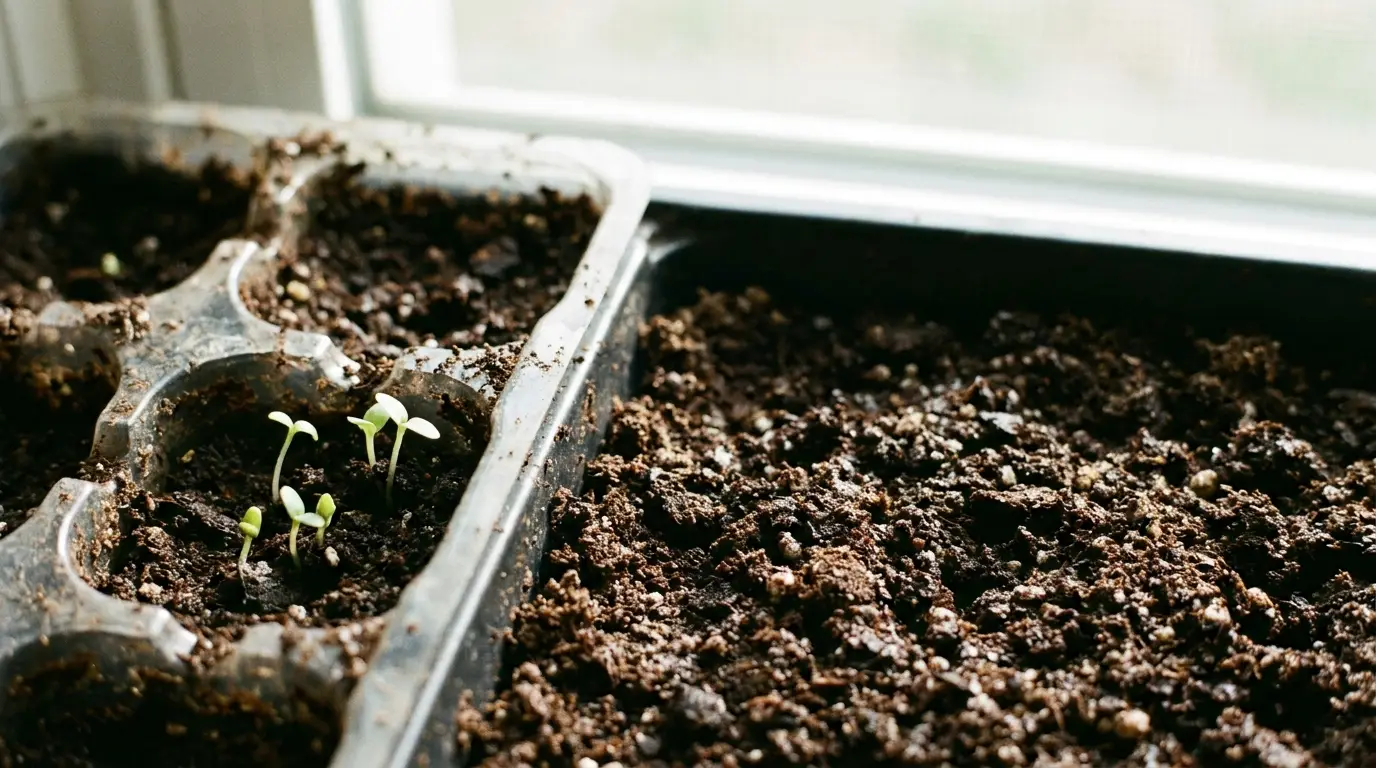
Even at the correct depth, seeds will struggle if their environment is wrong. Keep in mind that the soil mix, moisture, temperature, and light all work together, and problems with any of them can slow germination.
Here are the conditions to check first whenever a sowing fails:
- Soil texture. Heavy garden soil compacts in trays and pots, starving seeds of oxygen. Use a light, fine, sterile seed-starting mix indoors, and loosen and rake outdoor beds to a crumbly texture.
- Moisture balance. Seeds need consistent moisture, but waterlogged soil causes them to rot. The mix should feel like a wrung-out sponge, never soggy and never bone dry.
- Temperature. Each plant has its preferred range. Peppers, tomatoes, and zinnias want warm soil around 69°F–80°F (21°C–27°C), while spinach, sweet peas, and calendula germinate well in cooler conditions. A heat mat can work wonders for warmth-loving crops.
- Light or darkness. As mentioned, some seeds need light to sprout, while others, such as calendula and larkspur, prefer darkness. Know which group your seeds belong to.
Once seedlings emerge, light becomes even more important. Without strong light, young plants stretch and collapse. A bright south-facing window or a simple grow light placed close above the seedlings keeps them sturdy. If you are planning a colorful border and want varieties that perform reliably under good conditions, consider KVITER flower seeds, which come with clear growing guidance for each type.
Seed Dormancy
Sometimes a seed is perfectly healthy, sown at the right depth, and kept in ideal conditions, yet it still refuses to sprout. In these cases, dormancy is often the reason. Dormancy is a natural survival mechanism that prevents seeds from germinating at the wrong time of year
Many perennials, native wildflowers, herbs, shrubs, and tree seeds have some form of dormancy. Fortunately, gardeners have long known how to gently mimic nature and break it. The most common methods include:
- Cold stratification. Seeds such as echinacea, lavender, lupins, and many tree species need a period of cold and moisture before they germinate. Mix them with damp sand or place them in a moist paper towel, put them in a sealed bag, and keep them in the refrigerator for 4–8 weeks. Alternatively, sow them outdoors in late autumn and let winter do the work.
- Scarification. Seeds with very hard coats, like sweet peas, morning glories, lupins, and some legumes, may need their shell nicked or lightly sanded so water can penetrate.
- Soaking. Many large or tough seeds, including nasturtiums, beets, and parsley, sprout faster after soaking in warm water for 12 to 24 hours.
- Patience. Some seeds, such as parsley and certain perennials, are naturally slow and may take 3 weeks or more to germinate. Do not give up on a tray too early.
Poor Seed Viability
The final, and often overlooked, reason for germination failure is that the seed itself is no longer viable. Seeds are living organisms, and their vitality declines over time. Some, like tomatoes and cucumbers, can remain viable for 5 years or more under good storage. Others, such as onions, parsnips, and many herbs, lose vigor after just 1–2 seasons.
Poor storage speeds up this decline. Heat, humidity, and light all shorten a seed’s life. Store your seeds in a cool, dark, dry place, ideally in airtight containers with a small sachet of silica gel to absorb moisture.
If you are unsure whether old seeds are still good, try a simple germination test. Place ten seeds on a damp paper towel, fold it over, put it in a plastic bag, and keep it somewhere warm. After a week or two, count how many have sprouted. If seven sprout, your germination rate is roughly 70%, and you can sow a little more thickly to compensate. If only one or two sprout, it is time for fresh seed.
The surest way to avoid viability problems is to start with fresh, properly handled seed from a reliable source. KVITER’s values of reliability and innovation show up in practical ways, from germination-tested seed to thematic seed kits and digital planting tools that help gardeners succeed from the very first sowing.
Final Thoughts
When seeds fail to germinate, it is tempting to feel discouraged, but every empty tray is a lesson. In nearly all cases, the cause comes down to one of a few factors: sowing depth, soil and light conditions, natural dormancy, or seed viability. Once you learn to recognize these issues, you can fix them quickly and confidently.