Roof ventilation is mostly out of sight, which makes it all the easier to ignore. Very few people look beyond the shingles and gutters to think about how air is moving through the attic, if any. Still, attic conditions can affect the roof for years.
Heat collects under the roof in summer. Moisture can build up during colder months. Insulation sometimes blocks soffit vents without anyone realizing it. That is why Cape Cod roofing contractors looking at a larger roofing project should usually check what is happening underneath the roof covering too.
What Roof Ventilation Actually Does
In a typical vented attic, outdoor air enters low near the eaves and leaves higher up through ridge vents or another exhaust point.
| Part | What it does |
|---|---|
| Soffit or intake vents | Bring outdoor air into the attic |
| Ridge or exhaust vents | Let attic air escape |
| Insulation | Slows heat transfer between the house and attic |
| Air sealing | Limits indoor air leaking upward |
| Baffles | Keep an air channel open near the eaves |
The trouble starts with a blocked/missed piece, or with something that’s doing a part it was never meant to do. A vent can be useless. It can come up in attic assessments: soffit vents are visible outside, yet blown-in insulation is packed tightly against them inside. On paper, the house has intake, although the air barely gets through.
Heat and Moisture Create Different Problems
Summer heat gets most of the attention because it is obvious. Open an attic hatch on a hot afternoon, and you feel it immediately. Ventilation can help release some of that heat. Insulation below slows heat trying to move into the rooms beneath it. Winter deserves just as much attention.
Warm indoor air carries moisture. Small gaps around attic hatches, recessed lights, plumbing penetrations, and ceiling joints can let that air move upward. Once it reaches cold roof sheathing, condensation can form.
You may notice:
- damp insulation;
- dark staining on roof decking;
- a musty smell;
- droplets on nails or wood;
- frost during very cold weather.
No roof leak is required. If I found moisture around one bathroom exhaust duct, I would first check where that duct ends and whether humid air is being dumped into the attic.
Insulation Can Help or Get in the Way
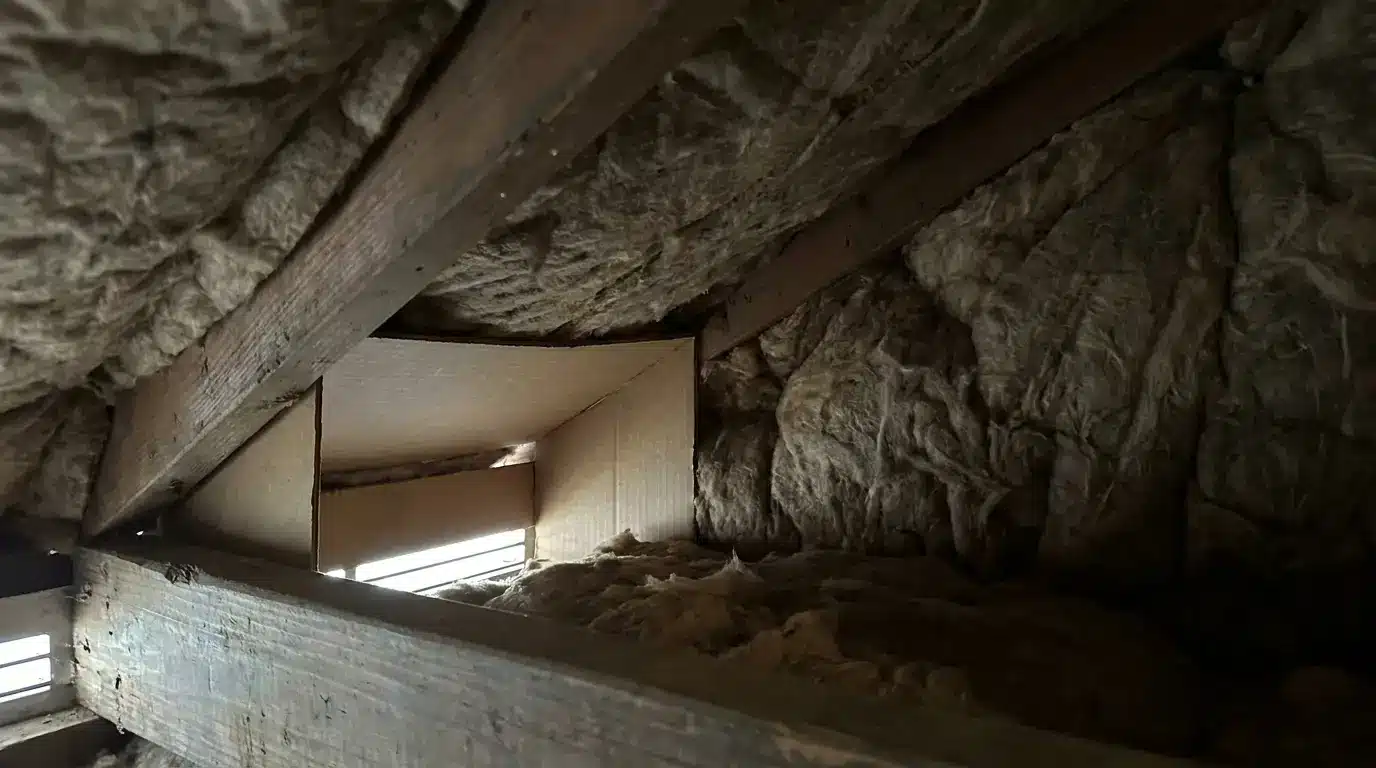
Insulation slows heat transfer. It can create a ventilation problem when pushed into the wrong place. The eaves are the area I would check first. If insulation covers the soffit intake, the attic may have plenty of exhaust capacity at the top and still move very little air. Baffles can preserve a clear channel between the insulation and the underside of the roof deck.
This detail is easy to miss if everyone stays outside and counts vents. That small check can change the entire recommendation later.
Summer and Winter Need Different Attention
A hot attic does not give you the diagnosis by itself. Maybe the soffit intake is blocked. Maybe the insulation is thin. Maybe conditioned air is leaking through small ceiling gaps. Often, more than one issue is involved. Winter shifts the questions.
I would look for:
- moisture staining on sheathing;
- frost or condensation around fasteners;
- bath fans that terminate inside the attic;
- insulation covering intake openings;
- obvious gaps around attic access panels.
Those clues tell you much more than temperature alone.
Some Ventilation Advice Is Too Simple
A few statements sound useful until you look at an actual attic.
“The attic is hot, so add more vents.”
Maybe. First check whether the existing intake can actually draw air.
“An attic fan will fix the heat.”
It can help in some setups. If the attic floor leaks air, a powered fan may also pull conditioned air out of the house. Then there is the idea that more ventilation is always better. I would be careful with that one. Intake and exhaust need to work together. The same goes for vent counts. Ten visible vents tell you little if half are blocked inside.
Signs Homeowners May Notice First
Most people notice a symptom before they notice a ventilation problem.
Common clues include:
- upstairs rooms that stay unusually warm;
- recurring musty attic odors;
- damp or compressed insulation;
- dark marks on rafters or roof decking;
- condensation or frost during cold weather;
- repeated ice-dam problems.
None of those signs gives you a complete diagnosis. Dark staining might come from an old leak. Damp insulation may point to condensation, plumbing, or roof leakage. You still have to trace the cause.
Why Adding Vents May Not Fix Anything
I would not start by asking which vent to add. I would want to know what the existing system is doing first.
A useful check goes in this order:
- Where is outside air supposed to enter?
- Are those intake openings clear?
- Can air move above the insulation?
- Where does the exhaust air leave?
- Are bath and kitchen exhausts vented outdoors?
- Does the attic floor have obvious air leaks?
One more question matters: is this attic designed to be vented at all? Some roof assemblies are intentionally unvented. They should not be modified casually because somebody cannot see soffit vents.
Roofing Work Is a Good Time to Check Everything Together
A roof replacement is one of the few times you already have a good reason to look at what’s happening under the surface, so I wouldn’t waste that opportunity.
Before the new roof goes on, I’d want someone to look inside the attic and answer a few basic questions. Are the soffit openings actually clear? Is the insulation packed too tightly at the eaves? Is there old staining on the sheathing that nobody has paid attention to? Where do the bathroom exhaust ducts end? You can learn a lot from a ten-minute attic check.
Sometimes there’s nothing interesting to find. Fine. Other times, that inspection explains a problem the homeowner has been living with for years, like a stuffy upper floor or recurring condensation in winter.
And if the soffits are blocked, new shingles won’t change that. Same with a bath fan that terminates in the attic or gaps that keep leaking warm indoor air upward.
So I wouldn’t automatically rebuild the ventilation setup exactly as it was. I’d look at the attic first, see how the existing pieces are actually working, and make decisions from there. It doesn’t need to become a huge technical exercise. It just needs a proper look before everything gets covered back up.