The Return of Personality in Modern Kitchens
Kitchen trends change constantly, but some styles never completely disappear. One of the clearest examples is retro-inspired kitchen design. While minimalist interiors and industrial spaces continue to dominate magazines and Pinterest boards, homeowners are increasingly bringing warmth, color, and personality back into their kitchens.
The return of retro aesthetics is not just about nostalgia. It is about creating spaces that feel welcoming and expressive. Many modern kitchens became extremely functional over the last decade, but they also started to look similar. White cabinets, black fixtures, and hidden appliances offered clean lines, yet many people began searching for interiors with more character.
That shift is one reason why colorful appliances and vintage-inspired details have become popular again. Brands like smeg helped lead this movement by combining modern functionality with classic Italian styling.
Why Retro Design Still Feels Relevant
Retro kitchens often borrow visual elements from the 1950s, 1960s, and 1970s. Rounded corners, pastel colors, chrome accents, and bold statement appliances create a softer and more inviting atmosphere compared to ultra-minimalist designs. The goal is not necessarily to recreate an old kitchen exactly as it once existed. Instead, it is about blending timeless aesthetics with current technology.
One of the reasons this design direction works so well is emotional connection. Kitchens are deeply personal spaces. People gather there before work, cook for family, host guests, and spend quiet evenings making coffee or preparing meals. Appliances that feel visually warm and expressive can make the space feel less mechanical and more lived in.
Another reason retro-inspired kitchens remain relevant is versatility. A single statement appliance can completely transform the mood of a room. A cream-colored toaster or pastel coffee machine can soften modern cabinetry. Likewise, a colorful refrigerator can become the focal point of an otherwise neutral interior.
Scandinavian Design and Retro Influence
Interior designers also point out that retro aesthetics pair surprisingly well with Scandinavian design principles. Nordic interiors often emphasize simplicity, functionality, and quality materials. Vintage-inspired appliances fit naturally into that environment because they provide visual warmth without overwhelming the room.
This balance between practicality and personality is increasingly important for homeowners. People no longer want kitchens that look like sterile showrooms. They want spaces that reflect their habits and identity.
Open shelving has also contributed to the popularity of design-focused appliances. In older kitchens, many tools stayed hidden in cabinets. Today, appliances are frequently displayed on countertops or open shelves, meaning appearance matters much more than before.
The Role of Coffee Culture and Daily Rituals
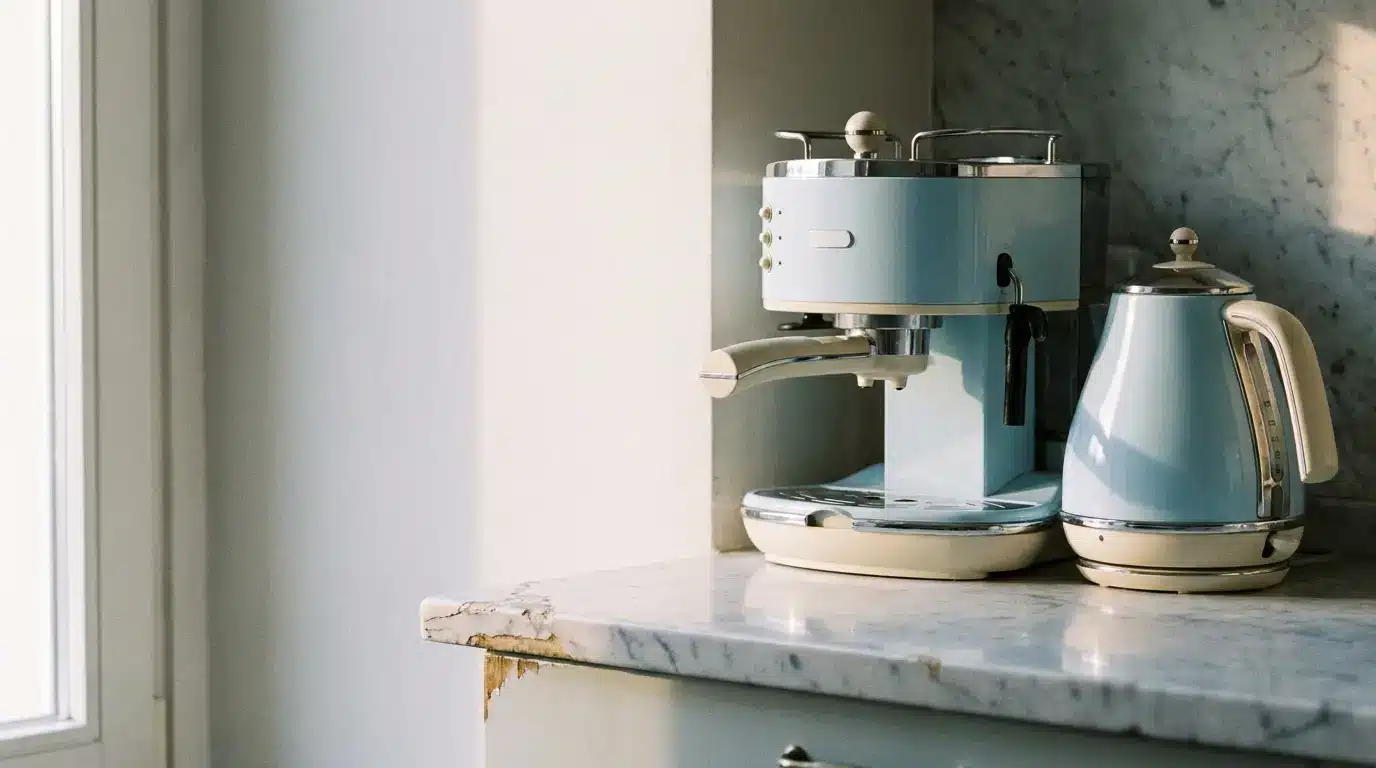
Coffee culture has influenced this trend significantly. Espresso machines, kettles, grinders, and milk frothers are now part of daily rituals for millions of people. Since these appliances remain visible throughout the day, consumers often choose products that contribute to the room’s visual identity.
The same applies to small breakfast appliances. Toasters and kettles used to be purely functional purchases. Now they are often selected with the same care people apply to furniture or lighting.
Manufacturers have responded by collaborating with architects and industrial designers to create appliances that feel timeless rather than disposable. According to the official brand history, Smeg has worked with designers and architects for decades while building its recognizable aesthetic identity.
Social Media and Kitchen Aesthetics
Retro design is also connected to durability. Many consumers are moving away from fast-consumption culture and looking for products they can use for years. Timeless styling supports that mindset because the products do not feel outdated after one or two seasons.
Social media has accelerated the trend further. Kitchens now appear constantly in home tours, cooking videos, and lifestyle content. As a result, visual presentation matters more than ever. Appliances that stand out aesthetically naturally receive more attention online.
At the same time, retro-inspired design is evolving. Modern interpretations are often cleaner and more refined than authentic vintage kitchens. Designers typically combine classic curves and colors with contemporary materials, energy efficiency, and compact functionality.
The result is a hybrid style that feels both nostalgic and current.
The Psychology Behind Warm Kitchen Spaces
Color psychology also plays an important role. Soft blues, creams, reds, and pastel greens create emotional warmth that many monochrome kitchens lack. During periods when people spend more time at home, comforting interiors become increasingly valuable.
Interestingly, younger homeowners are among the strongest supporters of retro aesthetics. Many of them did not grow up during the original retro eras, but they appreciate the individuality and emotional feel associated with vintage-inspired interiors.
There is also growing appreciation for European appliance design. Italian brands in particular have become associated with craftsmanship, creativity, and strong visual identity. That reputation continues to influence kitchen trends globally.
Why the Trend Continues to Grow
Ultimately, retro kitchen design continues returning because it solves a modern problem. Many contemporary interiors became highly optimized but emotionally flat. Vintage-inspired details restore warmth, personality, and visual storytelling to everyday spaces.
And in a room where people gather every single day, that emotional connection matters more than most design trends.