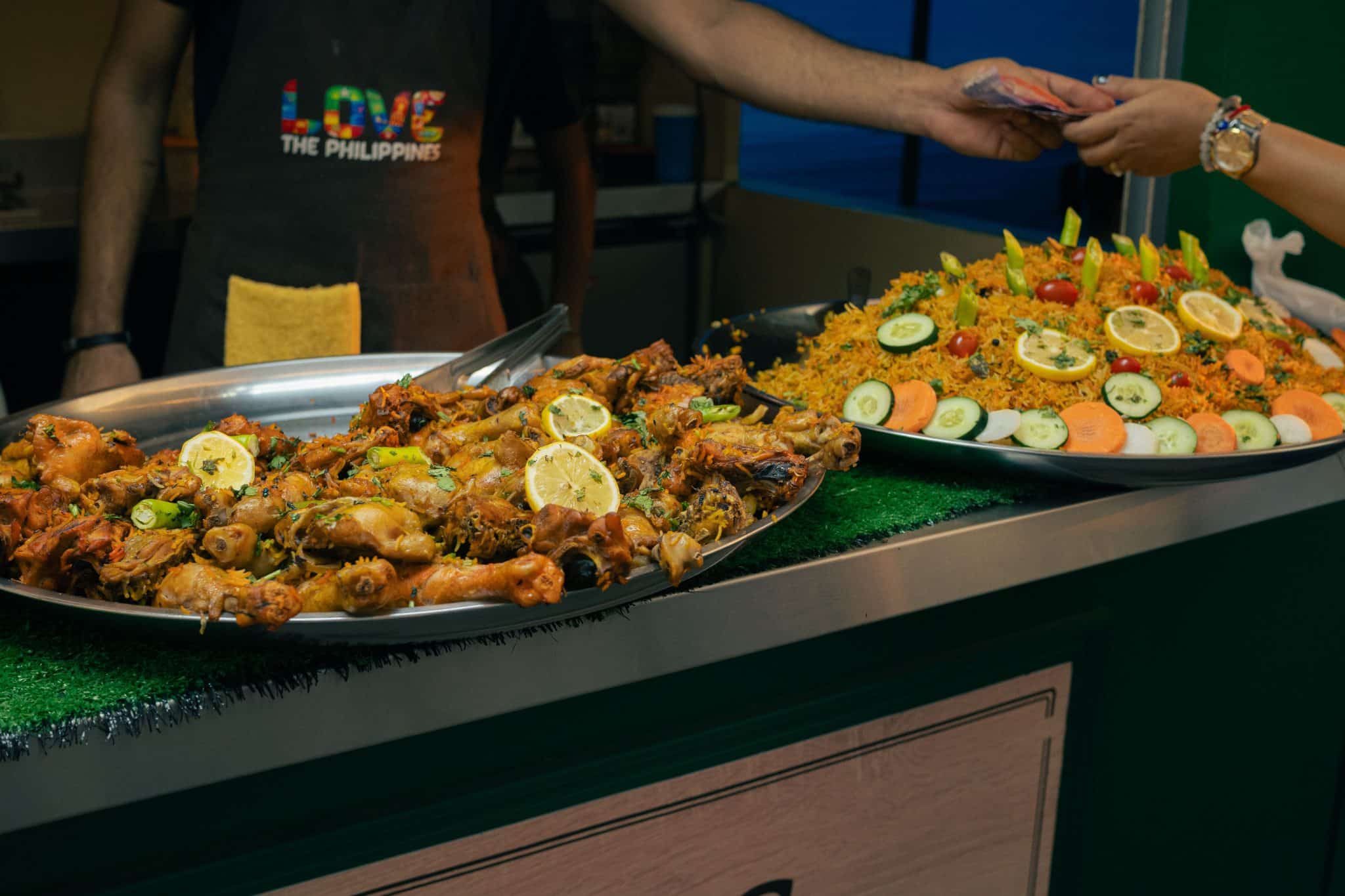
I first noticed it on a trip back from a late-night visit to a Binondo food stall. I’d been playing a mobile slot game during the commute home — one of those colorful, fast-spinning titles that had been recommended in a gaming group — and it struck me that the visual language on my screen was almost identical to what I’d just left behind. Vivid reds, deep golds, overflowing bowls of rice and fruit, the particular shimmer of glazed skin on a roasted centrepiece dish. The game wasn’t set in the Philippines. But it felt Filipino in the way that good food feels like home — immediately recognizable, emotionally resonant, designed to trigger appetite.
That recognition wasn’t accidental. Slot studios creating for the Southeast Asian market, and specifically for Filipino players, have become significantly more deliberate about how they deploy food imagery in game design. The relationship between Philippine cuisine and slot aesthetics runs deeper than surface decoration.
The Slot Screen as A Visual Menu
Slot game design operates on the same principles as food packaging and restaurant interiors: the goal is to trigger a desire to engage before the player has made any conscious decision. Color, proportion, and visual rhythm all contribute to this response. Philippine cuisine, with its specific palette of caramelized sugars, coconut-milk whites, banana-leaf greens, and the deep crimson of tocino and longganisa, offers a visual vocabulary that is both immediately distinctive and highly evocative for a Filipino audience.
Studios have learned that players engage longer with slot themes that resonate with their existing visual memory. A Filipino player who encounters symbols drawn from a lechon spread — the crackling golden skin, the garnish of liver sauce, the ceremonial presentation — is not just seeing a food image. They’re accessing a network of associations built over a lifetime of celebrating with that dish. That associative depth produces the kind of emotional engagement that generic fruit-machine symbols simply don’t generate in the same audience.
How Lechon Became a Scatter Symbol
The choice of specific dishes for slot symbol treatment is not arbitrary. Lechon, the Philippines’ most iconic celebration food, carries a specific semantic payload: abundance, festivity, occasion. These are exactly the associations that slot designers want attached to high-value symbols. A lechon scatter or wild carries the implication of celebration — “something good is happening” — in a way that is immediately legible to Filipino players without requiring any explanation.
Other food symbols that recur in Filipino-targeted slot games work through similar logic. Halo-halo — the layered dessert that mixes shaved ice, sweet beans, fruit, leche flan, and ube ice cream — is visually chaotic in the best sense: colorful, layered, surprising at every spoonful. Its visual structure maps naturally onto the satisfying disorder of a bonus round. The dessert’s diversity of ingredients mirrors the way bonus mechanics layer multipliers, free spins, and expanding wilds into a complex reward sequence.
Many of the highest-rated titles in 2026 draw directly from this visual vocabulary — tropical fruits, festive food spreads, and color palettes referencing vibrant street food imagery — and players who browse the best online slots for Filipino players will find that themes from Binondo’s Chinatown to the provincial panaderia at its most abundant are well represented across the leading libraries.
The Color Logic of Philippine Street Food
Philippine street food operates in a specific chromatic register that slot designers have recognized as a powerful engagement driver. The palette is warm-dominant: yellows from banana cue and turon batter, deep orange-reds from isaw grills and fishball sauce, the bright green of pandan-colored kalamay, the vivid purple of ube in every form from halaya to cake. These colors are not pastel or restrained — they signal energy, availability, and pleasure.
Slot game design has converged on the same warm-dominant palette for its highest-performing titles in the Philippine market. The visual intensity of street food environments — the layered colors, the light-catching glazes, the movement of food being prepared and served — translates naturally into the dynamic visual environments that slot interfaces use to communicate game state and reward signals. A spinning reel that lands on a kakanin spread or a fishball cart triggers the same warm-color dopamine response as seeing the actual food in the real environment.
Why Filipino Players Respond to Food-Themed Mechanics

The appetite appeal of food imagery in slot games isn’t purely aesthetic. It’s tied to how the brain processes reward signals. Food images activate reward circuitry more directly than most other visual content categories, and that activation creates a priming effect that carries over into the gaming behavior that follows. A player who encounters appetizing food imagery at the start of a slot session enters that session in a heightened reward-seeking state.
For Filipino players specifically, the effect is amplified by the cultural centrality of food in social and celebratory contexts. Philippine food culture is inherently communal — lechon is prepared for groups, halo-halo is ordered in rounds, merienda is shared. Games that invoke these associations carry not just the food’s visual appeal but its social and celebratory resonance. This is why food-themed slots that specifically target Filipino aesthetics outperform globally themed food slots in the Philippine market even when the mechanics are identical.
The fashion industry’s observation that conscious design choices reflect deeper cultural values — that what a culture considers luxurious or beautiful reveals something true about its priorities — applies directly to slot design for specific markets. Philippine food culture is luxury, celebration, and community combined in one visual package. Studios that understand this produce games that feel native rather than adapted.
The Game Studio Conversation: Designing for The Philippine Market
Filipino-targeted content has moved from a regional afterthought to a strategic priority in the roadmaps of major slot development studios over the past three years. Studios operating in Manila and in Southeast Asian development hubs have increased the proportion of Philippine cultural content in their new release pipelines. The shift reflects market data: games designed with explicit Philippine cultural reference points show higher session frequency, higher average bet sizes, and better D30 retention in the Philippine market than comparable games built for global or pan-Asian audiences.
The tropical fruit baseline — pineapples, mangoes, coconut — is where this conversation typically starts, but the more sophisticated studios push further. Pineapples carry a specific Philippine resonance that differs from their general tropical symbolism. The growth cycle and agricultural significance of the pineapple in the Philippines connects to regional identity in Mindanao and to export pride in a way that makes it more than just a fruit symbol. Designers who understand these layers produce games that feel researched rather than assembled, and Filipino players can tell the difference.
From Binondo to The Reels
What makes Philippine food culture a particularly rich source material for slot design is its layering. Filipino cuisine is a synthesis: Spanish colonial influence in the use of tomato and sofrito; Chinese roots in the noodle traditions of pancit and the pastries of Binondo’s egg tarts; the indigenous base of coconut, fermented fish, and rice in every form. This multicultural layering gives Filipino food imagery a visual and cultural complexity that holds interest across extended gameplay sessions in a way that simpler symbol sets don’t.
A slot session that unfolds across Filipino food symbols moves through a visual narrative — the morning panaderia, the midday carinderia, the evening inihaw spread — that creates a sense of place and time that purely abstract symbol sets can’t replicate. The best Filipino food-themed slots use this narrative quality deliberately: the symbol set tells a story about a day in Philippine food culture, and that story keeps the player engaged not just in the mechanics but in the world the game is building on screen.