Have you ever wondered what is a node on a plant and where those new leaves and branches come from on your favorite houseplant?
The answer lies in tiny but mighty spots called nodes. I remember when I first started caring for plants: I had no idea what a node was or why it mattered.
But once I learned to spot them, my propagation success rate shot up! I’ll walk you through everything you need to know about plant nodes in simple terms.
I’ll cover what nodes are, how to find them on your plants, why they’re essential for propagation and pruning, and how you can use this knowledge to help your plants thrive.
What is a Node on a Plant?
A node is the specific point on a plant’s stem where leaves, branches, buds, flowers, and sometimes roots emerge. Think of nodes as the plant’s growth centers where all new development originates.
Nodes typically appear as slightly raised, swollen bumps along the stem. They contain specialized cells called meristematic tissue, which produce new growth throughout the plant’s life.
Why Nodes Matter:
- New branches and leaves only grow from nodes
- Root development during propagation happens at nodes
- They’re essential for successful pruning
- Understanding nodes improves overall plant care
Without nodes, plants couldn’t produce new growth or expand their structure.
Node vs Internode: Key Differences
Many beginners confuse nodes with internodes, but they serve completely different purposes.
| Feature | Node | Internode |
|---|---|---|
| Location | Where leaves or branches attach to the stem | Section of the stem between two nodes |
| Growth Activity | Contains active growth tissue | No active growth tissue |
| Can Produce | New roots, leaves, branches | Cannot produce roots or leaves |
| Appearance | Often swollen or slightly raised | Usually smooth and cylindrical |
| Function | Essential for propagation | Provides structure and transports nutrients |
Simple Analogy: If you imagine a plant stem as a ladder, the nodes are the rungs (where action happens), and the internodes are the vertical rails connecting them.
When taking cuttings, you must include at least one node. A cutting with only internode tissue will never develop roots, no matter how long you wait.
How to Identify Nodes on Different Plants
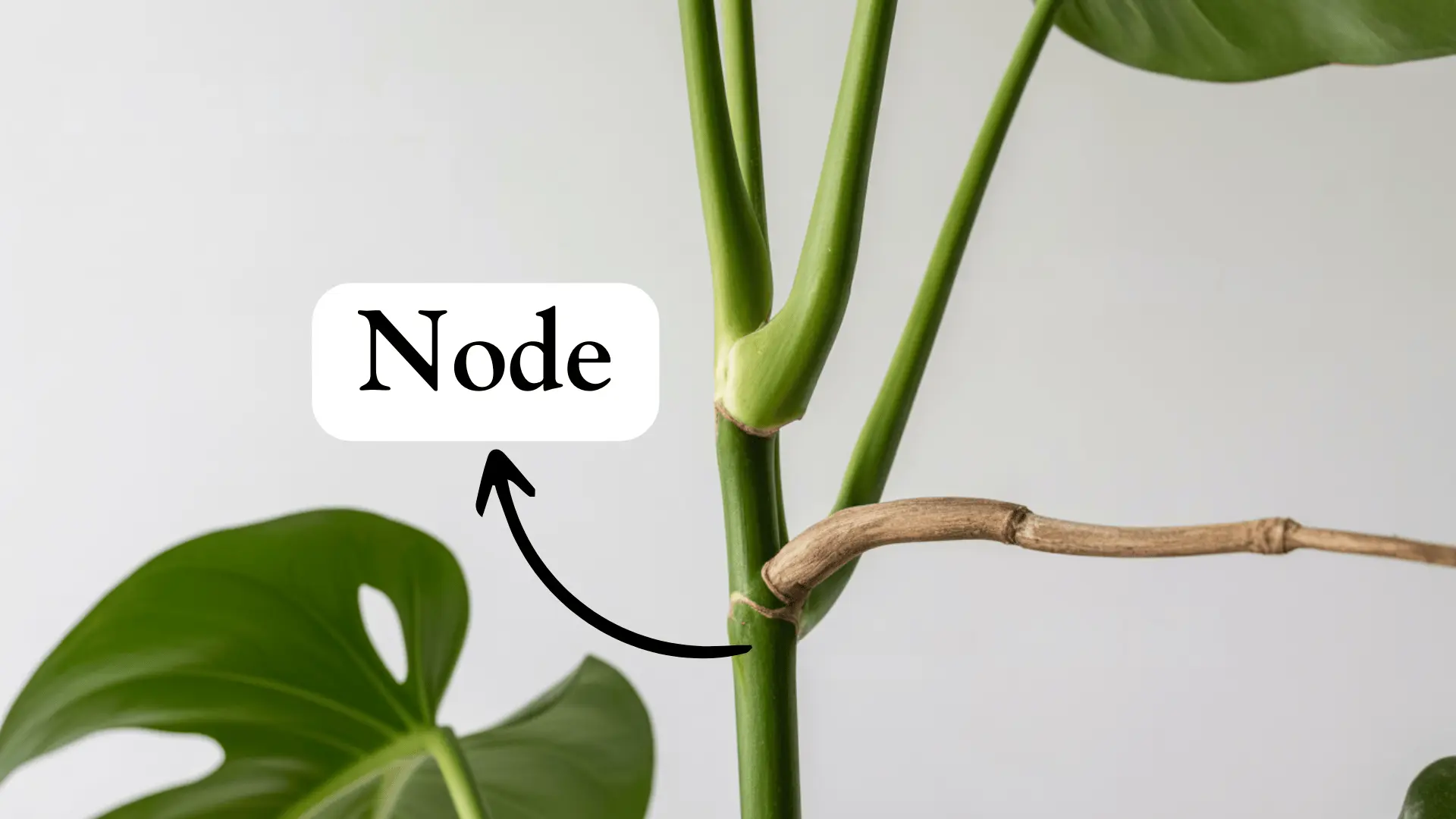
Nodes can look quite different depending on the plant species. Here’s how to spot them on common houseplants:
General Identification Tips
- Small raised bumps or swollen areas on the stem
- The point where leaves connect to the main stem
- Often slightly darker or different in color
- May have a ring-like appearance
- Sometimes produce small aerial roots
Plant-Specific Examples
Nodes look different on each plant species. Here’s what to look for on popular houseplants:
- Pothos: Look for small brown bumps on the stem opposite each leaf attachment, resembling tiny nubs or dots. Mature pothos vines may have small brown aerial roots emerging from these nodes.
- Monstera: Nodes are thick, raised rings around each leaf connection, often swollen and knobby. Mature monsteras develop thick aerial roots from these nodes, if you want to get more from your plant, it helps to understand what monstera plants need to thrive alongside knowing where their nodes are.
- Philodendron: Nodes resemble pothos but are more pronounced, appearing as small bumps at the leaf stem and vine junction. Some develop noticeable aerial roots.
- Succulents (Jade Plant): Nodes are the slight thickenings at leaf junctions on the stem, where new branches will grow if pruned above them.
- Snake Plant: These have underground nodes called rhizomes. New growth emerges from the soil where rhizome nodes produce new shoots.
- Spider Plant: Produces obvious nodes on runners (the long stems with baby plants). Each baby plantlet grows from a node that appears as a small bump where the baby connects.
Once you know what to look for on your specific plant, identifying nodes becomes second nature.
Functions and Importance of Nodes
Nodes are the powerhouse of plant growth. Understanding their functions helps you make better care decisions.
- Growth Centers: Nodes contain cells that continuously divide and develop into new leaves, branches, flower buds, and roots. Every new structure on your plant originates from a node.
- Vascular Junctions: Nodes serve as connection points for the plant’s transportation system, where water, minerals, and nutrients are distributed to leaves and branches.
- Structural Support: Nodes are typically thicker and stronger than internodes, providing anchoring points for leaves and branches while distributing weight across the plant.
- Propagation Points: Nodes are where adventitious roots form on cuttings, enabling vegetative propagation. Without nodes, you couldn’t grow new plants from stem cuttings.
- Response Centers: When you prune, nodes nearest to the cut become activated. Dormant buds at these nodes begin growing, creating bushier plants. This is why cutting just above a node stimulates fuller growth.
Using Nodes for Successful Propagation
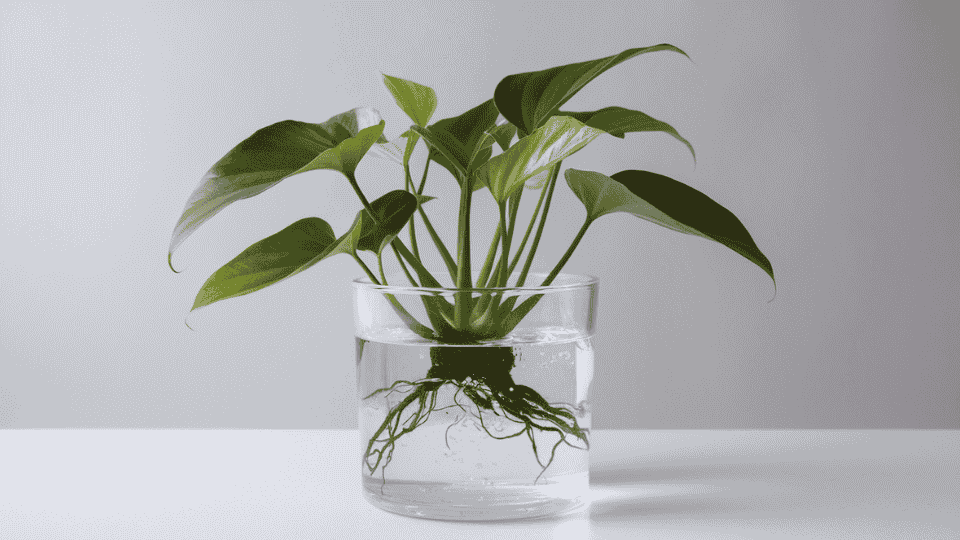
Propagation is the process of creating new plants from cuttings of existing ones. It’s a cost-effective way to expand your plant collection or share plants with friends.
Nodes are essential for propagation because they contain specialized cells that develop into roots. Without a node, cuttings cannot root and will eventually rot.
Propagation Steps
- Choose a healthy stem with 2-3 visible nodes
- Cut 1/4 inch below a node at a 45-degree angle
- Remove leaves from the bottom node(s)
- Place in water (node submerged) or soil (node buried)
- Change water every 3-5 days or keep soil moist
- Wait 2-6 weeks for roots to develop
- Transplant when roots are 2-3 inches long
Pro tip: Use a rooting hormone and take multiple cuttings to increase success.
Propagation Methods
Water Propagation
- Place cutting in clean water
- Ensure at least one node is fully submerged
- Keep leaves above water
- Change water every 3-5 days
- Wait 2-6 weeks for roots
Soil Propagation
- Plant with at least one node buried
- Use a well-draining potting mix
- Keep soil moist but not waterlogged
- Check for rooting after 3-4 weeks
Pruning at Nodes for Bushier Growth
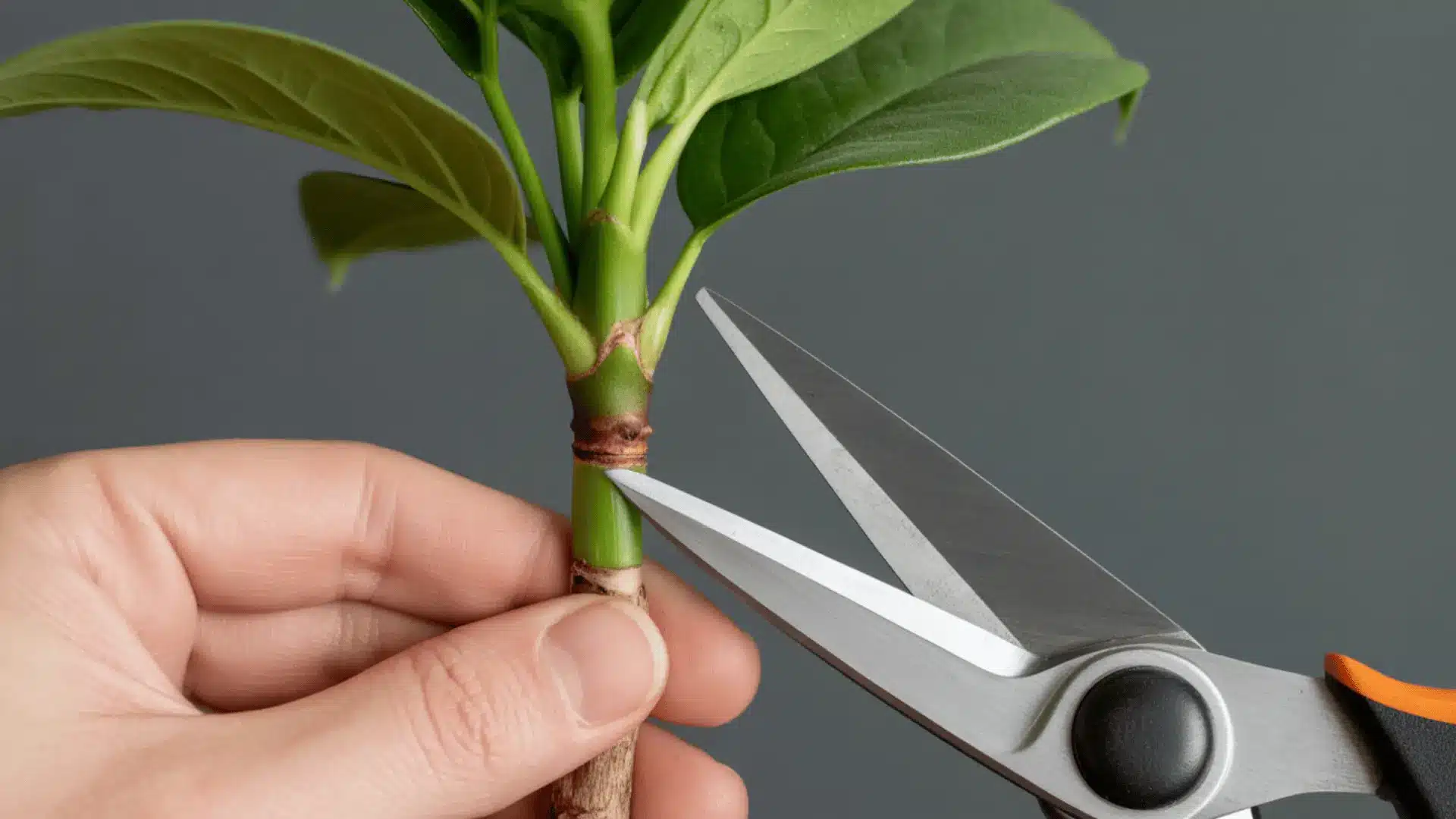
Strategic pruning at nodes turns leggy plants into full, bushy beauties.
When you cut a stem, the plant activates dormant buds at the nearest nodes below the cut. This redirects energy to lateral buds, causing them to sprout into new branches.
How to Prune Correctly
- Identify Target Node: Find a healthy node with visible growth buds where you want new branches to emerge.
- Position Your Cut: Place scissors 1/4 inch above the node at a 45-degree angle, sloping away from the node. This prevents water pooling.
- Make Clean Cuts: Use sharp tools and cut decisively — don’t saw or crush the stem.
- Monitor Growth: New shoots typically appear within 2-4 weeks. Ensure adequate light, water, and nutrients to support new growth.
Common Pruning Applications
- Making leggy plants bushier: Prune back to lower nodes
- Removing damaged sections: Cut to the first healthy node below the damage
- Controlling size: Prune to nodes at the desired height
- Encouraging branching: Prune the main stem to activate lateral buds
Common Mistakes to Avoid
Even experienced gardeners make these errors when working with nodes. Avoid these common pitfalls to improve your success with propagation and pruning.
- Taking Cuttings Without Nodes: Without nodes, cuttings cannot produce roots and will eventually rot. Always count nodes before propagating.
- Cutting in the Wrong Place: For propagation, cut 1/4 inch below a node. For pruning, cut 1/4 inch above a node. Cutting between nodes leaves dead tissue that can rot.
- Damaging the Node: Crushed nodes from dull tools cannot produce healthy growth. Use sharp, clean tools and make smooth cuts.
- Submerging Leaves Instead of Nodes: Roots only develop from submerged nodes, not leaves. Strip all leaves from nodes that will be in water or soil to prevent rot.
- Expecting Immediate Results: Different plants root at different rates. Some take days, others need 6-8 weeks. Be patient and maintain proper conditions. If you’re working with a monstera specifically, my guide to monstera plant care has realistic timelines for what to expect.
Learning to recognize and avoid these mistakes will significantly increase your success rate with both propagation and pruning.
Frequently Asked Questions About Plant Nodes
Can you propagate a plant without a node?
No, a cutting without a node has no way to produce roots. Nodes contain the meristematic tissue that generates adventitious roots, and without that tissue, a cutting will simply sit in water or soil until it rots. It doesn’t matter how long you wait or how fresh the cutting is. When I first tried propagating pothos, I lost several cuttings this way before I figured out what I was missing. Always count nodes before you cut, and make sure at least one will be submerged or buried in your propagation medium.
What’s the difference between a node and a bud on a plant?
A node is the specific location on the stem where growth can occur, it’s a structural point, like a junction. A bud is the actual growth that emerges from a node, whether it becomes a leaf, branch, or flower. Think of it this way: the node is the address, and the bud is the resident. Some nodes carry dormant buds that only activate when the plant is pruned or stressed, which is exactly why cutting above a node encourages that spot to sprout new growth. Both terms are often used loosely, but knowing the distinction helps when you’re deciding where to make a cut.
How many nodes does a cutting need to root successfully?
For most common houseplants, like pothos, philodendrons, monsteras, one healthy node is the minimum, but two or three give you a much better chance of success. With a single node, the cutting has less stored energy to work with, so rooting can be slower and the cutting more vulnerable to stress. I usually aim for a stem section with two nodes: one to bury for root development and one above the soil line to support the first new leaves. For woodier plants or those that root more slowly, three to four nodes is a safer bet.
Why are my cuttings rotting instead of rooting?
Rot during propagation almost always comes down to one of three things: leaves left submerged in water, a node that’s been damaged by a dull or dirty cutting tool, or conditions that are too warm and still. Strip any leaves from the portion of the stem that will sit below the waterline, submerged leaves decay quickly and spread rot to the node. Make sure your cutting tool is sharp and clean before you use it, as crushing or contaminating the node tissue slows rooting significantly. Finally, change the water every three to five days so bacteria don’t build up around the developing roots.
Do all plants have nodes, and are they always visible?
Every vascular plant has nodes, they’re a fundamental part of how plants are built. That said, they’re not always easy to see. On fast-growing tropical houseplants like pothos and monstera, nodes are quite obvious as raised bumps or rings on the stem. On slower-growing or succulent plants like jade, they’re more subtle thickenings at leaf junctions. Some plants, like snake plants and ZZ plants, keep their nodes underground on rhizomes, so you won’t see them at all without digging into the soil. Once you’ve practised spotting nodes on a few different plants, your eye adjusts and they become much easier to find.
Summary
Now you know what is a node on a plant – those special growth points on your plant’s stem where all the magic happens. New leaves, branches, and roots all start at these tiny bumps.
I hope this post has helped you easily identify nodes on your plants and understand their importance. When taking your first cut or pruning to promote bushier growth, always check for nodes first.
They serve as your guide to successful plant maintenance! Next time you tend to your green friends, take a moment to examine their stems and locate the nodes. You’ll be surprised how knowing what a node is can boost your gardening success.
Ready to put your new knowledge into action? Grab your favorite plant and see if you can spot its nodes right now! Share your findings in the comments below. I’d love to hear about your plant experiences!