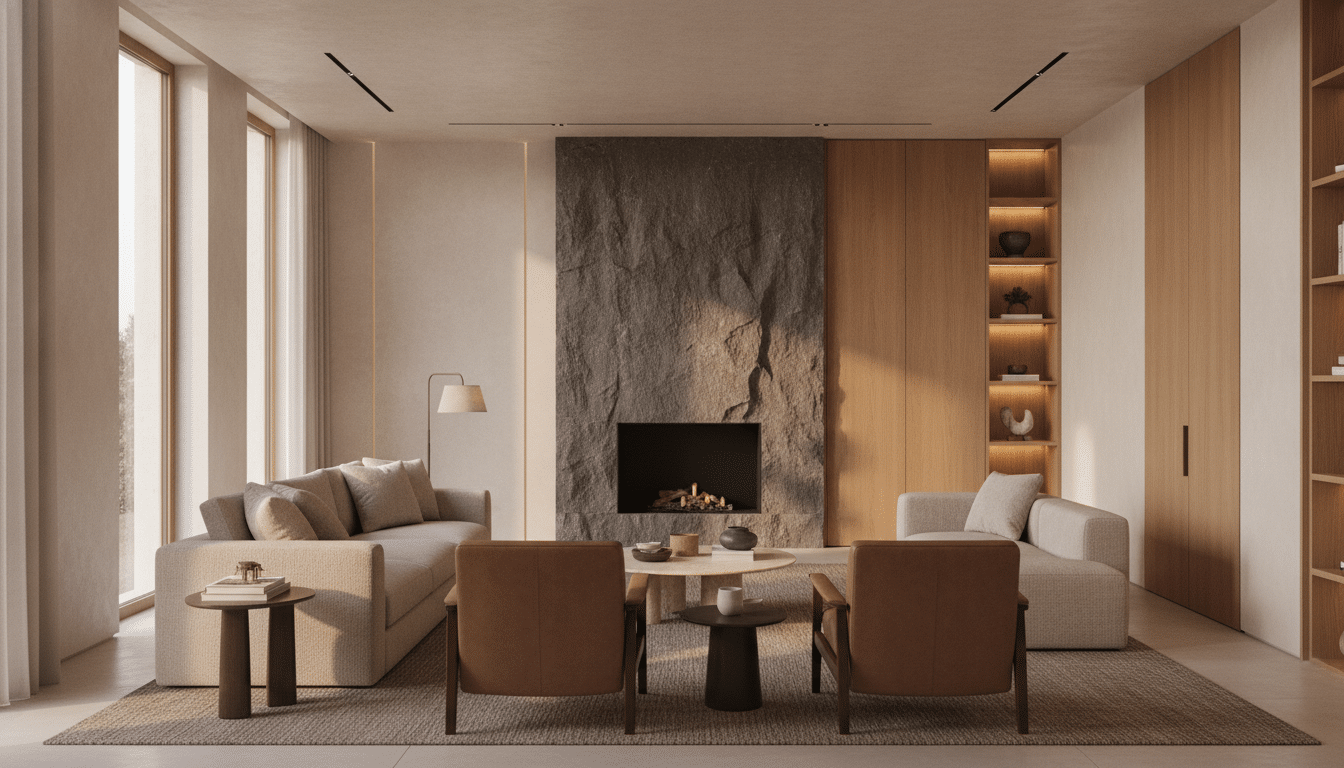
A persistent misconception is that luxury interiors are simply ordinary interiors with a larger budget. Add marble, commission bespoke furniture, choose an expensive sofa and install statement lighting, and the result should automatically feel luxurious.
In reality, some of the most expensive rooms can feel surprisingly uninspired, while spaces with considerably less obvious extravagance can possess an unmistakable sense of refinement.
The difference lies in design, not decoration.
A skilled luxury interior designer is not simply selecting higher-priced objects. They are considering how architecture, proportion, materials, lighting, furniture and the movement of people through a space work together. True luxury emerges from the relationship between these elements, rather than the cost of any one of them.
Luxury Begins With the Space Itself
Decoration often starts with what will be placed inside a room. Interior design starts with the room.
Before fabrics, artwork, or accessories enter the conversation, designers consider fundamental questions about space. Where does natural light enter? What should someone see when they first walk through the door? How does the room connect with adjoining spaces? Are the proportions balanced?
These decisions may not immediately register with someone entering the finished home, but they determine how that home feels.
A beautifully furnished living room can still feel awkward if its circulation routes cut through seating areas. An impressive kitchen can feel uncomfortable if an oversized island dominates the available space.
Luxury interiors tend to avoid these problems because spatial planning has been treated as part of the design itself.
Materiality Matters More Than Price
Luxury design also has a sophisticated relationship with materials.
The instinct when creating an expensive interior can be to use prestigious materials everywhere. Yet covering every available surface in marble, polished metal and exotic timber can quickly make a room feel more like a showroom than a home.
Experienced designers think instead about contrast and composition.
A highly figured stone might be paired with quiet plaster walls. Smooth timber cabinetry could sit beside textured upholstery. Reflective surfaces may be balanced by materials that absorb light.
This restraint gives individual materials room to be appreciated.
It also explains why natural materials are so powerful within high-end interiors. Stone, timber, leather and metals develop subtle variations over time. Their imperfections create depth that perfectly uniform synthetic finishes often struggle to reproduce.
The Best Details Often Disappear
One of the paradoxes of luxury interior design is that considerable effort frequently goes into details that occupants barely notice.
Consider the alignment between cabinetry and architectural features, the position of electrical outlets, transitions between flooring materials or the shadow gap running around a wall.
None is likely to become the focal point of a photograph. Together, however, they determine whether a space feels resolved.
Bespoke joinery is particularly important because it allows furniture and storage to respond directly to the architecture. Instead of filling an awkward recess with a freestanding cabinet, the designer can integrate storage into the structure of the room.
The result feels inevitable rather than added afterwards.
Lighting Is Architecture After Dark
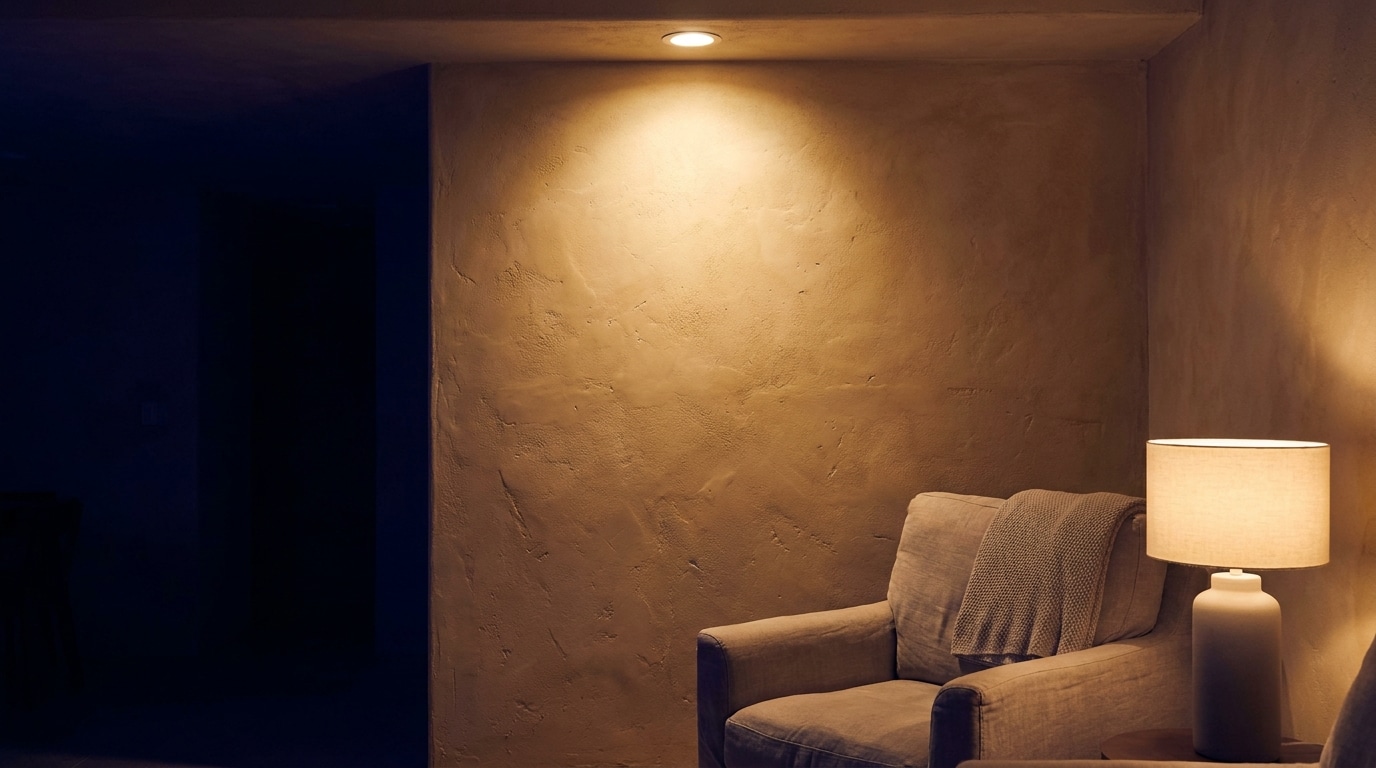
Few elements reveal the difference between decorating and interior design as clearly as lighting.
Decoration might focus on finding a spectacular chandelier. Design considers what happens when daylight disappears.
Successful schemes usually combine several sources: architectural lighting, decorative fixtures, task lighting and softer ambient illumination.
The objective is rarely to illuminate every surface equally.
Instead, designers use light to establish hierarchy. Artwork can be highlighted, textured walls grazed with light and seating areas given warmer pools of illumination.
The result changes the perception of the architecture itself.
Bespoke Does Not Mean Elaborate
Luxury is also frequently associated with complexity. Yet bespoke design does not necessarily mean ornate design.
A seemingly simple fitted cabinet may require extraordinary precision to achieve perfect proportions. A minimalist kitchen can involve extensive planning to conceal appliances and services. Even a plain upholstered chair may have been developed specifically for the dimensions and visual weight required by a room.
The value of bespoke work is therefore not simply exclusivity.
It allows objects to solve specific design problems.
Cohesion Beats Collection
Perhaps the greatest distinction between luxury design and expensive decorating is cohesion.
It is possible to fill a home with individually beautiful pieces and still create an interior that feels disconnected. Every object competes for attention.
Successful luxury interiors establish a hierarchy instead.
Some moments are intentionally dramatic. Others are deliberately quiet.
A sculptural staircase may become the defining feature of an entrance hall, allowing furniture around it to remain restrained. An extraordinary piece of stone might become the focus of a bathroom while fittings and cabinetry recede visually.
Knowing when not to add something is as important as knowing what to include.
Luxury Is Ultimately About Experience
The strongest interiors are designed around how people actually live.
Doors open without colliding with furniture. Lighting controls appear where they are naturally needed. Storage exists in the places where belongings accumulate. Materials are chosen not simply because they photograph beautifully, but because they suit the way the room will be used.
That is why true luxury can sometimes be difficult to identify in a single image.
Its most valuable qualities reveal themselves gradually: the effortless circulation, the perfectly positioned reading light, the satisfying weight of a handle or the way morning sunlight moves across a textured wall.
Expensive decorating can demonstrate wealth.
Luxury interior design demonstrates thought.
And ultimately, it is that thought, expressed through proportion, craftsmanship, material intelligence and attention to experience, that makes a beautifully designed home feel genuinely exceptional.