There’s a moment most people hit when children arrive and the garden starts to go. First a trampoline, then a plastic slide in a colour that exists nowhere in nature, and before long a space you used to sit in on summer evenings has become a municipal play park with a magnolia in the corner.
It doesn’t have to go that way. A garden can be genuinely good for children and still be somewhere you want to pour a glass of wine at seven o’clock, and the difference comes down to planning rather than spending.
Divide It Before You Fill It
The mistake is buying the big thing first and finding room for it afterwards. Work backwards instead and split the space into three zones.
Active at the far end, away from the house, where climbing and running belong. Messy near a tap, for water, sand and painting, on a surface you can hose down. And a quiet corner behind planting for dens and hiding, which costs nothing and gets used constantly.
Zoning does something useful aesthetically too. It contains the visual chaos in defined areas rather than letting it spread across the whole garden.
Leave Room Around the Equipment
This matters more than the equipment itself. Children play around a climbing frame far more than on it, so a modest frame with clear ground will be used endlessly while a huge one wedged between fences won’t.
A rough rule is that nothing should take more than a third of the usable lawn. When choosing outdoor play equipment, that constraint will steer you towards something better proportioned, which happens to be the thing that looks better too.
Natural timber weathers in and quietly disappears. Bright molded plastic never does. Where the budget allows, wood is worth it on both counts.
The Cheap Things Get Used Most
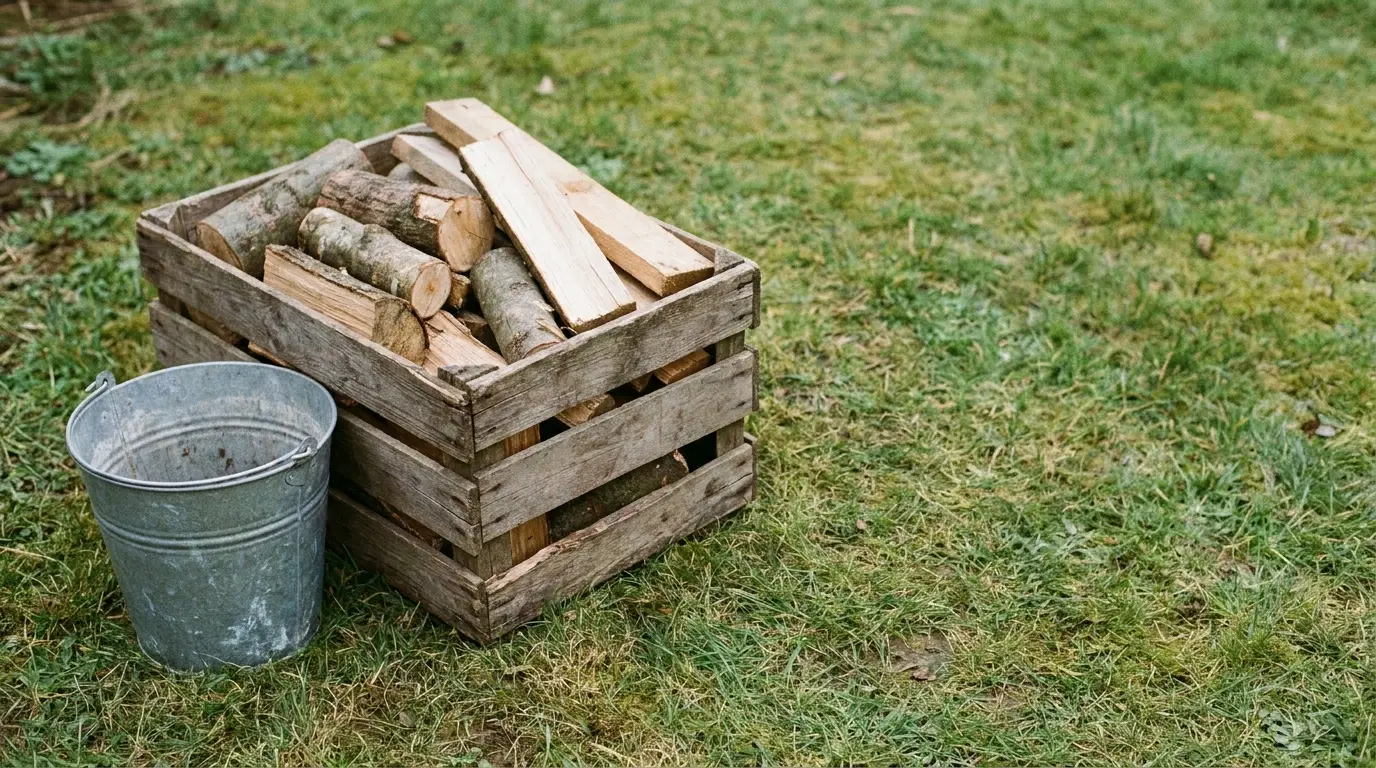
A crate of logs, planks, buckets and old pots will generate more hours of play than almost anything with a price tag. Children invent, and ambiguous objects let them.
The same goes for outdoor toys generally. Balls, chalk, a paddling pool, a bug-hunting kit. None of it costs much, all of it stores away, and it’s what actually gets reached for after school. Rotating them, putting half away for a few weeks, makes everything feel new again without spending anything.
Storage Is the Whole Game
Without somewhere to put things, everything lives on the lawn. That is the single thing that makes a garden look unkempt, more than any climbing frame does.
A storage bench doubles as seating. A slim shed down the side returns works. A weatherproof box against a wall, painted the same colour as the fence, vanishes. Choose something children can open themselves and tidying slowly becomes their job.
Dealing with Mud
Grass and children don’t survive a British winter together. By February the patch under the swing is gone.
Bark chips look natural and soften falls. Artificial grass solves it completely but runs hot in July and drains poorly. Or keep real lawn in one area and accept the bald patch elsewhere. Most people end up with some combination, and that’s fine.
Planting Does the Heavy Lifting
If you only do one thing for the look of it, plant generously around the edges. Nothing makes a children’s garden read as a garden more than things growing in it.
Grasses, hardy shrubs and anything that tolerates an occasional football will survive perfectly well. Planting in front of equipment hides a surprising amount, and height screens better than people expect. Keep the lighting soft and separate from the play zone so the space resets in the evening.
Don’t Finish It in One Weekend
Children change fast, and a garden installed complete dates just as quickly. Start small, add gradually, and leave room for whatever comes next.
Get the zones right, keep space to move, choose fewer and better pieces, and sort the storage. You’ll end up with somewhere children actually use and you still like looking at.