Patios set the tone of everything around your outdoor space; for instance, how the garden feels on a summer evening, how your furniture sits, and whether the space looks considered or just assembled. Most people spend weeks choosing outdoor furniture and five minutes choosing the stone underneath. That is worth reversing.
This is why you should choose Dijon limestone paving slabs for garden spaces for a perfect balance of timeless appearance and long-term practicality. It not only looks good on your patio but also performs well.
The UK weather is not kind to materials; most materials fail under frost, rain, and seasonal movement, but Dijon limestone does not. When correctly specified and installed, it handles the British climate with considerably more grace than many alternatives.
The combination of appearance and durability is why it continues to appear on mood boards and project specs alike.
Why Dijon Limestone Works Well for Outdoor Space
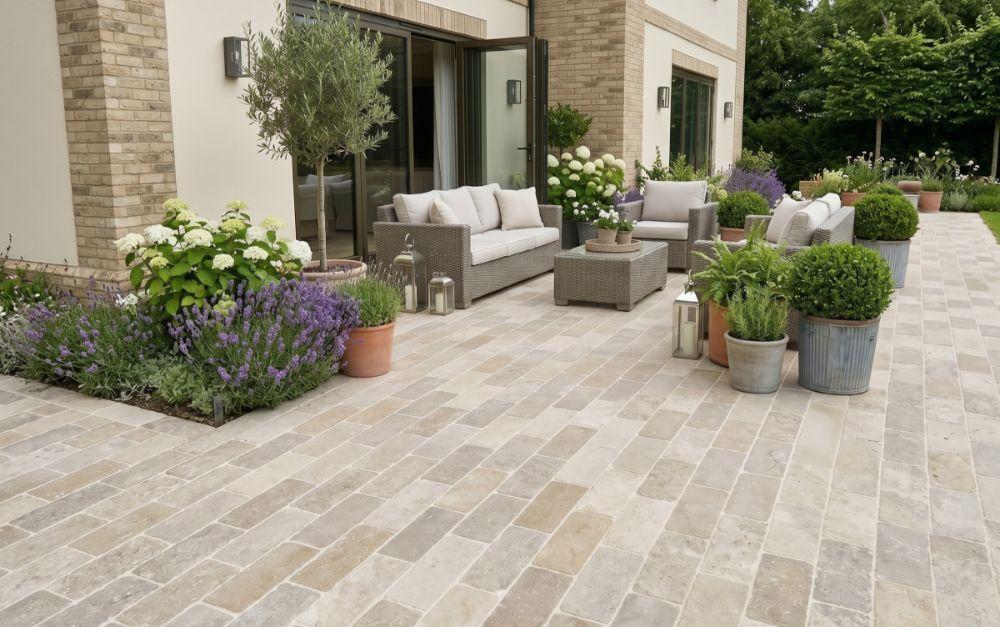
The first thing most people notice is the colour of the patio paving slabs. The warm, creamy beige paving slab with natural veining and tonal variation is what no porcelain product can replicate. The variation of this natural stone is a feature, not a flaw. It means each slab is unique and changes under different light, giving a patio or pathway genuine visual depth.
Maintenance
When talking about maintenance, limestone requires sealing with a pH-neutral penetrating sealer. The sealer must be applied on installation as well as every one to two years. A well-sealed Dijon limestone patio does not require a lot of attention.
“You shouldn’t be worried about going for a (Dijon) limestone if you are worried about maintenance. My patio has been getting on for three years. I just cleaned it with water and a little bit of dish soap – we don’t look after it too much, just clean it when we can” – Homeowner Review
Dijon Limestone Finishes: What to Expect
Structurally, limestone is a dense sedimentary stone, sourced and finished properly for outdoor use. It can handle thermal movement and resist surface spalling in frost and cold UK weather conditions. Particularly, the honed, tumbled and brushed finishes expose less surface porosity than a polished surface. For outdoor limestone paving in the UK, tumbled and brushed finishes are the most sensible choice, not just for aesthetics but for practicality.
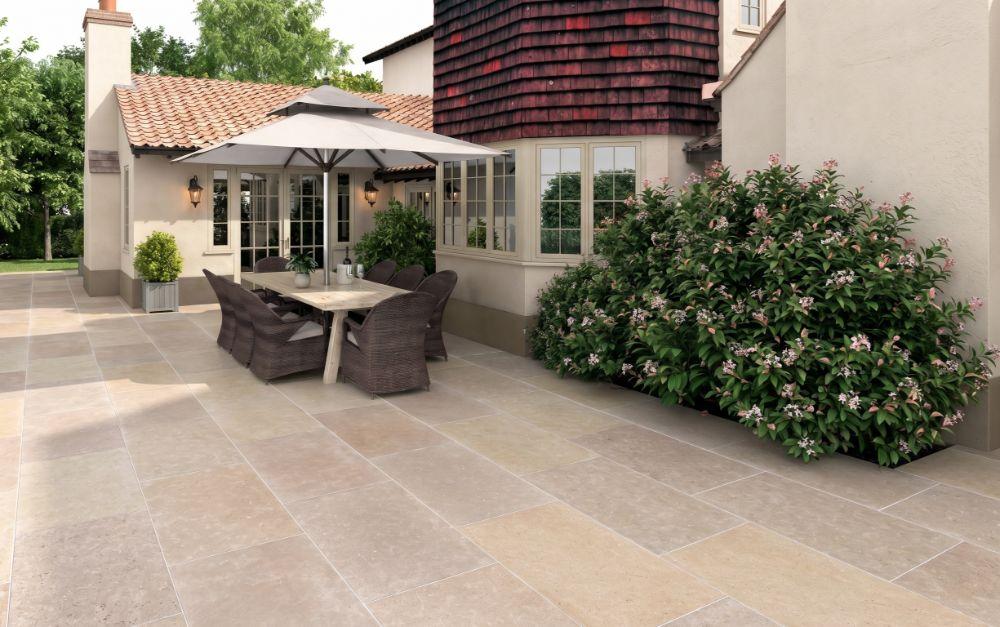
Are Dijon Limestone tiles slippery?
The surface texture of the tumbled Dijon limestone paving also provides impressive slip resistance without feeling rough and abrasive underfoot. This feature matters a lot around pool surrounds, garden steps, and areas facing rain and hosing down every now and then.
Dijon Limestone Paving Ideas for Outdoor Spaces
Dijon limestone paving slabs can be used outdoors very creatively. You can play with different sizes, layouts and combine them with other materials and colours.
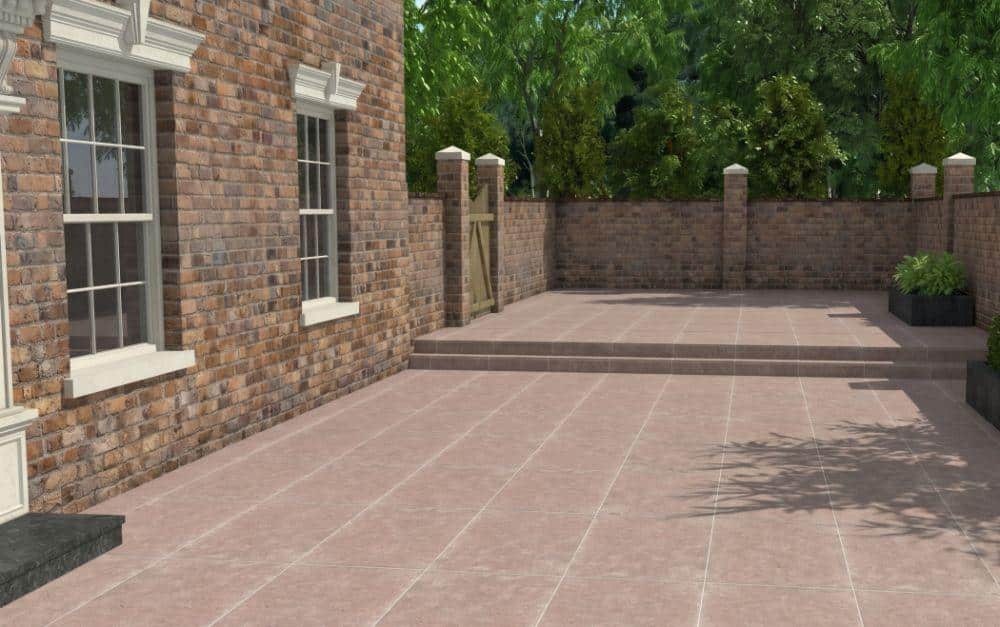
Large-Format Slabs in Patio
Large format Dijon Limestone slabs 900x600mm create a clear and expansive looking patios and outdoor entertaining areas, suiting both modern and traditional garden designs. These large paving slabs reduce grout lines, creating fewer visual interruptions, making it look more premium with less opportunity of weed ingress over time.
A standard stretcher bond or a free-length pattern works ideally in open-plan settings and outdoor dining spaces. The warm neutral tones sit comfortably with different materials such as timber furniture, dark metal frames, and planted borders without overpowering one another.
This is also where Dijon limestone earns its place in indoor-outdoor transitional spaces, laid inside an orangery or garden room and continued outside. The visual flow is natural and subtle in a way that only a few materials can achieve effortlessly.
Herringbone Paving for Pathways and Courtyards
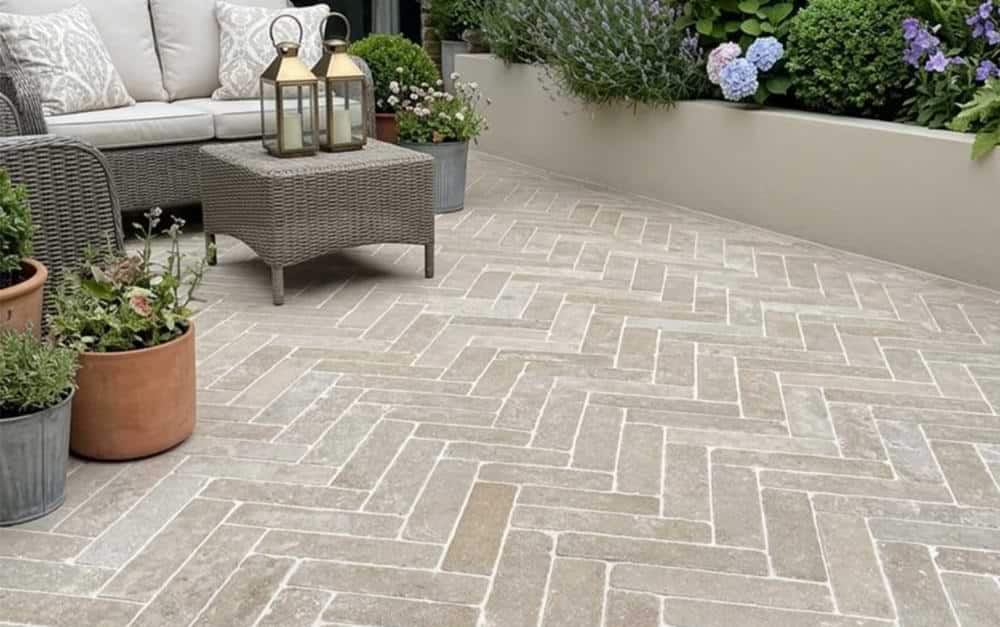
Dijon tumbled limestone in a herringbone pattern works reliably in garden pathways, courtyard areas and decorative breaks within a larger paving scheme.
The angled format shows movement and visual interest underfoot, while the tumbled edges of each piece give the floor a worn and reclaimed surface that suits period properties really well.
Herringbone Dijon limestone paving ideas work best in small unit sizes, i.e., 200×100mm or similar, especially when planning small garden decorating ideas for compact outdoor spaces. It is not the fastest format to lay in feature areas, but the results are worth the labour cost and time.
Poolside Paving and Garden Walkways
Tumbled Dijon limestone paving is ideal for wet and high-traffic areas. The softened edges of these limestone paving slabs reduce the risk of sharp corners, while the naturally textured surface provides traction underfoot to pool surrounds and garden walkways when wet.
The warm beige tones reflect heat moderately rather than absorbing it, making south-facing terrace and pool decks more bearable in the summertime.
For walkways, mixed format, also known as opus pattern or free length laying, creates a relaxed and organic feel in naturalistic planting schemes. Pair these paving slabs with planted joints or low gravel borders to make the space read as considered rather than plain and formal.
Wall Copings, Steps, and Feature Edging
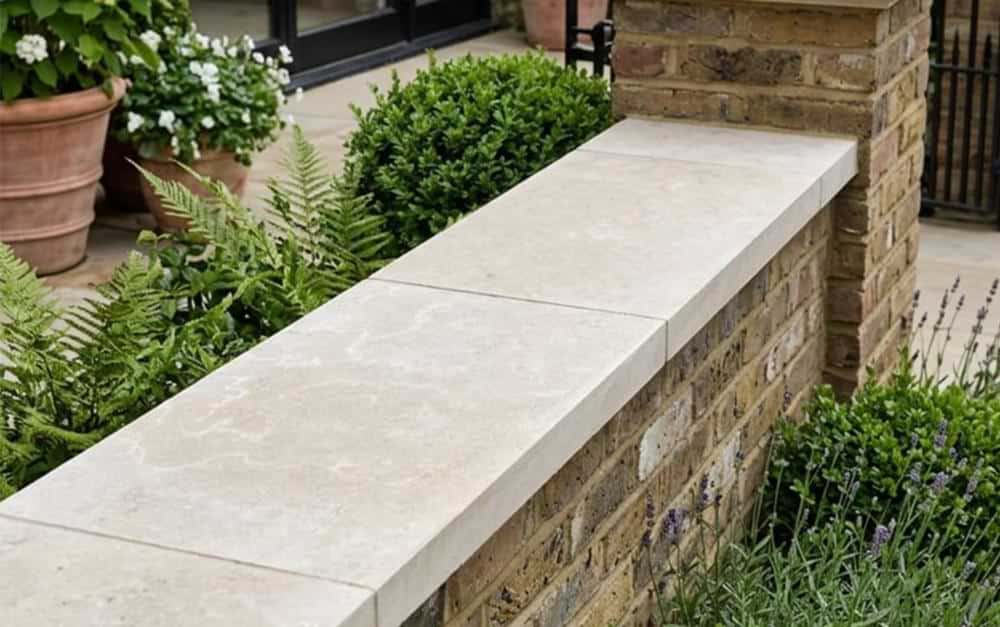
Considering vertical elements alongside horizontal surfaces makes any Dijon limestone patio paving scheme look considered and resolved.
- Bullnose step treads in matching Dijon limestone create a coherent transition between terrace levels.
- Splitface tumbled limestone walling used as a raised border or retaining wall face adds texture and reinforces the natural stone palette even more.
- Wall copings in Dijon limestone protect your garden wall from water absorption and ingress while continuing the same material.
These details move the garden scheme from just competent to genuinely well-designed.
How to Style Dijon Limestone with Different Garden Designs
Dijon limestone is not a single-style material. Its neutrality is deliberate and useful.
Dijon Limestone for Modern Gardens
In modern gardens, pair large-format limestone slabs with dark steel planters, clipped topiary, and minimal planting. The warm stone offsets the coolness of the metal and concrete without softening the overall garden design.
Dijon Limestones for Cottage or Period Gardens
Tumbled herringbone paving with planter joints, aged terracotta pots and loose naturalistic borders feels homely. The antique chiselled edges and tonal variation look like they have been there for ages.
Dijon Limestone for Luxury Outdoor Entertaining Spaces
Combine Dijon limestone patio slabs with outdoor kitchen surrounds, feature lights, bordering walls, and deep-seated outdoor furniture in neutral upholstery. The stone provides a backdrop that photographs well and ages better than most alternative paving slabs.
Buying Dijon Limestone: What to Check Before You Commit
The quality of Dijon Limestone varies between suppliers. Before you order Dijon limestone online or at any showroom, confirm the slab thickness. The slabs must be 16mm-20mm minimum for outdoor use, as thinner slabs crack, cause water pooling and uneven bedding after the first winter.
It is important to check:
- Calibration tolerance
- Finish consistency across the batch
- Whether the supplier can provide samples before full commitment
A sample looks different in your actual garden light and at different times of the day. It tells you far more than just a product photograph.
Royale Stones supplies Dijon Limestone paving in the UK with showrooms in Lincoln, Watford, Peterborough, Birmingham, and Kent. It is useful if you want to assess the stone in person before you buy.
Conclusion
Dijon limestone rewards the homeowner who specifies it carefully. Get the finish, thickness, and installation right at the outset, and it handles the British climate well, improves with age, and works across a wide range of garden styles without demanding much in return. The material does its job quietly, which is exactly what good paving should do.
FAQs
Is Dijon Limestone Good for Patios?
Yes. Dijon limestone is ideal for UK patios when specified correctly. A honed and tumbled finish with 16-20mm thickness, properly bedded MOT subbase, and accurate mortar mix delivers durability and a visually strong patio surface. The warm beige tones and natural variation go with other materials without competing with them.
Does Limestone Paving Need Sealing?
Yes. Limestone must be sealed during installation and every one to two years with a penetrating pH-neutral sealer. Avoid topical or film-forming sealers as they can alter the surface finish and appearance over time.
What Is the Difference Between Limestone and Porcelain Paving?
Limestone is a natural sedimentary stone with natural tonal variation and tactile surface. Porcelain is a manufactured, fired product with a consistent appearance and near-zero porosity. Porcelain is easier to maintain and has a more consistent appearance, while limestone offers depth and character that no man-made tile can replicate.
Is Tumbled Limestone Better for Outdoor Paving?
For most outdoor applications, yes. Tumbled limestone offers better slip resistance and a more forgiving edge profile than honed or polished finishes. It also reduces the visibility of chips and edge damage over time.
How Do You Maintain Limestone Patio Slabs in The Uk Climate?
Maintain limestone patios by brushing off debris regularly, rinsing with a pH-neutral cleaner to prevent algae and moss, and resealing every one to two years with an impregnating sealer. In winter, avoid salt-based de-icers; they damage the stone surface. Use a fine horticultural grit instead for traction in icy conditions.