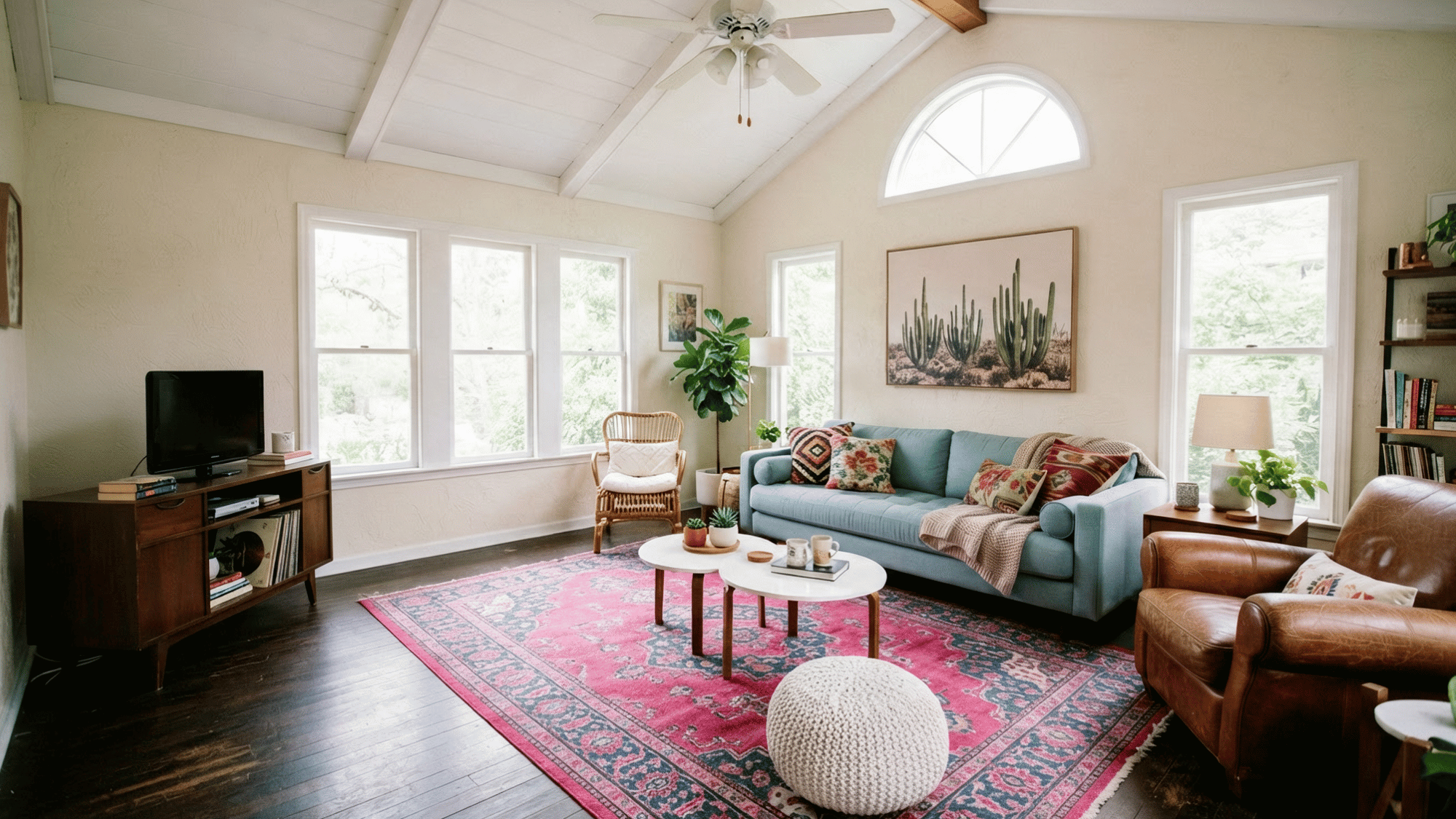
A small living room can be one of the most enjoyable spaces to decorate because every choice gets a chance to stand out.
I love seeing how a thoughtful mix of furniture, color, lighting, and personal details can completely change the mood of a compact room.
The best small living room decorating ideas are not about making your home look like a showroom either. They are about finding inspiration that suits your layout, everyday routine, and personality.
A few creative choices can give even the smallest room its own distinctive character.
Small Living Room Decorating Ideas
A small living room can feel comfortable and stylish when furniture, color, lighting, and storage work together. These ideas offer practical ways to use limited space while keeping the room visually open and personal.
1. Choose Furniture that Fits the Room

Furniture should suit the room’s proportions rather than simply fill the available space. Choose a sofa, chairs, and coffee table that leave enough room to move comfortably.
For example, a compact sofa paired with a slim side table can provide seating without overwhelming a narrow living room.
2. Arrange Furniture Around a Clear Walkway

A thoughtful layout helps a small living room feel easier to use. Place seating around a central focal point while keeping the main route through the room open.
Instead of pushing every piece against the wall, try floating a sofa slightly forward with a narrow walkway behind it.
3. Use a Compact Sofa or Loveseat

A smaller sofa or loveseat can provide comfortable seating without taking over the room. Look for designs with moderate depth and proportions that suit your space.
In a narrow living room, a loveseat paired with one lightweight accent chair can create a balanced seating area.
4. Add a Multifunctional Coffee Table

Choose a coffee table that offers more than a surface for drinks. Nesting tables, lift-top designs, and storage ottomans can provide flexibility in a compact room.
A nesting table can stay tucked away when not needed, while an ottoman can work as seating, a footrest, and a table.
5. Make Use of Vertical Storage

When floor space is limited, use the walls for storage and display. Floating shelves, tall bookcases, and wall-mounted cabinets can hold books, artwork, and everyday items without taking up much floor area.
Keep frequently used pieces within reach, and leave some open space so the room doesn’t feel crowded.
6. Choose Furniture with Exposed Legs

Sofas and chairs with visible legs can make a small room feel lighter because more of the floor remains visible. This creates a less bulky appearance than fully enclosed furniture.
Pair a raised sofa with a slim coffee table to maintain an open visual flow beneath the seating area.
7. Use Mirrors to Reflect Light

Mirrors can help a compact living room feel brighter and more open by reflecting natural or artificial light. Place one opposite a window, near a light source, or where it reflects an attractive part of the room.
A large, simple mirror above a sofa can also act as a decorative focal point.
8. Keep the Color Palette Light and Cohesive

A coordinated palette helps a small living room feel visually connected. Soft neutrals, warm whites, and gentle earth tones can create an airy foundation without making the room feel plain.
Use similar tones across walls, larger furniture, and curtains to reduce visual breaks and maintain a calm appearance.
9. Add Color Through Small Accents

You do not need bold walls or large furniture to add personality. Introduce color through cushions, artwork, rugs, curtains, or a small accent chair.
For example, a neutral sofa can feel more inviting with a few muted blue cushions and coordinating artwork.
10. Layer Lighting at Different Heights

A combination of ceiling, floor, table, and wall lighting can make a small living room feel warmer and more dimensional. Use a floor lamp beside the sofa, a table lamp on a console, or wall sconces where space is limited.
Multiple light sources also let you adjust the mood for different activities.
11. Choose a Rug that Defines the Seating Area

A rug can visually organize a small living room and make the seating area feel intentional. Choose a size that allows at least the front legs of the main seating to sit on it.
A rug that is too small can make the arrangement feel disconnected, while the right size creates a cohesive foundation.
12. Hang Curtains Higher and Wider

Curtain placement can influence how tall and spacious a small living room feels. Mount the rod slightly above the window frame and extend it beyond the sides when possible.
Choose curtains that reach the floor and coordinate with the room’s palette for a more continuous, polished appearance.
13. Use a Slim or Wall-Mounted TV Setup

A low-profile media unit or wall-mounted TV can reduce visual bulk in a compact living room. Choose furniture with clean lines and enough storage for cables, remotes, and electronics.
Keeping the area organized helps the room feel less cluttered and draws attention to the seating and decorative details.
14. Add Storage Baskets and Hidden Organization

Everyday items can quickly make a small living room feel crowded, so practical storage matters. Use baskets beneath a console, a storage ottoman for blankets, or closed cabinets for less decorative items.
Choose storage that matches the room’s furniture so it blends into the overall design.
15. Use a Round or Oval Coffee Table

Curved coffee tables can make movement easier in rooms with tight pathways or several furniture pieces.
Without sharp corners, they can create a smoother flow around the seating area. A round table paired with a compact sofa and one accent chair can work particularly well in a small square room.
16. Create a Focal Point

A clear focal point gives a small living room structure and prevents the decor from feeling scattered. Use a fireplace, artwork, accent wall, or statement light as the main visual anchor.
Arrange the seating to face or complement it, then keep surrounding accessories relatively simple.
17. Decorate with Fewer, Larger Accents

Too many small accessories can make a compact room feel busy. Instead, choose a few pieces with enough visual presence to make an impact, such as one large artwork, a substantial vase, or a statement lamp.
Leave some surfaces open so the room feels considered, not overcrowded.
18. Bring in Plants without Crowding the Floor

Plants add color and softness, but they don’t need to take up valuable floor space. Try a hanging planter, a narrow plant stand, or a small plant on a shelf.
Choose containers that complement the room’s palette and keep the arrangement simple around seating and walkways.
19. Use a Sectional Thoughtfully

A sectional can work in a small living room when its size and orientation suit the layout. Look for apartment-sized designs and measure carefully before buying.
Place the longer side along a wall or use the chaise to define the seating area, while keeping doors and main walkways clear.
Layered textures and soft lighting can also shape the feel of a small living room, much like the ideas featured in these cozy aesthetic room ideas.
20. Make a Small Living Room Feel Cozy with Texture

Texture adds warmth and comfort without requiring more furniture. Layer a soft rug, cushions, a throw, and curtains in complementary materials.
For example, linen curtains, a woven rug, and a textured cushion can make a neutral living room feel inviting while keeping the palette restrained.
21. Create a Small Work or Reading Corner

A small living room can include a work or reading area if you plan the space carefully. Place a compact desk, slim chair, or comfortable reading seat against an unused wall or in a corner.
Choose furniture that can be tucked away or used for another purpose when the area is not needed.
22. Use One Repeated Shape for Visual Balance

Repeating a shape can make a small living room feel thoughtfully coordinated. Echo the curve of a round table through a rounded lamp or mirror, or repeat straight lines through shelving and furniture edges.
This subtle connection creates balance without requiring identical pieces or adding more decorative objects.
23. Use a Statement Ceiling Treatment

The ceiling is often overlooked in a small living room, but it can add character without using floor or wall space. Consider a subtle painted ceiling, simple molding, or a decorative light fixture.
Keep the treatment restrained so it adds interest while maintaining the room’s open, balanced look.
Renters can get a similar effect without repainting by trying removable wallpaper and wall murals on a single wall or the ceiling itself.
24. Use Hidden Space Behind Doors

Unused areas behind doors can provide discreet storage in a small living room. Depending on the layout, use an over-door organizer, slim hooks, or a narrow hanging rack for lightweight items.
Keep the solution tidy and visually simple so it supports organization without adding noticeable bulk to the room.
25. Create a Flexible Furniture Arrangement

Choose furniture you can move easily when the room needs to serve different purposes.
Lightweight chairs, nesting stools, or movable ottomans can support guests, reading, or relaxing without requiring permanent extra seating. A flexible arrangement helps the living room adapt while keeping the everyday layout comfortable.
26. Add Personal Details with Meaning

Personal touches can make a small living room feel more welcoming without filling every surface. Display a favorite photograph, handmade item, travel memory, or meaningful book in a deliberate location.
Choose a few pieces that reflect your personality and coordinate with the room, rather than adding decorations just to fill space.
27. Use a Cohesive Frame and Hardware Finish

Matching small details can make a compact living room look more finished. Repeat one finish across picture frames, lamp bases, cabinet handles, or curtain hardware.
Black metal, warm brass, or natural wood can each work well when used selectively. This creates consistency without requiring every item to match exactly.
Common Small Living Room Decorating Mistakes to Avoid
- Oversized furniture: Choose pieces that fit the room comfortably.
- Blocked windows or walkways: Keep natural light and movement unobstructed.
- Unrelated colors and patterns: Use a cohesive palette with intentional accents.
- Harsh overhead lighting: Layer light sources for warmth and depth.
- Too much decor: Leave open space on surfaces.
- Poor proportions and storage: Match sizes and organize everyday items.
Conclusion
Decorating a small living room is about making thoughtful choices that balance comfort, function, and style. The right furniture scale, clear walkways, and practical storage help use limited space without making it feel crowded.
Light, cohesive colors, layered lighting, mirrors, and well-placed curtains can create a more open appearance, while rugs, textures, plants, and a few meaningful accents add warmth and personality.
I’ve found that even small changes, such as rearranging furniture or clearing a busy surface, can make a room feel more inviting. Start with what your space needs most, and let your style develop naturally.
Frequently Asked Questions
How Can I Decorate a Small Living Room without Making It Look Too Modern?
Mix timeless furniture, warm colors, traditional textures, and personal accessories while keeping the layout simple and the overall palette coordinated.
What Are the Best Small Living Room Decorating Ideas for Renters?
Use removable wallpaper, freestanding shelves, plug-in sconces, lightweight furniture, and temporary hooks to personalize the room without permanent changes.
How Do I Decorate a Small Living Room with No Windows?
Use layered artificial lighting, light-reflective finishes, mirrors, and warm colors to create brightness. Choose furniture and decor that keep the room feeling open.
How Do I Decorate a Small Living Room with A Dining Area?
Use a compact dining table, define each zone with lighting or a rug, and choose furniture that supports both functions without crowding the room.
How Do I Decorate a Small Living Room with High Ceilings?
Use tall artwork, floor-to-ceiling curtains, and vertically arranged decor to balance the height. Keep furniture proportional so the room feels grounded and comfortable.