Why a Beautiful Bathroom Needs More Than a Cosmetic Refresh
A bathroom renovation often begins with inspiration. Homeowners find a beautifully designed shower, an elegant vanity, or a carefully coordinated colour palette and start imagining how the same ideas might transform their own space. But what makes a bathroom beautiful in photographs does not necessarily make it practical to live with. Behind the finished surfaces are water supply connections, drainage systems, and construction details that influence how the room performs long after the renovation is complete.
Before finalizing a new layout, it is worth discussing the existing plumbing with a qualified plumber. An early assessment can help determine whether the proposed fixtures will work with the available connections and whether changes are required before installation begins. Understanding what lies beneath the design is one of the most useful steps toward creating a bathroom that will remain comfortable and functional for years.
Why Bathroom Renovation Planning Should Start Behind the Walls
A cosmetic renovation changes how a bathroom looks. A functional renovation also considers how the room works. This distinction matters because modern bathroom features are not always compatible with an older plumbing configuration.
A new freestanding bathtub may require a different drain position. A wall-mounted faucet needs carefully planned connections inside the wall, while a larger shower system may have different water flow requirements from the previous fixture. These considerations are easier to address during the planning stage than after expensive finishes have been installed.
Understand Your Existing Plumbing Layout
Every bathroom has physical limitations that influence renovation possibilities. Water supply lines bring water to fixtures, while the drain-waste-vent system allows wastewater to leave the building and helps maintain proper drainage. Changing the layout may require modifications to these concealed systems.
For example, moving a toilet across the room can be more complicated than changing its appearance. The location of the waste connection and the available floor structure may limit the practical options. Keeping major fixtures in their original positions can sometimes reduce construction work, although the existing arrangement still needs to be evaluated.
Design Around Daily Habits
A bathroom should support the way people actually use it. Think about how the room functions during the busiest part of the morning. A vanity that looks attractive in a showroom may provide insufficient counter space. A shower control placed too far inside the enclosure may require stepping beneath cold water before adjusting the temperature.
Good bathroom design considers these ordinary experiences. Rather than selecting every fixture based on appearance, consider its position and usability within the finished space.
Plumbing layout and waterproofing should be planned before installing the final bathroom finishes.
What Should Be Checked Before Installing New Bathroom Fixtures?
The most important renovation checks take place before walls and floors are closed. At this stage, concealed connections remain accessible, making it easier to identify installation problems. Once waterproofing and decorative surfaces are completed, making adjustments can involve disturbing work that has already been finished.
Water Pressure and Fixture Compatibility
Some homeowners choose elaborate shower systems without considering the existing supply arrangement. A large rain shower or multiple shower outlets may have different flow requirements from a conventional showerhead. The installer should confirm that the selected fixtures are compatible with the water supply and any applicable building limitations.
If water pressure is already inconsistent, determine the cause before investing in an upgraded shower system. Installing an expensive fixture will not correct an underlying supply problem.
Drain Position and Floor Slope
Water must travel toward the drain without collecting across the finished shower floor. The required slope is established during construction, beneath the visible surface. This is particularly important for walk-in showers, where the floor may appear almost level even though the drainage system requires carefully controlled gradients.
Moving the drain or changing its style may affect the floor construction. The appropriate solution depends on the existing structure and the selected shower design.
Access to Concealed Plumbing Components
A clean, minimalist bathroom often aims to hide mechanical elements. However, certain plumbing components require inspection or servicing. Where access must be maintained, it should be incorporated into the design rather than treated as an inconvenience.
A discreet access panel may be preferable to a completely concealed component that requires opening finished surfaces during future maintenance.
Waterproofing Is Part of the Bathroom Design
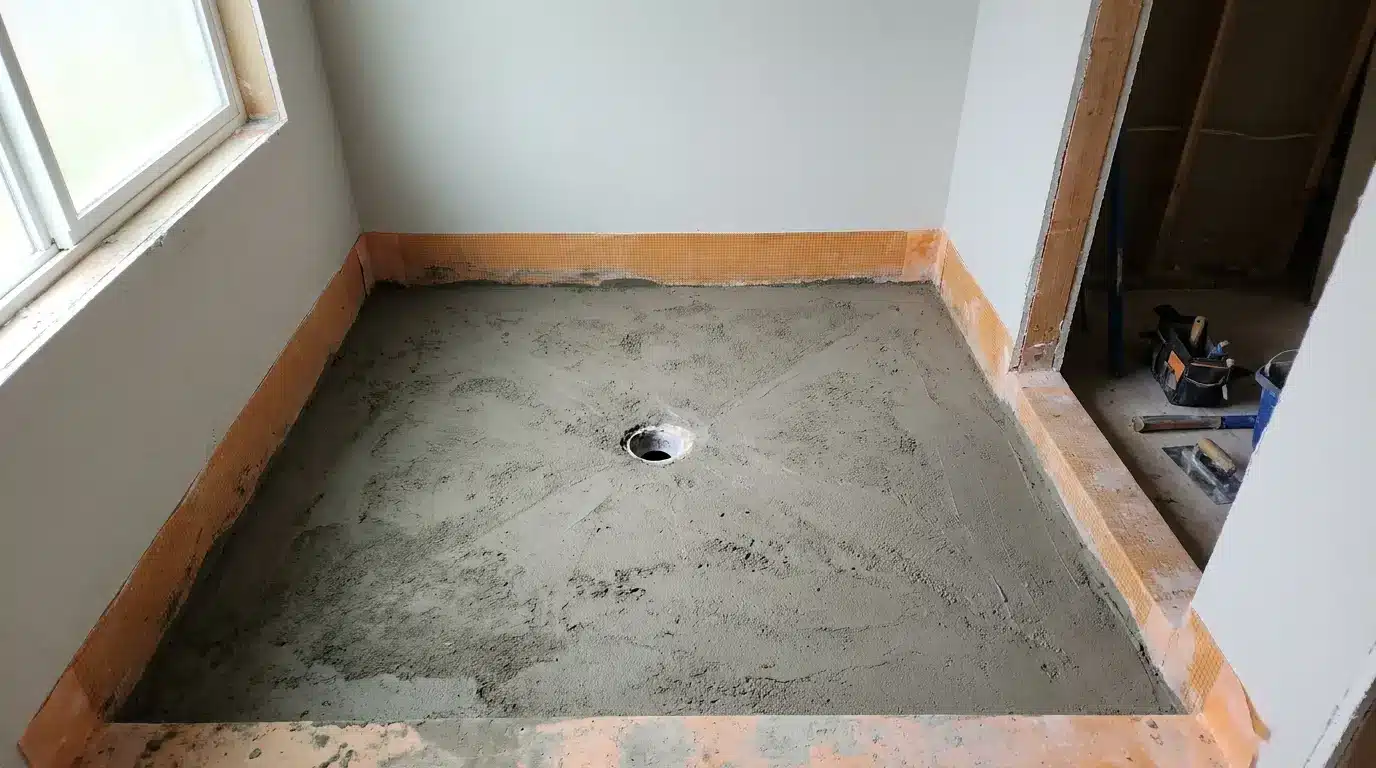
Waterproofing is one of the most important aspects of a bathroom renovation, even though it may be invisible when the project is finished. Tile and grout are decorative surfaces, not substitutes for a properly constructed waterproofing system. The purpose of waterproofing is to prevent water from reaching materials that are not intended to remain wet.
Why Attractive Tile Is Not Enough
Beautiful tile does not automatically guarantee a watertight shower. Water can travel through joints or installation defects, eventually affecting concealed building materials. A shower installation therefore depends on the complete waterproofing assembly, including appropriate treatment of corners and pipe penetrations.
Different waterproofing products have specific installation requirements. Combining incompatible materials can compromise the system. The contractor should establish the waterproofing method before installation begins.
Pay Attention to the Shower Enclosure
The shower enclosure affects how water behaves during everyday use. A poorly positioned glass panel may allow water to escape onto the bathroom floor, even when the internal shower surfaces are properly waterproofed. Door clearance also matters.
In a compact bathroom, a large swinging glass door can interfere with nearby fixtures or reduce comfortable movement. The enclosure should be selected together with the room layout rather than as a final decorative accessory.
Ventilation Protects Your Renovation
Humidity is unavoidable in a frequently used bathroom, but persistent moisture can become a problem. An effective ventilation system helps remove humid air and reduce condensation. Before completing a renovation, confirm that the existing exhaust system is suitable for the room.
Improving ventilation may be particularly important when converting an older bathroom into a more enclosed shower space. The objective is to make the room comfortable after use, not simply attractive while it is dry.
How Can You Make a Bathroom Easier to Maintain?
A bathroom should remain pleasant to use long after the renovation photographs are taken. Some design choices create unnecessary cleaning demands or make routine repairs more complicated. Thinking about maintenance while selecting finishes can help homeowners avoid these frustrations.
Choose Materials for Their Actual Environment
Not every attractive surface is equally suitable for a bathroom. Some natural stone finishes require particular cleaning products or periodic sealing. Certain decorative materials may be inappropriate for direct water exposure. Before making a selection, review the manufacturer’s recommendations.
A finish that requires constant attention may not suit a household looking for a low-maintenance bathroom. The most appropriate material is not necessarily the most expensive one. It is the material whose appearance and maintenance requirements match the intended use.
Avoid Difficult-to-Reach Areas
Narrow gaps around fixtures can become frustrating cleaning spaces.
For example, placing a freestanding bathtub too close to a wall may create an inaccessible strip behind it. A wall-mounted vanity can simplify floor cleaning, but its installation must account for suitable structural support. These decisions illustrate why bathroom planning should consider maintenance alongside appearance.
Keep the Plumbing Design Practical
Highly customized bathroom features can look impressive but introduce additional installation complexity. A shower system with several outlets may require more elaborate supply connections than a simple configuration.
This does not mean homeowners should avoid distinctive fixtures. It means that their installation requirements and future servicing should be understood before the design is approved.
The Most Common Bathroom Renovation Planning Mistakes
Many renovation problems begin with decisions that appear harmless during the design stage. Recognizing these issues can make planning more effective.
Ordering Fixtures Before Confirming Measurements
Showroom displays rarely reflect the limitations of a particular bathroom. A bathtub may fit within the overall room dimensions but leave insufficient access for maintenance or comfortable movement.
Before ordering fixtures, confirm dimensions against the finished layout. Measurements should account for wall finishes and installation clearances rather than relying entirely on the existing unfinished space.
Changing the Layout Too Late
An unexpected design change can affect work that has already been completed. Moving a shower valve after plumbing installation, for example, may require opening a wall again. Establishing the location of major fixtures before construction helps the different trades work from the same plan.
Treating Plumbing and Waterproofing as Separate Decisions
These systems must work together. Drain connections and plumbing penetrations affect the waterproofing details, while the finished wall assembly can influence fixture installation depths. Poor coordination can create difficulties even when each individual product is suitable.
This is why sequencing matters. The plumbing arrangement should be confirmed before waterproofing is completed, and the finished fixtures should be compatible with the constructed assembly.
When Should You Involve a Professional Plumber?
Professional plumbing involvement is particularly important when a renovation changes fixture locations or modifies concealed connections. An experienced contractor can assess whether the proposed work is practical and identify any applicable permit or inspection requirements. Dr. Pipe Drain and Plumbing is one example of a Toronto plumbing company homeowners may consider when planning bathroom plumbing modifications.
Before beginning substantial work, ask the contractor to explain the existing conditions and identify which parts of the design may require adjustment. A useful discussion should clarify whether the selected fixtures are compatible with the installation and what work needs to happen before the finishes are applied.
Coordinate the Different Trades
Bathroom renovation rarely involves only one type of work. Plumbing installation must be coordinated with framing and waterproofing, followed by the finishing stages.
If these activities happen in the wrong order, completed work may need to be disturbed. A shared installation plan reduces uncertainty and helps everyone understand the required sequence.
Allow Time for Unexpected Findings
Older bathrooms sometimes reveal concealed conditions once the existing finishes are removed. The renovation schedule should allow for reasonable adjustments if damaged materials or unsuitable connections are discovered.
It is better to address these findings while the work area is open than to conceal them beneath new finishes.
Final Thoughts
A successful bathroom renovation should look beautiful and perform reliably. Attractive materials contribute to the finished appearance, but the underlying construction determines how well the space supports everyday routines.
Considering plumbing layout, waterproofing, and long-term maintenance before installation begins allows homeowners to make more informed design decisions. The result is not simply a bathroom that looks impressive on the day it is completed, but one that remains practical and enjoyable to use.