Does picking a new cutting board ever feel harder than it should? I get it; wanting the safest cutting board material for your kitchen makes sense when it’s part of nearly every meal you cook.
Choosing the wrong one can lead to dull knives or unwanted bacteria buildup. I’ll help you understand which materials actually keep your food safe and make meal prep easier.
Each material has its pros and cons, depending on how often you cook and how much care you’re willing to give it.
By the end, you’ll know exactly which board best fits your routine and kitchen style. Let’s find the one that makes cooking smoother and safer every day.
Why Cutting Board Material Matters
The cutting board you use affects more than just convenience; it impacts food safety and knife performance.
Some materials harbor bacteria, while others naturally resist them, affecting how clean and safe your prep area stays. I’ve noticed that harder boards can dull knives faster, while softer ones protect edges but may scar easily.
The ideal cutting board strikes a balance: non-toxic, easy to sanitize, and gentle on your blades. It should also stand up to regular use without cracking or warping.
The best material depends on how often you cook, how carefully you maintain it, and the kind of food prep you do most.
What to Look for When Evaluating Cutting Board Safety
I know choosing a safe cutting board involves more than just picking something that looks good. I’ve found that checking a few key factors helps you make the smartest choice:
- Material and porosity: Porous materials trap moisture and bacteria in tiny holes, making them harder to clean and less sanitary over time.
- Chemical and finish safety: Watch out for harmful glues, adhesives, coatings, and plastics that can leach chemicals or release gases into your food.
- Knife compatibility and durability: Surfaces that are too hard will dull your knives quickly, while overly soft boards get gouged and damaged easily.
- Maintenance and cleaning: How well you care for your board directly affects its safety, so consider how much upkeep you’re willing to do.
These factors work together to determine how safe your cutting board really is. I always weigh all of them before making a purchase decision.
Comparing Different Safe Cutting Board Materials
After trying different cutting board materials, I’ve learned that each one affects safety, hygiene, and knife performance in its own way.
Here’s a clear look at how they compare so you can pick what works best for your kitchen:
1. Wood (Hardwood, End-Grain)
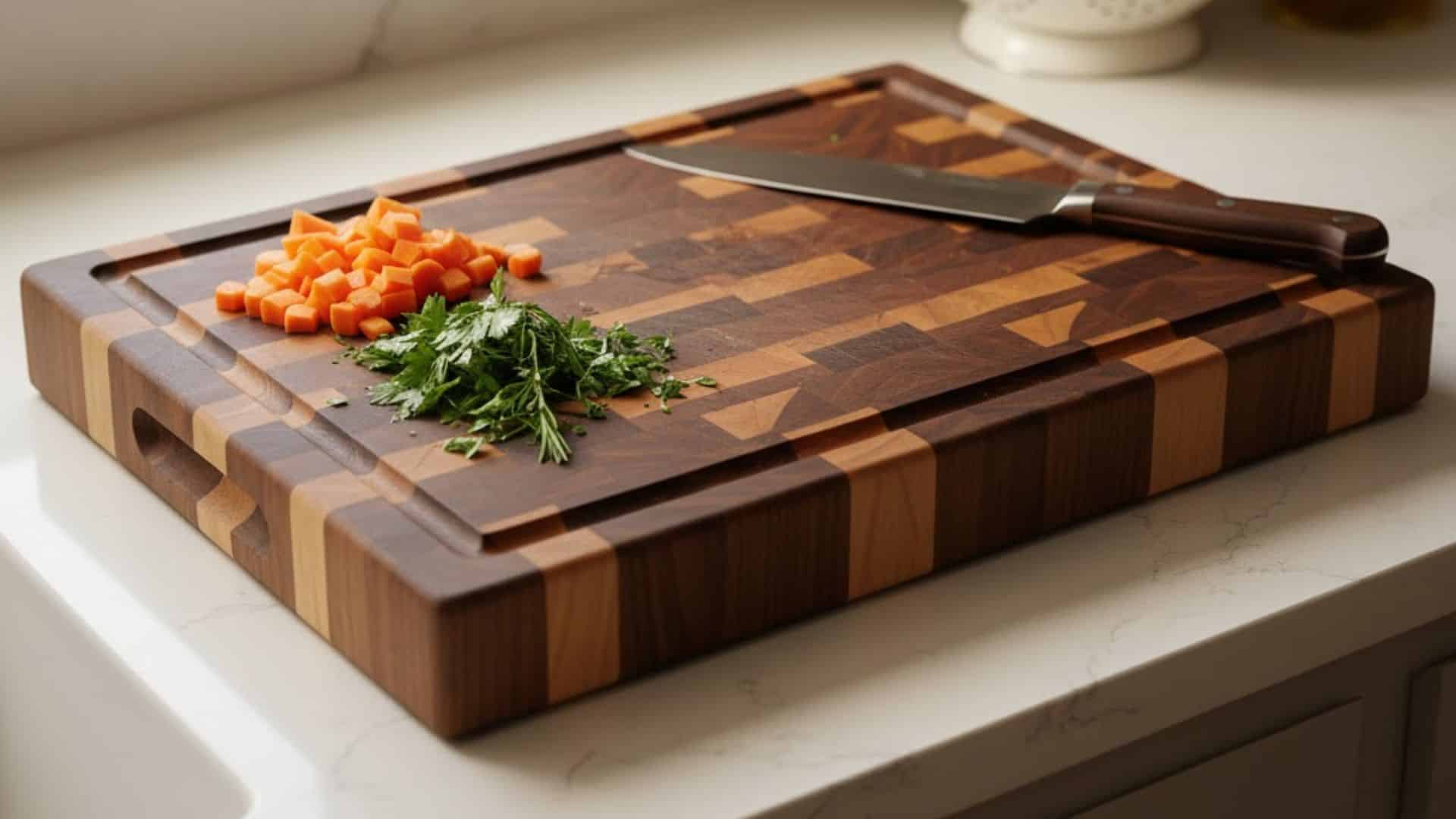
Wood boards naturally resist bacteria and stay gentle on knife edges, helping them last longer. They’re porous, though, so they need regular oiling to stay in good shape.
Avoid dishwashers since moisture can cause warping or cracking. Wood works great for slicing vegetables, bread, and everyday prep. With proper care, a solid wood board can last for years and stay safe to use.
2. Plastic (HDPE, Polypropylene)
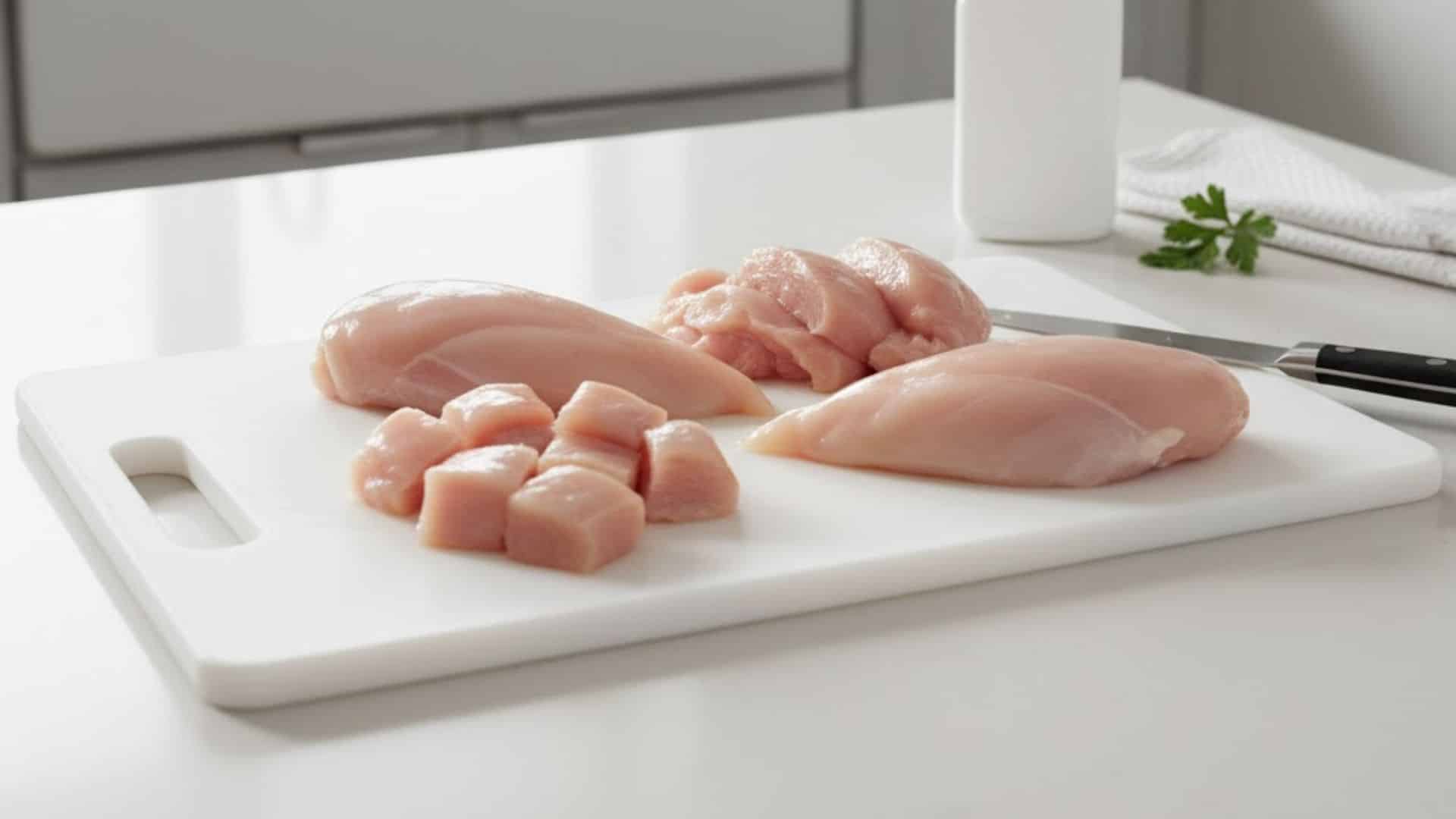
Plastic boards are non-porous, easy to sanitize, and dishwasher-safe. They’re affordable and ideal for cutting raw meats since you can clean them thoroughly.
The drawback is that they scratch easily, creating small grooves that can trap bacteria. Some cheaper plastics may contain chemicals that leach over time. For everyday prep, though, they’re reliable and simple to maintain.
3. Bamboo
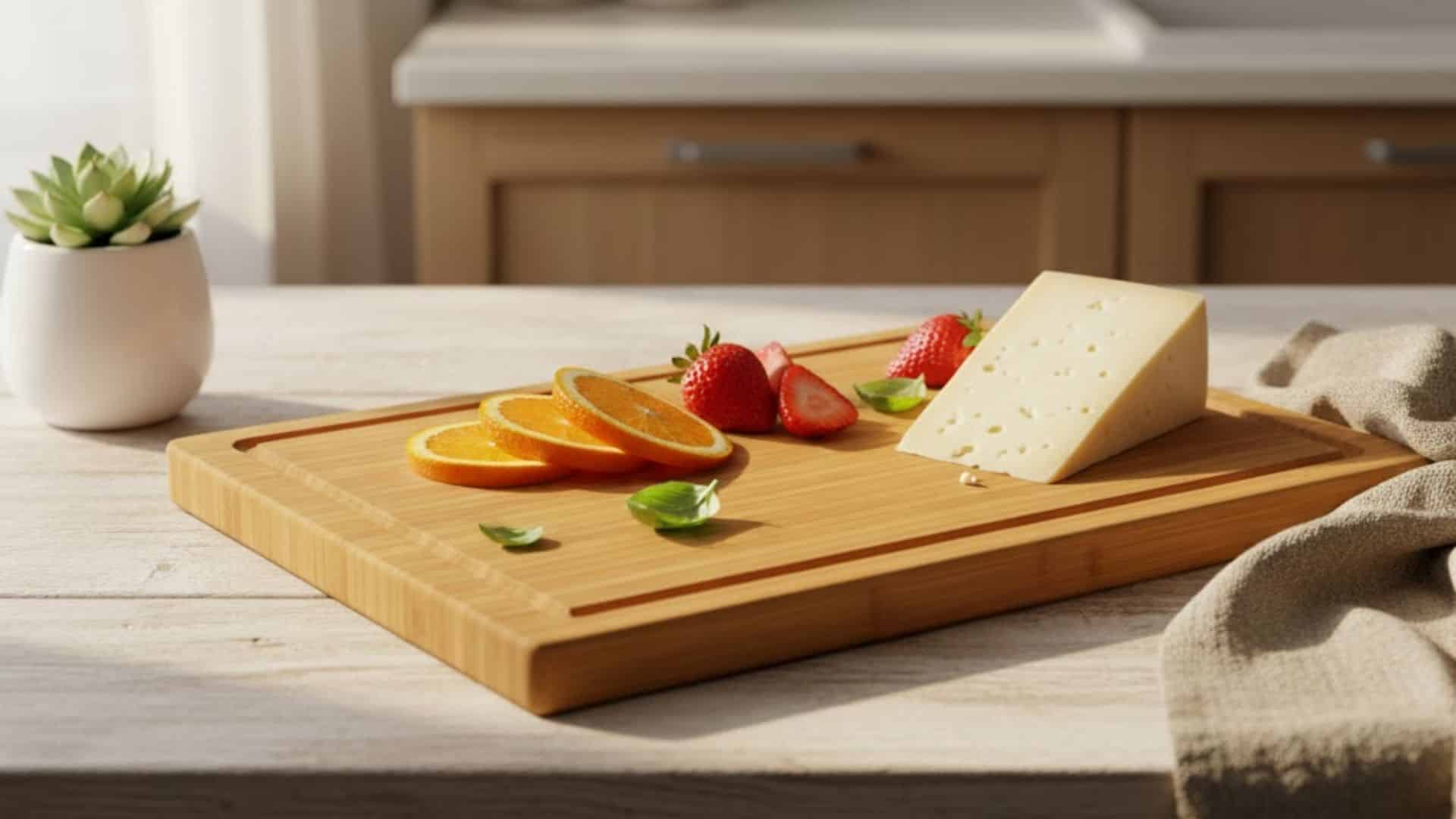
Bamboo boards are eco-friendly and durable, made from a fast-growing, renewable material. They’re harder than most woods, which means they can dull knives a bit faster.
Some bamboo boards use adhesives or treatments that may not be food-safe, so it’s worth checking labels. Bamboo is great for light cutting and serving cheese or fruit, but keep knives sharp with frequent honing.
4. Metal (Stainless Steel, Titanium) / Glass / Stone
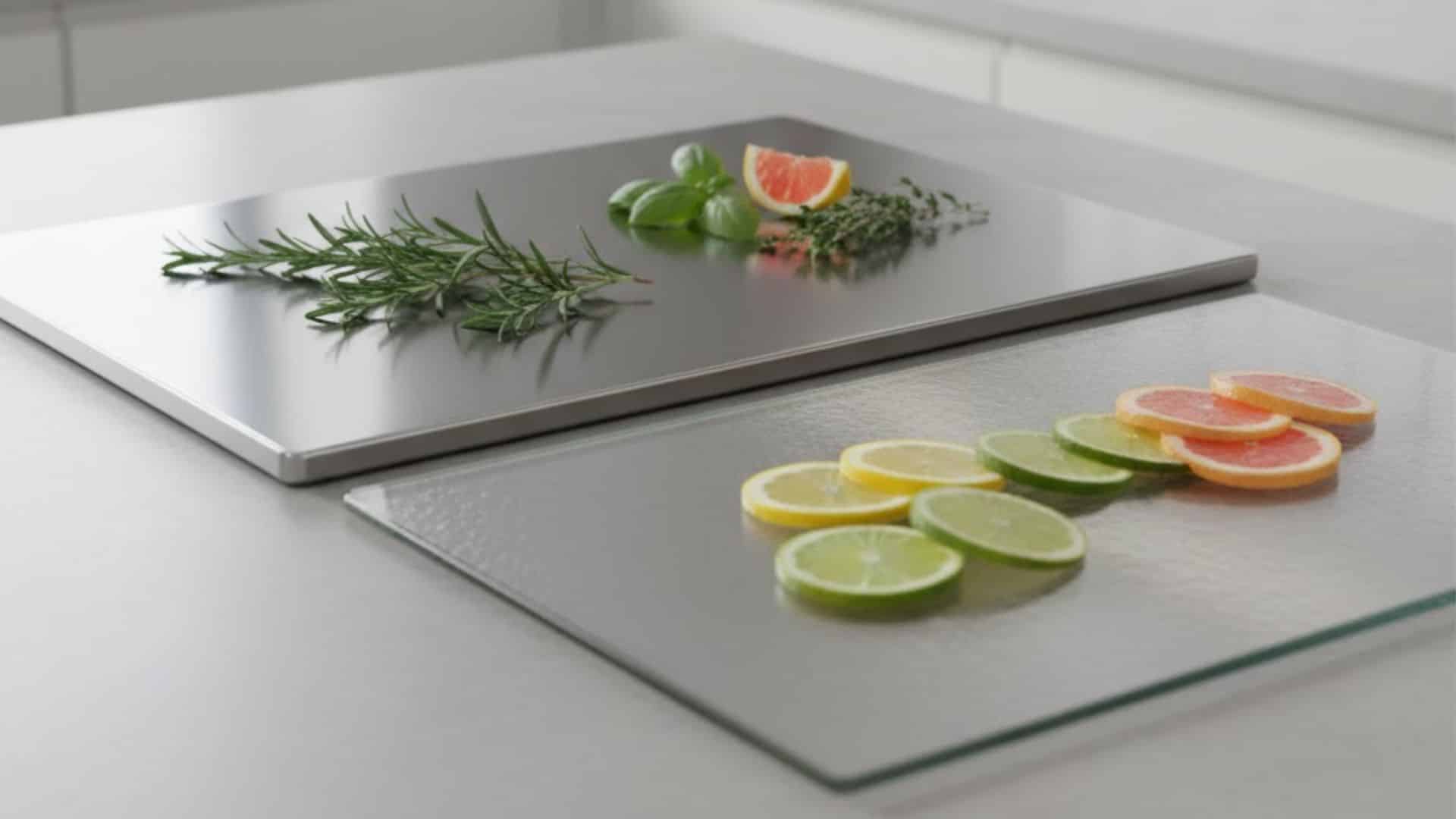
These materials are non-porous and easy to clean, but they’re too hard on knives. They can cause dulling or chipping after a few uses.
Glass boards also risk shattering, which makes them unsafe for busy kitchens. Metal and stone boards are best reserved for rolling dough or serving, not for daily chopping.
5. Composites (Wood Fiber, Paper Composite)
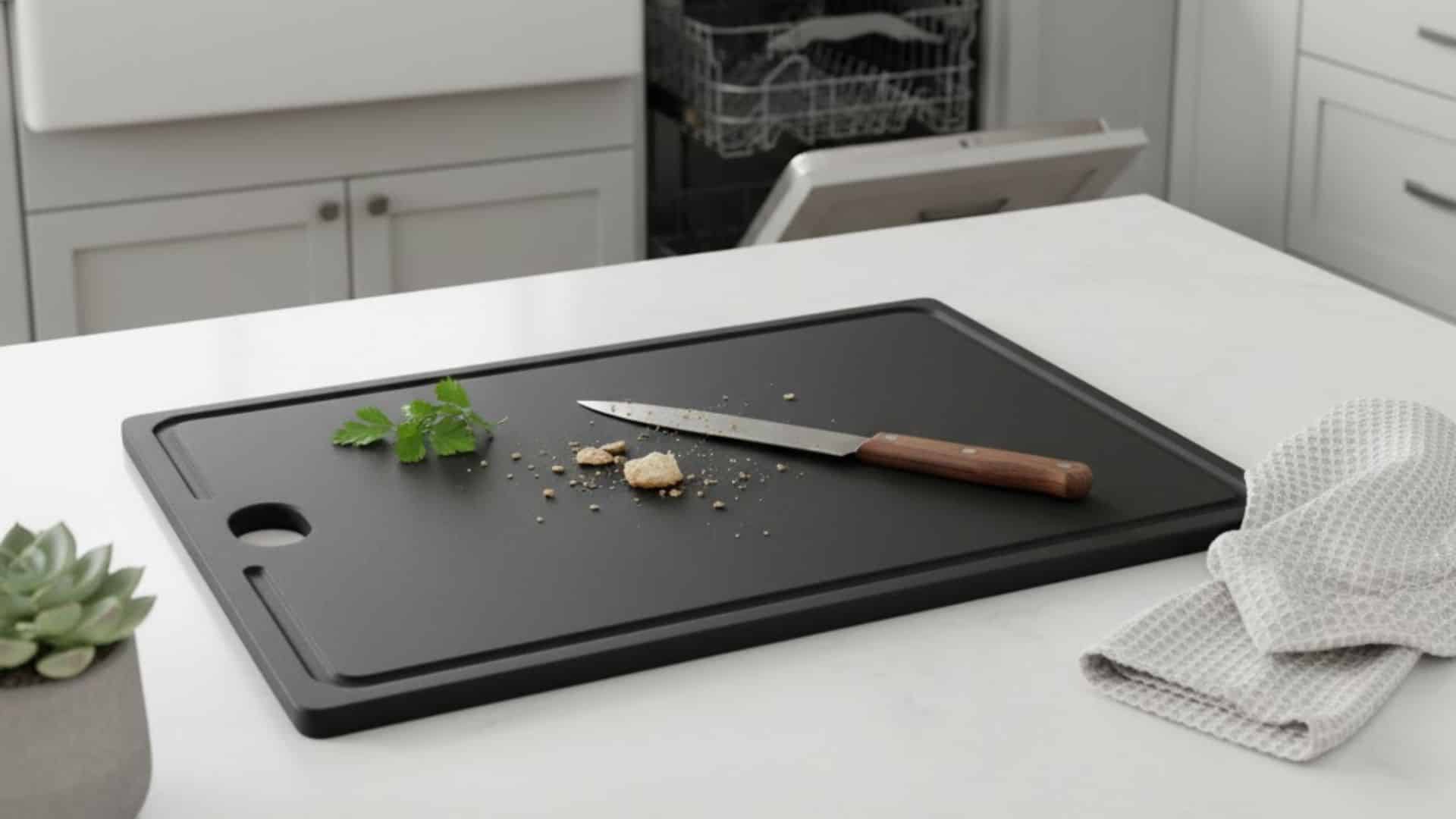
Composite boards combine materials to balance hygiene and durability. Wood-fiber and paper composites resist scratches and are often dishwasher safe.
They’re less porous than wood but still kind to knives. Recycled-material boards offer an eco-conscious choice without sacrificing functionality. These options are modern, sturdy, and a smart middle ground between wood and plastic.
Which Material is the Safest: Final Verdict
High-quality hardwood cutting boards remain the safest option when properly maintained with regular oiling and cleaning.
Metal boards are close in terms of hygiene since they’re completely non-porous and easy to sanitize, but they dull knives too quickly for everyday cooking.
It’s important to remember that “safest” doesn’t mean “maintenance-free.” Every board, no matter the material, needs consistent care to stay clean and functional.
The ideal choice depends on how you cook, how much effort you’re willing to put into upkeep, and how much counter space you have.
Pick the material that matches your habits and commit to maintaining it well for long-term safety and performance.
How to Choose the Best Cutting Board for Your Needs
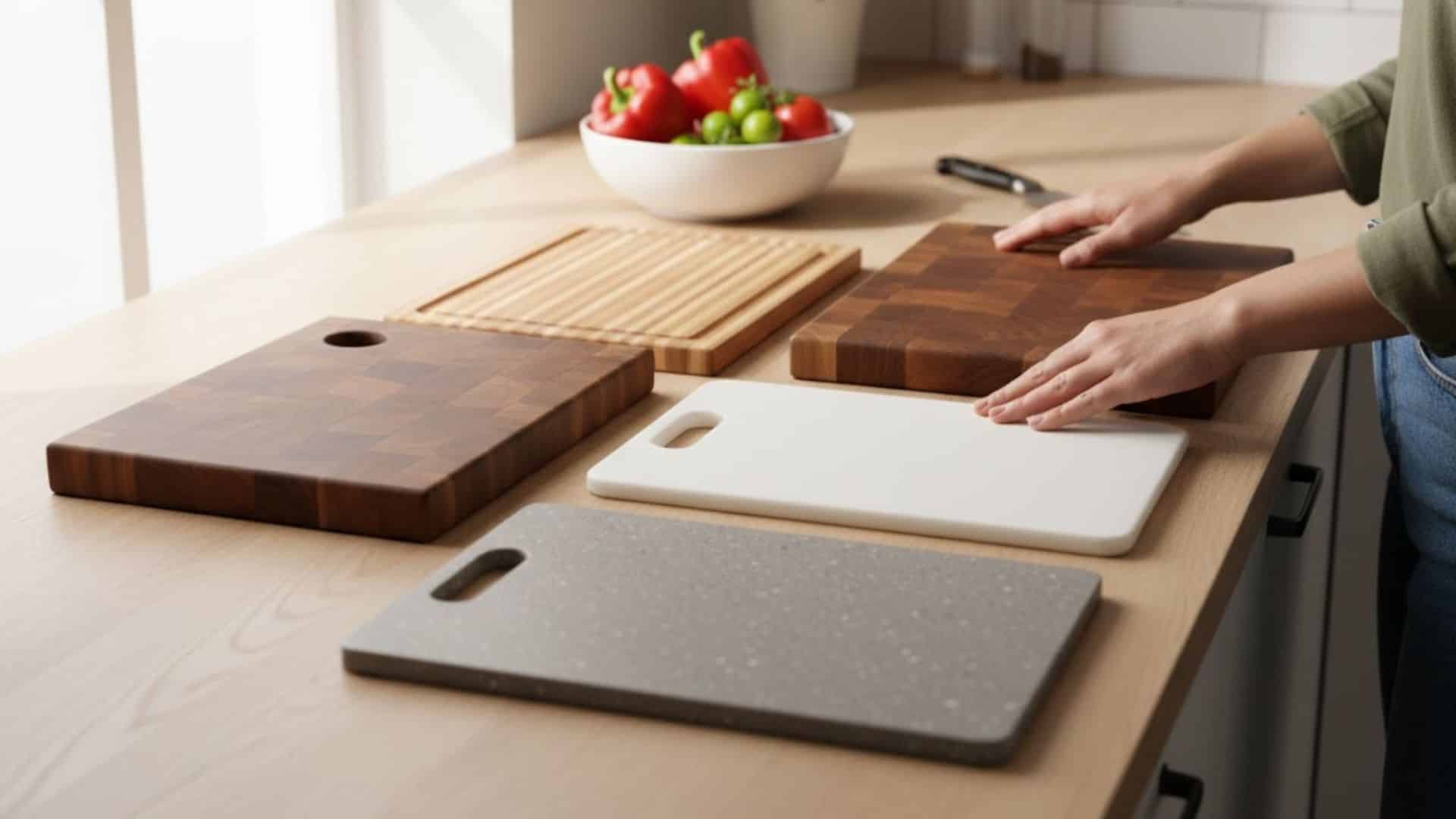
I know picking the right cutting board can feel overwhelming with so many options available. Let me walk you through the key factors that help you find your perfect match:
1. Match to Your Prep Style
Different tasks need different boards. I use plastic boards for raw meat because they’re easy to sanitize in the dishwasher. Wood boards are perfect for vegetables, fruits, and bread since they’re gentle on knives.
For heavy chopping, pick a thick, sturdy board that won’t slip or crack. Matching your board to your most common prep style keeps both your food and knives in great condition.
2. Size, Thickness, and Grain Type for Wood
Choose a size that fits your counter and typical prep portions. Thicker boards are more stable and durable than thin ones.
Edge-grain wood boards are affordable and great for daily use, while end-grain boards resist knife marks better and last longer. Find a size that gives you space to work comfortably without overcrowding your counter.
3. Color-Coding for Hygiene
Using separate boards for raw and cooked foods prevents cross-contamination. I keep color-coded boards to stay organized; red for meat, green for veggies, and blue for seafood.
This simple system keeps bacteria from spreading and helps you cook safely. It’s a small investment that makes a big difference in kitchen hygiene.
4. Balancing Budget, Lifespan, and Safety
Cheaper boards wear out quickly and may need to be replaced within a year. Investing in a well-made board costs more initially but saves money in the long term. Always prioritize safety and hygiene over price.
A durable, properly maintained cutting board pays off through years of reliable use and better overall performance.
Best Cutting Boards Available in the Market
Choosing the right cutting board can make a big difference in your kitchen’s safety and hygiene. Some materials are naturally more resistant to bacteria, while others are easier on your knives and simpler to maintain.
Here are a few top-rated options made from different safe materials to consider:
| Product Name | Material | Key Feature |
|---|---|---|
| John Boos Maple Cutting Board 1″ Thick (4-Cooks Series) | Hardwood (maple) | End-grain/edge-grain hardwood, knife-friendly, durable craftsmanship. |
| CuttingBoard.com Professional HDPE Poly Cutting Board – ½″ | Plastic (HDPE) | NSF certified HDPE, non-porous, dishwasher safe, heavy-duty. |
| Totally Bamboo 3-Piece Two-Tone Bamboo Cutting Board Set | Bamboo | Sustainable bamboo, less porous claim, good everyday board. |
| Taima® Pure Titanium Cutting Board V2 | Metal (Titanium) | 99.89% pure titanium, non-porous, antibacterial surface, premium hygiene. |
I’ve personally found that investing in a high-quality board saves time and effort in the long run. I prefer wooden and bamboo boards for daily use because they balance durability, safety, and maintenance beautifully.
Care & Maintenance Tips to Keep Your Board Safe
I’ve learned that proper care makes any cutting board last longer and stay safer for food prep. Here are the essential maintenance practices you need to follow:
- Clean and maintain by material: Hand-wash wood boards and oil them monthly, inspect plastic for deep scratches, and sanitize metal boards thoroughly after each use.
- Know when to replace: Toss boards with deep grooves that trap bacteria, visible warping that affects stability, or persistent bad smells you can’t remove.
- Prevent cross-contamination: Always use dedicated boards for raw meats and separate ones for ready-to-eat foods like vegetables and bread.
- Store properly and protect surfaces: Keep boards upright or flat in dry areas, avoid stacking wet boards, and maintain edges to prevent splitting or cracking.
Following these care practices keeps your cutting boards hygienic and functional for years. I check my boards regularly to catch any problems before they become safety hazards.
That’s a Wrap
You now understand exactly which cutting board material best fits your cooking style and safety needs.
I hope you feel confident choosing one that keeps your kitchen safe and efficient. Every board, no matter the material, needs proper care to stay hygienic and last longer.
Let your cooking habits guide your decision instead of what’s trendy or visually appealing. The right cutting board makes food prep smoother and helps protect your knives and your health.
Take a few minutes to check your current boards for deep cuts, warping, or damage, and replace them if needed.
Small maintenance steps today lead to safer, cleaner meals tomorrow. Your kitchen deserves reliable tools that make every chop count. Comment below with which board material you’re planning to try next.