Some evenings, I come home too hungry to wait and too tired to fuss, craving something warm that still feels like care. That’s when the Thai Salmon recipe saves the night: a fillet, a splash of sweet chili sauce, and a squeeze of lime.
The glaze hits the pan, caramelizing into something glossy and fragrant, sweet with a hint of heat. You can fry it for crisp edges, broil it for a sticky top, or grill it for a smoky finish.
It never asks for much, yet it tastes like a quiet reward after a long day. Dinner ends up on the table in twenty minutes, but it feels like more; that’s the quiet magic of Thai Salmon.
The Base Glaze: Sweet, Spicy & Tangy Thai Sauce
Serve: 2–4 people
Ingredients
- 4 Salmon fillets
- ½ cup Thai sweet chili sauce
- 2 tbsp soy sauce
- 1 tbsp fish sauce
- 1 tbsp lime juice
- 2 cloves garlic, minced
- 1 tsp grated ginger
- Oil for frying
- Optional: chopped peanuts, lime wedges, cilantro
Step 1: Mix the Glaze
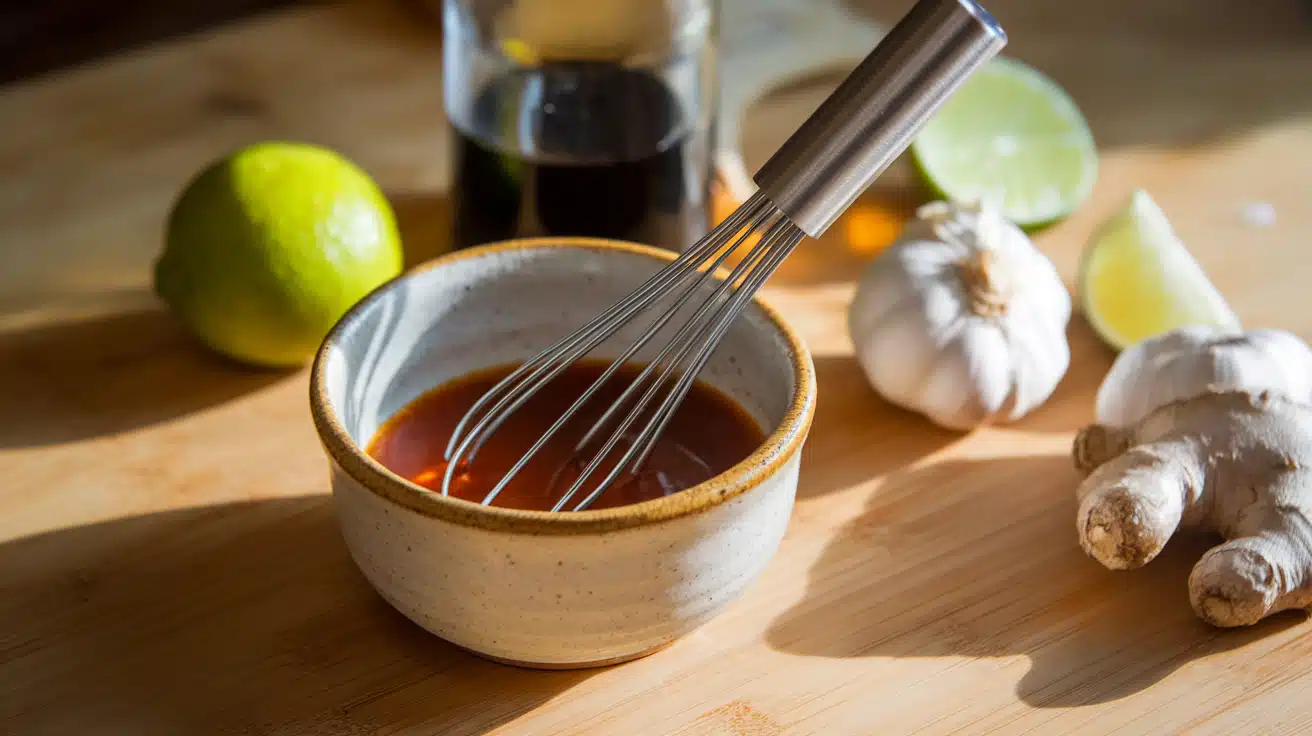
In a small bowl, combine Thai sweet chili sauce, soy sauce, fish sauce, lime juice, garlic, and ginger. Whisk until smooth. This is your base glaze; it will both marinate and coat the fish later.
Step 2: Prepare the Salmon
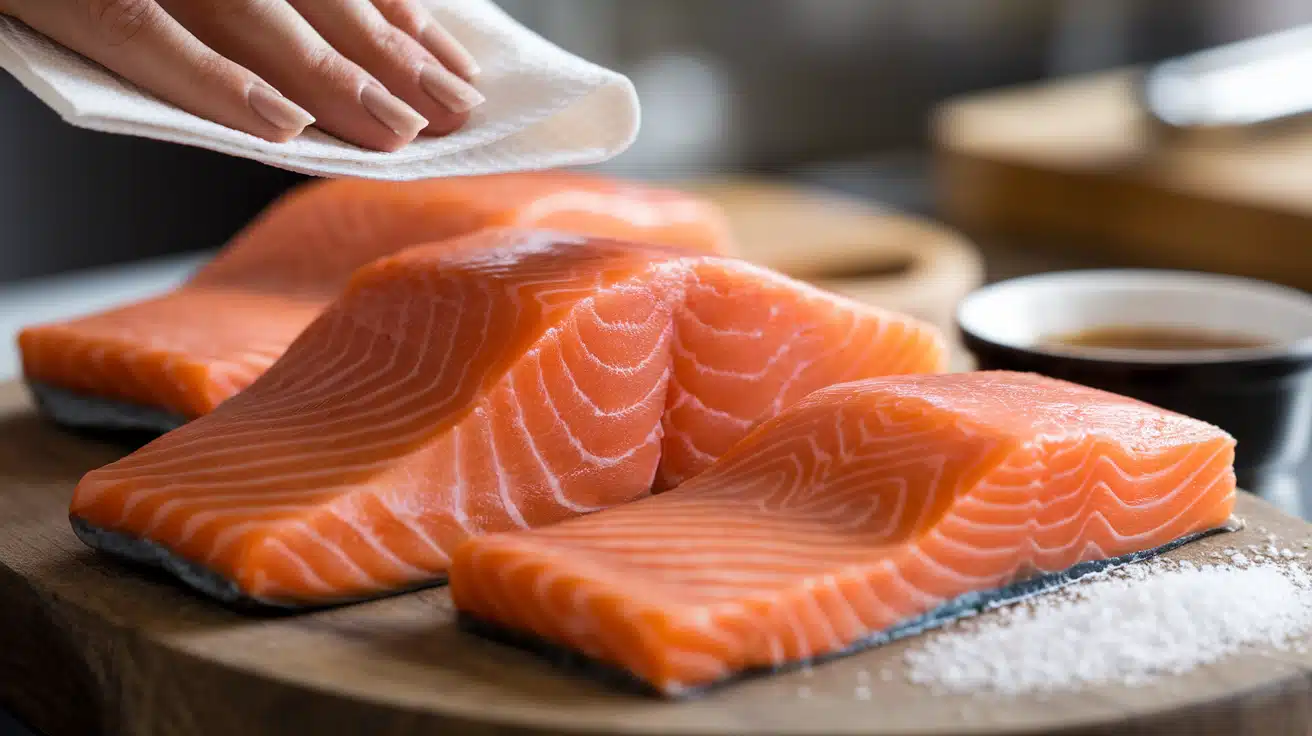
Pat each fillet dry with a paper towel until the surface feels smooth. Dry fish sears better and helps the glaze cling instead of sliding off.
If your Salmon has skin, keep it on; it locks in moisture while cooking. Lightly season with salt if your sweet chili sauce isn’t too salty
Step 3: Choose Your Cooking Method (Pan, Broil, or Grill)
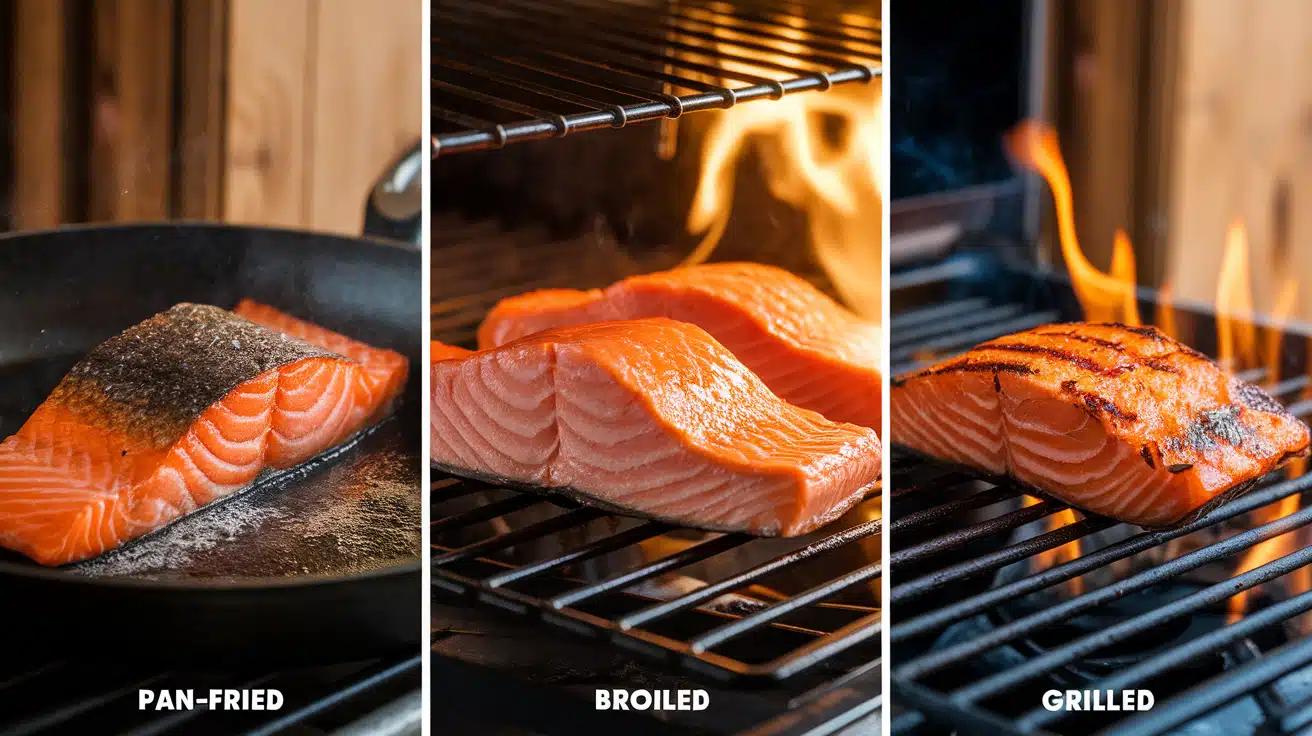
For Pan-Fried: Heat oil in a large non-stick skillet over medium heat. Place the Salmon skin-side down and cook for 5 minutes until the edges begin to turn opaque. Flip gently and pour half the glaze over the top. Let it bubble and caramelize for another 3–4 minutes until the fish flakes easily.
For Broiled: Preheat the broiler to 500°F (260°C). Line a tray with foil, place the Salmon skin-side down, and brush with glaze. Broil for 10–12 minutes until the edges darken slightly and the glaze turns glossy.
For Grill or BBQ: Oil the grill grates and cook over medium-high heat for about 8 minutes per inch of thickness, brushing with glaze halfway through.
Different ways to cook Thai-style Salmon bring out slightly different textures and flavors, all quick, all simple. If you want a crispy edge, a smoky glaze, or a caramelized finish, here’s how to get it just right:
| Method | Time | Temp | Texture | Key Tip |
|---|---|---|---|---|
| Pan-Fried | 8–10 min | Medium-high | Crisp edges, moist center | Pat dry and start skin-side down for the best sear |
| Broiled / Oven | 12–15 min | 500–550 °F (260–288 °C) | Slight char | Apply a thin glaze and rotate the tray halfway through |
| Air Fryer | 10–12 min | 400 °F / 200 °C | Even glaze | Brush on the glaze during the last 3 minutes |
| Grill / BBQ / Cedar Plank | 8 min per inch | Medium-high | Smoky crust | Oil the grill and rest the fish for 2 minutes before serving |
Step 4: Finish and Serve
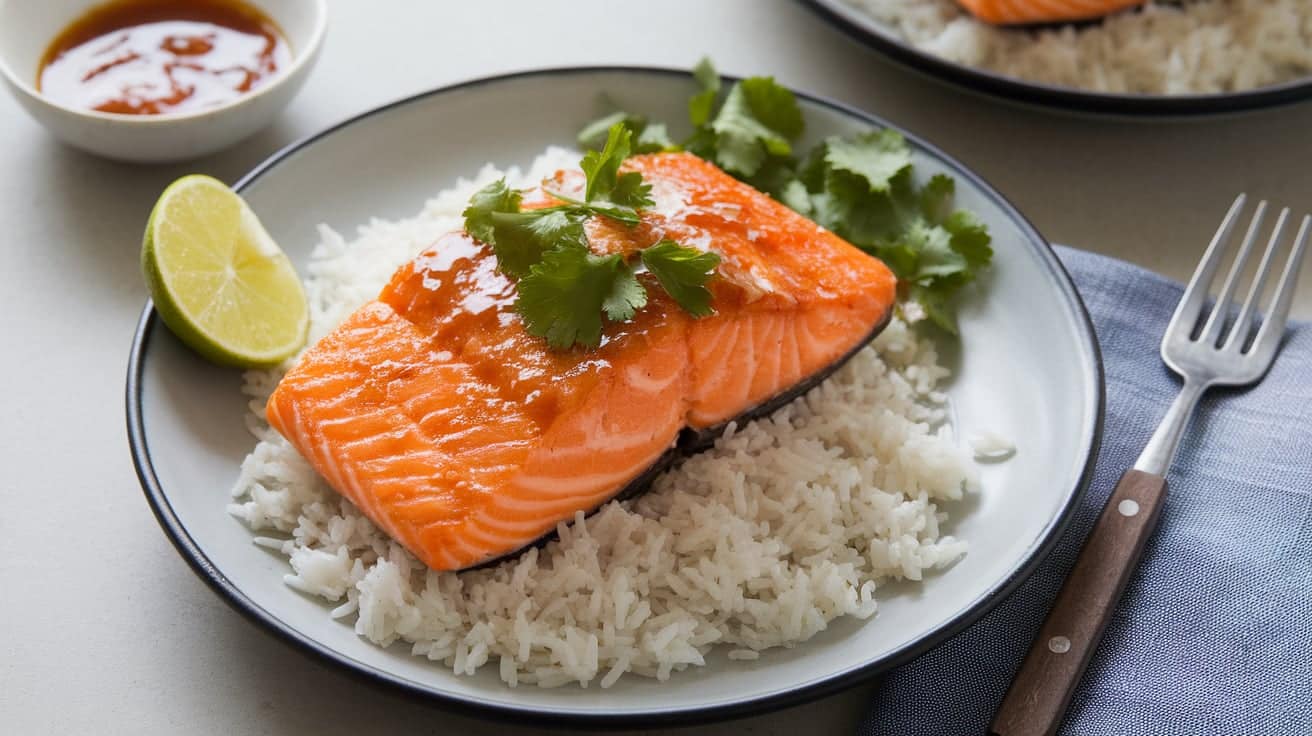
Brush the Salmon with the remaining glaze and let it rest for 2 minutes. The glaze will thicken slightly as it cools.
Plate the Salmon over jasmine rice or noodles and spoon a little extra sauce on top. Add peanuts, cilantro, or a squeeze of lime if you like a bit of freshness.
OptionalCreamy Twist: For a richer version, whisk ½ cup of coconut milk into leftover glaze in a small pan. Simmer for 2 minutes until it thickens slightly, then spoon over the Salmon and rice.
How to Tell When Your Salmon is Perfectly Cooked
The Salmon is ready when the flesh flakes easily with a fork and reaches an internal temperature of 125–130 °F (52–54 °C).
To prevent the white protein (albumin) from forming on the surface, let the fillets rest at room temperature for about 10 minutes before cooking, or give them a short brine in lightly salted water (3% salt for 15 minutes).
The Creamy Red-Curry-Coconut Option for Thai Salmon
Last weekend, I opened the cupboard and found a can of coconut milk, a small jar of red curry paste, and a couple of Salmon fillets in the fridge. That was enough.
The curry paste hit the pan and filled the kitchen with a gentle spice, the kind that feels more like comfort than heat.
Within minutes, the sauce turned creamy and pink, the Salmon barely holding together under the spoon. It’s a simple meal, quick, cozy, and full of flavor, but it never feels rushed.
Serves: 2–3 people
Ingredients
- 1 tbsp neutral oil
- 1 shallot, finely chopped
- 1 tbsp Thai red curry paste (Mekhala, Mae Ploy, or Thai Kitchen)
- 1 can (14 oz) coconut milk or cream
- 1 tsp coconut sugar or honey
- 1 tsp fish sauce
- Juice of ½ lime
- A few Thai basil leaves
- Optional: sliced Thai chili or kaffir lime leaf
Step 1: Soften the Shallot
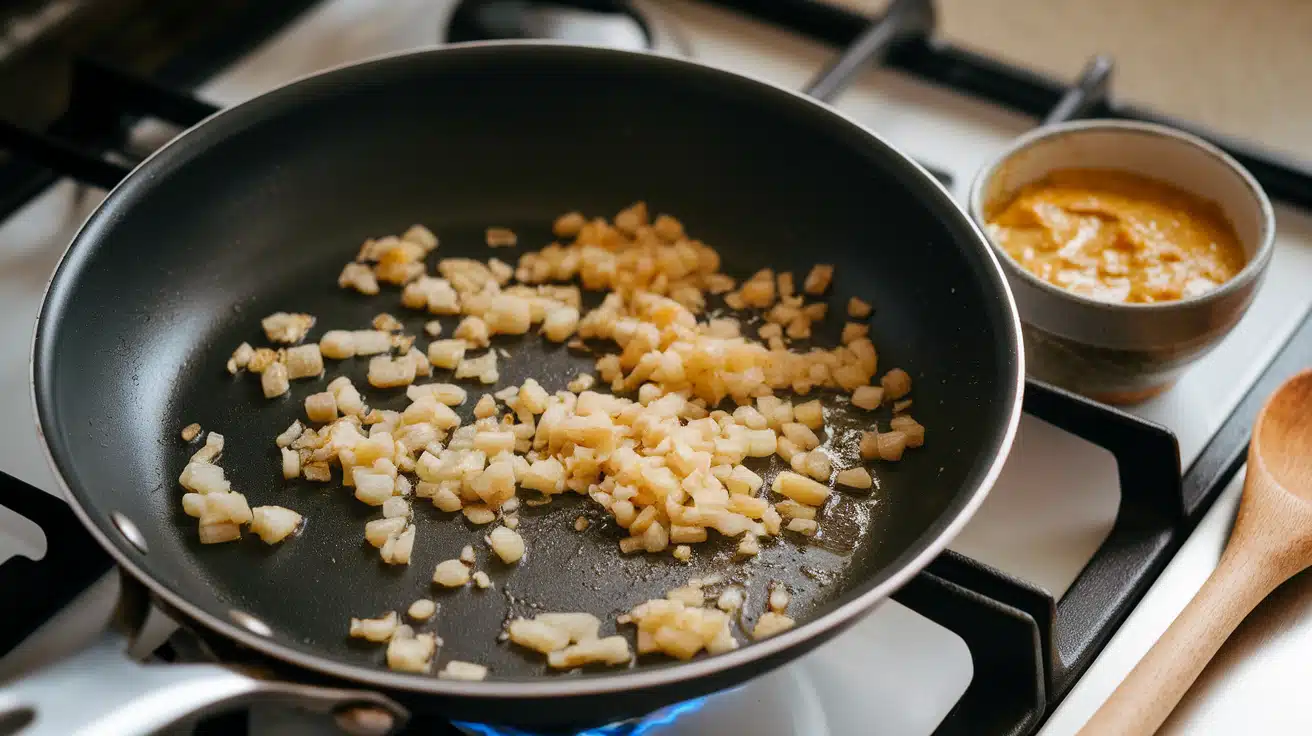
Warm the oil in a medium pan over gentle heat. Add the finely chopped shallot and stir occasionally until it turns translucent and soft. This slow start adds a light sweetness that helps balance the curry paste’s spice later.
Step 2: Wake Up the Curry Paste
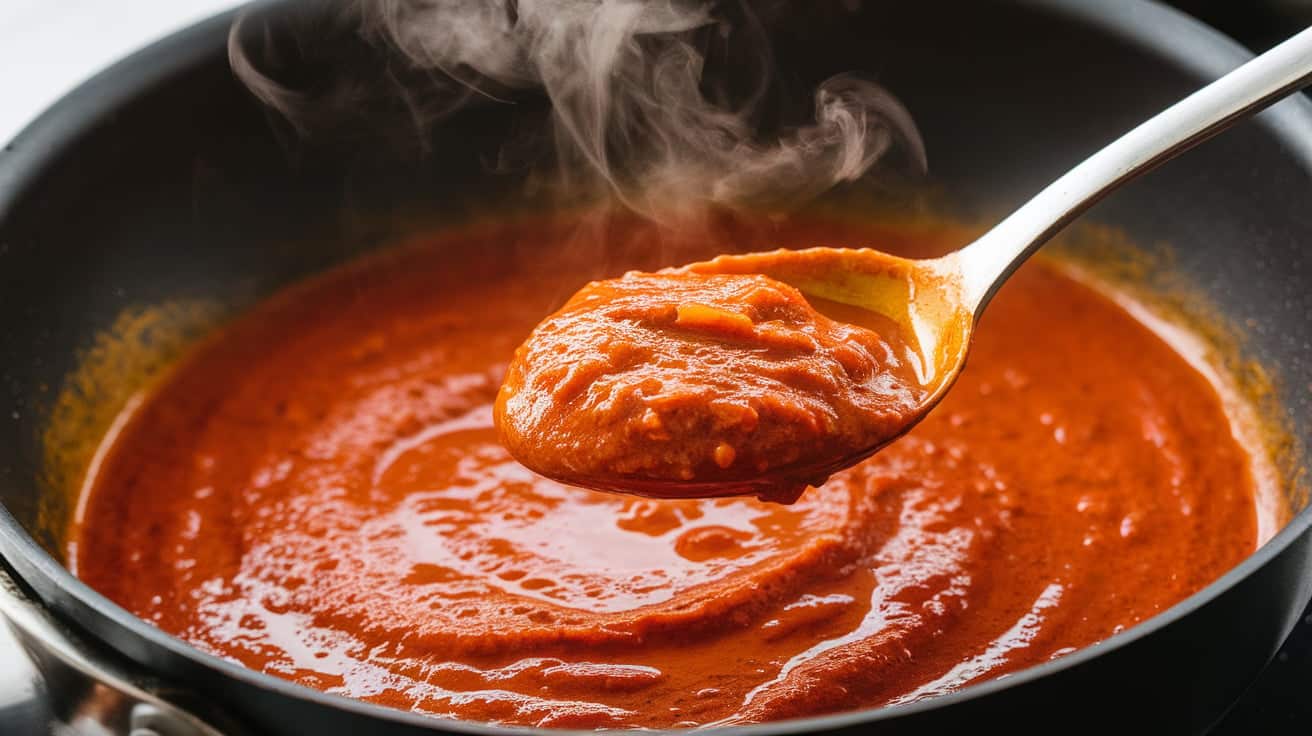
Add the red curry paste to the pan and cook for about 1 minute, stirring. You’ll notice the aroma deepen, warm and slightly sharp. This quick sizzle brings out the paste’s full flavor before the coconut milk softens it.
Step 3: Make the Sauce
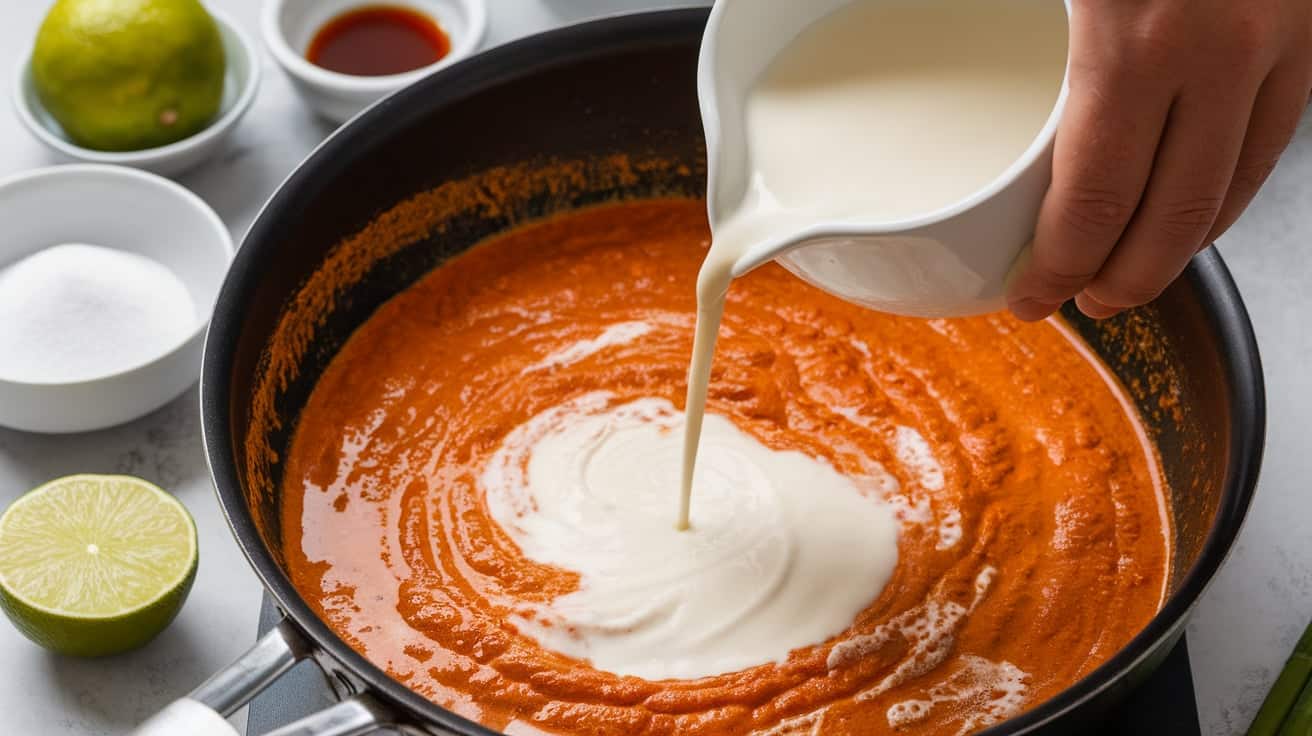
Pour in the coconut milk, then add coconut sugar, fish sauce, and lime juice. Stir gently while it simmers for a few minutes. The sauce should thicken slightly, look glossy, and smell rich, with the lime brightening the creamy base.
Step 4: Cook the Salmon
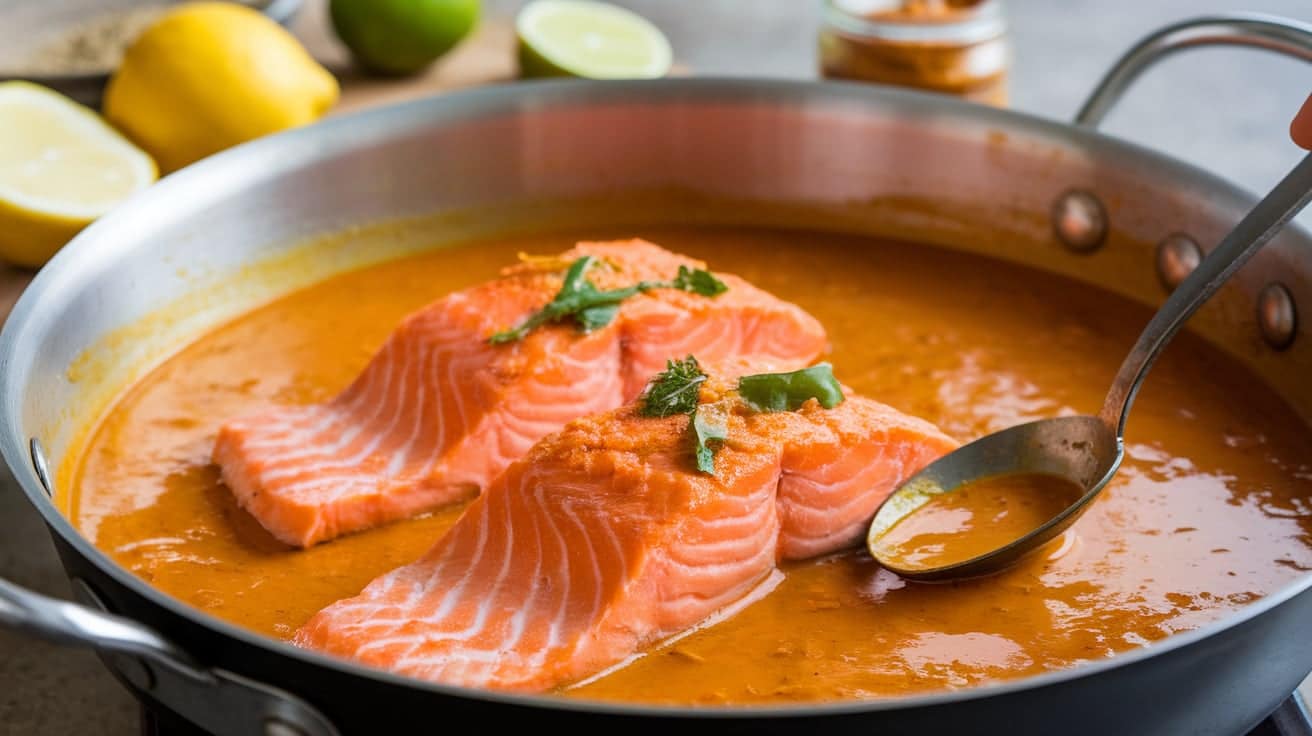
Lay the Salmon fillets into the sauce and spoon some curry over each one. Let them simmer gently on low heat for around five minutes. The Salmon should stay tender, flaking easily when touched with a fork.
Step 5: Finish and Serve
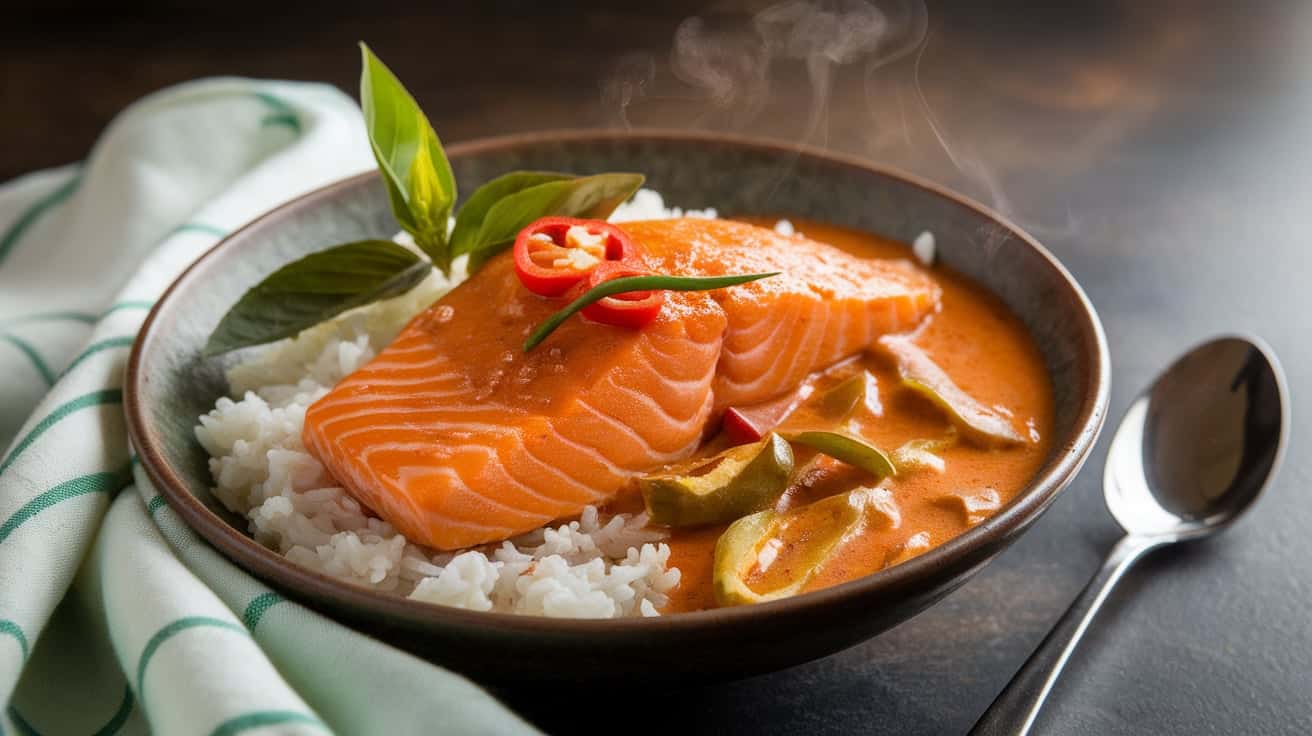
Top with Thai basil leaves and a few slices of chili for extra heat, if you want. Serve it over jasmine rice, the kind that clings lightly to the sauce.
The coconut gives it body, the lime keeps it bright, and the basil ties everything together. It’s comforting without being heavy, the sort of meal that makes a quiet evening feel looked after.
Cooking this always feels like pressing pause on the day.
The Glaze Matrix: Adjust Sweetness, Spice & Tang
Once you’ve mastered the base glaze, it’s easy to tweak the balance to suit your taste. Use this quick guide to fine-tune the flavor, whether you like it bold, sweet, or perfectly balanced.
| Flavor Goal | Add This | Result |
|---|---|---|
| Hotter | Extra sriracha or Thai chili | Fiery heat |
| Sweeter | +½ tbsp honey or coconut sugar | Caramel-style glaze |
| Tangier | +1 tsp rice vinegar | Brighter, sharper balance |
| Umami Boost | +½ tsp fish sauce | Deeper, richer flavor |
| Vegan | Replace fish sauce with soy sauce + seaweed flakes | Same Thai-inspired depth |
Ingredient Know-How: Small Details That Make It Better
Understanding a few small details about your ingredients makes it easier to perfect every version of Thai Salmon, from choosing the right fish to getting that creamy sauce just right.
Salmon 101
- Wild (sockeye, coho): Leaner and quicker to cook, reduce the heat slightly or check early.
- Farmed (Atlantic): Higher in fat, stays moist, but needs about 2 extra minutes.
- Skin-on: Helps lock in moisture; you can always remove it after cooking if you prefer.
Coconut Milk vs. Cream
| Type | Texture | Calories (½ cup) | Best For |
|---|---|---|---|
| Coconut Milk | Light and pourable | ~150 kcal | Everyday curries, lighter meals |
| Coconut Cream | Thick and rich | ~250 kcal | Full-bodied, restaurant-style sauces |
Curry Paste Brands to Try
- Mae Ploy: Hottest and saltiest, use about 2 tsp.
- Thai Kitchen: Mild and easygoing, go for 3–4 tsp.
- Mekhala: Balanced and organic, 2–3 tsp gives great flavor.
Sides and Garnishes for Thai Salmon
A good Thai Salmon is all about balance, rich glaze or creamy curry on the fish, something light and fresh on the side, and a few toppings to pull it all together.
Best Sides
- Jasmine or coconut rice: perfect for soaking up sauce.
- Rice noodles, soba, or quinoa: great when you want a lighter base.
- Thai cucumber–lime salad: crisp, cool, and refreshing beside the warm Salmon.
- Roasted veggies: like bok choy, bell peppers, or snow peas for color and crunch.
Garnish Ideas
- Crushed peanuts or toasted cashews for a bit of texture.
- Cilantro, scallions, and lime wedges to brighten the flavors.
- Toasted sesame seeds or crispy shallots for a subtle nutty note.
- Chili oil drizzle if you like an extra hit of heat at the end.
Common Thai Salmon Mistakes and How to Fix Them
Even simple recipes have their small hiccups. Here’s how to fix the most common Thai Salmon issues without starting over.
| Problem | Why It Happens | How to Fix It |
|---|---|---|
| Glaze burns | The glaze is too thick or sugary under high heat | Brush on a thinner layer and add the final coat in the last minute |
| Sauce splits | Coconut milk gets too hot and separates | Lower the heat and whisk in 1 teaspoon of cornflour mixed with a little water |
| Dry Salmon | Salmon cooks for too long | Remove from heat at 125°F / 52°C and let it finish cooking in its own warmth |
| White residue on top | Albumin forms from a sudden temperature change | Let the Salmon rest at room temperature for 10 minutes before cooking |
| Too salty | The sauce reduces too much, or the seasoning is too strong | Add 1 tablespoon of water or a splash of coconut milk to balance it |
Summing Up
Cooking Thai Salmon always reminds me how small things can shift the mood of an evening, lime adds brightness, chili brings warmth, and the whole dish feels like calm served on a plate.
It’s quick enough for weekdays but satisfying enough for when you want a little comfort without planning ahead. Whether you like it sticky from the broiler, crispy from the pan, or creamy with coconut, it never fails to feel rewarding.
If you try it, tell me which version wins your kitchen, the sweet chili glaze or the red curry sauce.
Share your thoughts below or check out my other easy weeknight dinners for more cozy, no-fuss meals that make home cooking feel easy again with Thai Salmon.