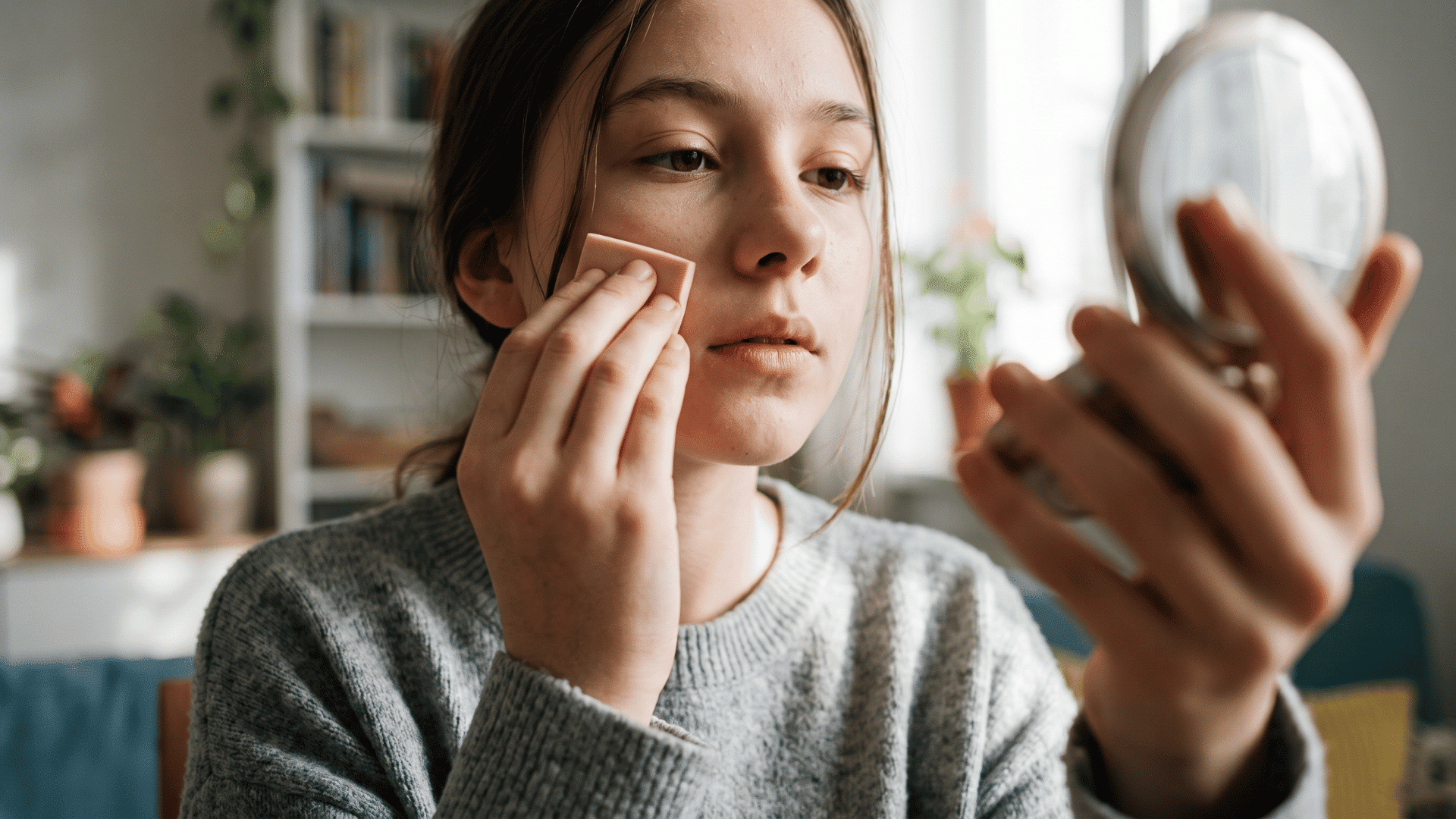
Foundation shopping can get confusing surprisingly fast. One formula promises a smooth, soft finish, another promises a skin-like glow, and somehow both sound like exactly what you need.
If you have been asking what powder foundation is, the compact itself only tells part of the story.
Powder and liquid behave differently once they meet your skin, and those differences can affect everything from coverage to how your makeup looks several hours later.
The easiest way to choose? Start with the formula, then think about the finish, coverage, and feel you actually enjoy wearing.
What Is Powder Foundation?

Powder foundation is pigmented face makeup in a dry formula designed to even out the complexion and provide coverage. Unlike liquid foundation, it has no fluid base and is applied directly to the skin as a powder.
It typically comes as pressed powder in a compact or loose powder in a jar. You can apply it with a fluffy brush, dense foundation brush, sponge, or powder puff, depending on the product and the amount of coverage you want
Pros and Cons of Powder Foundation
|
Pros |
Cons |
|---|---|
|
Gives a soft matte finish |
Usually offers less hydration |
|
Easy to build from light to medium coverage |
Can settle into fine lines |
|
Convenient for midday touch-ups |
May not suit very dry skin |
|
Lightweight and easy to carry |
Heavy layers can look powdery |
What Is Liquid Foundation?

Liquid foundation is a fluid makeup formula that creates a more even-looking complexion and provides coverage across the face. Unlike powder foundation, it has a liquid consistency that spreads easily over the skin.
It typically comes in bottles, tubes, or pump packaging and can be applied with your fingers, a makeup sponge, or a foundation brush.
The texture and consistency can range from thin and lightweight to thicker and more concentrated, depending on the product
Pros and Cons of Liquid Foundation
|
Pros |
Cons |
|---|---|
|
Available in sheer to full coverage |
Some formulas may become oily |
|
Can create dewy, natural, or matte finishes |
Requires more blending than powder |
|
Layers easily for buildable coverage |
Can settle into fine lines if overapplied |
|
Often suits dry skin better than powder |
Usually takes longer to apply and set |
Liquid vs Powder Foundation
The main difference between liquid and powder foundation is the formula: powder is dry and lightweight, while liquid has a fluid texture and generally offers greater flexibility in coverage and finish.
|
Feature |
Powder Foundation |
Liquid Foundation |
|---|---|---|
|
Texture |
Dry powder |
Fluid |
|
Coverage |
Light to full, depending on formula |
Sheer to full, depending on formula |
|
Finish |
Usually matte to soft-matte |
Dewy, satin, natural, or matte |
|
Oil Control |
Generally stronger |
Depends on the formula |
|
Dry Skin Comfort |
May require more skin prep |
Often more comfortable |
|
Touch-Ups |
Quick and convenient |
Less convenient |
|
Tools |
Brush, sponge, or puff |
Brush, sponge, or fingers |
How to Apply Powder Foundation?

1. Prep Your Skin
Apply moisturizer and give your skincare enough time to settle before starting your base.
If sunscreen is part of your morning routine, understanding mineral vs. chemical sunscreen can help you choose a formula that layers comfortably beneath makeup.
Let everything set before applying powder so it is less likely to catch on dry or uneven areas.
2. Choose the Right Tool
Reach for a fluffy brush when you want lighter, more natural-looking coverage. Use a sponge or denser brush when you want more coverage in areas with redness, uneven tone, or blemishes.
Whichever tool you use, avoid picking up too much powder at once. Tap off excess product to keep the first layer light.
3. Start With Less
Pick up a small amount and apply a thin layer first. You can always add coverage where your skin needs it.
Press or gently buff the powder onto the skin rather than repeatedly sweeping over the same area. Build another light layer only where you need extra coverage to avoid a cakey finish.
4. Blend Outward
Begin around the center of your face, then blend toward the edges. Carefully soften the product around your jaw and hairline. Once your foundation looks even, you can start adding color back to the complexion.
Knowing how to apply blush can help you place and blend color without disturbing the powder or liquid base underneath.
Can Powder Go Over Liquid Foundation?
Yes. You can apply powder over liquid foundation, but more product does not necessarily mean a better base.
Let your liquid foundation settle, then press a light layer of powder onto areas that need extra coverage or shine control. A heavy layer of powder foundation over an already full liquid base can look thick or cakey, especially over texture and fine lines.
And no, wearing liquid foundation does not mean you have to add powder. Use the second product only when it serves a purpose.
Pressed vs Loose Powder Foundation
The difference between pressed and loose powder becomes most noticeable when you use it.
|
Feature |
Pressed Powder |
Loose Powder |
|---|---|---|
|
Format |
Compact |
Jar or sifter |
|
Application |
Quick and controlled |
Soft and blendable |
|
Portability |
Easy to carry |
Less travel-friendly |
|
Coverage |
Often more buildable |
Usually lighter |
|
Best Use |
Daily wear and touch-ups |
Natural soft-focus finish |
Powder Foundation Mistakes to Avoid
Powder is wonderfully straightforward, but small application choices can make the difference between seamless and noticeably powdery.
- Skipping moisturizer: Powder may catch on dry or rough areas when the skin underneath is not properly prepped.
- Starting with too much: Build thin layers so you can stop as soon as you have enough coverage.
- Choosing the wrong tool: Match your applicator to your goal rather than automatically reaching for the same brush.
- Ignoring your skin’s needs: A formula that feels too dry can make existing texture more noticeable.
- Continually adding powder: Repeated touch-ups can eventually make an otherwise fresh base look heavy.
- Stopping at the jaw: Check your hairline and jawline for obvious edges before calling your makeup finished.
Powder or Liquid: Which Should You Choose?
No single foundation formula works best for everyone. The right choice depends on how you want your makeup to look and feel throughout the day.
Choose powder foundation if you prefer lightweight coverage, quick application, less shine, and easy touch-ups on the go. It can be especially useful when you want a simple base without multiple layers.
Choose liquid foundation if you prefer buildable coverage and more options for hydrating, natural, matte, or radiant finishes.
Focus on your skin’s needs, preferred finish, and everyday makeup routine to find the formula that suits you best.
Conclusion
Good foundation should make getting ready easier, not turn your makeup bag into a chemistry exam.
The liquid vs. powder foundation decision becomes much simpler once you stop looking for a universal winner and start looking at what suits your own skin.
Think about how your face feels throughout the day, the finish you enjoy seeing in the mirror, and how much time you actually spend on makeup. Then choose the formula that fits those needs and give it a proper try.
Are you team powder or team liquid? Share your pick in the comments.
Frequently Asked Questions
Can Powder Foundation Cover Acne and Redness?
Yes, buildable powder foundation can cover mild redness and blemishes. A denser brush or sponge usually gives more coverage than a fluffy brush.
Does Powder Foundation Need Primer?
Not always. Primer can help if you want smoother application, longer wear, or extra oil control, but well-moisturized skin may be enough for some formulas.
Can You Wear Powder Foundation Without Concealer?
Yes. If the coverage meets your needs, you can wear powder foundation alone. Concealer is only necessary when you want extra coverage in specific areas.
Is Powder Foundation the Same as Setting Powder?
No. Powder foundation contains pigment and provides complexion coverage, while setting powder is primarily designed to set makeup and control shine.
Is Powder or Liquid Foundation Better for Beginners?
Powder can be quicker to apply, while liquid gives more control over coverage and finish. The easier option depends on your preferred application method.