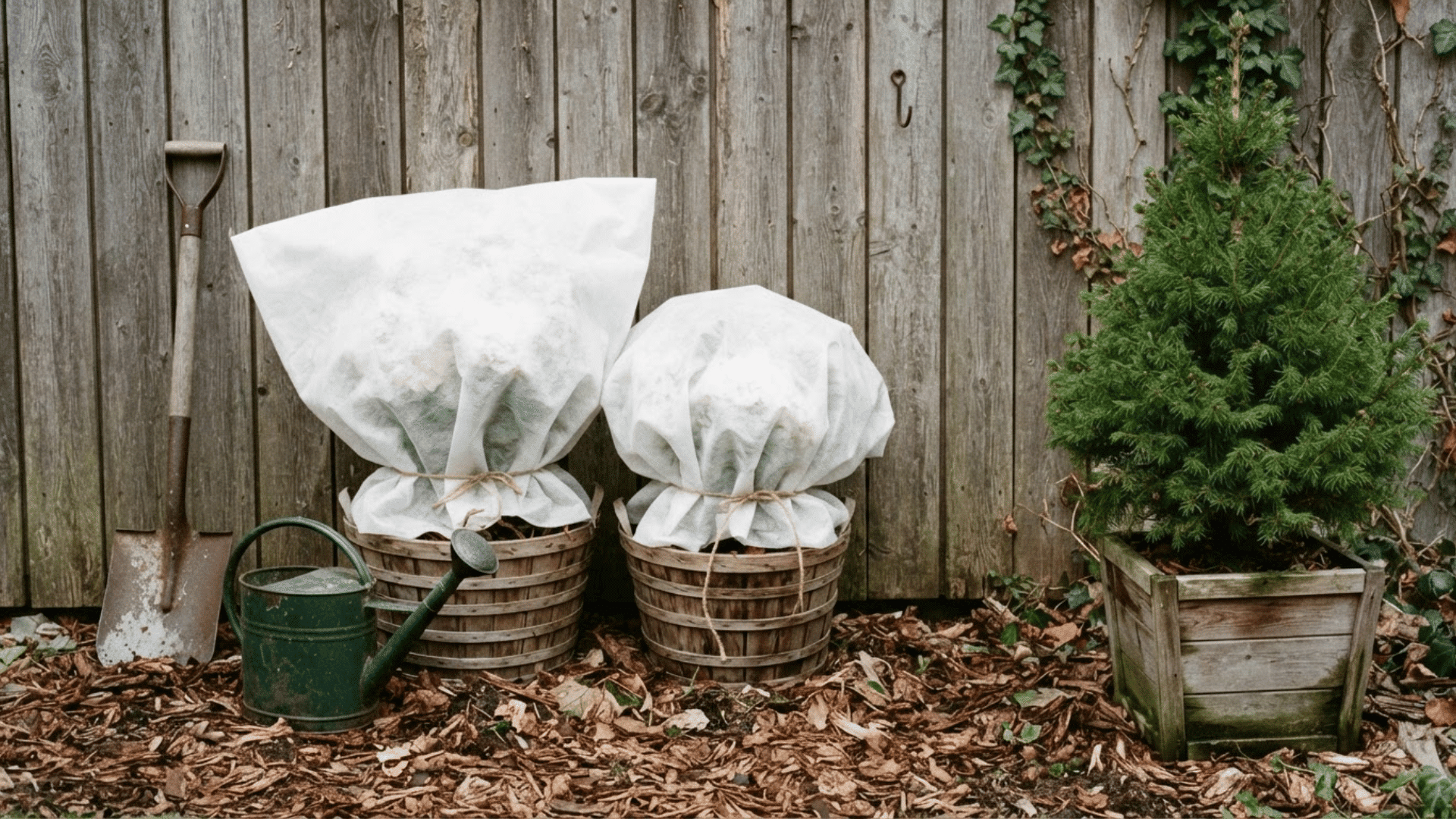
Tired of a front yard that looks messy again a few days after you clean it up? You are not the only one trying to cut back on mowing, watering, weeding, and trimming without losing curb appeal.
Low-maintenance front yard landscaping can help you create a yard that feels neat, welcoming, and easier to manage. I like starting with the biggest time-wasters first, then choosing plants and materials that actually fit the space.
You will learn simple ideas for replacing patchy grass, using rocks and mulch, choosing low-maintenance plants, and planning a front yard that fits your routine.
How to Choose the Right Low-Maintenance Design for Your Climate?
Your local climate shapes which plants and materials will actually thrive. Matching your design to weather patterns saves time, money, and frustration down the road.
- Hot, sunny areas: Choose drought-tolerant plants, gravel, and light-colored materials to reduce heat and watering needs.
- Wet or humid climates: Focus on drainage-friendly layouts and moisture-resistant materials like river rock or properly installed pavers.
- Shaded yards: Use mulch, ground covers, and ferns instead of grass, which struggles without enough light.
- Cold regions: Plant hardy evergreens and perennials built to survive seasonal changes without constant replacement.
Matching your yard to local temperature, rainfall, sunlight, and soil type pays off long-term. The result is a healthier, more balanced front yard that needs far less upkeep.
Front Yard Ideas for Low Maintenance
A low-care front yard should solve real problems first. These ideas help reduce mowing, watering, weeding, trimming, and replanting while still keeping the yard neat, useful, and welcoming from the street.
1. Gravel or River Rock
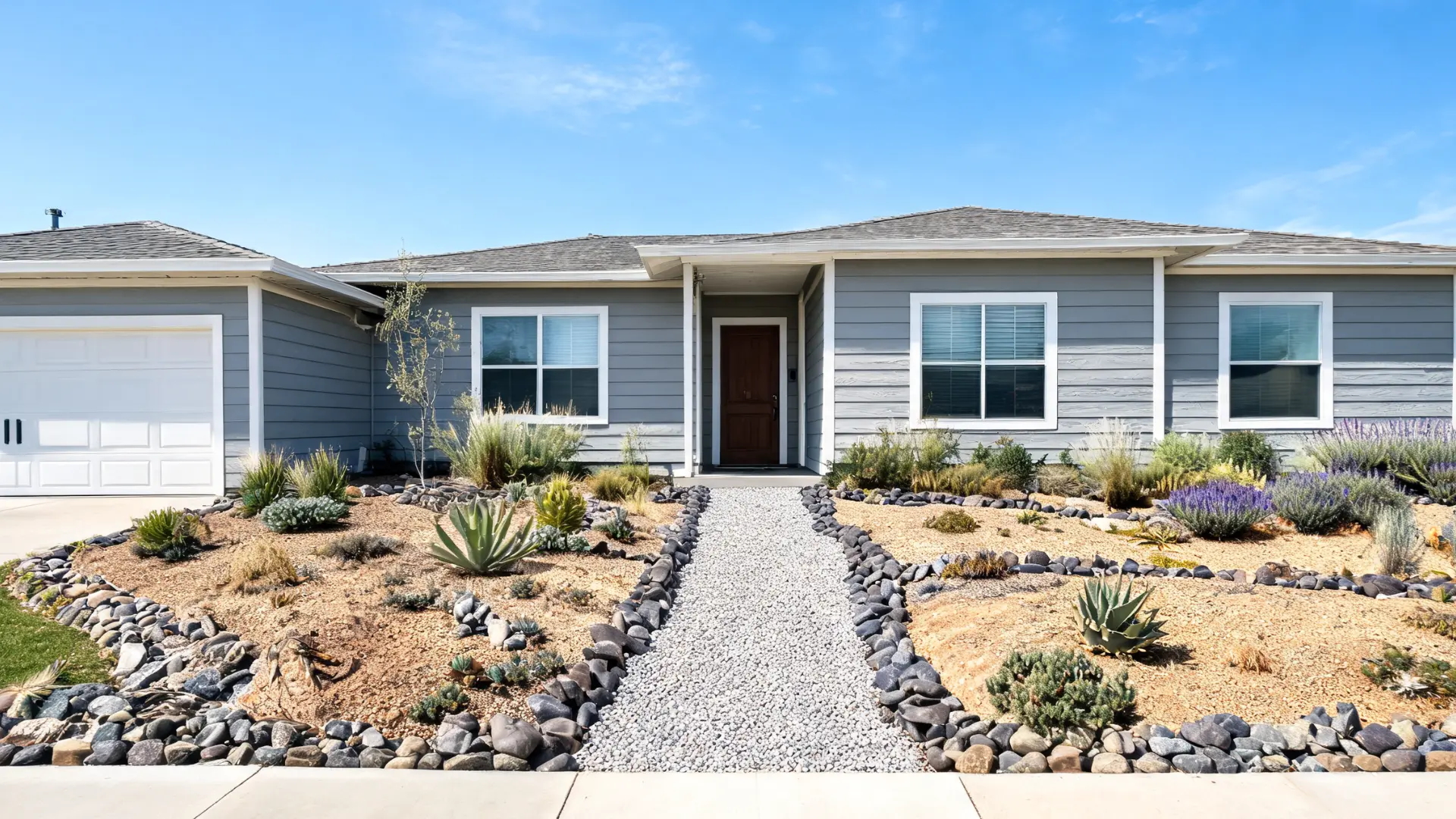
Gravel or river rock works best for patchy grass, dry sunny areas, drainage zones, and narrow strips that are hard to mow.
Gravel suits paths and no-grass areas since it needs no watering, while river rock holds up well for borders and runoff spots because it lasts longer and stays tidy.
Add strong edging so stones do not scatter into the lawn, sidewalk, or driveway, especially in dry, sunny, or high-traffic spots where grass keeps failing.
2. Mulch Bed Strips
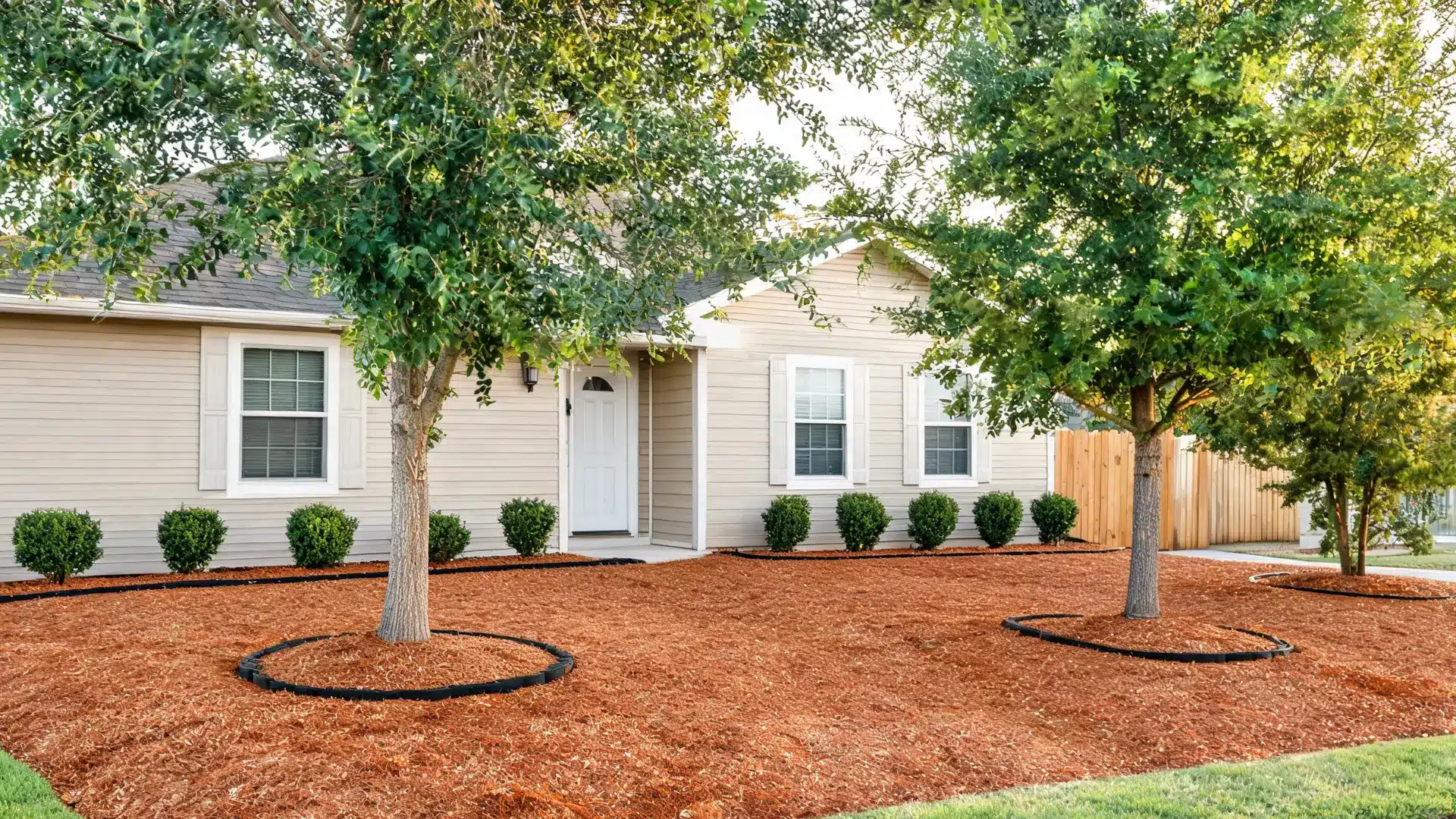
Mulch bed strips are a smart fix for bare soil, narrow lawn strips, and areas where weeds keep coming back.
Mulch holds moisture, softens beds, and works well around trees, shrubs, perennials, and foundation plantings, giving thin grass areas a cleaner look without a major project.
Plan to top it up over time and keep it a few inches from trunks and stems wherever soil is exposed or mowing feels awkward.
3. Simple Walkways
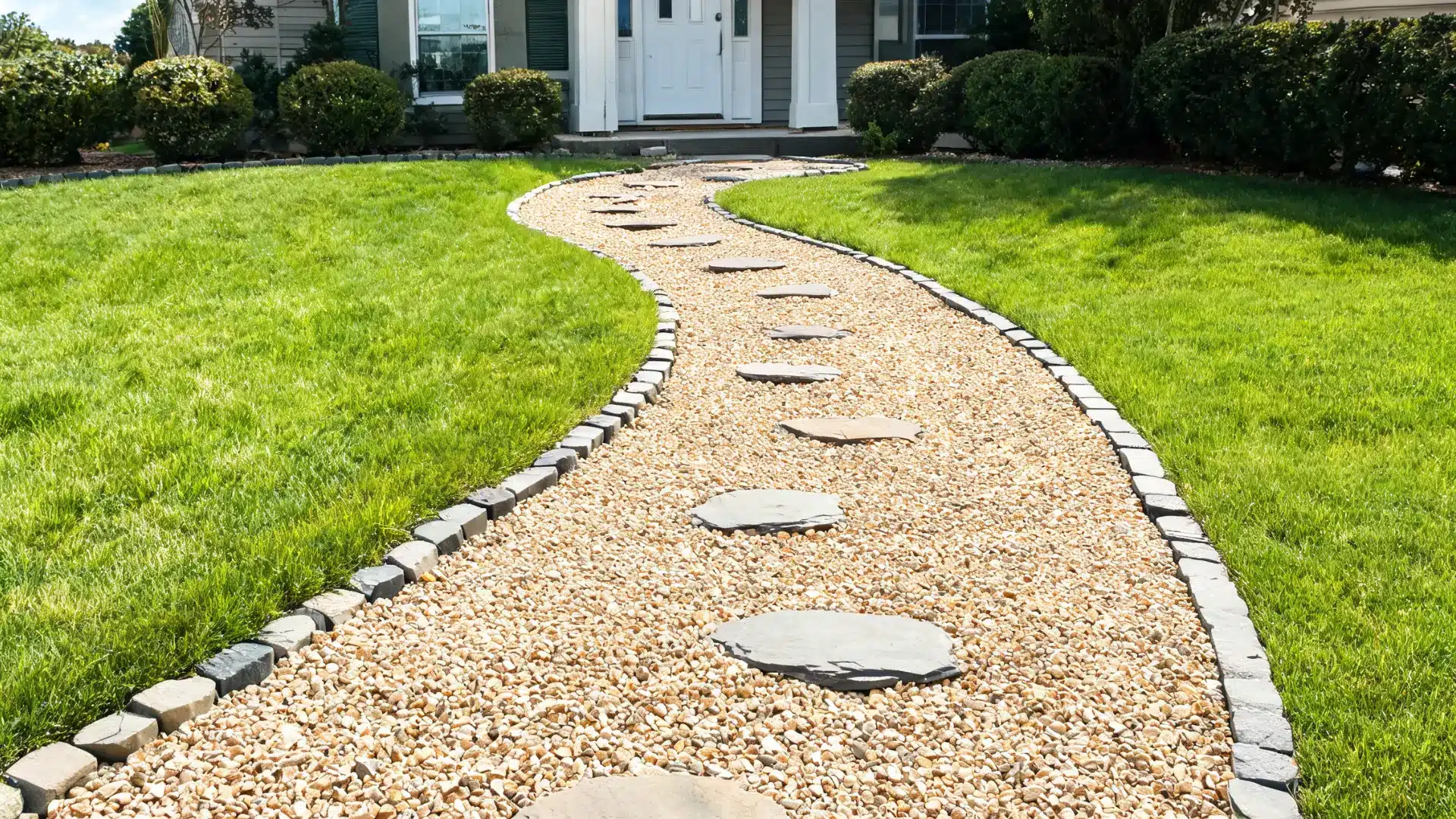
Simple walkways work well when your lawn has a worn path from regular foot traffic. Pavers, flagstone, stepping stones, or gravel can turn that damage into a clear route.
Pavers feel more durable and structured, while flagstone offers a softer, more natural look, and gravel is more budget-friendly but requires edging.
A firm base matters so the path stays level wherever people already cross the lawn or where the grass wears down.
4. Slow-Growing Evergreens

Slow-growing evergreens are ideal for overgrown bushes, plain foundation beds, and front yards that need structure, adding year-round shape without seasonal replanting.
Choose dwarf or compact varieties that fit the space at mature size, especially near windows, porches, walkways, and mailboxes.
Pair them with mulch, gravel, or pavers so the planting looks finished, stays easier to maintain, and holds its shape near entries.
5. Native Plantings
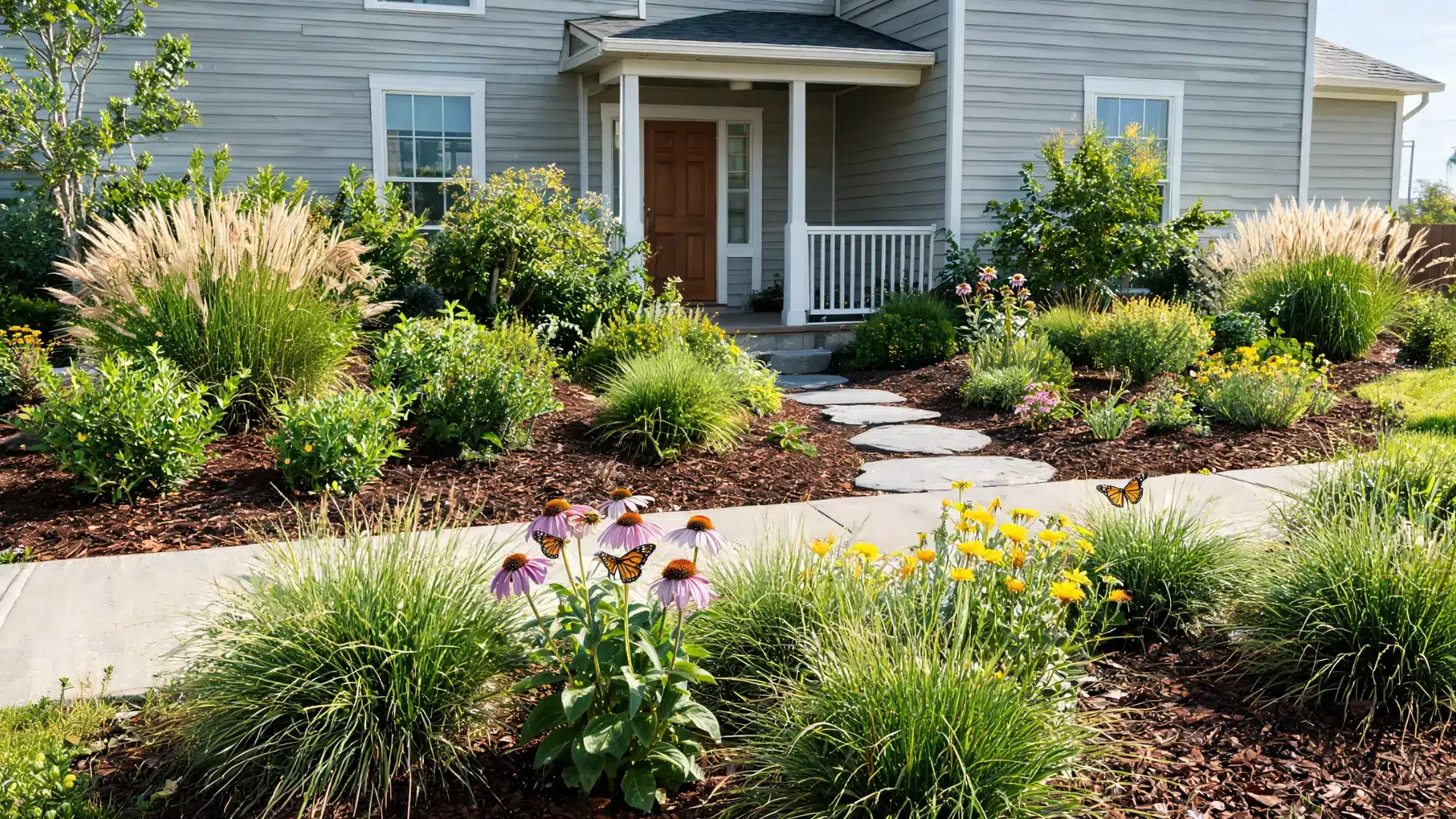
Native plantings are a good choice when you want plants that match your climate, don’t need constant care, and work well in sunny beds, shaded areas, slopes, and pollinator-friendly front yards.
Once established, many native shrubs, perennials, trees, and grasses need less water, fertilizer, and pest control.
Combine them with mulch to hold moisture and reduce weeds while roots settle, giving you lower long-term care and a better climate fit.
6. Ground Cover
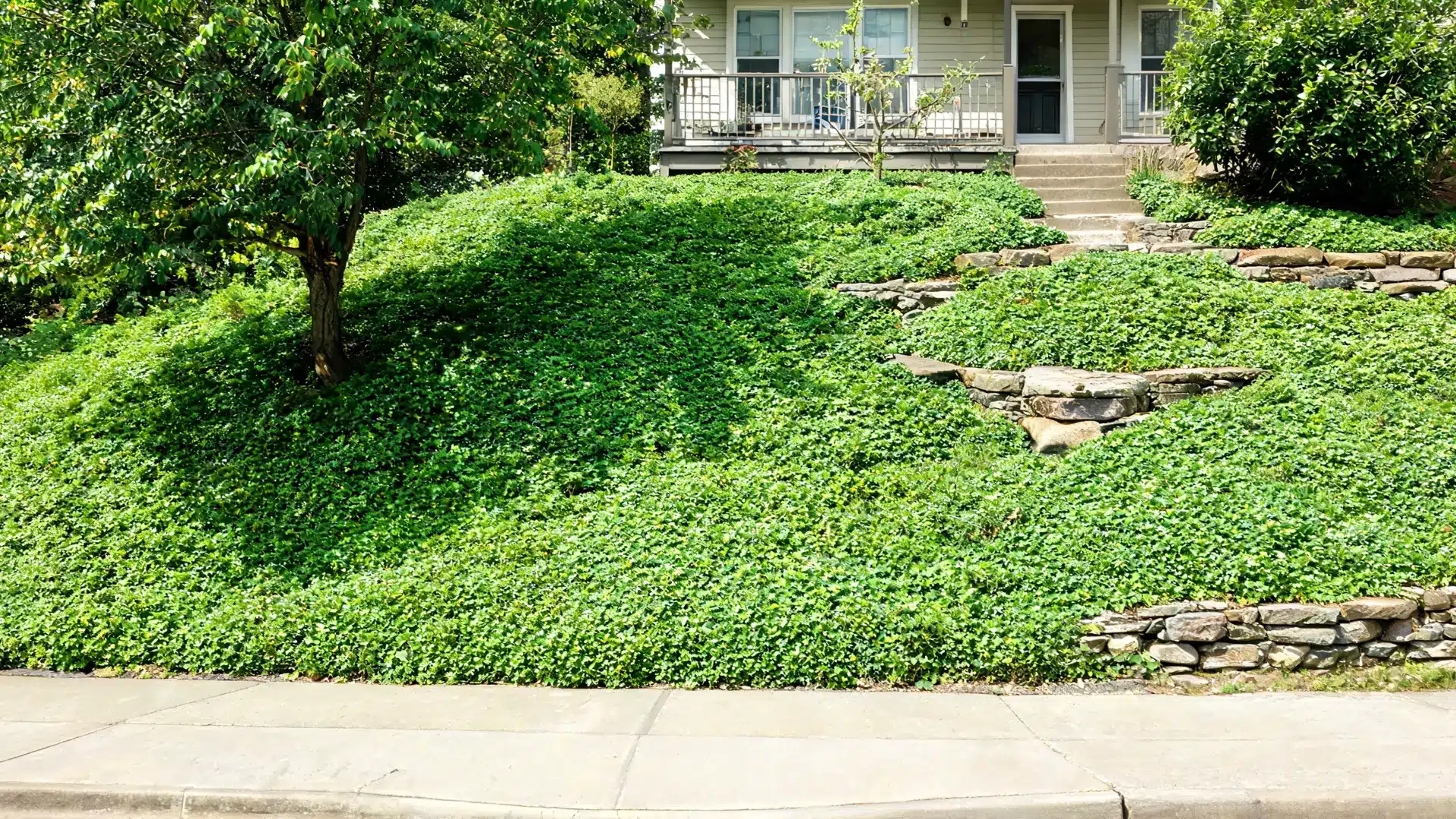
Ground cover is useful for slopes, shaded areas, bare soil, and narrow spaces where grass struggles to grow, reducing mowing, controlling erosion, and covering soil to give weeds less room to spread.
Use it instead of turf where mowing feels unsafe or pointless. Some ground covers need early weeding before they fill in, so choose non-aggressive types that fit your climate, foot traffic, and shaded or bare patches.
7. Ornamental Grasses
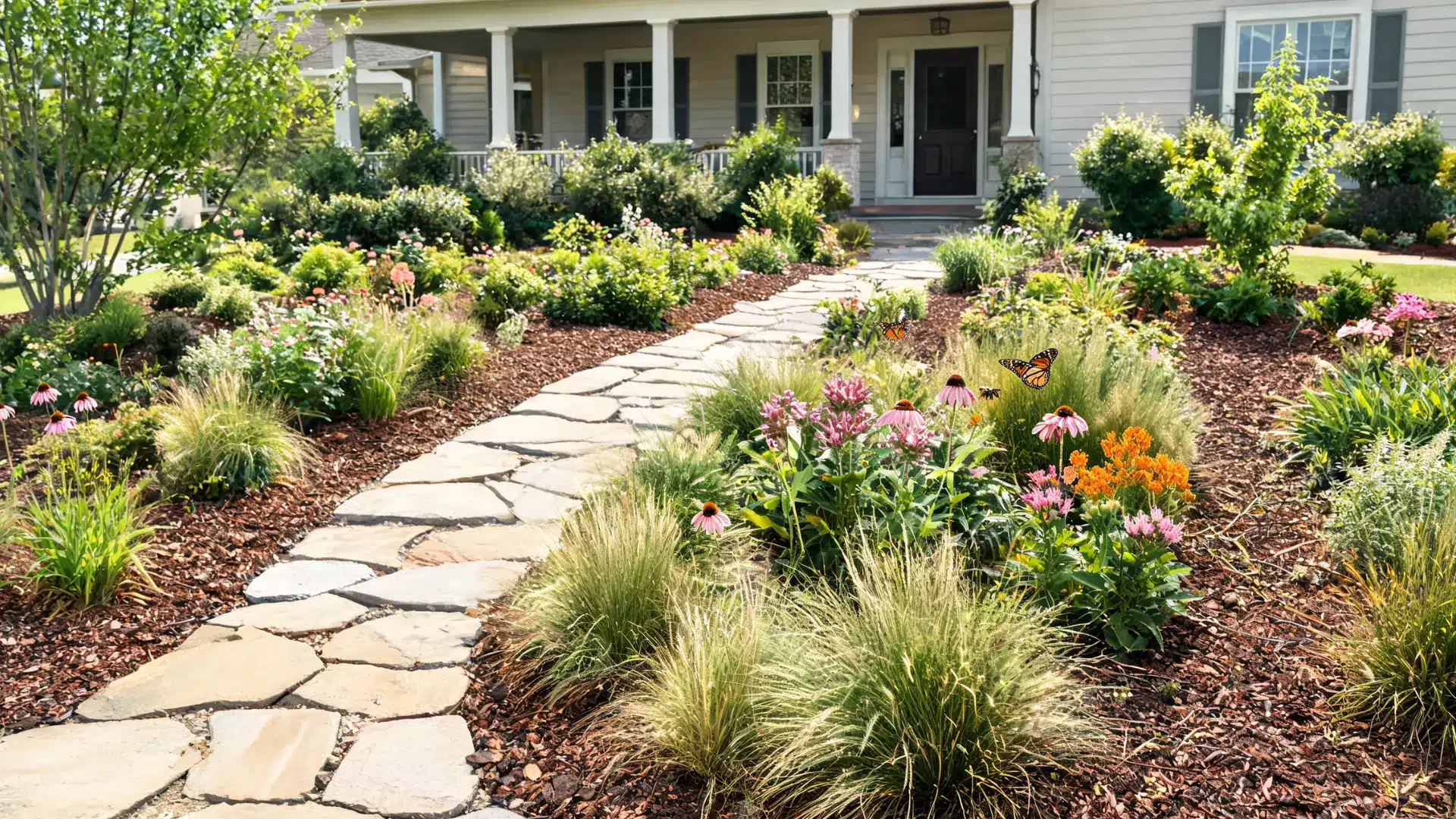
Ornamental grasses are helpful for dry sunny areas, plain beds, rock gardens, and spaces that need texture without heavy care, adding movement, height, and softness while needing little shaping.
Plant them in groups so the bed looks intentional, since they pair well with gravel, river rock, mulch, and boulders to soften hard materials. Choose clumping grasses near walkways to fill space without adding much pruning.
8. Large Planters
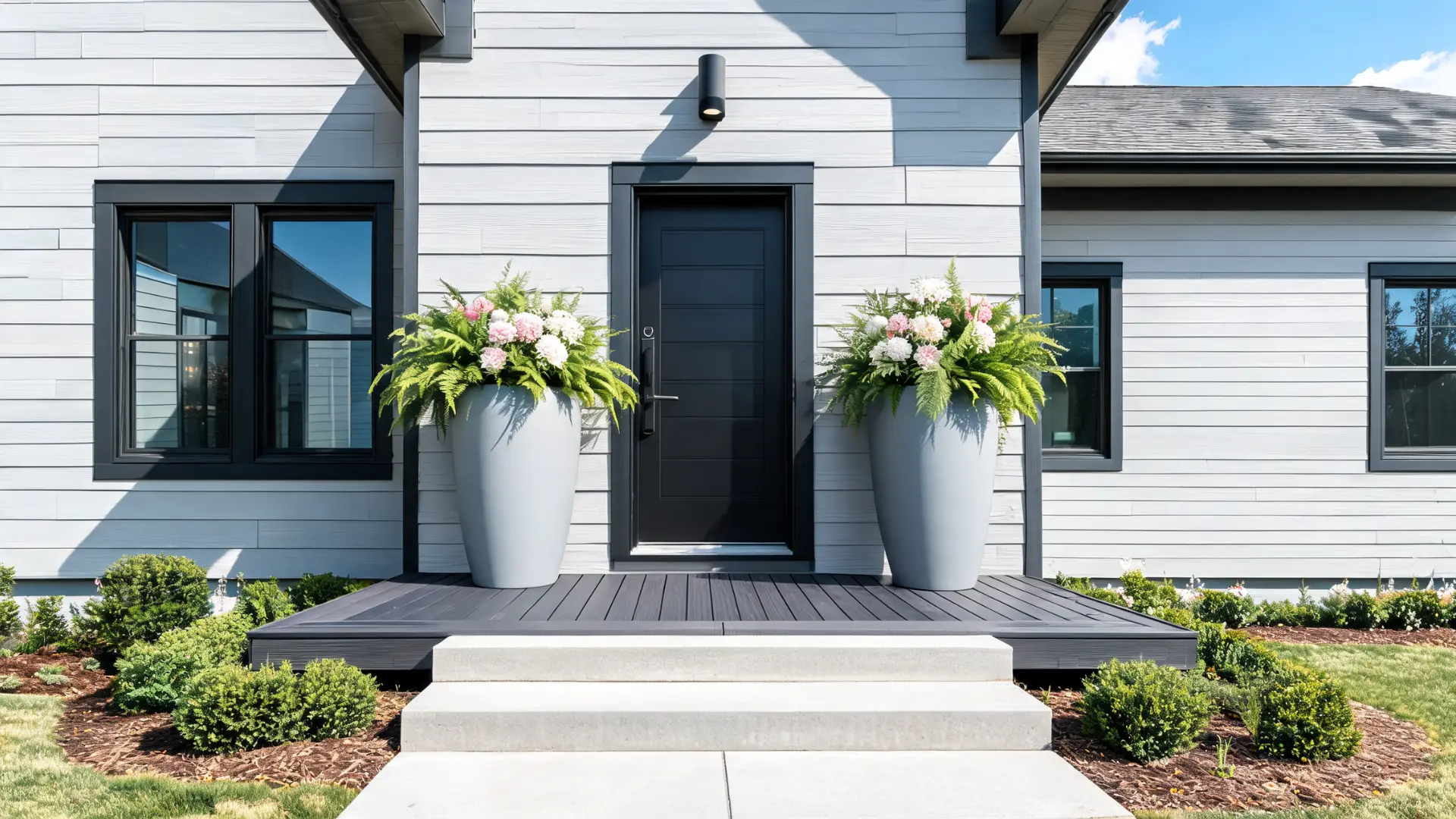
Large planters are an easy fix for a plain entry, porch, steps, or front door area, adding color and structure without needing a full planting bed.
Larger containers dry out more slowly than small pots, and self-watering options can reduce daily care.
Use durable materials that can withstand the weather near your entry, and keep the planting simple so containers look full without constant trimming or digging in beds.
9. Rock Gardens
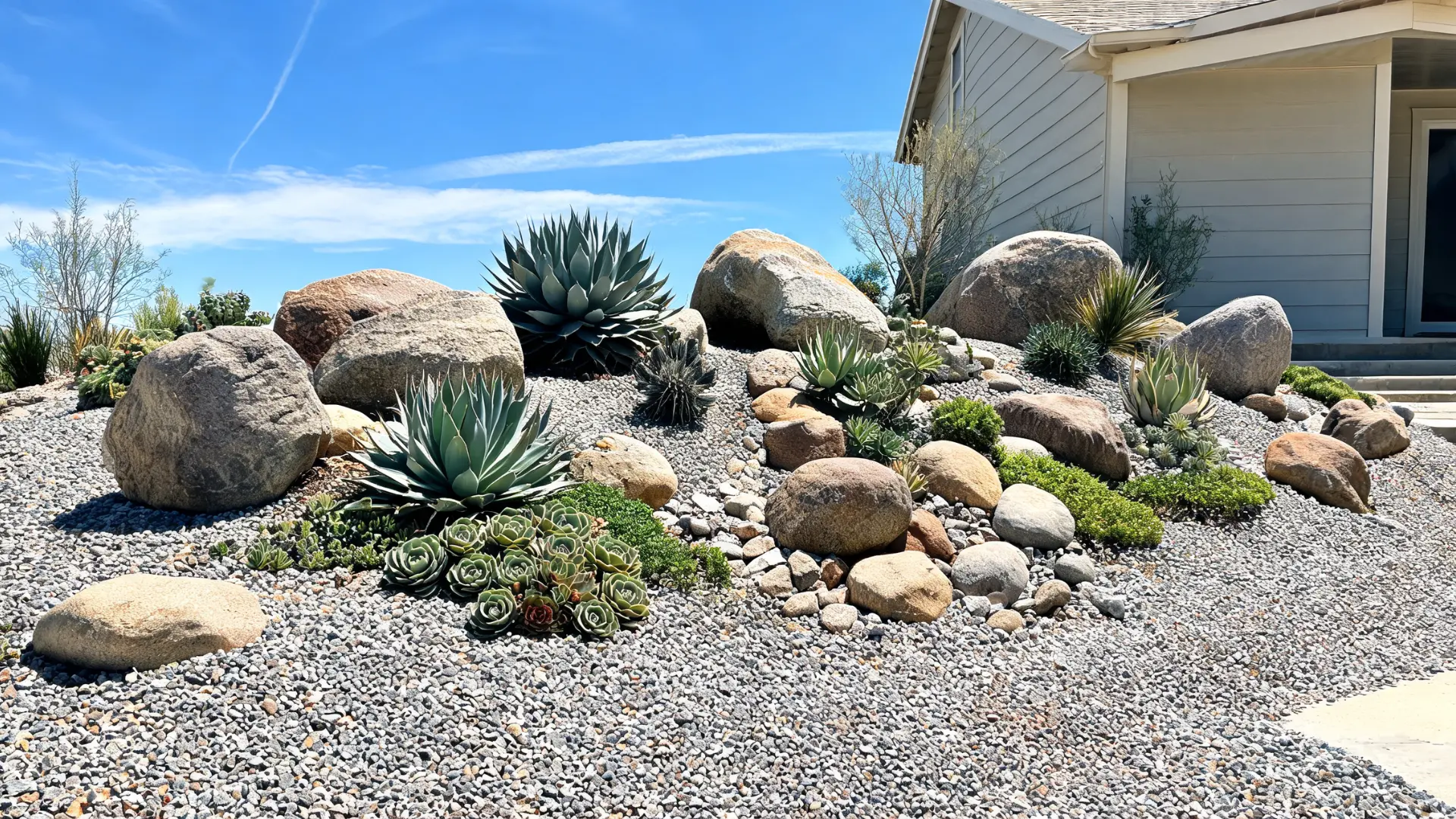
Rock gardens work well for dry sunny areas, driveway edges, slopes, and places where grass keeps failing.
Use mixed rock sizes, gravel, river rock, and boulders to create structure without watering, though boulders can look harsh alone.
Add drought-tolerant perennials, succulents, or ornamental grasses to bring height, color, and softness into hot, dry, or sloped areas where a lawn needs too much care.
10. Retaining Walls
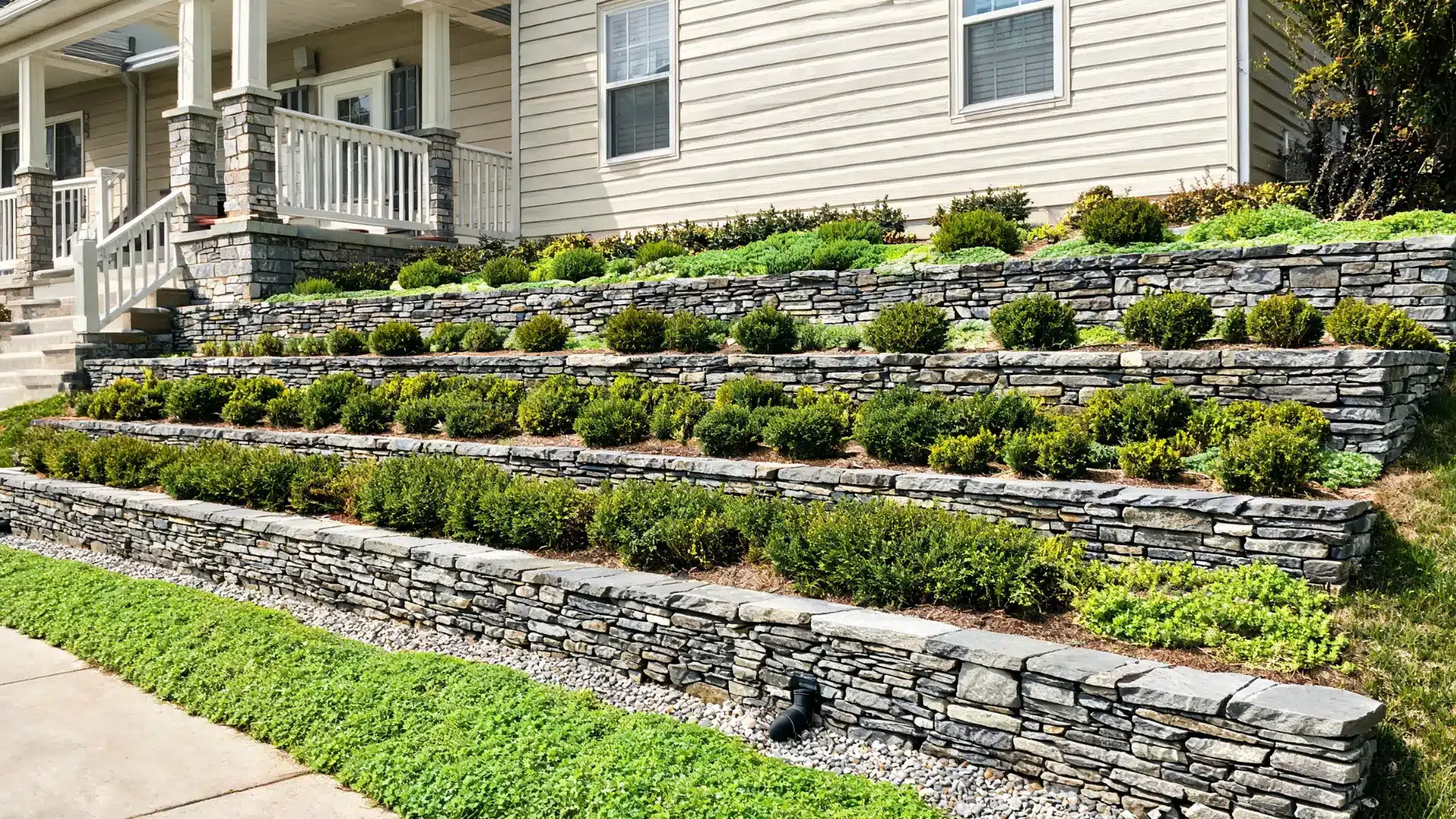
Retaining walls are useful for sloped front yards, erosion problems, and areas where mulch or soil keeps washing away.
Stone walls can hold grade, create raised planting space, and make the yard feel more structured, pairing well with river rock, ground cover, steps, and hardy shrubs.
Drainage behind the wall is essential, since trapped water can damage it and increase maintenance needs on slopes.
11. Smaller Shrubs
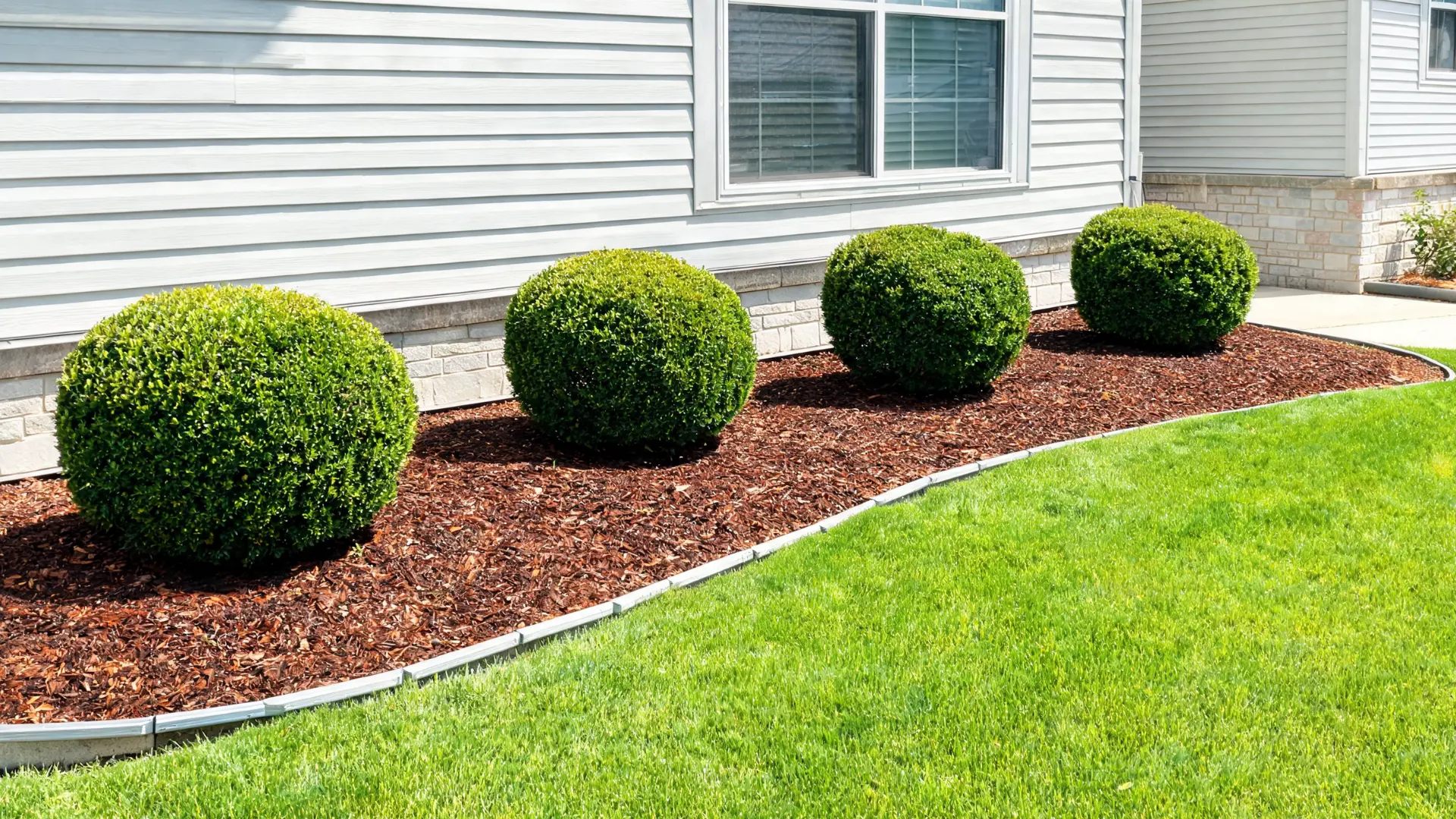
Smaller shrubs are a better fix for overgrown bushes, blocked windows, crowded foundation beds, and entries that feel hidden, reducing pruning and helping the house show better from the street.
Always check mature height and width before buying, since small nursery plants can grow much larger.
Pair smaller shrubs with mulch, pavers, or stone edging so the bed stays neat and easier to manage.
Low-Maintenance Front Yard Landscaping on a Budget
Low-maintenance front yard landscaping on a budget works best when you fix the most visible problem first. Start small with mulch, edging, or compact plants, then build the yard slowly as time and money allow.
| Step | What to Do | Estimated Budget |
|---|---|---|
| Remove One Lawn Strip | Replace the hardest-to-mow strip with mulch, gravel, or ground cover | $50–$150 |
| Use Mulch First | Apply mulch around shrubs, trees, and bare soil for instant refresh | $30–$100 |
| Repeat Plants | Plant fewer varieties in groups for cohesion and easier care | $75–$200 |
| Add Edging | Use metal, brick, stone, or concrete edging to define beds | $40–$120 |
| Work Around Healthy Trees | Add mulch or shade ground cover, avoiding trunks and roots | $20–$60 |
| Use Gravel Paths | Build low-cost paths with a firm base and edging | $60–$180 |
| Choose Small Shrubs, Reuse Materials | Pick compact shrubs and reuse onsite stone, chips, or leaves | $50–$150 |
Keep in mind these are rough estimates. Actual costs can vary based on your location, yard size, material quality, and whether you hire help or do it yourself.
First-Year Care Tips for a Low-Maintenance Yard
The first year of a low-maintenance yard is about helping plants and materials settle, not eliminating all work. Even drought-tolerant and native plants need consistent care while roots develop and stabilize.
- Water Deeply, Not Daily: Water new plants deeply during dry periods rather than shallow, daily watering to encourage stronger root growth and long-term resilience.
- Watch for Weeds Early: Keep an eye on weeds during early months, especially in mulch and newly planted areas, since they establish quickly if ignored.
- Refill Mulch As Needed: Top up mulch where soil becomes exposed to help retain moisture and reduce weed growth throughout the season.
- Check Edging After Rain: Inspect edging and gravel areas after heavy rain to keep materials in place and maintain a clean layout.
By the end of the first or second growing season, maintenance needs drop significantly as plants mature and the yard functions as a stable, low-care system.
Conclusion
Choosing the right decking and designing a low-maintenance yard doesn’t have to feel overwhelming.
I’ve shared how wood, composite, PVC, vinyl, and hardwood perform in real-world conditions, along with first-year care tips, common mistakes to avoid, and seasonal planning strategies.
You now understand which materials fit your budget, climate, and comfort with maintenance, how to test boards, and what to expect from each option over time. By focusing on structure, low-care plants, and durable materials, you can create a backyard or deck that looks great year-round while saving effort.
With these insights, you can confidently pick the best decking material for your home. Try these tips in your yard and share your experiences or questions in the comments.
Frequently Asked Questions
How Long Should I Water New Plants In A Low-Maintenance Yard?
Water new plants deeply for the first one to two seasons to establish strong roots. Even drought-tolerant or native plants need consistent early hydration.
Can Planters Reduce Maintenance In A Yard?
Yes, planters allow seasonal color changes without disturbing the main landscape, making year-round control of irrigation and sunlight exposure easier.
How Do I Maintain A Low-Maintenance Yard Near A Pool?
Use slip-resistant materials, drought-tolerant plants for minimal watering, and proper edging to prevent soil or mulch from shifting near the pool.